How to Improve Your Credit Score: A Practical 2026 Plan
Most credit advice is a list of tips with no sense of timing or trade-offs. Here is what actually moves a FICO score, how quickly each lever works, and the common mistakes that quietly keep people stuck in the low 600s.
Rewritten with AI and republished automatically. Our editors set the standards and fix reported errors — how we work.

TL;DR: Pay every bill on time, and get your reported card balances under about 10% of your limits before each statement closes. Those two levers drive roughly two thirds of a FICO score. Everything else — disputes, secured cards, limit increases — is support work. Expect movement in 30 to 60 days, not overnight.
What is a credit score, and which one does a lender actually see?
A credit score is a three-digit number, usually on a 300–850 scale, that predicts how likely you are to fall seriously delinquent on a debt in the next couple of years. It is generated from the data in your credit files at Equifax, Experian, and TransUnion — not from your income, savings, or job title, none of which appear in your credit report.
There is no single score. FICO and VantageScore each publish multiple versions, and lenders choose which one to pull. A card issuer may use one FICO version, an auto lender another that weights auto history more heavily, and the free score in your banking app may be a VantageScore that behaves differently from all of them. This is why your app score and your mortgage score can differ by 30 points and both be correct.
The practical takeaway: stop chasing the number in one app. Fix the underlying data, and every model improves together.
Which factors move a credit score the most?
Payment history and amounts owed dominate. In the classic FICO weighting, payment history is about 35% of the score and amounts owed — mostly credit utilization — about 30%. Length of history is roughly 15%, with new credit and credit mix at about 10% each.
| Lever | Approximate weight | How fast it responds | Best move |
|---|---|---|---|
| Payment history | ~35% | Damage is instant; recovery takes years | Autopay the minimum on every account as a safety net |
| Amounts owed / utilization | ~30% | 30–45 days | Pay down before the statement closes, not just before the due date |
| Length of credit history | ~15% | Years | Keep your oldest no-fee card open and lightly used |
| New credit / inquiries | ~10% | Fades over ~12 months | Batch rate shopping into a short window |
| Credit mix | ~10% | Slow | Let it develop naturally; never borrow for variety |
Notice what is missing: your salary, your bank balance, how long you have had a job. Lenders consider those separately when underwriting, but they are not score inputs.
How do I lower credit utilization before my statement closes?
Pay the card down before the statement closing date, because the balance printed on that statement is almost always the number your issuer reports to the bureaus. Paying in full by the due date protects you from interest but often arrives after the high balance has already been reported.
Worked example. You have two cards with a combined limit of $10,000 and a $4,500 balance, so 45% utilization is reported and your score sits lower than your behavior deserves. If you move $3,500 to the cards three days before the statements close, the bureaus see $1,000 — 10% — and the next scoring refresh reflects it. Same money, same month, roughly 20 to 40 points of difference for many files.
Two refinements. First, per-card utilization matters, not just the total: one maxed card among four empty ones still drags. Second, reporting literal zero across every account can score marginally lower than a small positive balance in some models, so let one card report a modest amount and pay it in full afterward.
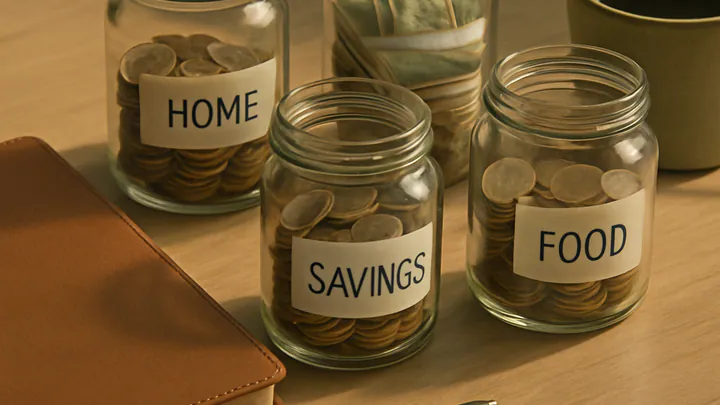
If cash flow is the real constraint, the fix is upstream of the credit file. Building a system of sinking funds so irregular expenses stop landing on a credit card does more for your score over a year than any single tactic on this page.
How do I find and dispute errors on my credit report?
Pull all three reports free at AnnualCreditReport.com — the only federally authorized source — and read them line by line. The bureaus have made weekly free access available, so you can stagger pulls rather than using all three at once.
Look specifically for: accounts you do not recognize, a limit reported lower than your actual limit (this inflates utilization), a late payment you can disprove, a debt listed twice under both the original creditor and a collector, and an account still marked open after you closed it years ago.
Dispute in writing with the bureau and the furnisher, attach documentation, and keep copies. Bureaus generally must investigate within about 30 days. If the item is accurate but old, no dispute will remove it — most negative marks age off after seven years, bankruptcies later.
A quieter win: call your issuer and ask them to correct a stale credit limit. It is a five-minute call that can drop your reported utilization instantly, and almost nobody does it.
Should I use a secured card, a credit-builder loan, or become an authorized user?
It depends on whether your file is thin (little history) or damaged (history with derogatory marks). The two situations call for different tools, and most articles blur them together.
- Thin file, no cards: a secured card is the cleanest start. You post a refundable deposit that becomes your limit, use it for one small recurring charge, and pay in full. Many issuers graduate you to an unsecured card in 6–12 months and return the deposit.
- Thin file, want installment history: a credit-builder loan from a credit union holds the borrowed amount in a locked account while you make payments, then releases it. Low risk, real payment history. Caveat: it opens a new account, which briefly lowers your average account age.
- Damaged file: nothing accelerates past the clock on a collection or a 90-day late. Focus on stacking 12–24 months of perfect payments and low utilization so the new data outweighs the old.
Where the authorized user trick backfires. Being added to someone else's seasoned, low-balance card can import years of history onto your file. But if that person runs the card near its limit or pays late, you inherit that too — and removing yourself does not always erase it quickly. Some lenders also manually discount authorized user accounts during underwriting, so treat it as a boost, not a foundation. This does not apply at all if the primary cardholder's issuer does not report authorized users to all three bureaus; confirm before you bother.
What mistakes quietly cost people the most points?
The expensive errors are rarely dramatic. They are ordinary decisions that look responsible.
- Closing the paid-off card. You clear a $4,000 balance, feel triumphant, and close the account. Your total limit drops, the utilization on your remaining cards jumps, and the score falls the month after you did the right thing.
- Applying for store cards for the discount. Each application is a hard inquiry, and card applications get no rate-shopping grace period. Three in a month reads as distress.
- Letting a $9 subscription go unpaid on a forgotten card. Creditors typically report at 30 days past due, and the size of the balance is irrelevant to the damage. A missed payment on a trivial amount scores the same as a missed mortgage payment.
- Paying a collection right before a mortgage application. Depending on the model in use, this can update the account's activity date without removing it. Talk to your loan officer first.
- Opening a new card 45 days before closing on a house. Lenders re-pull credit near closing. New debt discovered then can change your terms or sink the approval.
What should I do if I need a higher score in the next 60 days?
Stop opening anything, pay all revolving balances down as far as cash allows before statement close, and ask your lender about a rapid rescore. A rapid rescore is a lender-initiated process that pushes verified updates — a paid-down balance, a corrected limit — to the bureaus in days rather than a full billing cycle. You cannot buy it directly as a consumer; it runs through the mortgage or auto lender, and it only speeds up changes that are already true.
Decision rule we give readers: if you are within 60 days of a major application, your only jobs are (1) zero missed payments, (2) reported utilization under 10%, and (3) no new accounts or inquiries. Everything else can wait until after closing.
Which credit score myths should I ignore?
Three persistent ones. Checking your own credit hurts your score — false; that is a soft inquiry. You must carry a balance to build credit — false; paying in full reports the same on-time history and skips the interest. All debt is bad for your score — false; a mortgage or auto loan paid on time strengthens both payment history and credit mix.
One more worth retiring: the idea that score repair requires a paid service. Everything a legitimate repair company can do — dispute errors, negotiate with creditors — you can do yourself for free. Anyone promising to remove accurate negative information is describing something that does not work.
How does this fit into the rest of your money life?
A score is a by-product, not a goal. It rises when your spending fits inside your income with margin to spare, and it stalls when it does not. That is why the durable fixes tend to be lifestyle-level: fewer impulse purchases because a smaller, deliberate wardrobe removes the monthly restock reflex, or trips planned the way slow travel trades three flights for one long stay and cuts the credit card bill that follows a vacation.
Track your score monthly, not daily. Daily checking encourages reacting to normal model noise. Monthly checking lets you see whether the trend line is up.
Key takeaways
- Payment history and utilization together drive roughly two thirds of a FICO score — fix those before anything else.
- Pay cards down before the statement closing date, not just before the due date, because the statement balance is what gets reported.
- Pull all three reports free at AnnualCreditReport.com and correct stale credit limits and duplicate collections; both are fast, overlooked wins.
- Keep your oldest no-fee card open and lightly active; closing it raises utilization the same month.
- Thin files need a secured card or credit-builder loan; damaged files need time plus 12–24 months of clean behavior. The tools are not interchangeable.
- Within 60 days of a mortgage or auto application: no new accounts, no inquiries, and ask the lender about a rapid rescore.
Financial disclaimer: This article is for general information only and is not financial advice. Credit products, scoring models, and lender criteria vary, and your situation may differ from the examples given. Consider consulting a qualified financial advisor or an accredited nonprofit credit counselor before making borrowing or debt-repayment decisions.
Frequently asked questions
How fast can a credit score go up?
Utilization changes can show up in 30 to 45 days, because card issuers report balances roughly once a month. Removing a reporting error can take 30 days after a dispute. Rebuilding after a late payment, collection, or bankruptcy is measured in years, not weeks, because those marks age off on a fixed schedule.
Does checking your own credit report lower your score?
No. Pulling your own report or score is a soft inquiry and has no effect on your score. Only hard inquiries from a lender reviewing a credit application can shave points, and those typically affect FICO scoring for about 12 months while remaining visible for two years.
What is the ideal credit utilization percentage?
Aim for 1% to 9% of your total limits reported across your cards, with no single card running high. Reporting zero on every account can slightly underperform a small positive balance in some scoring models, so leaving a tiny balance to report and then paying it in full is usually the strongest setup.
Do I need to carry a balance to build credit?
No. Paying your statement balance in full every month still reports on-time payment history and still builds your score. Carrying a balance only buys you interest charges, not points.
Does paying off a collection remove it from my report?
Usually not. The account stays on your report until it ages off, generally seven years from the original delinquency. Newer scoring models such as FICO 9 and VantageScore 4.0 ignore paid collections, but older models still widely used in lending may not, so paying is worth it for other reasons even when the score moves slowly.
Should I close a credit card I no longer use?
Usually no, if it has no annual fee. Closing it removes its limit from your utilization calculation, which can push your ratio up overnight. Closed accounts in good standing stay on your report for years, so the history loss is slower than most people assume, but the utilization hit is immediate.
Will shopping for a mortgage or auto loan wreck my score?
Not if you compress it. FICO models treat multiple mortgage, auto, or student loan inquiries within a short shopping window, commonly 14 to 45 days depending on the model, as a single inquiry. Credit card applications get no such grouping.