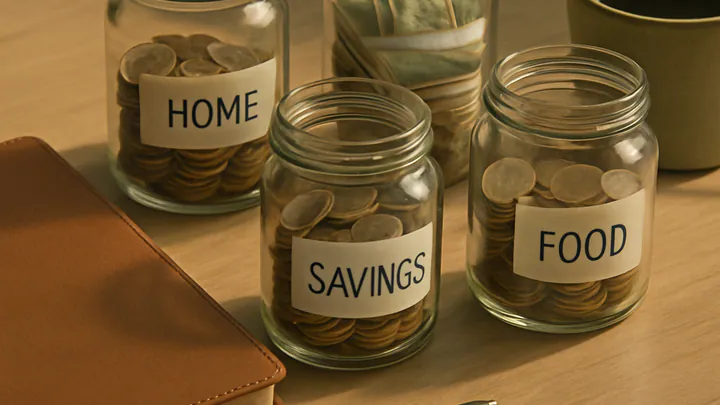
Emergency Fund Tips: Build a Rock-Solid Safety Net in 2026
An emergency fund is cash you can reach in a day, held apart from spending money, sized to your real fixed costs. Here is how much to hold in 2026, where to park it, what qualifies as an emergency, and the mistakes that quietly hollow it out.
Rewritten with AI; reviewed by Haroon Ahmad on . How we work.

TL;DR: Hold three to six months of essential expenses — nine to twelve if your income is irregular — in a federally insured high-yield savings or money market account, separate from your checking bank. Start with $1,000, automate the transfer, and keep sinking funds for predictable costs so the emergency fund stays untouched.
What exactly is an emergency fund, and how does it work?
An emergency fund is a reserve of cash held in a stable, federally insured account that you can convert to spendable money within roughly one business day, set aside solely for urgent and unplanned costs. Its job is not to grow. Its job is to be boring, whole, and available on the worst week of your year.
That definition rules a lot of things out. Money in a brokerage account is not an emergency fund, because it can be worth less exactly when layoffs spike. A credit card limit is not an emergency fund, because borrowing turns a one-month problem into a two-year one. Home equity is not an emergency fund, because lenders tighten standards in the same conditions that cost people their jobs.
The mechanism that makes it work is friction. Cash that lives one transfer away from your checking account is close enough for a broken furnace and far enough away from a Tuesday-night impulse.
The fund also buys time. Job loss is the expensive emergency because income stops while expenses continue: unemployment insurance replaces only a portion of prior wages in most states, and COBRA health coverage typically costs far more than the employee share. Cash is what lets someone take the right next job instead of the first one.
How much should I have in an emergency fund in 2026?
Save three to six months of essential expenses — rent or mortgage, utilities, groceries, insurance, minimum debt payments, transportation, childcare — not three to six months of gross income. That distinction usually cuts the target by a third or more and makes the goal reachable.
Work the example. If your essentials total $2,800 a month, three months is $8,400 and six months is $16,800. Your gross salary might be $5,500 a month, which would have implied a $33,000 target. Same household, half the mountain.
The number of months should scale with how long your income would realistically take to replace, not with how anxious you feel.
| Situation | Months of essentials | Why |
|---|---|---|
| Two earners, both in high-demand fields, no dependents | 3 months | One income continues while the other job search runs |
| Single earner, stable salaried role, renting | 4–6 months | No second income; landlord absorbs major repairs |
| Homeowner with dependents | 6 months | Repairs, deductibles, and childcare all land on you |
| Freelance, commission, or seasonal income | 9–12 months | Revenue gaps are routine, not exceptional |
| Specialized or senior role in a thin job market | 9–12 months | Searches commonly run six months or longer |
| Retired or near retirement | 12+ months in cash | Avoids selling investments during a market drop |
| Anyone paying off high-interest debt | $1,000–$2,000 starter | Buffer first, then debt, then the full fund |
One adjustment: if you are on a high-deductible health plan, add your annual out-of-pocket maximum to the target, or fund a health savings account alongside it. A family deductible can swallow a three-month fund in a single hospital stay.
The deductible floor rule
Before thinking in months, add up the deductibles you are actually exposed to: health plan, auto, and homeowners or renters. The starter fund should cover the largest of them, ideally the two largest. A $1,000 starter does little for someone with a $3,000 high-deductible health plan and a $2,500 wind-and-hail deductible; that household's real floor is $5,500.
Where should I keep my emergency fund so it stays safe and reachable?
Use a high-yield savings account or money market deposit account at an FDIC-insured bank or NCUA-insured credit union, held at a different institution from your everyday checking. Deposit insurance covers $250,000 per depositor, per insured institution, per ownership category, which is far above what almost any emergency fund needs.
| Account | Time to access | Value risk | Watch out for |
|---|---|---|---|
| High-yield savings (online bank) | 1–2 business days | None | Transfer limits; slower first-time links |
| Money market deposit account | Same day if it has a debit card | None | Minimum balance requirements |
| Checking at your main bank | Instant | None | Gets spent; typically earns nothing |
| Short CD ladder | At maturity | None if held | Early withdrawal penalty forfeits interest |
| Series I savings bonds | Locked 12 months | None | Redeem before 5 years and you lose 3 months of interest |
| Brokerage / index funds | Days, plus settlement | High | Can be down 20%+ in the exact month you are laid off |
A detail most articles skip: do not keep your emergency fund at the same institution that holds your credit card or personal loan. Deposit agreements — and, at credit unions, a statutory lien — commonly allow the institution to apply your deposits against a delinquent debt you owe them. If a job loss makes you late on that card, the cash you were counting on may not be sitting where you left it. Read your account agreement, or simply bank elsewhere.
One tax note: interest earned on the fund is taxable as ordinary income, and the bank issues a 1099-INT once the year's interest passes a small threshold. That small cost is not a reason to move the money into investments.
How do I build an emergency fund on a tight budget?
Automate a small transfer the day after payday and raise it only when it stops hurting. Consistency beats size: $60 a week compounds into roughly $3,100 a year with zero willpower required, while a heroic $800 month you never repeat does not.
- Hit $1,000–$2,000 first. This starter tier covers the tire, the urgent-care visit, the busted laptop. It converts most small crises from card debt into an inconvenience.
- Automate on payday. Schedule the transfer for the day after your paycheck clears so the money leaves before it becomes visible.
- Route windfalls straight in. Tax refunds, bonuses, rebates, and the first month of any raise should go to the fund before they touch checking.
- Cut temporarily, not permanently. Pause two or three subscriptions and shift a few restaurant nights to cheap batch cooking. Restore what you miss once the target is met.
- Sell the drift. Unused gear, an outgrown wardrobe, the second streaming device. Building a 30-piece capsule wardrobe tends to surface a surprising amount of resellable clothing.
If your income arrives in lumps, save by percentage rather than by flat amount. Committing 15% of every invoice removes the need to guess what a "normal" month looks like.
Worked example: three phases instead of one big number
With essentials of $2,800 a month, six months is $16,800, so break it into phases. Phase one is a $2,500 deductible floor: at $150 a month plus a $900 tax refund, that takes roughly eleven months. Phase two targets three months ($8,400) at $300 a month once a car payment ends, which takes under two years. Phase three coasts to six months on autopilot.
What actually counts as an emergency?
A real emergency is urgent, unexpected, and necessary — all three. Job loss, a medical bill, a car repair that keeps you employed, a failed heating system in January, an emergency flight for a family crisis. If it fails any of the three tests, it belongs in a different pot of money.
The single most common leak is treating predictable annual costs as surprises. Car registration, insurance premiums, holiday gifts, back-to-school clothes, and tire replacement are all scheduled expenses wearing an emergency costume. Those belong in sinking funds, which spread known costs across the year so they never reach your safety net.
Travel is the other frequent offender. A trip you want to take is a savings goal; a slower, longer trip planned months ahead is cheaper anyway, and planning it properly keeps the emergency fund out of the conversation entirely.
What are the costly mistakes people make with emergency funds?
- Parking it in checking. Zero friction means zero survival rate. It also usually earns nothing while inflation erodes it.
- Linking it as overdraft protection. Savings at the same bank as checking, linked to cover overdrafts, gets drained automatically and silently every time a bill is mistimed. Unlink it, or move the fund to a separate institution.
- Building a CD ladder that matures on the wrong dates. A 12-month CD is not liquid in month four, and breaking it costs interest. If you use CDs at all, ladder only the portion above your first three months of cash.
- Confusing "I have a credit limit" with "I have a reserve." Issuers can and do cut limits during downturns.
- Stopping at the starter tier. A $1,000 buffer handles a car repair, not a layoff. Keep the automation running until you hit the full target.
- Not replenishing. A fund used once and never refilled is a fund that fails the second time.
- Chasing yield across five banks. Splitting $9,000 across accounts to capture a slightly better rate adds transfer delays and password friction for a trivial gain. One good account is enough.
How do I rebuild the fund after using it?
Restart the transfer in the same week you spend the money, and treat the refill as a non-negotiable bill until the balance is restored — six to twelve months is a reasonable window. The danger period is the month right after the crisis passes, when the pressure lifts and the freed-up cash quietly gets reabsorbed.
Two practical moves help. First, raise the automatic transfer by the exact amount of any spending you paused during the emergency, then let it run. Second, if you replaced something insured, deposit the claim check directly into the fund rather than into checking.
- Keep matched retirement contributions going. Giving up an employer match to rebuild cash faster is usually a poor trade; pause vacation and other discretionary savings goals instead.
- Re-check the target. If the emergency revealed a gap, such as a deductible higher than remembered, raise the number before refilling it.
When does this standard advice not apply?
Three honest exceptions. If you carry a balance on a card with a punishing interest rate, stopping at a $1,000–$2,000 starter buffer and attacking that debt usually beats building six months of cash at a much lower savings yield. If you have a guaranteed severance package or a genuinely secure income with strong disability coverage, the lower end of the range is defensible. And if you are self-employed, your business needs its own operating reserve — personal and business cushions should not be the same pile of money.
Immediate threats come first regardless: imminent repossession, eviction or a utility shutoff outranks the savings plan. Deal with the fire before the fund.
There is also a ceiling. Once you are past roughly twelve months of essentials in cash, additional dollars are usually better directed toward retirement accounts or other long-term goals. Oversaving in cash is a milder problem than undersaving, but it is still a real one.
Key takeaways
- Size the fund on essential expenses, not gross income — it typically cuts the target by a third.
- Three to six months for most households; nine to twelve for irregular income, single earners, or hard-to-replace roles.
- Keep it in an insured high-yield savings or money market account at a different institution from your credit card issuer.
- Urgent, unexpected, and necessary — all three, or it belongs in a sinking fund.
- Build the $1,000 starter first, automate the rest, and restart contributions the same week you spend from it.
Financial disclaimer: this article is for general information only and is not financial advice. Account terms, insurance coverage, and interest rates change, and individual circumstances vary. Please consult a qualified financial professional before making decisions about saving, borrowing, or investing.
Frequently asked questions
How much should I have in an emergency fund?
Most households should hold three to six months of essential expenses — not full income — with nine to twelve months appropriate for freelancers, commission earners, single-income families, and anyone in a niche role that takes a long time to replace. Start with a $1,000 to $2,000 starter buffer before chasing the full number.
Where is the best place to keep an emergency fund?
A high-yield savings account or money market deposit account at an FDIC- or NCUA-insured institution is the default choice, because the balance is stable, federally insured up to $250,000 per depositor per ownership category, and reachable within a day or two. Avoid stocks, crypto, and anything with a lockup period.
Is it okay to keep my emergency fund in my checking account?
It is safe, but it rarely stays intact. Money sitting in the account you swipe from gets spent on near-emergencies, and it usually earns nothing. Keep the fund at a separate institution so a transfer takes a day — long enough to interrupt an impulse, short enough for a real crisis.
What counts as a real emergency?
A real emergency is urgent, unexpected, and necessary: job loss, a medical bill, a car repair that gets you to work, a failed furnace, an emergency flight for a family crisis. Predictable annual costs like insurance premiums, holiday gifts, and tire replacement belong in sinking funds instead.
Should I pay off debt or build an emergency fund first?
Build a small starter buffer of $1,000 to $2,000 first, then attack high-interest debt, then finish the full fund. Without any cash cushion, the next unexpected expense goes straight back onto the card you just paid down, and you end up running in place.
Can I use a Roth IRA as my emergency fund?
Direct Roth IRA contributions can generally be withdrawn at any time without tax or penalty, which makes a Roth a reasonable backstop tier — but it is a poor primary fund. Withdrawn contribution room is usually gone for good, and markets often fall at the same time layoffs rise.
How fast should I rebuild the fund after using it?
Treat replenishment like a fixed monthly bill and aim to restore the balance within six to twelve months. Restart automatic transfers the same week you spend from the fund, before the freed-up cash flow gets absorbed by ordinary spending.