Gut Health Recipes: 7 Dishes That Actually Feed Your Gut
Gut-friendly cooking comes down to two things: plant fiber variety and live cultures you actually eat often. Here are seven recipes that deliver both, plus the portion rules, heat limits, and common mistakes that quietly cancel out the benefits.
Rewritten with AI and republished automatically. Our editors set the standards and fix reported errors — how we work.
TL;DR: Good gut health recipes do two jobs at once — feed resident bacteria with varied plant fiber, and deliver live cultures from unpasteurized fermented foods. The seven dishes below cover both, with portion rules, heat limits, and low-FODMAP swaps so you get the benefit without the bloating.
What exactly is a "gut health recipe"?
A gut health recipe is a dish built to supply prebiotic plant fiber, live microbial cultures, or both, in a form you will actually cook more than once. That last clause matters more than any ingredient list. Consistency beats novelty here, because the bacteria in your colon respond to what arrives regularly, not to one heroic Sunday salad.
The mechanics are simple. Fermentable fibers — resistant starch, inulin, beta-glucan, pectin — pass undigested into the colon, where bacteria break them down and produce short-chain fatty acids like butyrate that nourish the cells lining your gut. Fermented foods add live organisms and the compounds produced during fermentation. A dish that does one is useful; a dish that does both is efficient.
Use a two-part test for this category: does the dish contain at least two distinct plant foods, and is there a live-culture element added off the heat? If the answer to both is yes, it qualifies. If a recipe is labeled "gut healthy" because it contains coconut oil and no gluten, it does not.
How many different plants should I eat in a week?
Aim for roughly 30 different plant foods across a week rather than obsessing over any single superfood. Diversity of plants correlates more closely with microbial diversity than sheer quantity of one vegetable, and the count is easier to hit than it sounds — herbs, spices, seeds, nuts, whole grains, and legumes all count as separate entries.
A jar of mixed seeds on the counter can add four plants to breakfast in one spoonful. A handful of mixed frozen berries adds three. This is why our gut recipes lean on blends: mixed grains, mixed beans, mixed herbs. If you want the broader physiological picture behind this, our practical guide to gut health covers the microbiome fundamentals in more depth.
Which fermented food should I actually start with?
Start with kefir or live yogurt if you tolerate dairy, and with sauerkraut if you do not — both are cheap, widely available, and require zero cooking skill. The bigger decision is portion size and heat handling, which the table below sorts out.
| Food | Live cultures? | Heat handling | Starting portion | Watch out for |
|---|---|---|---|---|
| Kefir | Yes, typically the broadest range of organisms | Never heat; blend cold | 1/4 cup, building to 1 cup | Tangy taste; lactose is largely fermented but not always fully |
| Live yogurt | Yes, if labeled "live and active cultures" | Stir in off the heat | 1/2 cup | Flavored tubs can carry significant added sugar |
| Kimchi | Yes, when refrigerated and unpasteurized | Add at the very end or serve raw | 1–2 tablespoons | High sodium; high FODMAP at larger servings |
| Sauerkraut | Only the refrigerated kind — shelf-stable jars are pasteurized | Serve cold alongside | 1 tablespoon | Buying the canned aisle version by mistake |
| Miso | Yes, in unpasteurized paste | Whisk in after the broth stops simmering | 1 teaspoon per cup of broth | Boiling the paste destroys the cultures |
| Tempeh | Usually not after cooking | Cooked thoroughly by design | 3 oz | Valued for fiber and protein rather than live cultures |
The sauerkraut line is the one that catches people out most often. If it sat on a warm shelf, the cultures are gone. It is still a fine pickled vegetable — just not a probiotic one.
What are seven gut health recipes worth cooking this week?
These seven are structured rather than fussy: each is a template you can rotate ingredients through, so the plant count keeps climbing without the recipe becoming a chore.
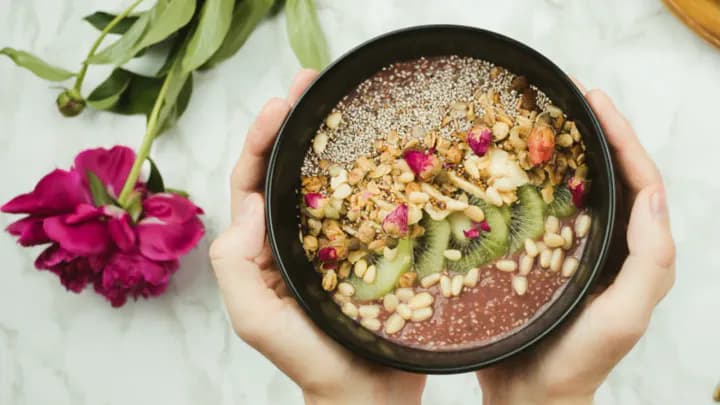
1. Overnight chia pudding with mixed berries
Three tablespoons of chia seeds to one cup of milk or kefir, left overnight, topped with mixed berries and a spoon of chopped nuts. Chia's soluble fiber forms a gel that adds stool bulk and slows gastric emptying. If you use kefir, add it cold and eat within two days. Plant count: four to six.
2. Warm quinoa and roasted vegetable bowl
Roast carrots, broccoli, and red onion, fold through cooked quinoa, dress with olive oil and lemon, finish with a tablespoon of kraut on the side. Cooling the quinoa before reheating increases its resistant starch — a genuinely fermentable fiber your colon bacteria use. For the sheet-pan mechanics, our guide to fast, balanced sheet-pan dinners covers timing multiple vegetables on one tray.
3. Miso soup with tofu, seaweed, and scallion
Simmer dashi or vegetable stock with cubed tofu and wakame, then take the pan off the heat, let it stop steaming hard, and whisk the miso in last. This is the single most common mistake in gut-focused cooking: boiling miso turns a live food into a salty seasoning. Seaweed also contributes fermentable polysaccharides that land squarely in the prebiotic category.
4. Kimchi and avocado wraps
Whole-grain wrap, mashed avocado, a tablespoon of kimchi, shredded carrot, cilantro, and a squeeze of lime. Avocado supplies both soluble fiber and fat that improves absorption of fat-soluble vitamins from the vegetables. Keep kimchi at a tablespoon or two if you are new to it — the sodium and the fermentable sugars both add up fast.
5. Kefir smoothie with banana, oats, and flaxseed
One cup kefir, a slightly underripe banana, two tablespoons rolled oats, one tablespoon ground flaxseed. Underripe bananas carry more resistant starch; oats bring beta-glucan; flax adds lignans and soluble fiber. Ground flax, not whole — whole seeds pass through largely intact.
6. Lentil, carrot, and cumin soup
Red lentils, carrots, cumin, stock, finished with yogurt stirred in at the bowl rather than the pot. Roughly a cup of cooked lentils delivers a substantial share of a day's fiber alongside plant protein. Cook them soft and blend if legumes have historically been rough on you; particle size genuinely affects tolerance.
7. Tempeh stir-fry with brown rice and greens
Tempeh is fermented soy, and while cooking removes the live organisms, fermentation has already reduced its phytate content and made it easier on many digestive systems than plain soybeans. Pair with brown rice cooked the day before and refrigerated — again, that cooling step raises resistant starch.
What does a day that actually hits the fiber target look like?
Here is a worked example. Chia pudding at breakfast contributes roughly 10 grams of fiber between the seeds and berries. The lentil and carrot soup at lunch adds around 10 to 12. A tempeh stir-fry with brown rice and greens at dinner adds another 8 to 10. That lands you comfortably in the 25–38 gram range general dietary guidance recommends for adults, without a single supplement.
The critical detail: do not jump to that from a 12-gram baseline overnight. Add about 5 grams per week and increase water alongside it. Fiber without fluid is the most reliable way to make yourself more constipated, not less — a genuinely common and uncomfortable mistake.
Who should be cautious with these recipes?
If you have IBS, inflammatory bowel disease, a history of SIBO, or you are immunocompromised, several ingredients here need modification rather than adoption. Onion, garlic, lentils, and larger kimchi servings are high in FODMAPs and can trigger symptoms in sensitive people; live cultures may be inadvisable for severely immunocompromised individuals.
Practical swaps that preserve flavor: use garlic-infused olive oil instead of garlic cloves, firm tofu or tempeh instead of lentils, kiwi or unripe banana instead of apples, and cap sauerkraut at a tablespoon. These are starting points, not a treatment plan — consult a qualified healthcare professional or registered dietitian before eliminating whole food groups, and treat any blood in stool, unintended weight loss, or persistent pain as a reason to get assessed rather than to adjust your grocery list.
Does eating this way really affect mood?
There is a real and well-documented communication pathway between gut and brain, involving the vagus nerve, immune signaling, and microbial metabolites. It is worth being precise, though: most of the body's serotonin is indeed produced in the gut, but that peripheral serotonin does not cross the blood-brain barrier, so the popular framing of "eat yogurt, make brain serotonin" oversimplifies the biology considerably.
What research generally suggests is more modest and still useful — diets rich in fiber and fermented foods are associated with better-reported wellbeing, and the mechanisms are plausible. Sleep and activity pull in the same direction. Regular movement speeds intestinal transit, which is why our Zone 2 cardio training guide pairs naturally with a fiber-forward diet, and poor sleep reliably worsens gut symptoms — see our sleep hygiene reset guide if nights are the weak link.
What should I put on the grocery list?
Buy across four categories every shop: a live-culture item, a legume, a whole grain, and a seed or nut mix. That structure guarantees the four recipes you improvise mid-week still qualify.
- Live cultures: refrigerated kefir, plain live yogurt, refrigerated sauerkraut or kimchi, unpasteurized miso paste.
- Prebiotic-rich plants: garlic, onion, leek, asparagus, slightly underripe bananas, cold-cooked potatoes, oats.
- Legumes and grains: red and brown lentils, chickpeas, black beans, quinoa, barley, brown rice.
- Seeds and nuts: ground flaxseed, chia, pumpkin seeds, walnuts.
- Skip or minimize: heavily sweetened yogurt drinks, shelf-stable "probiotic" snacks with no live-culture labeling, and anything marketed on a health claim rather than an ingredient list.
One honest caveat on supplements: a fermented-food habit covers most people's needs, and a decision to add a strain-specific probiotic — or magnesium, which some people reach for when constipation is the issue — should be made with a clinician. Our overview of magnesium glycinate benefits, dosing, and safety explains why the form matters if that conversation comes up.
How do I plan a week without it falling apart by Wednesday?
Batch two components, not two meals. Cook a pot of grains and a pot of lentils on Sunday, refrigerate both, and you can assemble five of the seven recipes above in under fifteen minutes each. The cooling step is doing double duty: it saves time and raises resistant starch.
- Monday: chia pudding; lentil and carrot soup with yogurt stirred in at the bowl.
- Tuesday: kefir smoothie; tempeh stir-fry with the cold-cooked brown rice.
- Wednesday: kimchi and avocado wrap; miso soup with tofu.
- Thursday: yogurt with mixed seeds; roasted vegetable and quinoa bowl.
- Friday: leftovers, plus a tablespoon of kraut on whatever you eat.
- Weekend: one new plant food, one batch cook, no rules beyond that.
Key takeaways
- Gut-friendly cooking means fermentable plant fiber plus live cultures — a recipe missing both is just a nice meal.
- Heat destroys live cultures: whisk miso in after the boil, add kimchi and kraut off the heat, never warm kefir.
- Shelf-stable sauerkraut is pasteurized and contains no live organisms; buy from the refrigerated case.
- Increase fiber by about 5 grams per week with more fluid, not all at once — rushing it causes the bloating people blame on the food itself.
- Cooling cooked rice, potatoes, and quinoa raises resistant starch, which is free prebiotic value from leftovers.
- If you have IBS, IBD, SIBO, or are immunocompromised, adapt these recipes with a registered dietitian rather than adopting them wholesale.
Frequently asked questions
What makes a recipe genuinely good for gut health?
A genuinely gut-friendly recipe delivers prebiotic fiber from plants, and ideally live cultures from an unpasteurized fermented food, without a heavy load of refined sugar or alcohol. A quick test: count the distinct plant foods in the dish and check whether any fermented element is added off the heat. Two or more plants plus a live-culture topping is a strong recipe.
Does cooking kill the probiotics in miso, kimchi, or sauerkraut?
Yes, sustained heat above roughly 115°F kills most live cultures, which is why miso should be stirred into broth after it comes off the boil and kimchi is best added at the end or served raw alongside. Cooked fermented foods still contribute flavor, organic acids, and fiber, so they are not wasted, but they no longer count as a probiotic source.
How much fiber should I aim for each day?
General dietary guidance puts adults in the range of about 25 to 38 grams of fiber per day, and most people in Western countries fall well short. Rather than chasing the number in one meal, spread it across three eating occasions and increase by roughly 5 grams per week so your gut can adapt without gas and bloating.
Will these gut health recipes help if I have IBS?
Some will and some will not, because several classic gut foods including onion, garlic, lentils, and large servings of kimchi are high in FODMAPs that trigger symptoms in sensitive people. Start with lower-FODMAP options such as garlic-infused oil, firm tofu or tempeh, oats, kiwi, and small portions of sauerkraut, and work with a registered dietitian before restricting broadly.
Do I need a probiotic supplement if I eat fermented foods?
Most people who eat a live-culture food most days do not need a supplement to maintain a varied diet pattern. Supplements can be useful in specific situations, such as after a course of antibiotics or for a defined strain-specific indication, but that decision belongs with a qualified healthcare professional who knows your history.
How long until I notice a difference?
Stool regularity and bloating often shift within one to two weeks of a consistent fiber and fermented-food routine, while broader changes in microbial diversity take longer and depend heavily on the variety of plants you eat. If symptoms worsen rather than settle after two weeks, that is a signal to slow down and get assessed rather than push harder.
Is kombucha as useful as yogurt or kefir?
Kombucha contains live cultures but generally fewer than kefir or live yogurt, and many commercial bottles carry meaningful added sugar. It is a reasonable addition if you enjoy it, but it is not a replacement for a daily fermented dairy or vegetable source, and it is not the best starting point if you are sugar-sensitive or prone to reflux.