Loud Spin and Gym Classes: How to Protect Your Hearing
Ringing ears after spin or HIIT class are a warning sign. Learn how to check your class's volume with a phone, choose earplugs that stay put through sweat, and keep your weekly activity minutes.
Drafted with AI. This version has not been reviewed by an editor, so it carries no ads — how we work.
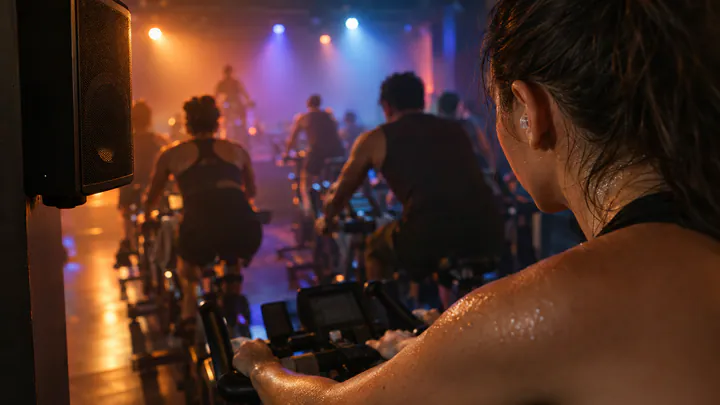
If you walk out of spin or HIIT class with ringing ears, or with sound that seems wrapped in cotton for the rest of the evening, the music was loud enough to strain your hearing, and repeating that several times a week is how lasting damage builds. You don't have to quit the classes you enjoy. This guide shows regular class-goers how to check how loud the room really is, which earplugs survive a sweaty session, what to say to the instructor, and how to keep your weekly exercise minutes if you decide to swap a class.
It is not for anyone who has noticed sudden hearing loss or a change in one ear only: that needs a doctor promptly, not earplugs. And if you're also around loud noise at work or at concerts, you need broader hearing-protection advice than a gym-focused guide can give.
Why a weekly class adds up to real noise exposure
Noise damage depends on two things together: how loud the sound is and how long you hear it. The NIDCD's guide to noise-induced hearing loss says sounds at or below 70 A-weighted decibels (dBA) are unlikely to cause hearing loss even after long exposure, while long or repeated exposure to sounds at or above 85 dBA can cause it. The louder the sound, the less time it takes to do harm.
For class regulars, the important word is repeated. Loud sound wears down the tiny hair cells in the inner ear that turn vibration into the signals your brain hears, and in people those cells don't grow back. A single loud class rarely causes lasting harm on its own; the risk comes from stacking sessions week after week, year after year.
Worked example: one regular's yearly class hours
Say you take four 45-minute spin classes a week. That's 180 minutes (4 × 45), or 3 hours, of loud music every week, and 156 hours a year (3 × 52), before you count earbuds on the commute, a noisy restaurant or a concert. If the studio sits at or above 85 dBA, every one of those hours belongs to the kind of repeated exposure that wears hearing down.
The decibel levels where hearing damage starts
Decibels run on a logarithmic scale, so small differences in the number are large differences in sound energy: each 10-decibel step means ten times the sound intensity. That's why the gap between chatting with a friend and a pumped-up sprint playlist is bigger than the numbers suggest. The NIDCD puts normal conversation at about 60 to 70 dBA, which gives you a useful reference point for whatever your class measures. The table below lines up a phone reading with the 70 and 85 dBA levels from that same page.
| Your reading | What the level means | What we'd do |
|---|---|---|
| 70 dBA or below | Unlikely to cause hearing loss, even after long exposure | Nothing extra needed |
| Between 70 and 85 dBA | Louder than normal conversation; below the level linked to damage from repeated exposure | Keep earplugs in your bag and pick a spot away from the speakers |
| 85 dBA and above | Long or repeated exposure can cause hearing loss | Wear earplugs every session, move back, and ask for the volume to come down |
A rough cue that needs no meter: if you have to shout to be heard by the person on the next bike or mat, the room is far louder than conversation, and you should treat it as a hearing risk until you've measured it.
Measuring your class with a phone sound meter
A free sound level meter app on your phone won't match a calibrated instrument, but it's good enough to tell a quiet room from a risky one. Treat every reading as an estimate, and if it hovers near 85 dBA, act as though it's over.
- Pick an app that reports dBA. A-weighting matches the way hearing-risk thresholds are expressed. Many smartwatches also show ambient noise levels and can alert you to loud environments.
- Sanity-check it first. In a quiet room the reading should be low; talking a few feet from the phone should land around ordinary conversation level. If it jumps around wildly in silence, try another app.
- Measure from where you exercise. Take the phone out of its case if the case covers the microphone, or set it face-up on the bike's console or your mat. Don't measure from inside a pocket or a cupholder, which muffles the reading.
- Catch the loudest stretches. Warm-ups are usually quieter than sprints, climbs and the final push. Note the average reading over a few minutes (some apps call it Leq) as well as the peaks.
- Repeat across classes. Volume varies by instructor, time slot and studio, so take readings from two or three different sessions before deciding which classes are a problem.
While you're at it, compare a spot near the front speakers with a back corner. Moving away from the source of the noise is one of the protections listed in the NIDCD's noise guidance, and the difference between rows can be enough to change which line of the table above you fall into.
Earplugs that work while you sweat
The NIDCD's protection advice comes down to three moves: wear hearing protection such as earplugs, move away from the source of the noise, and limit how long you're exposed. In a class you can't control the playlist or the length, so earplugs and where you set up do most of the work. The catch is that sweat, jaw clenching and bouncing loosen some plugs, and some muffle the instructor's cues so much you lose track of the workout.
| Type | Fit | Sweat and movement | Music and instructor clarity | Rough cost |
|---|---|---|---|---|
| Foam (roll-down) | Expands to fill the ear canal; very effective when inserted deeply | Can creep out with sweat and jaw movement; single-use, gets grimy fast | Muffled and bass-heavy; cues can be hard to catch | Roughly $10–$20 for a box of many pairs |
| Flanged (silicone, reusable) | Two or three ridged tiers push in and seal; quick to fit | Holds reasonably well; rinse and reuse | Moderately muffled | Roughly $10–$25 a pair |
| High-fidelity (filtered) | Soft tips, usually in several sizes | Stay put for most people; washable | Lower volume more evenly across pitches, so music and voices sound clearer, just quieter | Roughly $20–$50 a pair |
| Custom-molded | Made from an impression of your ear by a hearing professional | Best grip during hard efforts | Can be fitted with high-fidelity filters | Often well over $100 |
For most people taking several classes a week, we'd start with a high-fidelity pair: you still hear the beat and the cadence calls, which makes you more likely to wear them every time. Keep a few foam plugs in your gym bag as backup. Custom-molded plugs make sense if you're in loud classes most days and also go to concerts, since the cost spreads over a lot of use.
Fit matters more than type. For foam, roll the plug into a thin cylinder, reach over your head to pull the top of your ear up and back, slide it in, and hold it for several seconds while it expands. A good seal makes your own voice sound boomy and drops the music noticeably. If a plug keeps working loose mid-sprint, try the next size down or a different type rather than pushing it in harder.
One habit to drop: playing your own music through earbuds to drown out the class. That stacks a second loud source on top of the first instead of reducing what reaches your ears.
What to ask the instructor or gym
Instructors often turn the music up to lift the energy and to be heard over it, and many don't realize how loud the room has become; they're exposed for far more hours than you are. A short, friendly word before class, rather than mid-session, tends to land best. Something like:
"Hi, I really like this class and want to keep coming. The music's been leaving my ears ringing afterward, and the sound meter on my phone showed it running above 85 during the sprints. Could you bring it down a notch? I can still follow your cues fine at a lower level."
If nothing changes, take it to the front desk or studio manager with the readings you've collected. Useful questions to ask:
- Does the studio have a maximum volume for classes, and who checks it?
- Which instructors or time slots tend to run quieter?
- Could some classes be offered at a lower volume, or could earplugs be kept at the front desk?
Ask other regulars, too. A request from several members is easier for a manager to act on than one person's complaint.
Warning signs after class: ringing and muffled sound
Ringing, buzzing or hissing in the ears (tinnitus), sound that seems dull or far away, and trouble following conversation in a noisy café afterward are all signs the exposure was more than your ears handled comfortably. According to the NIDCD, a temporary hearing loss after loud noise can disappear 16 to 48 hours later. That recovery is easy to mistake for an all-clear, but it's a warning, and repeated episodes fit the pattern of long or repeated loud exposure that the same page links to hearing loss.
After a loud class, give your ears quiet time: skip the earbuds on the way home and keep the TV low that evening. If ringing or muffled hearing lasts beyond a couple of days, keeps coming back after classes, or you notice sudden loss or a change in one ear, see a doctor or audiologist, who can test your hearing and advise on your own situation.
Keeping your activity minutes if you switch classes
Swapping a loud class for a quieter session doesn't have to cost you fitness. The CDC's adult activity overview sets the aerobic target at 150 minutes of moderate-intensity activity a week, or 75 minutes of vigorous activity as an alternative, along with muscle-strengthening work on 2 days a week. By that ratio, a vigorous minute does roughly the work of two moderate ones, which makes swaps easy to plan.
Worked example: trimming loud classes without losing minutes
Back to the rider taking four 45-minute spin classes: that's 180 vigorous minutes a week, well above the 75-minute vigorous target. Two ways to cut loud exposure and still meet it:
- Keep one class, add a quiet session. One 45-minute spin class plus a 30-minute hard row or run at your own volume gives 75 vigorous minutes (45 + 30). Loud class time drops from 180 to 45 minutes a week, which is 135 fewer loud minutes (180 − 45), or 2.25 hours, every week.
- Mix intensities. One 45-minute class counts like about 90 moderate minutes (45 × 2). Add two 35-minute brisk walks (70 minutes) and you reach 160 moderate-equivalent minutes (90 + 70), above the 150 target.
Strength classes, lap swimming, outdoor rides and home cycling with your own volume control are usually easier on the ears than a dark studio with a booming sound system, and two strength sessions cover the muscle-strengthening part of the guideline as well. Put any new quieter sessions in your calendar at fixed times so they actually replace the loud ones. And if your favorite loud class is the one that keeps you showing up, keep it, wear good earplugs, and take the back row.