One-Pan Pasta in 2026: The Ratios That Actually Work
One-pan pasta cooks dry noodles directly in a measured amount of liquid so the starch builds its own sauce. Here are the ratios that hold up, the salt math nobody mentions, and how to rescue a pan that has gone gluey or soupy.
Drafted with AI; reviewed by Najam Kausar on . How we work.
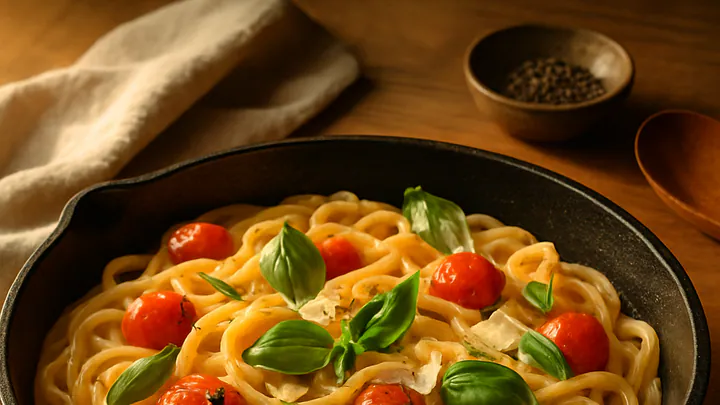
TL;DR: Cook dry pasta directly in a measured amount of liquid with your aromatics in one wide skillet. Start at 3 cups of liquid per 8 ounces of short pasta, uncovered, stirring every 60 to 90 seconds. Dinner lands in about 20 minutes with a built-in starchy sauce and one pan to wash.
One-pan pasta is a stovetop technique in which dry pasta hydrates in a controlled amount of seasoned liquid rather than a flood of boiling water, so the starch it releases stays in the pan and thickens into the sauce. That single change removes the second pot, the colander, and the timing dance between noodles and sauce.
Below is what we actually measure, what we got wrong, and the three or four rules that decide whether the pan turns out glossy or gluey.
How does one-pan pasta actually make a sauce?
Dry pasta is roughly 70 percent starch, and a measurable share of that starch leaches into the cooking liquid. In traditional cooking you throw nearly all of it down the drain and then beg for a ladle of pasta water back. In the one-pan method the starch never leaves, so as the liquid reduces it thickens into something between a broth and a cream.
That is why the ratio matters more than the recipe. Too much liquid and the starch is diluted into soup; too little and the pasta runs out of water before it is cooked through, leaving a chalky center and a scorched bottom. Everything else — the garlic, the sausage, the beans — is decoration on top of that one piece of arithmetic.
One detail worth knowing: bronze-die pasta, which has a rougher, chalkier surface than glossy Teflon-extruded pasta, sheds noticeably more starch and gives a creamier pan. If your sauce keeps coming out thin at the correct ratio, the brand of pasta is a likelier culprit than your technique.
How much liquid do I need per 8 ounces of pasta?
Three cups of liquid per 8 ounces of dry short pasta, cooked uncovered in a 12-inch skillet, is the default that has held up across our testing. Adjust from there by shape, because long strands sit in a wider footprint and small shapes hydrate faster.
| Pasta type | Liquid | Simmer time | What to watch |
|---|---|---|---|
| Short wheat (penne, rigatoni, shells) | 3 cups | 9–12 min | The most forgiving category; best place to start |
| Long wheat (spaghetti, linguine, fettuccine) | 3¼ cups | 10–12 min | Break strands or press them down as they soften; stir to stop clumping |
| Small shapes (orzo, ditalini, fregola) | 2½ cups | 7–9 min | Sticks fast; stir nearly constantly and check two minutes early |
| Whole wheat | 3¼ cups | 12–15 min | Absorbs slowly; the sauce looks thin until the last two minutes |
| Chickpea or lentil | 3 cups | 7–9 min | Foams heavily and sheds starch; pull early or it collapses |
| Gluten-free corn/rice blends | 2¾ cups | 8–10 min | Narrow window between tender and mush; taste from minute six |
Two modifiers that catch people out. First, the lid changes everything: cover the pan and you cut evaporation sharply, so subtract about half a cup of liquid from the numbers above. Second, altitude matters — above roughly 4,000 feet water boils cooler, so add two to three minutes and an extra quarter cup.
Two more adjustments. Watery vegetables such as zucchini, spinach, fresh tomatoes or mushrooms add their own liquid, so shave 2 to 3 tablespoons off. And weigh the pasta: "half a box" only works if the box is a full pound, and many are now 12 ounces.
What is the step-by-step method?
The choreography is the same every time, which is exactly why it is worth learning once instead of memorizing recipes.
- Build a base. A tablespoon of olive oil or butter over medium heat, then garlic, shallot, red pepper flakes, or a mashed anchovy for one to two minutes.
- Bloom the concentrated seasonings. Tomato paste, miso, harissa, curry paste, or dried herbs go in for 30 seconds in the fat. This step builds a depth you cannot recover by stirring them in later.
- Add liquid and pasta together. Pour in the measured liquid, bring it to a brisk simmer, then add the dry pasta and stir it under.
- Simmer uncovered, stirring often. A lively bubble, not a rolling boil. Stir every 60 to 90 seconds and scrape the pan bottom each time.
- Finish off the heat. When the pasta is just tender, kill the burner before adding cheese, cream, herbs, citrus, or a final knob of butter. Rest two minutes and the sauce tightens on its own.
That final rest is the step most people skip, and it is the difference between "this is soup" and "this is dinner." The pasta keeps absorbing for several minutes after the heat goes off.
How much salt does the liquid need?
Far less than you think, because nothing gets drained. When you boil pasta conventionally you salt the water aggressively and pour 95 percent of that salt away; here, every grain ends up on the plate. Season the cooking liquid so it tastes like a mild soup, not like the sea.
The costly mistake we made early on: using full-sodium store-bought broth, then adding canned beans, pancetta, and a shower of Pecorino at the end. The result was inedible. Our rule now is to use unsalted or low-sodium liquid whenever the dish includes cured meat, canned legumes, olives, capers, miso, or a hard finishing cheese, and to correct seasoning only after the pan comes off the heat.
As a concrete starting point, use about 1 teaspoon of kosher salt per 3 cups of unsalted liquid, and none if you are starting with commercial broth.
What does a real 20-minute run look like?
Here is the lemon, spinach, and white bean version as a timed worked example, for two generous servings.
- 0:00 — Olive oil in a 12-inch skillet over medium. Add one sliced shallot and three sliced garlic cloves.
- 2:00 — Pour in 3 cups of unsalted broth and a pinch of red pepper flakes. Raise the heat.
- 4:00 — Liquid at a brisk simmer. Add 8 ounces of shells, stir under, and set a timer for 9 minutes.
- 4:00–13:00 — Stir every 60 to 90 seconds, scraping the base. At minute 10, add one drained can of cannellini beans.
- 13:00 — Taste a shell. Just tender with no chalky core? Heat off. Stir in two big handfuls of baby spinach, the zest and juice of one lemon, and a tablespoon of butter.
- 15:00 — Rest. The spinach wilts, the sauce tightens, the lemon comes forward.
- 17:00 — Grate cheese over the top and serve straight from the pan.
Note where the lemon goes. Acid slows starch hydration, so citrus juice and large volumes of vinegar added at the start can leave pasta chalky long past the timer. Canned tomatoes are acidic enough to add a minute or two as well — build in the extra time rather than fighting it.
Which flavor blueprints are worth memorizing?
Once the method clicks, recipes become blueprints. These six cover most of what is in a normal pantry.
- Garlic, tomato, basil. Garlic and tomato paste in oil, then crushed tomatoes plus water, short pasta, torn basil and Parmesan to finish. The gateway version.
- Lemon, spinach, white bean. The worked example above; light but genuinely filling.
- Miso butter and mushroom. Brown the mushrooms hard and dry before anything else goes in, deglaze with broth, then whisk a tablespoon of white miso into butter off the heat.
- Coconut, curry, chickpea. Bloom curry paste, add coconut milk plus water, pasta, and chickpeas; finish with lime and cilantro. Coconut fat plus pasta starch makes the silkiest sauce in the rotation.
- Cacio e pepe style. Lightly salted water, heavy cracked pepper, then finely grated Pecorino Romano stirred in vigorously off the heat. Constant stirring is the only trick.
- Sausage and kale. Brown crumbled Italian sausage, add broth and pasta, fold in chopped lacinato kale for the last three minutes, finish with lemon and shaved cheese.
If you like the pattern of one vessel and no recipe, the same logic drives our no-recipe formula for sheet-pan dinners, which handles roasted vegetables and protein the way this method handles starch and sauce.
To turn any blueprint into a full dinner, add ingredients in the order they need heat. Sear chicken thighs or sausage until cooked through, set them aside, build the pasta in the same pan with the fond, and return the protein for the last 2 minutes. Broccoli, cauliflower, carrots and green beans go in with the pasta; spinach, peas and asparagus tips need only the last minute or residual heat.
Why is my one-pan pasta stuck, thin, or pasty?
Almost every failure traces to one of four causes, and each has a fix you can apply mid-cook.
- Stuck to the bottom. Heat too high or stirring too rarely. Drop to medium-low and scrape the base every 60 seconds. A thin pan makes this nearly unavoidable.
- Sauce too thin. Take the pan off the heat and wait three minutes before doing anything else. Nine times out of ten it fixes itself. If not, return to low heat and reduce for two minutes before adding cheese.
- Sauce too thick or pasty. Splash in warm liquid a tablespoon at a time. Cold liquid stalls the simmer and shocks the starch.
- Chalky centers with a dry pan. You started too hot and evaporated your budget. Add a quarter cup of hot liquid at a time and keep going; the pasta will get there.
Dairy deserves its own warning. Milk and cream added at the start will scorch on the pan bottom and can break under a long simmer. Add them in the final two minutes, or off the heat entirely. For a creamier finish without the risk, swap half a cup of the water for whole milk or unsweetened oat milk near the end.
Hard cheese needs the same care: above a fairly narrow temperature band it turns grainy and oily. Kill the heat, wait 30 to 60 seconds, then add the cheese in two additions, stirring between them; if it still turns grainy, a splash of hot water and vigorous stirring usually brings it back.
When should you not use this method?
This is where most articles go quiet. One-pan pasta is a bad choice in three situations. Delicate seafood — shrimp, clams, scallops — overcooks long before the pasta is ready and the pan liquid muddies their flavor. Dishes that depend on a firmly al dente bite, like a classic aglio e olio, lose their point when the noodle softens in a starchy bath. And large batches for a crowd break the ratio math, because absorption scales with pasta weight while evaporation scales with pan surface area.
That last one is the practical decision rule: if you are cooking more than 12 ounces of dry pasta, either move to a wider pan or cut the added liquid by roughly half a cup for each additional 8 ounces. Otherwise the pan cannot evaporate fast enough and you get soup. Our companion pieces on one-pot pasta for weeknights and building a silky one-pan sauce go deeper on scaling and finishing fats.
In numbers: 16 ounces of pasta takes about 5.5 cups of liquid rather than 6, and 24 ounces about 8 cups rather than 9. Beyond about 24 ounces, a pot of boiling water is genuinely easier. Either way, keep half a cup of hot broth by the stove.
Two ingredients also rule the method out. Fresh egg pasta cooks in two to three minutes and releases too little starch to build a sauce, and angel hair and other very thin strands overcook before the liquid reduces.
What equipment genuinely helps?
No specialty gear is required, but four things change the outcome: a 12-inch skillet, braiser, or wide sauté pan with a heavy base and a lid; a sturdy wooden spoon or silicone spatula that can scrape the pan bottom flat; a liquid measuring cup, because eyeballing the ratio is the single most common reason this method fails; and a microplane for finishing cheese, zest, or raw garlic.
Skip the nonstick if you plan to brown sausage or mushrooms first. You want the fond, and most nonstick coatings do not like sustained medium-high heat.
A quick width check: if the liquid is deeper than one inch when the pasta goes in, the pan is too narrow. If a narrow pot is all you have, cut the liquid by about a quarter cup and stir twice as often. One material caveat: unlined cast iron can react with long-simmered tomato and pick up a metallic edge.
How do I adapt it for different diets?
Chickpea and lentil pastas add protein but foam heavily and go from tender to mealy fast, so taste from minute six. Gluten-free corn and rice blends release extra starch and need slightly less liquid plus a shorter window. Whole grain adds fiber and wants a few more minutes. For a dairy-free finish, unsweetened plant milks work in the last two minutes, and nutritional yeast stands in for the salty savor of Parmesan.
If sodium is a concern, start unsalted and season at the end while tasting. If you are trying to front-load protein across the day rather than only at dinner, our guide to high-protein breakfasts for busy mornings pairs well with a bean-heavy pasta night.
This article is general culinary information. If you have food allergies, dietary restrictions, or a medical condition affected by nutrition, please consult a qualified registered dietitian or your healthcare provider before making significant dietary changes.
Key takeaways
- Default to 3 cups of liquid per 8 ounces of short pasta, uncovered, in a wide heavy pan — then adjust by shape, lid, and altitude.
- Season the liquid like a mild soup, not like pasta water; none of it gets drained away.
- Build flavor first with aromatics and bloomed pastes, then add liquid and dry pasta together.
- Add acid and dairy at the end; acid slows hydration and dairy scorches or breaks under a long simmer.
- Finish off the heat and rest two minutes — that is when a thin pan turns into a glossy one.
- Skip the method for delicate seafood, strictly al dente dishes, and batches over 12 ounces in a single skillet.
Frequently asked questions
What is one-pan pasta?
One-pan pasta is a stovetop method in which dry pasta cooks directly in a measured amount of liquid alongside aromatics, vegetables, and seasonings. The starch the pasta releases stays in the pan and thickens the liquid into a built-in sauce, so there is no separate pot of boiling water and no colander.
How much liquid do I need for one-pan pasta?
Start with 3 cups of liquid per 8 ounces of dry short pasta in an uncovered 12-inch skillet. Long shapes want about 3¼ cups, small shapes like orzo want about 2½ cups, and whole wheat wants an extra ¼ cup plus two to three minutes. If you cook with the lid on, subtract roughly ½ cup because far less liquid evaporates.
Why did my one-pan pasta turn out gummy?
Gumminess usually means the pasta cooked past tender in a pan that had already run low on liquid, or that you used a gluten-free or legume pasta that sheds more starch than wheat. Pull the pan off the heat the moment the pasta is just tender, and loosen with warm liquid a tablespoon at a time rather than letting it sit on the burner.
Can I double a one-pan pasta recipe in the same skillet?
Not with the same ratio. Absorption scales with the weight of pasta but evaporation scales with the surface area of the pan, so doubling the pasta in the same 12-inch skillet leaves you with a soupy result. Either move to a wider pan or reduce the added liquid by about half a cup for the second 8 ounces.
Does one-pan pasta taste as good as pasta boiled separately?
For saucy, comforting dishes it often tastes better, because the starch that normally goes down the drain stays in the pan and makes the sauce cling. The trade-off is texture: one-pan pasta is rarely as firmly al dente, so it is a poor fit for delicate seafood pastas or dishes where you want the noodle to stay distinct.
How do I salt one-pan pasta correctly?
Season the cooking liquid so it tastes like a mild soup, not like seawater, because none of it gets drained away. If you are using store-bought broth, cured pork, canned beans, or a salty finishing cheese, start with unsalted or low-sodium liquid and correct the seasoning off the heat at the end.
What pan works best for one-pan pasta?
A wide, heavy-bottomed pan with 2 to 3 inches of side wall and a lid: a 12-inch skillet, a braiser, or a large sauté pan. Width controls the evaporation rate and gives the pasta room to move, and a heavy base prevents the scorched spots that thin pans create.
Can I make one-pan pasta ahead of time?
It is best served within a few minutes of cooking because the pasta keeps drinking liquid as it cools. To reheat leftovers, add a splash of water, broth, or milk and warm gently over low heat while stirring until the sauce loosens back into a glossy coating.