Cybersecurity Tips for 2026: The 10 That Actually Matter
Most security advice is a list of chores with no order. This is the order: secure your email account first, move off SMS codes, then fix backups. Plus the nuance generic lists skip — SIM swapping, fake Telegram encryption, and backups ransomware can reach.
Rewritten with AI and republished automatically. Our editors set the standards and fix reported errors — how we work.

TL;DR: Secure your primary email first, because it can reset everything else. Move that account off SMS codes to an authenticator app, hardware key, or passkey. Use a password manager for the rest, keep one backup copy offline, and treat urgency in any message as the warning sign it usually is.
Personal cybersecurity is the set of everyday habits and tools an individual uses to keep accounts, devices, and data out of the hands of people who want to exploit them. It is not an IT department's job description — it is closer to locking your door, and it works the same way: a small number of correctly ordered steps stops the overwhelming majority of attempts.
The list below keeps the practical advice from our original guide and adds what generic checklists leave out: which steps come first, where the popular advice is now outdated, and what actually goes wrong for people who thought they were being careful.
What changed in cybersecurity going into 2026?
The tactics got cheaper to run, not more exotic. Generative AI removed the broken grammar and awkward formatting that used to make phishing emails easy to spot, and voice cloning made the "it's me, I'm in trouble" phone call plausible from a few seconds of public audio.
At the same time, the defenses improved. Passkeys reached mainstream support, browsers block more malicious downloads by default, and phones now run meaningful security checks on-device. The gap between a protected person and an exposed one in 2026 is mostly about account recovery paths — the side doors — rather than password strength.
If I only have 30 minutes, what should I fix first?
Do these four things in this order. The order matters more than the individual steps, because each one protects the ones below it.
- Your primary email account. Unique password, strong second factor, and check the settings for unfamiliar forwarding rules, filters, or recovery addresses. Everything else resets through here.
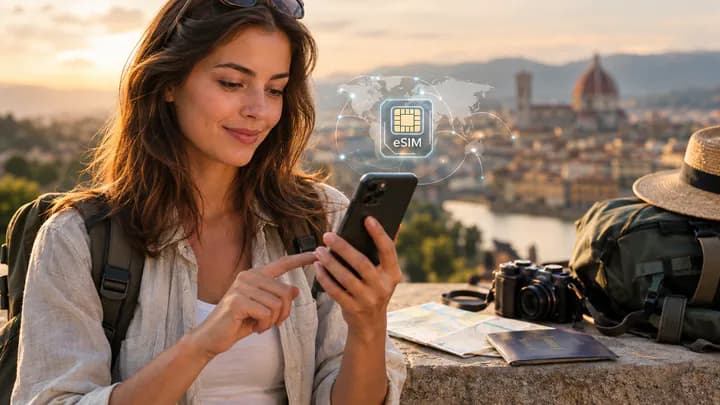
- Your phone carrier account. Add a port-out PIN or SIM-swap lock. This is the step almost nobody takes and the one that defeats the most damaging identity attack.
- Your password manager or browser vault. One long, unique master passphrase you have never used anywhere, plus a second factor. Write the passphrase on paper and store it somewhere physically safe.
- Your money. Turn on transaction alerts at your bank, and consider freezing your credit files with the three major US bureaus — Equifax, Experian, and TransUnion — which is free and reversible. This is general safety guidance, not financial advice.
Which form of two-factor authentication is worth using?
Any second factor beats none, but they are not equivalent. Phishing-resistant methods — hardware keys and passkeys — are the only ones that survive a convincing fake login page, because the credential is cryptographically bound to the real website's domain.
| Method | Resists phishing? | Main weakness | Best used for |
|---|---|---|---|
| SMS text code | No | SIM swapping, message interception | Low-value accounts with no other option |
| Email code or magic link | No | Only as strong as the email account itself | Newsletters, forums, retail logins |
| Authenticator app (TOTP) | No | Codes can be typed into a fake page | Most accounts — a solid default |
| Push approval with number matching | Partly | Approval fatigue on repeated prompts | Work accounts, cloud services |
| Passkey (device biometric) | Yes | Uneven support; recovery needs planning | Email, banking, anything critical |
| Hardware security key | Yes | Costs money; keep a spare | High-risk roles, primary email |
If you are deciding whether to make the jump away from typed secrets entirely, our explainer on how passkeys work and where they still fall short covers the recovery trade-offs in detail.
Do I still need a password manager if passkeys exist?
Yes — probably for several more years. Passkeys only help on services that support them, and a typical adult still holds dozens of logins at banks, insurers, government portals, and legacy employers that require a password.
A manager solves the real problem, which is not password complexity but password reuse. When a random shopping site is breached, reused credentials get replayed against email providers and banks within hours. Unique passwords turn one company's bad day into a single-account inconvenience.
The edge case worth knowing: a password manager's master passphrase cannot be reset for you. Some services offer an emergency contact or recovery kit — set it up on day one, not the day you forget.
How do I spot AI-generated phishing and deepfake scams?
Stop reading for typos and start reading for structure. Modern phishing is grammatically perfect, so the reliable tells are behavioral: an unexpected request, artificial time pressure, an unusual payment or credential path, and a reply channel you did not choose.
Three habits carry most of the load:
- Verify out of band. If a message asks for money, credentials, or a code, contact the person or company through a number or app you already had — never the contact details inside the message.
- Treat any code you did not request as an attack in progress. Legitimate staff never ask you to read a verification code aloud. Ever.
- Agree on a family code word. A cloned voice claiming to be a relative in trouble cannot answer a question only the real person knows.
Worked example: an email from "your bank" warns of a suspicious charge and links to a login page that looks flawless. You type your password and your app-generated code. The attacker relays both to the real bank in real time and is in. A passkey or hardware key would have refused to authenticate, because the domain did not match. That is the entire practical argument for phishing-resistant factors.
Is public Wi-Fi still dangerous, or is that outdated advice?
It is partly outdated. Because nearly all web and app traffic is encrypted with HTTPS, a stranger on the café network usually cannot read your session contents the way they could a decade ago. The classic "never bank on public Wi-Fi" warning has weakened considerably.
What remains true: a hostile network can see which domains you connect to, captive portals can push fake update prompts, and rogue hotspots with a familiar name still catch people. A VPN is a reasonable tool for untrusted networks and for hiding browsing destinations from the network operator — it is not an antivirus, and it does nothing against a phishing page you willingly log into.
This does not apply if you are on a network you control. On your own router, the bigger wins are current firmware, WPA3 where available, and a separate guest network for smart devices. If you are already replacing hardware, our guide to whether Wi-Fi 7 is worth the upgrade at home is a sensible companion read.
How should I back up data so ransomware can't reach it?
Use the 3-2-1 rule: three copies of anything you cannot recreate, on two different kinds of storage, with at least one copy offline or otherwise unreachable from your everyday machine. Ransomware encrypts whatever your computer can write to, and that includes a permanently connected external drive and a synced cloud folder.
Practical version for a household:
- Continuous cloud sync for working files, with version history enabled so you can roll back encrypted copies.
- A weekly image or file backup to an external drive that you unplug when it finishes.
- An annual archive copy of irreplaceable material — photos, records, tax documents — stored at a different address.
The mistake that ruins backups: never testing a restore. Once a year, recover a handful of files and confirm they open. A backup you have never restored from is a hypothesis, not a safety net.
Which messaging apps are actually end-to-end encrypted?
Signal and WhatsApp encrypt personal and group messages end-to-end by default. Telegram does not — its ordinary cloud chats are encrypted in transit and at rest on Telegram's servers, and only manually enabled Secret Chats are end-to-end encrypted, on one device at a time.
Apple's iMessage and Google's RCS implementations offer end-to-end encryption between supported devices, but conversations that fall back to SMS do not. The general rule: if the chat history appears instantly on a brand-new device after you log in, it is being stored somewhere you do not control.
Metadata matters too. Encryption protects content, not necessarily who you contacted or when, which is one reason privacy-minded readers are increasingly interested in what on-device AI means for the data leaving your phone and in running models locally rather than in the cloud.
What are the mistakes careful people still make?
These are the failures we see in people who already consider themselves security-conscious.
- Recovery codes saved in the same place as everything else. Storing backup codes in the email account they unlock, or in the vault they exist to recover, defeats the point. Print them.
- A strong password on the bank, a reused one on the old forum. Attackers start with the forum.
- Ignoring browser extension permissions. An extension with "read and change all your data on all websites" can see everything you type, including codes, and extensions change owners quietly.
- Leaving old accounts alive. Dormant logins at defunct services are breach material with your reused password and security answers attached. Delete rather than abandon.
- No SIM lock. Every other step assumes your phone number is yours.
What should I do in the first hour after a compromise?
Work from a clean device if you can, and go in this order: change the password, then revoke all active sessions and connected third-party apps, then regenerate recovery codes, then audit account settings for added forwarding rules, recovery emails, or phone numbers. Attackers routinely leave a side door behind after a password change.
Next, contact the provider's official support through their site, notify your bank if payment details were exposed, and warn anyone the attacker may have messaged in your name. If money moved, document timestamps and amounts immediately — recovery windows are short, and an emergency cash cushion makes the aftermath far less painful. For anything involving legal exposure or business data, consult a qualified professional rather than improvising.
Key takeaways
- Order beats effort: email account, then carrier SIM lock, then password manager, then financial alerts.
- Only passkeys and hardware keys survive a convincing fake login page — app codes can still be relayed by an attacker.
- Unique passwords matter more than complex ones, because credential reuse is how one breach becomes five.
- A backup that stays plugged in is a backup ransomware can encrypt; keep one copy offline and test a restore annually.
- Telegram's default chats are not end-to-end encrypted; Signal and WhatsApp are.
- Verify every urgent request through a channel you chose yourself, and never read a verification code to anyone.
Frequently asked questions
What is the single most important cybersecurity step I can take?
Lock down your primary email account with a unique password and app-based or hardware-based two-factor authentication. Email is the recovery channel for almost every other account you own, so an attacker who controls it can reset your bank, cloud storage, and social logins regardless of how strong those passwords are.
Is SMS two-factor authentication still safe in 2026?
SMS two-factor authentication is far better than nothing but is the weakest mainstream option, because text codes can be intercepted through SIM swapping — where an attacker convinces your mobile carrier to move your number to their device. Use an authenticator app or a hardware security key for email, banking, and any account that controls other accounts.
Do passkeys replace password managers?
Not yet. Passkeys replace passwords on the services that support them, but plenty of banks, utilities, employers, and older platforms still require a password, so you need a manager for the remainder. Most password managers now store passkeys alongside passwords, so you can run both from one vault.
Do I really need a VPN on public Wi-Fi?
Less than you used to. Nearly all traffic is now encrypted by HTTPS, so a café network can rarely read the contents of your sessions. A VPN still helps on genuinely untrusted networks and hides which sites you visit from the network operator, but it does nothing against phishing, malware, or a weak password.
How often should I back up my data?
Follow the 3-2-1 rule: three copies, on two different types of media, with one kept offline or otherwise out of reach of your everyday computer. Daily automated backups are right for active work files; weekly is usually enough for photo archives and personal documents.
What should I do immediately if an account is hacked?
Change the password from a different, trusted device, revoke active sessions and connected apps, regenerate your recovery codes, and check whether a forwarding rule or recovery email was added. Then work outward to any account that used the same password or that account as its recovery address.
Are WhatsApp, Signal, and Telegram equally private?
No. Signal and WhatsApp encrypt one-to-one and group chats end-to-end by default, while Telegram's standard cloud chats are not end-to-end encrypted — only its manually enabled Secret Chats are, and those are device-specific.