How to Master Street Style Outfits Without Copying Anyone
Street style isn't a shopping list — it's a set of decisions about proportion, contrast and repetition. Here's the volume rule, the hem-break rule, where to spend versus save, and the mistakes that quietly flatten an otherwise good outfit.
Rewritten with AI and republished automatically. Our editors set the standards and fix reported errors — how we work.

TL;DR: Street style is decision-making, not shopping. Keep volume in one place, choose one loud piece per outfit, match your hem to your sneaker's sole height, and repeat a small set of well-fitting basics. The clothes can be thrifted, cheap or borrowed — the proportions are what read as intentional.
What is street style, and how is it different from streetwear?
Street style is an approach to dressing that builds outfits from everyday urban clothing — sneakers, denim, outerwear, workwear and sportswear — through personal styling choices rather than head-to-toe brand looks. Streetwear is a category of product; street style is what you do with it.
The distinction matters because it changes what you buy. Streetwear thinking asks "which hoodie is everyone wearing?" Street style thinking asks "what does this hoodie need next to it to look considered?" The second question is cheaper to answer and ages far better.
Historically the look grew from documentation rather than design: photographers shooting real people outside shows, in Harajuku, in Copenhagen, on New York sidewalks — Bill Cunningham's decades of bicycle-borne street photography being the most famous example. What made those pictures interesting was never the price tag. It was someone solving a dressing problem in an unexpected way.
How do you build a street style outfit from scratch?
Start with the shoe and the pant, then layer upward. Those two items set the entire silhouette, and every other decision — jacket length, top volume, bag size — either supports that line or fights it.
A reliable build order:
- Pick the pant. Wide, straight or tapered. This is the outfit's spine.
- Match the shoe to the hem. Chunky soles need a hem that stops at or above the sole's top edge; slim low-tops can take a longer, stacked hem.
- Choose the top for contrast. Volume below means restraint above, and vice versa.
- Add one outer layer. Length should either stop above the hip or run well past it — hitting exactly mid-hip tends to cut the body awkwardly.
- Add up to three small details. A cap, a chain, a bag. Stop there.
If you're rebuilding a wardrobe rather than styling one outfit, the same logic scales up. Our guide to building a 30-piece capsule wardrobe is a useful structural backbone; street style is what happens when you add two or three personality pieces on top of that base.
What does the high-low mix really mean, and where should you spend?
The high-low mix means pairing one considered, well-made item with several inexpensive ones — not splitting your budget evenly across everything. Spend where fit, structure and wear show; save where the item is essentially a color or a shape.
| Item | Spend or save | Why |
|---|---|---|
| Outerwear (trench, chore coat, parka) | Spend | It's the first thing seen, it carries the silhouette, and construction quality is visible at the shoulder and hem. |
| Denim | Spend — or buy secondhand | Heavier weights hold their shape; vintage pairs are often better made than new budget denim at the same price. |
| Sneakers | Middle | Silhouette matters more than price, but cheap foam breaks down and a collapsed shoe ruins the line. |
| T-shirts and tanks | Save, but buy several | They're consumable. Replace when the neckline warps rather than trying to buy one perfect tee. |
| Knitwear | Spend selectively | Fiber content is the whole product. Merino and cotton-rich knits pill less and drape better than acrylic. |
| Caps, chains, sunglasses | Save | These rotate with your mood. Cheap is fine as long as the metal doesn't discolor. |
| Bag | Middle to spend | Daily use, visible wear, and a structured bag instantly raises the perceived quality of everything else. |
A useful decision rule: if the item touches weather, weight or the floor, it deserves money. If it's a print or a color you'll get bored of by spring, it doesn't. The same logic underpins the case we make for building a timeless wardrobe around quality over logos — street style borrows that discipline and then breaks it once, on purpose, per outfit.
How do you play with proportions without looking sloppy?
Keep volume in one place. Wide pants pair with a fitted or lightly boxy top; an oversized jacket pairs with a slimmer bottom half or a cropped hem. Two large volumes stacked read as "clothes wearing you" rather than a deliberate silhouette.
When you do want volume everywhere — the intentionally engulfed look — you need one defined point so the eye can locate your frame. A front tuck, a visible belt, a rolled sleeve, or an exposed ankle all do this job.
| Bottom half | Top half | Shoe | Why it works |
|---|---|---|---|
| Wide-leg or baggy jeans | Fitted knit, tank, or boxy tee | Low-profile sneaker or loafer | The hem covers most of the shoe, so the leg reads as one long line. |
| Tapered cargo or track pant | Oversized jacket or hoodie | Chunky trainer or boot | Narrow ankle gives the bulky shoe room to be the punctuation mark. |
| Straight-leg trouser | Graphic tee under structured blazer | Leather sneaker | Tailoring plus casual is the most office-survivable version of the look. |
| Long skirt or wide short | Cropped or tucked top | Sock-and-sneaker or tall boot | A visible waistline stops the vertical fabric from swallowing the figure. |
One more specific rule that people rarely say out loud: the hem break. If your pants stack in heavy folds over a chunky sneaker, you lose both the shoe and the ankle, and the outfit gets shorter and heavier. Either hem the pant so it grazes the top of the sole, or commit to full coverage — the in-between puddle is where most outfits go wrong. If you're shopping for the pant that fixes this, our rundown of denim shapes worth buying now covers which cuts actually hold a hem.
Which accessories actually improve an outfit — and how many is too many?
Three small additions is the working ceiling for most outfits: for example a cap, a chain and a bag, or sunglasses, a watch and a belt. Beyond three, individual pieces stop registering and the look reads as busy rather than layered.
Accessories earn their place when they do one of three jobs:
- Repeat a color already in the outfit, which makes the whole thing look planned.
- Break a large block — a belt across an all-black fit, a crossbody strap over a long coat.
- Add the only warmth or shine in an otherwise matte outfit.
An honest caveat: layered chains and stacked rings photograph better than they live. If you commute, type all day, or handle children, one piece you never take off will look more natural than four you keep adjusting.
What are the most common and costly street style mistakes?
The expensive mistake is buying statement pieces before basics. A wardrobe of seven memorable items and no neutral foundations produces an outfit you can wear once a month and photograph once, ever. Statement pieces need a quiet supporting cast.
Others we see constantly:
- The head-to-toe new fit. Everything crisp, everything unworn, nothing broken in. Street style depends on a sense that the clothes belong to you. Mixing in one worn item — old denim, a scuffed jacket — fixes it instantly.
- Ignoring the sock. A thin dress sock under a chunky sneaker is a mismatch you can see from across the street. Match sock weight to shoe weight.
- Buying the runway version of a trend. Runway proportions are exaggerated for a raised platform under strong light. The wearable version is usually one size less extreme.
- Shopping the algorithm. If you buy only what a feed shows you, you will own the same six items as everyone else and wonder why the look feels flat.
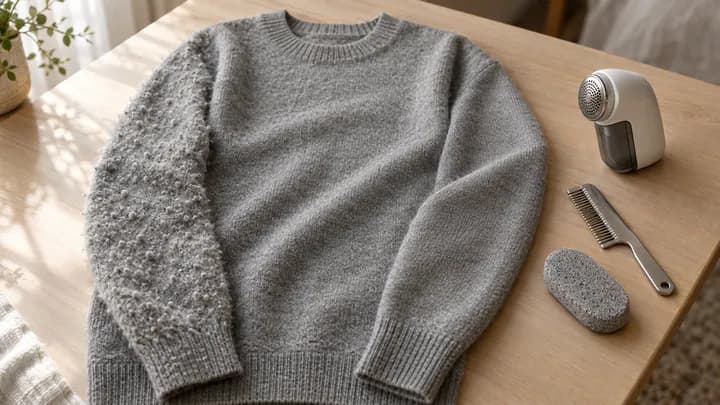
- Skipping maintenance. Cleaning sneaker midsoles, de-pilling knits and steaming outerwear does more for how you look than a new purchase.
A quick verification trick: take a full-length photo before you leave. A camera flattens the outfit into shapes and shows proportion errors your mirror hides, because in the mirror your eye keeps compensating for movement.
Does street style work if you're older, taller, shorter, or bound by a dress code?
It adapts, but not without edits — and it's fair to say some versions genuinely don't translate. Heavy logo pieces and extreme Y2K proportions are the hardest to carry outside their original context; texture, outerwear and footwear are the easiest.
- Shorter frames: volume works, but keep it to one half and raise the waistline. A cropped jacket over wide pants preserves leg length; a long coat over wide pants often erases it.
- Taller frames: you can carry longline coats and stacked hems that would swamp others. Watch sleeve and inseam length — a hair too short reads as accidental.
- Over 40: swap graphics for texture. Suede, waxed cotton, corduroy and heavyweight knit carry the same visual interest without the costume risk.
- Strict dress codes: keep the proportions, drop the materials. Relaxed-shoulder tailoring, a knit polo, a minimal leather sneaker if permitted, a heavier trouser.
- Cold climates: the outfit is the coat. Build around one strong outer layer and treat everything beneath it as a system, not a look.
How do you make street style sustainable without losing the edge?
Buy secondhand for the categories that age well — denim, leather, workwear, outerwear, wool knits — and new for the categories that don't, like tees, socks and anything with elastic. This is also the cheapest path to originality, because thrift and resale inventory is by definition not what everyone else just bought.
Practical habits that hold up:
- Set a simple rule such as one in, one out, so the closet stays shoppable.
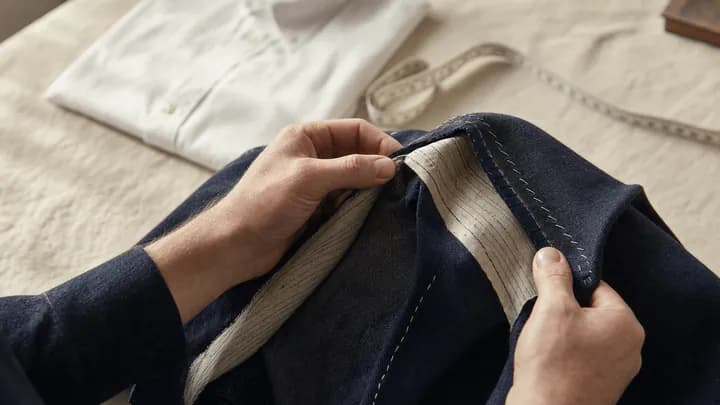
- Learn two repairs: replacing a button and patching a knee. Both extend a garment's life by years.
- Check fiber content before price. Cotton, wool, linen and leather wear in; cheap synthetics wear out.
- Wash denim less and air it more. Shape lasts longer.
If a spending plan is part of the problem, treating clothing as a scheduled category rather than an impulse helps — a sinking fund works as well for a winter coat as it does for a car repair. Nothing here is financial advice; it's just a way to stop a wardrobe from being funded by surprise.
How do you find your own look instead of copying one?
Pick a uniform and then vary it. Nearly every person whose style you admire is wearing a slight variation of the same outfit repeatedly — the same pant shape, the same shoe family, the same three colors — with one rotating element on top.
A workable exercise: save fifteen images of outfits you like, then list what they share. Not the brands — the shapes. You'll usually find a pattern, often something like "wide pants, short jacket, flat shoe, no pattern." That pattern is your uniform. Build it properly, then break it once a week with a single unexpected item.
Confidence is genuinely part of this, but it's not mystical. It comes from repetition: wearing an outfit for the fourth time, knowing it fits, knowing it survives the bus and the coffee run. Novelty makes people self-conscious. Familiarity makes them look easy. If you're rebuilding from the ground up, our piece on building a closet you actually reach for covers how to get to that repeatable core.
Key takeaways
- Volume in one place at a time, with one defined edge — waist, ankle or sleeve — so your frame stays readable.
- Set the shoe and pant first; match the hem to the sole height instead of letting fabric puddle.
- One loud piece per outfit, up to three small accessories, and let neutrals do the rest.
- Spend on outerwear, denim and knitwear; save on tees, caps and jewelry you'll rotate out.
- Buy secondhand in the categories that age well — it's simultaneously the cheapest and the most original route.
- Photograph the outfit before you leave; the camera catches proportion problems your mirror forgives.
Frequently asked questions
What exactly counts as a street style outfit?
A street style outfit is an everyday look built from urban staples — sneakers, denim, outerwear, workwear and sportswear — assembled through personal styling choices rather than bought as a head-to-toe designer look. The defining feature is contrast: something relaxed against something structured, something cheap against something considered.
Do I need expensive sneakers to pull off street style?
No. Clean, well-maintained sneakers in a silhouette that suits your pants beat expensive sneakers that are scuffed or the wrong shape. Sole height and toe bulk matter far more than the logo — a slim low-top disappears under a wide hem, while a chunky trainer needs a shorter or tapered leg to stay visible.
How do I wear oversized clothes without looking sloppy?
Keep volume in one place at a time. Wide leg pants pair with a fitted or lightly boxy top; an oversized jacket pairs with a slimmer or cropped bottom half. When both halves are voluminous, define one edge — tuck the front of the shirt, cinch a belt, or push the sleeves up — so the eye can find your frame.
Does street style work if I have an office dress code?
Partly. If your workplace requires tailoring or closed leather shoes, street style translates as texture and proportion rather than graphics and sneakers — a relaxed-shoulder blazer, a heavier trouser, a knit polo, a leather sneaker in a minimal shape. Loud logo pieces and technical outerwear usually don't survive a conservative dress code intact.
How much does it cost to start dressing this way?
Most people can assemble a workable core — one jacket, two pants, three tops, one sneaker, one bag — for a few hundred dollars if secondhand denim and outerwear are part of the plan. The expensive route is buying a new trend piece each month while the base layer of the wardrobe stays thin.
What's the most common street style mistake?
Wearing three statement pieces at once. A patterned pant, a logo jacket and a bright sneaker compete rather than combine. Choose one loud element per outfit and let neutrals, texture and fit carry the rest.
How do I know if an outfit actually works?
Photograph it in a full-length mirror before you leave. A photo flattens the outfit into shapes and reveals proportion problems — a hem hitting the wrong point, a jacket that swallows your shoulders — that a live mirror hides because your eye keeps correcting for movement.