Virtual Healthcare Specialist: The Role Reshaping Medicine
A virtual healthcare specialist is a licensed clinician who delivers diagnosis, treatment and monitoring through digital channels. Here is what the role actually involves, which visits work over video, which don't, and the rules that quietly govern all of it.
Rewritten with AI and republished automatically. Our editors set the standards and fix reported errors — how we work.

TL;DR: A virtual healthcare specialist is a licensed clinician who diagnoses, treats and monitors patients through video, messaging and connected devices. The role works extremely well for follow-ups, chronic disease management and mental health, poorly for anything needing hands or labs, and is governed by state licensure and prescribing rules most patients never hear about.
What exactly is a virtual healthcare specialist?
A virtual healthcare specialist is a licensed clinician whose primary mode of practice is remote: video consultations, secure messaging, phone visits and data from connected devices, rather than a physical exam room. The license, scope of practice and malpractice exposure are identical to in-person care. Only the channel is different.
In job listings the title overlaps with telemedicine practitioner, telehealth clinician and virtual care provider. The people filling these roles include family physicians, nurse practitioners, physician assistants, psychiatrists, dermatologists, endocrinologists, therapists, dietitians and clinical pharmacists. What distinguishes the modern version of the role from "a doctor on a video call" is the surrounding system: triage protocols, remote monitoring dashboards, asynchronous review queues and escalation rules that decide when a patient must be sent to a physical building.
What does a telemedicine practitioner actually do in a day?
Less of the day is spent on live video than most people assume. A typical schedule mixes synchronous visits with asynchronous work — reviewing submitted photos, blood pressure logs, glucose trends, lab results and patient messages, then acting on them without a live appointment at all.
A realistic block might look like this:
- Synchronous visits: 10–20 minute video appointments, usually follow-ups, medication adjustments, results discussions and behavioral health sessions.
- Asynchronous review: store-and-forward dermatology images, wound photos, home blood pressure readings, symptom questionnaires.
- Remote patient monitoring: reviewing flagged readings from connected cuffs, glucometers, pulse oximeters and cardiac monitors, and deciding which flags are noise.
- Coordination: ordering labs at a local draw site, arranging imaging, referring to an in-person colleague, closing the loop on what was ordered.
That last bullet is the part outsiders underestimate. A good virtual clinician is judged largely on how reliably they hand patients off to physical care when the screen runs out of usefulness.
Which conditions work well over video — and which don't?
Video works when the diagnosis lives mostly in the history, the visible surface, or a trend line of numbers. It fails when the diagnosis lives in touch, auscultation, internal examination or same-day labs. The shorthand: if the answer changes depending on what a physical exam finds, book the physical exam.
| Presentation | Virtual suitability | Why |
|---|---|---|
| Medication follow-up, chronic disease review | Strong | History plus home readings carry the decision |
| Therapy, counseling, psychiatry | Strong | The conversation is the intervention |
| Rash, wound check, post-op incision | Good with decent photos | Visual surface findings transmit well |
| Sore throat, sinus symptoms, UTI symptoms | Mixed | Often resolvable; sometimes needs a swab or dipstick |
| Abdominal pain, joint injury, new lump | Poor | Palpation and range-of-motion testing are decisive |
| Chest pain, breathlessness, neurological change | Not appropriate | Time-critical; needs in-person or emergency assessment |
None of this is a substitute for clinical judgment about your own situation. If you are unsure which column you fall into, describe the symptom to a qualified professional and let the triage step decide.
What technology does virtual care actually run on?
Four layers, and each one has a failure mode. The platform layer handles scheduling, video and documentation, and must meet privacy standards such as HIPAA in the US. The device layer contributes objective data — validated blood pressure cuffs, glucometers, pulse oximeters, smart scales, ECG patches. The analytics layer flags outliers. The connectivity layer decides whether any of it arrives.
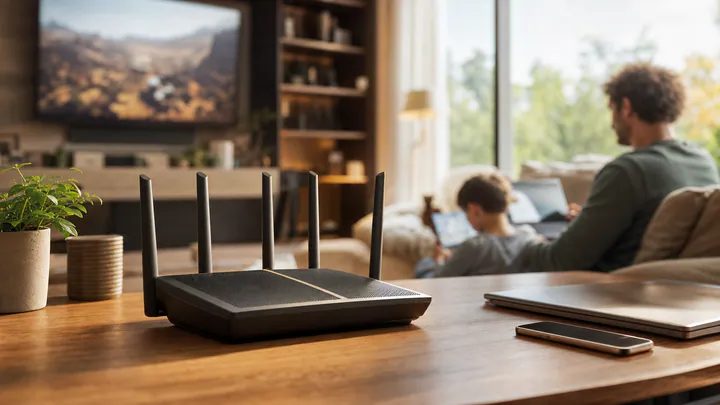
That last layer is unglamorous and decisive. A consultation that freezes mid-sentence costs clinical accuracy, not just patience. If your household regularly drops video, it is worth reading our guide on whether a Wi-Fi 7 router upgrade is worth it before you blame the clinic's app. Positioning the call near the router, hard-wiring where possible, and closing background uploads all help more than buying new hardware.
On the analytics side, the interesting shift is where the model runs. Processing symptom images or voice notes on the handset rather than in the cloud reduces how much identifiable data travels — a genuine privacy argument, and one we unpack in our explainers on what on-device AI means for you and running AI models locally. Assistive tools can draft notes and surface patterns; they do not carry clinical responsibility, and any clinic implying otherwise deserves scrutiny.
Account security matters too, because a patient portal holds a complete medical history. Reused passwords are the weak point in almost every health data breach story, which is why phishing-resistant sign-in — see our primer on how passkeys replace passwords — is worth enabling the moment your provider offers it.
How much does a virtual visit cost and what does insurance cover?
Costs fall into tiers rather than a single number. Direct-to-consumer urgent care visits are the cheapest and are often a flat cash price. Insurer-sponsored virtual primary care usually carries a reduced copay or none at all. Virtual specialist consults, psychiatry and ongoing therapy sit at the top, and subscription-based chronic care programs add a monthly fee on top of visit charges.
Two details cause most billing surprises. First, audio-only visits are not always reimbursed the same way as video visits — if your camera fails and the clinician continues by phone, coverage can change. Second, a virtual visit that ends in "you need to be seen in person" may still be billable, meaning you pay twice for one problem. Ask the clinic up front how they handle an escalation on the same day; many waive the virtual fee, and the ones that do are worth choosing.
This is general information, not personalized insurance or medical advice. Verify your own plan's cost share before booking.
What licensing and credentials does a telemedicine career require?
The governing rule in the US is that the clinician must generally be licensed in the state where the patient is physically located at the time of the visit — not where the clinician sits. This single sentence shapes the entire career. Clinicians who want national reach end up maintaining licenses in many states, with the renewal fees, CME rules and administrative load that implies. The Interstate Medical Licensure Compact streamlines obtaining multiple licenses for eligible physicians but does not create one universal license.
Prescribing adds a second layer. Routine medications are straightforward. Controlled substances are governed separately and more strictly, and the requirements around prescribing them without a prior in-person evaluation have been revised repeatedly in recent years. Anyone building a practice — or a treatment plan — around remote prescribing of controlled medication should confirm the current rule rather than rely on what was true last year.
Beyond licensure, the skills that separate strong virtual clinicians from adequate ones are unglamorous: structured history-taking without physical cues, webside manner, documentation speed, comfort with escalation, and the discipline to say "I cannot assess this safely on camera."
Where does virtual care fail, and what mistakes cost the most?
Three failures come up again and again.
The state-line trap
A patient books a follow-up, then takes the call from a hotel one state over. The clinician is not licensed there, and the appointment is canceled at the start — or worse, proceeds and creates a regulatory problem. Always tell the clinic where you will physically be, not where you live.
The uncalibrated home device
Remote monitoring is only as good as the measurement. Wrist blood pressure cuffs used incorrectly, unvalidated cheap devices, and readings taken immediately after coffee or a stair climb all produce numbers that lead to real medication changes. Use an upper-arm cuff from a validated list, sit still for five minutes first, and bring the device to one in-person visit a year to check it against the clinic's.
Treating the screen as a triage bypass
The most costly mistake is using a video visit to delay an assessment that needed to be physical. Virtual care shortens the path to advice; it does not shorten the path to an examination. When a clinician recommends an in-person visit, that recommendation is the product you paid for.
There is also an honest limitation: this whole model does not apply well to patients without reliable broadband, without a private room to speak from, or with sensory or cognitive impairments that make screen-based interaction harder. Telehealth widens access for many and narrows it for some.
How do you prepare so a virtual appointment isn't wasted?
A worked example. Say you are managing hypertension remotely. The visits that go well look like this: two weeks of twice-daily readings from a validated upper-arm cuff, logged with times; a current, accurate medication list including supplements; a written list of your top two questions; good front-and-side lighting; a wired or strong connection; and a quiet room where you can speak candidly.
The visits that go badly involve a phone held at chest height in a moving car, a vague recollection of "the white pill," and readings from a cuff nobody has checked. Same clinician, same fifteen minutes, completely different clinical value.
The same principle applies to wearable data. Sleep and activity trends from a watch are useful as context, not diagnosis. Bring the pattern, not the screenshot of your worst night.
Key takeaways
- A virtual healthcare specialist is a fully licensed clinician practicing through digital channels — the scope of practice is unchanged, only the delivery is.
- The decision rule that matters: if the answer depends on a physical exam, book the physical exam. Video excels at history, visible findings and trend data.
- Licensure follows the patient's physical location, so travel can invalidate an appointment; controlled-substance prescribing rules are separate and change frequently.
- Remote monitoring is only as reliable as the device — validated upper-arm cuffs, correct technique and an annual calibration check against clinic equipment.
- Ask before booking whether a same-day escalation to in-person care means paying twice; the best clinics waive it.
- Hybrid, not fully virtual, is where most sustainable care is settling. For anything about your own health, consult a qualified professional who knows your history.
Frequently asked questions
What is a virtual healthcare specialist?
A virtual healthcare specialist is a licensed clinician — physician, nurse practitioner, physician assistant, therapist or pharmacist — who diagnoses, treats and monitors patients through video, phone, secure messaging and connected devices rather than primarily in an exam room. The license and scope of practice are the same as in-person care; only the delivery channel changes.
Is a telemedicine practitioner the same as a virtual healthcare specialist?
Yes, in everyday use the two terms describe the same role. "Telemedicine practitioner" is the older clinical term, while "virtual healthcare specialist" is more common in job listings and tends to imply extra responsibility for remote monitoring programs, triage protocols and platform workflows.
Which medical problems should not be handled by video?
Anything that depends on touching, listening to, or looking inside the body should be seen in person: chest pain, severe abdominal pain, suspected fractures, new neurological symptoms, significant shortness of breath, heavy bleeding, or a lump that needs palpation. A useful rule is that if the answer changes depending on what a physical exam finds, book the exam.
Can a telehealth doctor prescribe medication?
Yes for most routine prescriptions, but controlled substances are governed separately and more tightly. Rules around prescribing controlled medications without a prior in-person evaluation have changed repeatedly in recent years, so confirm the current requirement with the clinic before you build a treatment plan around it.
Does my doctor need a license in my state to see me online?
In the United States, the clinician generally must be licensed in the state where the patient is physically located at the time of the visit, not where the clinic is based. That means traveling across a state line can cancel or restrict an appointment, so tell the clinic where you will actually be.
How much does a virtual visit usually cost?
Direct-to-consumer urgent care visits are typically the cheapest tier, insurer-run virtual primary care sits in the middle, and virtual specialist or therapy appointments cost the most. Coverage varies widely by plan and by whether the visit is video or audio-only, so verify your cost share before booking rather than after.
Is telehealth a good career move for a clinician?
It can be, particularly for primary care, psychiatry, dermatology, endocrinology and behavioral health, where a large share of work is history-taking and follow-up. The tradeoffs are multi-state licensing costs, higher documentation volume, and reduced procedural practice, so clinicians who want to keep hands-on skills usually choose a hybrid schedule.