Leftover Food Safety: How Long It Really Keeps in 2026
A practical guide to how long leftovers keep in the fridge and freezer, why the 2-hour rule matters more than the smell test, and how to cool, label, and reheat food safely.

TL;DR: Cooked leftovers keep three to four days in a fridge at 40°F or below, and stay safe indefinitely at 0°F in the freezer (though quality drops after a few months). What actually makes people sick is usually slow cooling, not an expired container — get food chilled within two hours, label it, and reheat to 165°F.
Leftover food storage is the practice of cooling, refrigerating or freezing, and reheating already-cooked food so it stays both safe to eat and worth eating. It sounds trivial, and it's the single most common place home cooks quietly gamble. Our team has watched more perfectly good meals thrown out on day three out of vague fear — and more genuinely risky pots of chili left on the stove overnight — than any other kitchen habit.
This guide covers the real numbers, the reasoning behind them, and the handful of edge cases where the standard rules don't apply.
How long do leftovers actually keep in the fridge?
Three to four days, in a refrigerator running at 40°F or colder. That's the guideline used across US food safety guidance, and it applies to the vast majority of cooked dishes: roast chicken, chili, pasta, curries, cooked grains, casseroles, stir-fries.
The limit isn't arbitrary. Refrigeration slows bacterial growth dramatically, but it doesn't stop it. Cold-tolerant organisms keep multiplying slowly at 38°F, and after roughly four days the population in a container of cooked food can climb toward levels that cause illness — with no reliable warning signs.
Two things quietly break this rule in real kitchens:
- Your fridge may not be at 40°F. Door bins and the top shelf of a crowded fridge often sit several degrees warmer. A $10 appliance thermometer on the middle shelf is the cheapest food safety upgrade available.
- The clock starts at cooking, not at storing. If a pot sat on the counter for three hours before going in, you've already spent a chunk of the food's safe life.
Why is the two-hour rule the part people get wrong?
Because it's cumulative, and because it overrides everything else. Food held between about 40°F and 140°F — the temperature danger zone — should spend no more than two hours total there before it's discarded. In hot conditions above 90°F, such as a picnic table or a car, the limit drops to one hour.
That two hours is a running total across the food's whole life: time cooling on the counter, time on the buffet, time in a bag on the commute home, time sitting out while you eat a second helping. Bacteria in that range can double every 20 minutes or so under good conditions.
Here is the part that surprises people most: reheating does not undo it. Staphylococcus aureus and Bacillus cereus can produce toxins that are heat-stable. Boiling the food kills the bacteria and leaves the toxin behind. This is why "I'll just boil it hard tomorrow" is not a rescue plan for a stew that sat out all night.
How long does each common leftover last?
Storage life varies more by food type than most people expect. Cooked seafood and rice are shorter-lived in practice than a dense braise; cured deli meat behaves differently again. The table below covers the items we get asked about most.
| Food | Refrigerator | Freezer (for quality) |
|---|---|---|
| Cooked poultry, meat, casseroles | 3–4 days | 2–6 months |
| Soups, stews, chili | 3–4 days | 2–3 months |
| Cooked rice, pasta, grains | 3–4 days | 1–2 months |
| Cooked fish and shellfish | 3 days | 2–3 months |
| Gravy and meat broth | 1–2 days | 2–3 months |
| Opened deli meat / packaged lunch meat | 3–5 days | 1–2 months |
| Hard-boiled eggs, in shell | 1 week | Not recommended |
| Cut melon and other cut fruit | 3–4 days | Varies (texture suffers) |
| Cooked beans and lentils | 3–4 days | 2–3 months |
| Dressed salads with mayonnaise | 3–4 days | Not recommended |
Freezer times are about quality, not safety. Food kept continuously at 0°F stays safe indefinitely; what degrades is texture, color, and flavor through moisture loss and oxidation. Freezer burn is unappealing, not dangerous.
Does freezing reset the clock?
It pauses the clock rather than resetting it. Freezing suspends bacterial growth; it does not kill bacteria or destroy toxins already present. So freezing food on day four of its fridge life buys you nothing in safety terms — it simply preserves a food that's already at the end of its window.
Our working rule: if you already know you won't finish it in two days, freeze it on day one. Portion into single servings, flatten in freezer bags so they thaw in minutes, and label with the contents and the date. Undated frozen containers are how freezers turn into archaeology.
Thaw in the refrigerator, in cold running water, or in the microwave — never on the counter, where the outer surface climbs into the danger zone long before the center softens. Food thawed in the fridge can be safely refrozen; food thawed in water or the microwave should be cooked first.
Why can't you trust the smell test?
Because spoilage and pathogens are two different processes. The organisms that make food smell sour, look slimy, or grow fuzz are mostly spoilage bacteria and molds — unpleasant but often harmless. The organisms that cause serious illness, including Listeria and Salmonella, frequently produce no odor, no discoloration, and no change in texture at all.
So a container that smells fine on day seven is not evidence of safety. It's evidence that the spoilage bacteria haven't won yet. Trust the date on the lid, not your nose. Conversely, food that smells off is a clear discard regardless of the date.
What's the safest way to cool and store a big batch?
Speed is everything. Getting food from 140°F down through the danger zone quickly is more protective than any storage container. A gallon of hot soup left in its stockpot can take six hours or more to reach a safe temperature in the fridge — well past the two-hour limit at the center.
- Divide immediately. Move food into shallow containers no more than about two inches deep. Surface area is what chills food, not refrigeration power.
- Don't wait for it to cool down first. Put it in the fridge hot, with the lid ajar or loosely set on top, and seal once it's cold.
- Use an ice bath for large volumes. Set the pot in a sink of ice water and stir. Ten minutes of stirring beats an hour of sitting.
- Cut big roasts into smaller pieces. A whole braised shoulder holds heat for hours; three chunks don't.
- Leave airflow around containers. Stacking hot containers in a wall creates an insulated pocket that stays warm.
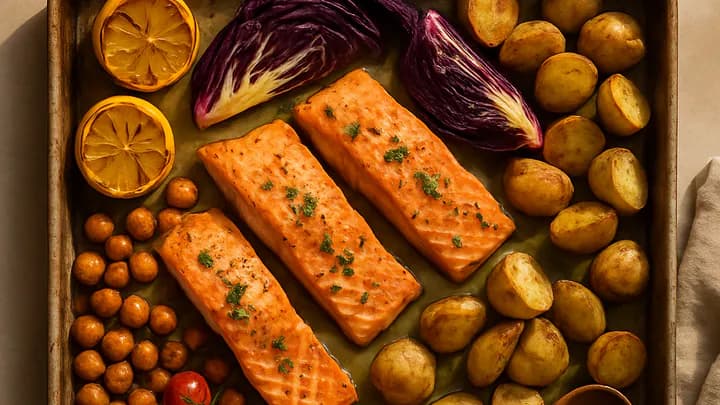
This is also where meal prep goes wrong most often. If you batch-cook on Sunday, the cooling step is the weak link — five hot containers stacked on one shelf can leave the middle one in the danger zone for hours. When we build a week of sheet-pan dinners using a no-recipe formula, we spread the trays out to cool for ten minutes, portion into shallow glass, and refrigerate in a single layer before restacking the next morning.
How should you reheat leftovers so they're safe and still good?
Reheat to an internal temperature of 165°F, verified with an instant-read thermometer in the thickest part. Bring liquids — soups, sauces, gravies — to a full rolling boil rather than just steaming hot.
Microwaves heat unevenly, so cover the food to trap steam, stop halfway to stir or rotate, and let it stand a minute so the temperature evens out. Cold pockets in the center of a dense casserole are the usual failure.
Reheat only the portion you plan to eat. Every trip from fridge to hot and back again spends more time in the danger zone and costs texture. Pull one serving from the big container rather than reheating the whole thing twice.
How to reheat without ruining the texture
- Rice and grains: add a splash of water, cover, steam. Dry heat turns them to gravel.
- Roasted vegetables and fries: hot dry heat in an oven, air fryer, or skillet. Never a microwave.
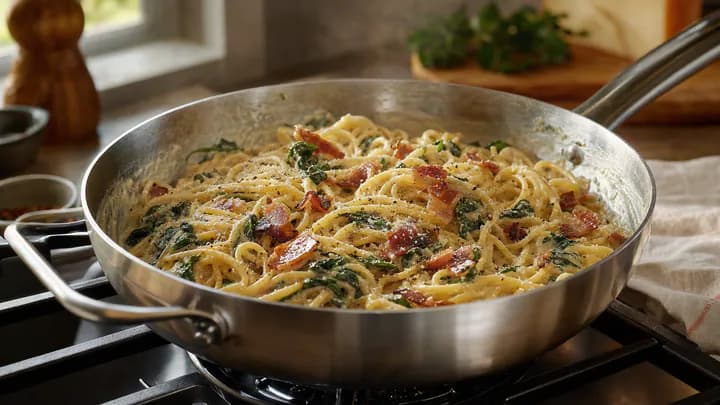
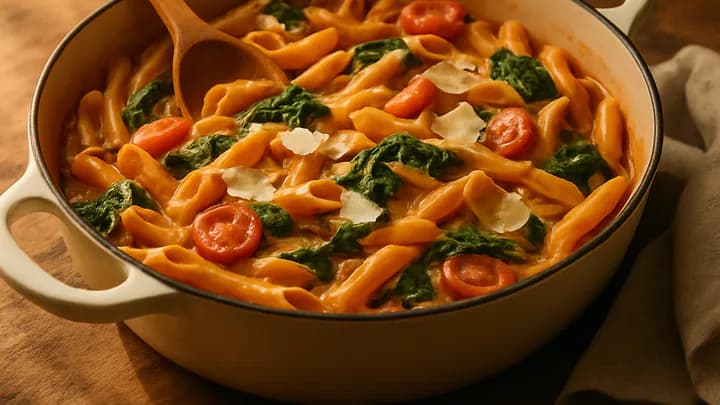
- Pasta in sauce: a spoonful of water and a low pan brings the emulsion back — the same principle that makes one-pan pasta silky in the first place.
- Roast meat slices: warm gently in a little broth, covered, rather than blasting them.
Which foods are the risky edge cases?
A handful of items don't follow the standard pattern, and these are where experienced cooks still get caught.
- Cooked rice. Bacillus cereus spores survive boiling and germinate rapidly at room temperature. Rice left to cool slowly in a rice cooker or a covered pot is a genuine risk. Chill it fast and spread it thin.
- Garlic or herbs stored in oil. Low-acid, oxygen-free, and room temperature is the exact environment Clostridium botulinum favors. Keep homemade infused oils refrigerated and use within a few days.
- Gravy and broth. Shorter fridge life than the solid food they came from, typically one to two days.
- Rice pudding, quiche, and custard-based dishes. Egg and dairy-rich, and often cooled in a single deep vessel.
- Sous vide and low-temperature cooking. Long holds at low temperatures follow their own time-and-temperature tables and shouldn't be improvised.
- Anything eaten by someone in a higher-risk group. Pregnancy, age over 65, young children, and weakened immune systems all shift the margin. Be stricter, not looser.
What do "sell by," "best by," and "use by" actually mean?
With the exception of infant formula, date labels in the US are mostly manufacturer quality estimates, not federally mandated safety deadlines. They describe peak freshness, not the moment food becomes hazardous.
- Sell by: guidance for the retailer's stock rotation. Food is typically fine for some time after.
- Best by / best if used by: a flavor and texture estimate.
- Use by: the closest thing to a real limit, and worth respecting on perishables like fresh dairy and ready-to-eat deli items.
Crucially, all of these apply to unopened packages. Once you open a package or cook the contents, your own three-to-four-day clock takes over regardless of what's printed on the carton.
What happens to your food after a power outage?
An unopened refrigerator keeps food safe for about four hours. A full freezer holds for roughly 48 hours; a half-full freezer about 24. Keep the doors closed — every look costs you cold air.
After the power returns, judge by temperature rather than appearance. Food that stayed at or below 40°F is fine. Perishables that spent more than two hours above 40°F should be discarded. Frozen food that still contains ice crystals or reads 40°F or below can be refrozen, though quality may suffer.
Three mistakes that cost the most
- Cooling in the cooking vessel. The single most common serious error. A deep pot insulates; the center of a large batch can stay above 40°F for hours in a cold fridge.
- Skipping labels. Without a date, every container becomes a guess, and guessing leads either to waste or to risk. A roll of masking tape and a marker solves it permanently.
- Trusting appearance over the calendar. Dangerous bacteria are frequently invisible, odorless, and tasteless. The date is better evidence than your senses.
A simple decision rule
When you're standing at the fridge door deciding, use this order:
- Was it ever out of refrigeration for more than two hours (or one hour above 90°F)? Discard.
- Is it day one to four, properly chilled, and smells normal? Reheat to 165°F and eat.
- Is it day two or three and you know you won't finish it? Freeze it now, portioned and labeled.
- Is it day five or later, or unlabeled and undated? Discard.
- Does it smell, look, or feel wrong at any point? Discard, regardless of date.
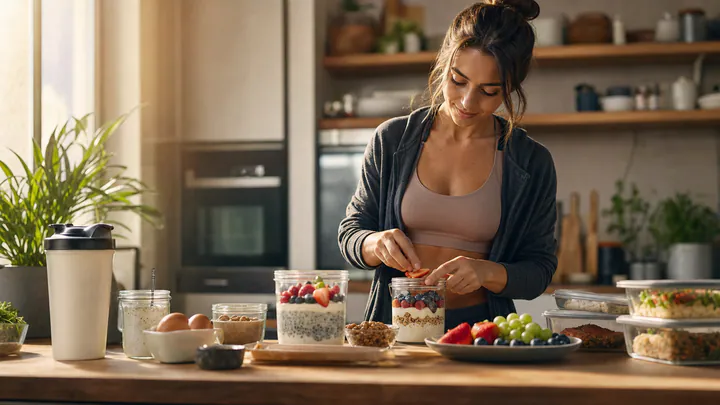
Applied consistently, this saves money rather than costing it. Most household food waste comes from uncertainty — bags of forgotten produce and mystery containers — not from following limits. The same logic that makes a 30-gram protein breakfast come together in ten minutes works here: a small amount of front-loaded structure removes the daily decision entirely.
Editorial note
This article is general educational information about food handling, not medical advice. Food safety risk depends heavily on individual circumstances, and people who are pregnant, immunocompromised, very young, or older adults face meaningfully higher stakes from foodborne illness. If you suspect food poisoning — particularly with high fever, persistent vomiting, bloody stool, signs of dehydration, or neurological symptoms — contact a qualified healthcare professional promptly rather than waiting it out.
Key takeaways
- Cooked leftovers keep three to four days at 40°F or below; frozen food at 0°F stays safe indefinitely but loses quality after a few months.
- The two-hour rule is cumulative and overrides the calendar — food held in the 40°F to 140°F range longer than that should be discarded, because some toxins survive reheating.
- Cool fast in shallow containers, refrigerate hot with the lid loose, and never cool a big batch in its cooking pot.
- Reheat to 165°F, boil liquids, and only reheat the portion you'll actually eat.
- Label everything with a date. Smell and appearance are unreliable indicators of the bacteria that actually make people sick.
- Date labels on packaging are mostly quality estimates; once opened or cooked, your own three-to-four-day window applies.
Frequently asked questions
How long do leftovers last in the fridge?
Most cooked leftovers are safe for three to four days in a refrigerator held at 40°F or below. After that, spoilage and pathogen growth risk rise even if the food looks and smells normal, so freeze anything you won't eat within that window.
Can I eat leftovers after 5 days?
We don't recommend it. Day five is past the widely accepted three-to-four-day guideline for cooked leftovers, and the bacteria that make people sick often produce no visible mold, off smell, or slime before they reach unsafe levels.
Is it safe to leave food out overnight if I reheat it well?
No. Food left in the temperature danger zone (roughly 40°F to 140°F) for more than two hours should be thrown out, because some bacteria produce heat-stable toxins that survive boiling even after the bacteria themselves are killed.
Do I have to let hot food cool before putting it in the fridge?
No — modern guidance is to refrigerate hot food promptly, divided into shallow containers no more than about two inches deep so it chills fast. Leave the lid loose or ajar until the food is cold, then seal it.
How long is cooked rice safe to keep?
Cooled quickly and refrigerated, cooked rice keeps three to four days like other leftovers. Rice is riskier than most foods because Bacillus cereus spores survive cooking and multiply fast at room temperature, so the cooling speed matters more than the storage limit.
Does freezing kill bacteria in leftovers?
No. Freezing at 0°F pauses bacterial growth rather than killing it, so food frozen while already spoiled will still be unsafe after thawing. Freeze leftovers early in their fridge life, not on the last day.
What temperature should I reheat leftovers to?
Reheat leftovers to an internal temperature of 165°F, checked with an instant-read thermometer in the thickest part. Bring soups, sauces, and gravies to a full rolling boil, and stir microwaved food partway through to eliminate cold pockets.