Screen Time Guidelines for Kids: A 2026 Parent's Playbook
Screen time rules fail when they are only about the clock. Here is an age-by-age framework, a family media plan that survives a real week, an honest comparison of parental control tools, and the common mistakes that quietly make screens more powerful.
Rewritten with AI and republished automatically. Our editors set the standards and fix reported errors — how we work.

TL;DR: For ages 2–5, cap high-quality screen media at about an hour a day. For ages 6 and up, stop counting hours alone and manage what screens displace: sleep, school, movement, and face-to-face time. Write a short family media plan, keep devices out of bedrooms overnight, and treat parental controls as friction rather than enforcement.
Screen time guidelines are a set of age-based recommendations and household rules that govern when, where, how long, and for what purpose children use digital devices. They exist because a child's attention, sleep architecture, and impulse control are still under construction — and because devices are engineered by very capable teams to hold attention for as long as possible.
Most advice on this subject stops at "set limits and model good behavior." That is true and insufficient. Below is what to actually write down if you are building a plan this week, including where the popular tools break.
How much screen time is recommended at each age?
The clearest numbers come from the American Academy of Pediatrics: avoid screen media other than video chatting before roughly 18 months; introduce high-quality programming slowly between 18 and 24 months with an adult watching alongside; limit ages 2–5 to about one hour a day of high-quality content. From age 6 onward, the AAP deliberately stopped issuing an hour figure and instead asks families to set consistent limits that protect sleep, activity, and school.
That shift matters. A blanket "two hours" rule treats a video call with a grandparent, a coding club, and an infinite short-video feed as the same substance. They are not.
| Age | Recreational screen target | What matters most | Biggest failure point |
|---|---|---|---|
| Under 18 months | Video chat only | Live, responsive human interaction | Background TV drowning out speech |
| 18–24 months | Very short, co-viewed | An adult narrating what's on screen | Handing the device over unattended |
| 2–5 years | About 1 hour/day | Program quality and clean endings | Autoplay turning one show into five |
| 6–10 years | Family-set; often 1–2 hours on school days | Sleep, homework, outdoor play protected first | Screens becoming the default boredom fix |
| 11–13 years | Negotiated budget, weekday vs. weekend split | Content type, group chats, first social accounts | Bedroom devices and late-night use |
| 14–18 years | Self-managed with guardrails | Sleep window, driving, privacy, judgment | Rules imposed without any conversation |
What actually counts as screen time — and what shouldn't?
Recreational, self-directed media counts. Assigned schoolwork, video calls with family, and assistive technology should be tracked separately. If you lump them together, you end up penalizing a child for a homework assignment they had no say in, and the whole system loses credibility fast.
Our working split is four buckets: assigned (school platforms, research), connective (video calls, coordinating with friends), creative (music production, drawing, game-building, editing), and consumptive (feeds, autoplay video, casual mobile games). Only the fourth bucket needs a hard number. The others need attention, not a timer.
This is also where the honest caveat belongs: these guidelines do not apply uniformly to every child. A device used for augmentative communication, text-to-speech, or a prescribed therapy program is a tool, not entertainment, and rationing it does real harm. Build that exception in writing before anyone is upset.
How do we build a family media plan that survives a real week?
A family media plan is a short written agreement covering screen-free zones, screen-free times, device curfews, and what happens when the rules slip. Keep it to one page, put it where everyone can see it, and have the child help write it — a plan a 12-year-old co-authored is enforced by the 12-year-old.
The four clauses that do most of the work:
- Screen-free zones: bedrooms and the dinner table. No exceptions for adults.
- A charging station outside bedrooms. All devices, all people, overnight.
- A device curfew 30–60 minutes before the earliest bedtime in the house.
- An order of operations: what has to happen before recreational screens start (homework, chore, outside time) — a sequence is far easier to enforce than a stopwatch.
Worked example. An 11-year-old on a school day: devices stay downstairs from 8:30 p.m.; homework and 20 minutes outdoors come first; then a 75-minute recreational budget she chooses how to spend — all in one block or split. Saturday gets a larger budget with no per-app policing. One "rollover" hour per week can be banked for a movie night. That structure gives her agency over allocation while the household keeps control of the boundaries.
Which parental control tools work, and where do they fail?
Every major platform ships a control system, and every one of them is bypassable by a motivated child. Use them to reduce friction-free access, not as a security perimeter.
| Tool | Cost | Strongest at | Known weakness |
|---|---|---|---|
| Apple Screen Time | Free, built in | App limits, downtime, communication limits | Date/time-zone tricks, "ignore limit" taps, browser versions of blocked apps |
| Google Family Link | Free, built in | Android app approval, location, remote lock | Weak on in-app content; little help on a school-managed Chromebook |
| Microsoft Family Safety | Free | Windows and Xbox time budgets, spending limits | Only covers the Microsoft ecosystem |
| Router-level filtering | Free to ~$60/yr | Whole-home schedules, guest device coverage | Instantly defeated by switching to cellular data |
| Console/TV controls | Free, built in | Age ratings, purchase blocks, play-time reports | Nothing stops a shared account on a friend's device |
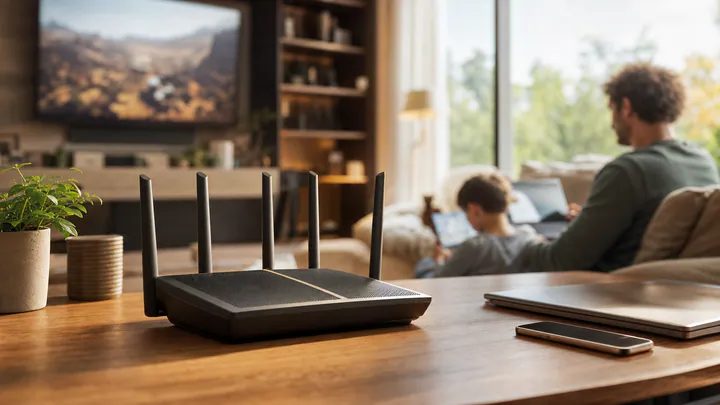
Router-level scheduling is underused and worth twenty minutes of setup — modern mesh systems make per-device profiles genuinely easy, and if you're already weighing a hardware refresh, our guide to whether Wi-Fi 7 is worth upgrading your home router for covers what the current generation offers. Just remember it only governs your Wi-Fi; a phone with a data plan walks straight past it.
One more note on the household's security posture: as kids get their own accounts, the account itself matters as much as the time limit. Shared, reused passwords are how a 13-year-old ends up locked out of their own game library. Our explainer on how passkeys are replacing passwords is a useful primer before you set up a first real account.
Why do screens wreck kids' sleep, and what's the fix?
Two mechanisms, and only one of them is about blue light. Evening light exposure nudges the circadian clock later, but the bigger culprit is arousal and displacement: a group chat, a competitive match, or a cliffhanger episode keeps the brain alert and pushes bedtime back a half hour at a time. Night filters do not solve this.
The fix is boring and effective: devices charge outside bedrooms, and a hard stop 30–60 minutes before lights out. If your household is already running a deficit, our guide to recovering from sleep debt and rebuilding rest covers how to claw back lost hours without weekend oversleeping. On the other end of the day, a short dose of outdoor light after waking helps anchor the rhythm.
What's the most common mistake parents make with screen limits?
Using screen time as the household currency. When screens are the reward for good grades and the thing confiscated for bad behavior, you have told your child that device access is the single most valuable commodity in the home. Every future limit then carries the emotional weight of a punishment, and negotiation becomes constant.
Keep the media plan stable and boring. Tie consequences to the behavior itself — a missed chore gets done, a broken curfew moves the curfew earlier. The screen budget stays where it is.
Two more mistakes worth naming. First, the abrupt cutoff: ending a session mid-match or mid-episode reliably produces a meltdown, and the meltdown then gets blamed on "screen addiction." Give a five-minute warning and, where possible, let the natural unit finish. Second, the one-sided rule: a phone-free dinner table that an adult violates to check a text has no force at all.
How do we handle screens with teenagers without constant conflict?
Shift from control to negotiated guardrails around age 13 or 14. Teens will have unsupervised device access within a few years regardless of what you do, so the objective becomes practiced judgment, not sealed borders. Keep exactly three non-negotiables — the overnight charging rule, no devices while driving, and an open door on anything that scares or embarrasses them — and hand over the rest.
The most valuable sentence you can say: "If you ever see something that makes you uncomfortable, you can tell me and you will not lose your phone for it." Punitive responses to disclosure are the fastest way to guarantee the next incident stays hidden.
Curiosity beats surveillance. Ask what they're watching, who's funny in the group chat, which creator they actually respect. Teens are also increasingly running capable AI tools directly on their own hardware — our overview of what on-device AI means for everyday users is worth reading so you can have an informed conversation about homework, drafting, and what the school considers acceptable.
What are the warning signs that screen use is a real problem?
Look for displacement and distress, not for the number on a weekly report. The signals worth acting on: sleep loss, a significant drop in school performance, withdrawal from friendships or hobbies the child previously loved, deception about device use, and emotional dysregulation that does not settle within roughly 20 minutes of a device being put away.
A useful decision rule: if the screen time is not taking anything away — sleep, school, movement, friends, mood — the hour count is probably not the issue. A 14-year-old who edits video for three hours on a Saturday, sleeps well, and plays soccer is fine. A 14-year-old at 45 minutes a day who is anxious about a group chat is not.
If several warning signs persist for weeks, or if you are seeing significant anxiety or low mood, talk with your pediatrician or a qualified mental health professional. This article is general guidance, not a clinical assessment, and a real evaluation can distinguish a habit problem from something that needs treatment.
What about school-issued devices you can't control?
This is the edge case most articles skip. A district-managed Chromebook or iPad is enrolled in the school's mobile device management system, and parental control apps generally cannot be installed on it. You do not control the device — so control the context instead.
Three things that still work: require homework on a school device to happen in a shared room, ask the school which filtering applies off-campus (many run a filter that follows the device home, and many do not), and keep the school laptop on the same overnight charging station as everything else. Also check whether your child's personal accounts have been signed into the school device, which is how "homework time" becomes something else entirely.
Key takeaways
- Ages 2–5 get a real number — about one hour a day. From age 6, manage displacement (sleep, school, movement, friends) rather than the clock alone.
- Separate assigned, connective, creative, and consumptive screen use. Only the last one needs a hard cap.
- The single highest-return rule is an overnight charging station outside every bedroom, adults included.
- Parental controls are friction, not enforcement. Kids bypass them routinely, so pair the tools with conversation.
- Never make screen access the reward-and-punishment currency of the household; it inflates the value of the thing you are trying to moderate.
- Assistive and communication devices are exempt, and persistent warning signs warrant a conversation with a qualified professional.
Frequently asked questions
How much screen time should a child have per day?
For ages 2 to 5, the American Academy of Pediatrics suggests about one hour per day of high-quality programming, ideally co-viewed with an adult. Children under 18 months should avoid screen media other than video chatting with family. For ages 6 and up, there is no single official hour limit — the guidance is consistent, family-set limits that protect sleep, school, physical activity, and meals.
Does homework on a school laptop count as screen time?
No, not in the same bucket. Assigned, task-focused schoolwork should be tracked separately from recreational screen use, because counting it together punishes children for work they cannot opt out of. Track recreational time as the number you actually manage.
Can kids get around Apple Screen Time or Google Family Link?
Yes, frequently. Common workarounds include changing the device date or time zone, using web versions of blocked apps through a browser, deleting and reinstalling an app to reset per-app counters, and consuming media inside apps that are allowlisted. Treat these tools as speed bumps and friction, not as enforcement.
Should screens be allowed in the bedroom at night?
The most effective single rule for most families is that all devices, including parents' phones, charge outside the bedroom overnight. It removes late-night scrolling, early-morning use before anyone is awake, and most of the arguing about bedtime, without requiring any app or subscription.
Is using screen time as a reward or punishment a good idea?
It usually backfires. Making screens the currency of good behavior teaches the child that screen access is the most valuable thing in the household, which raises the emotional stakes of every limit. Tie consequences to the behavior itself instead, and keep the media plan stable.
What are the warning signs that screen use has become a real problem?
Watch for sleep loss, a sharp drop in grades, withdrawal from friends or activities the child used to enjoy, deception about device use, and distress that does not settle within roughly 20 minutes after a device is put away. If several of these persist for weeks, talk with your pediatrician or a qualified mental health professional.
Do these guidelines apply to children with disabilities?
Not uniformly. Devices used for augmentative and alternative communication, assistive reading, or therapy are tools, not entertainment, and should never be rationed as screen time. Work with your child's clinical or educational team on a plan that fits their needs.
At what age should a child get their own smartphone?
There is no universal age. A more useful test than a birthday is readiness: can the child consistently keep track of belongings, tell you about an uncomfortable message without fear, and follow an agreed charging rule for a lower-stakes device first? Many families bridge the gap with a smartwatch or a calls-and-texts-only phone.