10 Psychological Thrillers That Keep You Up (and Sleep Fixes)
Ten psychological thrillers built on unreliable narrators and earned twists, compared by pace, intensity and content warnings, plus a practical method for reading suspense late at night without sabotaging the next day.
Rewritten with AI and republished automatically. Our editors set the standards and fix reported errors — how we work.
TL;DR: The ten thrillers below are the genre's most reliable page-turners, built on unreliable narrators and twists you could have spotted on a reread. They work because they raise arousal and withhold resolution — which is also exactly why they cost you sleep. Read them, but finish 30 minutes before lights-out.
What is a psychological thriller, and how is it different from a mystery?
A psychological thriller is a suspense novel in which the central threat comes from the mind — memory, perception, obsession or manipulation — rather than from a puzzle waiting to be solved. A mystery asks who did it. A psychological thriller asks whether the person telling you the story is telling you the truth.
That distinction matters when you pick your next read. Classic crime fiction rewards deduction and gives you a stable narrator to trust. Psychological thrillers deliberately destabilize the ground under you, usually through an unreliable narrator, split timelines, or a reveal that reframes everything you have already read. Horror aims for dread; psychological thrillers aim for doubt.
The genre also overlaps with domestic suspense — marriages, families and suburban houses as crime scenes — which is where most of the modern bestsellers live. Six of the ten books below take place largely inside a home.
Which 10 psychological thrillers are worth your next reading week?
These ten earn their reputations. Each one has a genuine structural trick rather than a simple shock ending, and each is short enough to finish before the tension dissipates.
1. Gone Girl — Gillian Flynn (2012)
The book that reset the genre. A wife disappears on her fifth wedding anniversary, and the alternating narration between husband and diary slowly turns into something far nastier than a missing-person case. The mid-book pivot is the single most imitated move in modern suspense, and Flynn's prose is sharper than anything that copied it. David Fincher's 2014 film is faithful, so read first.
2. The Silent Patient — Alex Michaelides (2019)
A painter shoots her husband and never speaks again; the psychotherapist who takes her case becomes dangerously invested. It is the most efficient twist machine on this list — short chapters, clean prose, a reveal that reorganizes the whole book in one page. If you want one book to test whether the genre is for you, this is it.
3. Sharp Objects — Gillian Flynn (2006)
Flynn's debut, and the bleakest entry here. A reporter returns to her Missouri hometown to cover the murders of two girls and collides with her mother, her half-sister and her own history of self-harm. Genuinely upsetting and genuinely brilliant. The HBO limited series with Amy Adams is one of the few adaptations that improves the atmosphere without softening the ending.
Content note: sustained depiction of self-harm, child abuse and substance misuse.
4. The Girl on the Train — Paula Hawkins (2015)
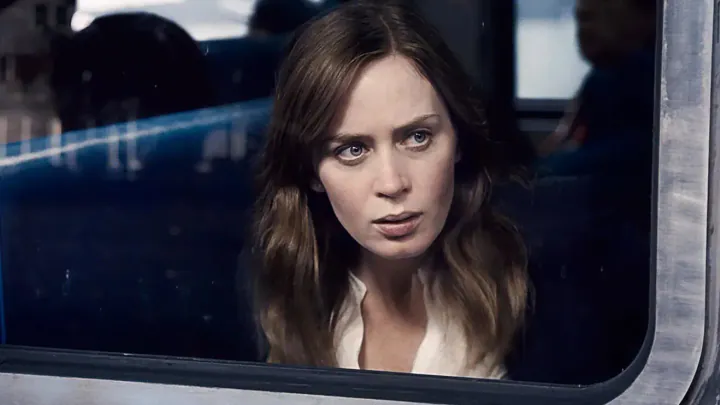
A commuter watches the same house from the same train every morning, invents a life for the couple inside, and then one of them vanishes. The engine here is alcoholic blackout: the narrator cannot verify her own memories, and neither can you. Slower than its reputation suggests, and better for it.
5. Shutter Island — Dennis Lehane (2003)
A US Marshal investigates a patient's disappearance from a hospital for the criminally insane on an island off Boston in 1954. It is period gothic as much as thriller, and the ending is the rare one that survives knowing it exists. Scorsese's 2010 film is excellent but reveals everything, so the book goes first.
6. You — Caroline Kepnes (2014)
Narrated in second person by a bookstore manager who stalks a woman he has decided is his destiny. The "you" is the trick: it implicates the reader in a way no third-person account could. Funny, repulsive and much smarter than the Netflix series it spawned.
7. Before I Go to Sleep — S.J. Watson (2011)
A woman with anterograde amnesia wakes each morning with no memory of the previous two decades and reconstructs her life from a journal she does not remember writing. The purest unreliable-memory premise in contemporary fiction, and the gentlest read on the list in terms of on-page violence.
8. Behind Closed Doors — B.A. Paris (2016)
The perfect couple with the perfect house, and a wife who is never left alone with anyone. Structurally simple, relentlessly claustrophobic. It is the most stressful book here — not because of what happens but because of how long it makes you wait.
Content note: coercive control and domestic abuse throughout.
9. The Wife Between Us — Greer Hendricks & Sarah Pekkanen
Sold as a love triangle between an ex-wife, a fiancée and the man between them. It is not a love triangle. The misdirection is built into the sentence structure rather than the plot, which makes it one of the best rereads in the genre.
10. Verity — Colleen Hoover
A struggling writer is hired to finish an injured novelist's book series and finds an unpublished manuscript in the house. This is romance-inflected psychological horror rather than crime fiction, and readers arriving from the mystery shelf are often blindsided by the explicit content. The ambiguity of the final pages is the point — people still argue about it.
Content note: explicit sexual content, harm to children.
Which one should you start with, based on what you actually want?
Use the table below as a decision rule: pick the row that matches your tolerance for bleakness, then check the night-risk column before you start it at 10pm.
| Book | Core device | Pace | Bleakness (1–5) | Night risk |
|---|---|---|---|---|
| Gone Girl | Dual unreliable narrators | Slow build, explosive middle | 4 | High — short chapters, no stopping point |
| The Silent Patient | Withheld timeline | Fast throughout | 3 | High — designed to be read in one sitting |
| Sharp Objects | Narrator's own trauma | Slow, atmospheric | 5 | Medium — disturbing rather than propulsive |
| The Girl on the Train | Blackout memory | Measured | 3 | Medium |
| Shutter Island | Institutional gaslighting | Steady, gothic | 3 | Low — long chapters, natural breaks |
| You | Second-person complicity | Fast, voice-driven | 4 | Medium |
| Before I Go to Sleep | Amnesia and a journal | Repetitive by design | 2 | Low |
| Behind Closed Doors | Coercive control in real time | Very fast | 5 | Very high — sustained dread, no relief |
| The Wife Between Us | Linguistic misdirection | Fast | 2 | Medium |
| Verity | Manuscript within a manuscript | Very fast | 4 | Very high — short, addictive, explicit |
Why do psychological thrillers actually keep you up at night?
Two mechanisms, and only one of them is about fear. The first is physiological arousal: suspense raises heart rate and alertness, which is the opposite of the wind-down the body needs to fall asleep. The second is unresolved narrative — an open question is cognitively "sticky," and the mind keeps returning to it in the quiet dark.
Book design amplifies both. Modern domestic suspense is written in three- to five-page chapters ending on a hook, which removes the natural stopping point. Gone Girl, Verity and Behind Closed Doors all use this structure deliberately. A book with 20-page chapters, like Shutter Island, hands you an exit every half hour. A book with three-page chapters never does.
The costly mistake most readers make is not the book at all — it is reading it on a phone at full brightness, in bed, with notifications on. You then get the arousal of the plot plus the arousal of a device that is also your work inbox. If late-night reading is a regular habit, our guide to resetting your sleep hygiene covers the environmental fixes that matter most.
How do you read a thriller at night without wrecking the next day?
Set a hard stop 20 to 30 minutes before lights-out, and end on a chapter opening rather than a chapter ending. That single reversal removes most of the problem: a hook you have just started feels less urgent than one you have just been handed.
- Use paper or e-ink, warm-toned and dim. Backlit phone screens in a dark room are the worst-case combination.
- Cap the session. A 45-minute timer is enough for 40 to 60 pages and short enough that "one more chapter" does not become 2am.
- Buffer with something dull. Ten minutes of a nonfiction chapter, a crossword or a shower between the thriller and the pillow gives arousal time to fall.
- Save the bleakest titles for daylight. Sharp Objects and Behind Closed Doors reward an afternoon on the sofa far more than a midnight reading binge.
- Do not chase lost sleep with a longer lie-in on Sunday. Consistent wake times work better; we explain why in our piece on recovering from sleep debt.
If you do finish a book at 1am, the most useful thing you can do the next morning is get outside early. A short dose of morning sunlight anchors the body clock and limits the knock-on damage to the following night.
When should you skip these books entirely?
Skip them if the subject matter maps onto your own experience closely enough that reading it would be re-exposure rather than entertainment. That is not squeamishness; it is a sensible boundary, and it applies most obviously to Sharp Objects (self-harm), Behind Closed Doors (coercive control) and Verity (harm to children).
There is also a milder version worth naming. Some people find that domestic suspense leaves a residue of suspicion about ordinary relationships for a day or two. If you notice that, switch to the institutional or period entries — Shutter Island, You — which are further from daily life.
And a genuine caveat: if disrupted sleep, intrusive thoughts or anxiety persist beyond the occasional late night, that is a matter for a qualified clinician rather than a reading list. Nothing here is a substitute for professional advice.
Should you read the book or watch the adaptation first?
Read first whenever the twist lives in the prose. Gone Girl, Shutter Island and Before I Go to Sleep all depend on what the sentences let you assume, and film versions hand you the answer visually. Once you have seen them, the books become rereads rather than reads.
Watch first — or in any order — when the adaptation is doing something different. The Sharp Objects series expands atmosphere rather than plot, and You diverges sharply from Kepnes's novels after the first season. The Girl on the Train film relocates the story to New York, which changes the texture enough that both versions stand alone.
One useful habit: after finishing a twist-heavy novel, skim the first two chapters again before watching anything. The clues you missed are almost always in the opening pages, and spotting them is a large part of why the genre is satisfying rather than merely startling.
Key takeaways
- Psychological thrillers turn on trust and perception, not deduction — the narrator is the puzzle.
- Start with The Silent Patient for the cleanest twist, or Gone Girl for the book that defined the modern genre.
- Short-chapter books (Verity, Behind Closed Doors) are the hardest to put down and the worst choice for a weeknight.
- Stop at a chapter's start, not its end, and leave 20 to 30 minutes between the last page and lights-out.
- Check the content notes before you start: several of these books deal seriously with abuse, self-harm and trauma.
- Read before you watch when the twist is built into the prose — Gone Girl, Shutter Island, Before I Go to Sleep.
Frequently asked questions
Which psychological thriller should I read first?
Start with The Silent Patient if you want the cleanest, fastest twist, or Gone Girl if you want the book that defined the modern genre. The Silent Patient is shorter, less bleak and easier to finish in two or three sittings, which makes it the better entry point for readers new to the genre.
Do psychological thrillers actually make it harder to sleep?
They can, because suspense raises physiological arousal and leaves narrative questions unresolved, which is the opposite of what the body needs to fall asleep. Most people notice it as lying in bed replaying the plot. Finishing 20 to 30 minutes before lights-out, on paper or a warm-toned e-ink screen, usually removes the problem.
What is the difference between a psychological thriller and a mystery?
A mystery asks who did it; a psychological thriller asks whether you can trust the person telling you. Mysteries are usually solved by evidence and deduction, while psychological thrillers turn on perception, memory and manipulation, and the reveal often reframes everything you have already read.
Are these books appropriate for teenagers?
Most are adult fiction with adult content, and several are genuinely unsuitable for younger readers. Sharp Objects deals with self-harm and child abuse, Verity contains explicit sexual content and graphic harm to children, and Behind Closed Doors depicts sustained domestic abuse. Shutter Island and Before I Go to Sleep are the mildest on the list.
Should I read the book or watch the adaptation first?
Read first when the twist depends on the prose, and watch first when the adaptation is a different beast. Gone Girl, Shutter Island and Before I Go to Sleep lose most of their power if you know the ending, so read them first. Sharp Objects works either way, because the HBO series changes emphasis rather than outcome.
What makes a twist feel earned rather than cheap?
An earned twist is one you could have assembled yourself from clues already on the page. The test is simple: if rereading the first 50 pages reveals sentences that were technically true but deliberately misread, the twist is earned. If the reveal depends on information the author withheld entirely, it is a cheat.
How many of these books have screen adaptations?
Seven of the ten do. Gone Girl, The Girl on the Train, Sharp Objects, Before I Go to Sleep, Shutter Island, Behind Closed Doors and You have all been adapted for film or television, with You running as a multi-season series. The Wife Between Us, The Silent Patient and Verity have been optioned at various points but are best known as books.