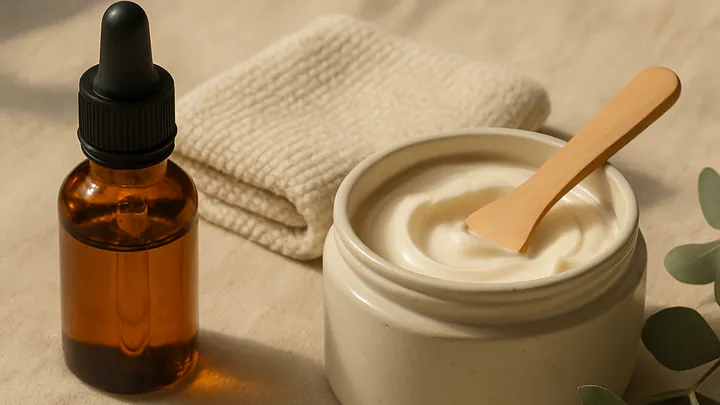
Skin Barrier Repair in 2026: A Calm, Simple Guide
A calm, science-informed guide to repairing your skin barrier in 2026 — what it is, why it breaks down, and the simple routine that helps skin heal.

TL;DR: A damaged skin barrier is your skin's outer layer struggling to hold water and block irritants. To repair it in 2026, simplify your routine to a gentle cleanser, a barrier-supporting moisturizer with ceramides or fatty acids, and daily sunscreen. Pause exfoliants, retinoids, and strong actives for two to six weeks. Skin usually feels noticeably calmer within seven to ten days of consistent, minimal care.
If your skincare suddenly stings, your cheeks flush at the smallest provocation, or your foundation refuses to sit right, your skin barrier is probably asking for a break. It's one of the most common — and most fixable — issues we hear about, and it rarely requires new products. Usually it requires fewer.
What the skin barrier actually is
Your skin barrier (technically the stratum corneum) is the outermost layer of skin. Think of it as a brick wall: skin cells are the bricks, and lipids — ceramides, cholesterol, and fatty acids — are the mortar holding them together. When that mortar is intact, water stays in and irritants stay out. When it's depleted, everything gets harder: hydration escapes, allergens penetrate more easily, and the nerves underneath become more reactive.
A healthy barrier is why some people can splash cold water on their face and go about their day. A compromised one is why others feel their skincare burning before they've finished applying it.
Signs your barrier is compromised
- Stinging or burning from products you used comfortably before
- New redness, flushing, or visible capillaries
- Tightness, rough patches, or unusual flaking
- Dehydrated skin that also breaks out
- Skin that feels hot or reactive throughout the day
- Makeup pilling or clinging to dry spots
You don't need every symptom. Two or three is enough to warrant a reset.
Why barriers break down in 2026
The culprit is almost always doing too much. Skincare has become extraordinarily potent, and social media has normalized layering four or five active ingredients on the same face. Add in weather extremes, hot showers, over-cleansing, and long-haul flights, and it's easy to see why irritation has become the default state for many people.
Common triggers we see include:
- Over-exfoliation. Daily acids or scrubs strip lipids faster than skin can rebuild them.
- Aggressive retinoid ramp-ups. Starting a prescription-strength retinoid nightly instead of easing in.
- Layering too many actives. Vitamin C, retinol, benzoyl peroxide, and acids in the same routine.
- Foaming or high-pH cleansers used twice daily on already-dry skin.
- Hot water, harsh towels, and rough physical exfoliation.
- Environmental stress from cold wind, indoor heating, or heavy air pollution.
The barrier repair routine, step by step
The rule for a healing barrier is less, gentler, more often. Here is the routine our team recommends people try for at least two weeks before adding anything back in.
Morning
- Rinse with lukewarm water only, or use a creamy, fragrance-free cleanser if you wore heavy sunscreen or makeup the night before.
- Apply a hydrating serum with glycerin, hyaluronic acid, or panthenol to slightly damp skin.
- Layer a rich, barrier-supporting moisturizer with ceramides, cholesterol, squalane, or shea butter.
- Finish with broad-spectrum SPF 30 or higher. Mineral sunscreens (zinc oxide, titanium dioxide) tend to be well tolerated by irritated skin.
Evening
- Cleanse gently once, using a cream or milk cleanser. Skip double cleansing unless you wore heavy makeup or mineral sunscreen — in which case use a soft oil or balm first, then a gentle second cleanse.
- Repeat your hydrating serum on damp skin.
- Apply your barrier moisturizer, slightly more generously than in the morning.
- Optional: an occlusive layer — a thin film of petrolatum, a squalane oil, or a "slugging" balm on the driest areas to lock everything in overnight.
What to pause
- Retinoids, retinol, and retinal
- AHAs (glycolic, lactic, mandelic) and BHAs (salicylic)
- Benzoyl peroxide
- High-strength vitamin C (over ~10%)
- Physical scrubs, cleansing brushes, and clay masks
- Fragrance and essential-oil-heavy products
This isn't forever. It's a two- to six-week reset so your skin has a chance to rebuild.
Ingredients that genuinely help
You don't need a shelf of new products. You need a short list of the right ones. When reading labels, look for:
- Ceramides — the lipids your barrier is literally made of.
- Cholesterol and fatty acids — the other two-thirds of your natural lipid mix.
- Glycerin and hyaluronic acid — humectants that draw water into the skin.
- Panthenol (pro-vitamin B5) — soothing and hydrating.
- Niacinamide — supports barrier function and calms redness; 2–5% is usually well tolerated.
- Colloidal oatmeal — long-used for reactive, itchy skin.
- Squalane — a lightweight, non-comedogenic oil that mimics skin's own lipids.
- Centella asiatica (cica) — widely used in soothing formulas.
- Petrolatum — the most effective occlusive we have for reducing water loss.
Lifestyle habits that speed up healing
Topicals do most of the work, but a few daily habits make a real difference:
- Turn the shower down. Warm, not hot, and keep face-time under a minute.
- Pat, don't rub. Use a soft towel and leave skin slightly damp before moisturizing.
- Run a humidifier in dry rooms or during winter heating season.
- Protect from wind and cold with a scarf or balm on exposed areas.
- Prioritize sleep. Skin does most of its repair work overnight.
- Change pillowcases regularly and be gentle with fabrics on your face.
How to reintroduce actives without starting over
Once your skin feels calm — no stinging, no unusual redness, comfortable throughout the day — you can slowly bring actives back. The mistake most people make is reintroducing everything at once.
- Pick one active you actually need. For most people, that's either a retinoid or an exfoliating acid, not both.
- Start once a week for two weeks. If skin stays calm, move to twice a week.
- Always apply on fully dry skin, and sandwich it between moisturizer if you're prone to sensitivity.
- Wait at least a month before adding a second active back in.
If irritation returns, don't push through it. Pause again and give it another week. Your barrier is a renewable resource, but only if you let it renew.
When to see a professional
Most barrier issues resolve with a simpler routine and time. But some situations deserve professional help. Consider seeing a board-certified dermatologist if you notice persistent redness that doesn't improve after four to six weeks, painful cracking or bleeding, sudden widespread rashes, or symptoms that could point to rosacea, eczema, or perioral dermatitis. These conditions can look like a damaged barrier but need a different treatment plan.
Editorial disclosure
This article is general information for a healthy adult audience and is not medical advice. Skin conditions vary, and ingredients that work well for one person can irritate another. If you have a diagnosed skin condition, are pregnant or breastfeeding, or are considering prescription treatments, please consult a qualified dermatologist or medical professional before changing your routine.
Key takeaways
- A damaged skin barrier is common in 2026 — usually from doing too much, not too little.
- Simplify to a gentle cleanser, a hydrating serum, a ceramide-rich moisturizer, and daily SPF.
- Pause retinoids, acids, and strong vitamin C for two to six weeks.
- Look for ceramides, glycerin, panthenol, niacinamide, and squalane on labels.
- Reintroduce one active at a time, slowly, only after skin feels calm.
- See a dermatologist if irritation persists beyond six weeks or worsens.
Frequently asked questions
How do I know if my skin barrier is damaged?
Common signs include stinging when applying products, new redness or flushing, tight or rough patches, unusual dryness, and breakouts that appear alongside irritation. If familiar products suddenly feel harsh, your barrier is likely compromised.
How long does it take to repair a damaged skin barrier?
Mild irritation often calms within a week of simplifying your routine. Deeper damage from over-exfoliation or strong actives can take four to six weeks to fully recover, since skin cells need time to turn over and rebuild.
Should I stop using retinol and acids while my barrier heals?
Yes, temporarily. Pause retinoids, AHAs, BHAs, and strong vitamin C until your skin feels calm and comfortable. Reintroduce them one at a time, starting with once or twice a week, and only after the stinging and redness have resolved.
What ingredients actually help repair the skin barrier?
Ceramides, cholesterol, fatty acids, glycerin, hyaluronic acid, panthenol, niacinamide, squalene, and colloidal oatmeal are widely used for barrier support. They help skin hold water and rebuild the lipid layer that keeps irritants out.
Can I still wear makeup with a damaged barrier?
Yes, but keep it minimal. Choose fragrance-free, non-comedogenic formulas, skip long-wear or matte products that can be drying, and remove makeup gently with a cream cleanser or micellar water rather than makeup wipes.
Does diet or water intake affect the skin barrier?
Hydration and a balanced diet support overall skin health, but topical care matters more for barrier repair. Adequate sleep, managing stress, and avoiding very hot showers also help skin recover faster.