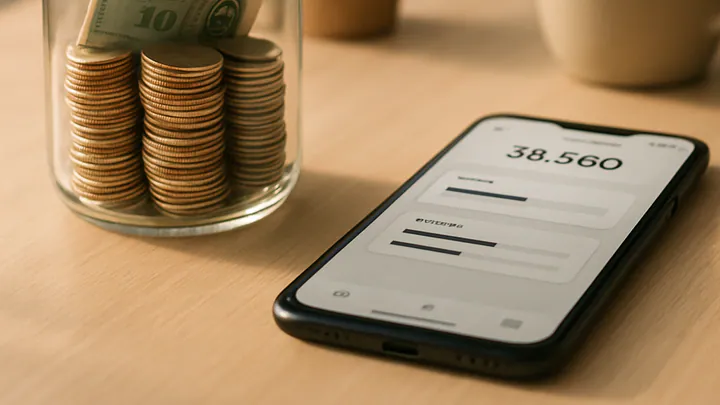
High-Yield Savings in 2026: Where to Park Cash
High-yield savings accounts still beat traditional banks in 2026. Here's how to compare rates, avoid fees, and pick the right account for your emergency fund and short-term goals.


TL;DR: In 2026, high-yield savings accounts (HYSAs) remain one of the simplest ways to earn meaningful interest on cash you can't afford to lose. The best accounts offer competitive variable rates, no monthly fees, no minimum balance, and FDIC or NCUA insurance. Use a HYSA for your emergency fund and short-term goals — not for money you plan to invest for retirement or won't touch for a decade.
Cash used to feel like dead weight in a portfolio. For years, traditional savings accounts paid almost nothing, and inflation quietly eroded balances that sat still. That picture looks different now. Online banks and credit unions have kept meaningful yields available on ordinary savings deposits, and the gap between what a big-brand branch bank pays and what a competitive online account pays remains striking.
Our team put together this guide to help you make a confident, low-stress decision about where to park cash in 2026 — whether that's a starter emergency fund, a house down payment, or the buffer that keeps your budget from wobbling every time an unexpected bill lands.
What a high-yield savings account actually is
A high-yield savings account is a deposit account, just like the one you might already have at your primary bank. The difference is the interest rate. Because online banks don't run expensive branch networks, they can pass those savings back to depositors as a higher annual percentage yield (APY).
Three features define a HYSA worth using:
- Federal insurance. FDIC coverage for banks, or NCUA coverage for credit unions, protects your deposits up to $250,000 per depositor, per institution, per ownership category.
- Liquidity. You can typically transfer money in or out within a few business days, sometimes instantly between linked accounts.
- Variable interest. The APY can change at any time, up or down, based on broader interest rate conditions.
That last point matters. A HYSA is not a locked rate like a certificate of deposit (CD). If your bank cuts its rate, your yield falls with it. That's the trade-off for keeping full access to your cash.
Who a HYSA is right for in 2026
Not every dollar belongs in a savings account. But some categories of money almost always do.
Your emergency fund
Most personal finance guidance suggests keeping three to six months of essential expenses accessible, in cash, for genuine emergencies. A HYSA is arguably the best home for this money. It's liquid, insured, and it earns something instead of nothing while it waits.
Short-term savings goals
Saving for a wedding next spring? A move next fall? A car in eighteen months? Money you'll need within roughly one to three years usually doesn't belong in the stock market — the risk of a temporary drop right when you need the cash is real. A HYSA lets that money grow modestly without putting your timeline at risk.
A sinking fund system
If you use sinking funds — small pots of cash for predictable irregular expenses like insurance premiums, holiday gifts, or annual subscriptions — a HYSA with sub-account or bucket features can hold all of them under one roof.
Who a HYSA is not right for
A savings account is a parking spot, not a growth engine. Historically, the stock market has outpaced savings interest over long periods, and inflation can still eat into cash balances even at competitive yields.
Money you won't need for a decade or more — retirement savings, long-horizon investments — generally belongs in tax-advantaged accounts and diversified investments, not a HYSA. And balances above the $250,000 insurance limit at a single institution need a plan to spread coverage across banks or ownership structures.
How to compare accounts without getting overwhelmed
The marketing around savings accounts can be noisy. Here's the short list our editorial team uses when evaluating an account.
1. The advertised APY — and its conditions
Look for the current APY, but also read the fine print. Some banks offer a promotional rate that drops after a few months. Others require direct deposit, a linked checking account, or a minimum balance to unlock the headline rate. A slightly lower rate with no strings often beats a splashy rate that quietly resets.
2. Fees and minimums
The best HYSAs in 2026 charge no monthly maintenance fees and require no minimum balance. If an account charges a monthly fee unless you keep a set balance, keep shopping. There are enough fee-free options that you don't need to compromise.
3. Transfer speed and access
How quickly can you pull money out in an emergency? Some online banks now offer near-instant transfers to a linked checking account; others take two to three business days via ACH. If your HYSA is your emergency fund, faster access matters.
4. Deposit insurance
Confirm the account is FDIC- or NCUA-insured directly. This is a floor requirement, not a nice-to-have. If a platform is a fintech rather than a bank, check which underlying partner bank holds your deposits — insurance follows the bank, not the app.
5. User experience
A clean app, easy transfers, and clear statements are worth a small yield trade-off. You will interact with this account regularly. Friction turns good savings habits into abandoned ones.
HYSA vs. money market vs. CD vs. Treasury bills
A few other options compete for short-term cash. Here's how they generally compare:
- Money market accounts (MMAs) function similarly to HYSAs but sometimes add check-writing or debit access. Rates are often close; features and minimums vary widely.
- Certificates of deposit (CDs) lock your money for a set term in exchange for a fixed rate. They're useful when you're confident about your timeline and want rate certainty, but early-withdrawal penalties can sting.
- Treasury bills are short-term government securities. They can offer competitive yields and may be exempt from state and local income tax, but they're less liquid than a savings account during their term.
Many households use a combination: a HYSA as the everyday cash hub, with CDs or T-bills layered in for money with a defined timeline.
A simple two-account setup
If you're starting from scratch, a straightforward structure works for most people:
- Keep a checking account at whichever bank fits your daily life — direct deposit, bill pay, debit card use.
- Open a HYSA at a separate online bank with a competitive APY, no fees, and no minimums.
- Automate a weekly or biweekly transfer from checking to the HYSA. Even a small, consistent amount builds momentum.
- Label the HYSA — mentally or with a nickname — as your emergency fund or specific goal. Separation from your spending account reduces the temptation to dip in.
That's the whole system. It doesn't require a spreadsheet or an app subscription. It requires one good account and one recurring transfer.
Common mistakes to avoid
- Chasing every rate change. If you already have a competitive account, moving your money every time another bank ticks up by 0.10% costs time and rarely earns much. Pick a solid account and stay.
- Ignoring the fine print on bonuses. Sign-up bonuses can be real, but they often require locking in deposits for months. Read the terms.
- Parking long-term money in cash. If you're saving for retirement, a HYSA is usually not the right primary vehicle. Cash drag over decades is real.
- Forgetting about taxes. Interest earned is taxable as ordinary income. Set aside a bit of what you earn if it will meaningfully affect your return.
Key takeaways
- A high-yield savings account is one of the simplest, safest homes for short-term cash and emergency funds in 2026.
- Prioritize federal insurance, no fees, no minimums, and a competitive variable APY over splashy promotions.
- Use a HYSA for money you'll need within one to three years; use investment accounts for long-horizon goals.
- A checking account plus one HYSA, with an automated recurring transfer, is enough structure for most people.
- Interest is taxable, and rates are variable — don't confuse a HYSA with a locked-rate product like a CD.
Editorial disclosure: This article is for general informational and educational purposes only and is not financial, tax, or investment advice. Interest rates, account features, and tax rules change. Please consult a qualified financial advisor or tax professional about your specific situation before making decisions about where to keep your money.
Frequently asked questions
What is a high-yield savings account?
A high-yield savings account (HYSA) is a federally insured deposit account that pays a significantly higher interest rate than a standard savings account, typically offered by online banks with lower overhead costs.
Are high-yield savings accounts safe?
Yes, as long as the bank is FDIC-insured (or NCUA-insured for credit unions), your deposits are protected up to $250,000 per depositor, per institution, per ownership category.
How often do HYSA rates change?
Rates on high-yield savings accounts are variable and can change at any time. They generally track the federal funds rate, so they move up or down as broader interest rate policy shifts.
Should I keep my emergency fund in a HYSA?
For most people, yes. A HYSA offers liquidity, safety, and meaningful interest, making it a strong fit for three to six months of essential expenses you may need on short notice.
Is a money market account better than a HYSA?
It depends on features you need. Money market accounts sometimes offer check-writing or debit card access, while HYSAs often have slightly higher rates. Compare current yields, minimums, and access rules before deciding.
Do I owe taxes on savings account interest?
Yes. Interest earned in a savings account is taxable as ordinary income in the year you receive it. Your bank will typically send a Form 1099-INT if you earn more than $10 in interest.