Capsule Wardrobe 2026: Build a Closet You Love
A practical 2026 guide to building a capsule wardrobe that actually gets worn — with a color formula, core pieces, and a simple shopping filter.

TL;DR: A capsule wardrobe for 2026 is a small, intentional closet of 25–40 pieces per season that all work together. Start with a tight color palette (two neutrals plus one accent), audit what you already own and wear, fill only real gaps, and use a three-question shopping filter before buying anything new. The goal isn't fewer clothes for its own sake — it's a closet where every hanger earns its place and getting dressed takes 30 seconds.
We get a version of the same question every January and September: How do I stop over-shopping and still feel put-together? The answer, for most readers, is a capsule wardrobe — not the rigid 33-piece kind that goes viral on social media, but a flexible system that fits your real life. Below is the exact framework our editorial team uses when we help friends and readers rebuild their closets in 2026.
What a capsule wardrobe actually is (and isn't)
A capsule wardrobe is a curated collection of clothes designed to mix and match effortlessly. Every top works with most bottoms. Every jacket layers over most outfits. Nothing lives in the closet as a one-off.
It is not a specific aesthetic. You can build a capsule around streetwear, romantic vintage, sharp tailoring, or beachy neutrals. It is not a vow of never shopping again, and it is not about owning exactly 33 items. Those numbers are marketing shorthand — the underlying idea is intentionality, not scarcity.
Done well, a capsule wardrobe does three things:
- Cuts decision fatigue in the morning
- Reduces impulse purchases and buyer's remorse
- Makes every outfit look considered, because everything genuinely coordinates
Step 1: Do an honest closet audit
Before buying a single new thing, pull everything wearable onto your bed. Yes, everything. Then sort into four piles:
- Love and wear weekly. These are your anchors — study them.
- Love but rarely wear. Ask why. Wrong fit? Wrong season? Doesn't match anything?
- Fine but forgettable. Neutral basics you keep reaching past.
- Don't wear. Donate, resell, or recycle.
Pay special attention to pile one. The colors, fabrics, silhouettes, and rise heights that show up repeatedly are telling you what actually works on your body and in your life. Most people are already 60–80% of the way to a capsule and don't realize it.
The 30-day wear test
If you're not sure what you actually wear, try this: turn every hanger backwards. After you wear something, hang it back forwards. In 30 days, you'll have a clear map of your active wardrobe versus your dead weight.
Step 2: Choose your color formula
The single biggest reason capsule wardrobes fail is a messy color palette. If half your closet is warm-toned and half is cool-toned, nothing mixes.
Use this simple formula for 2026:
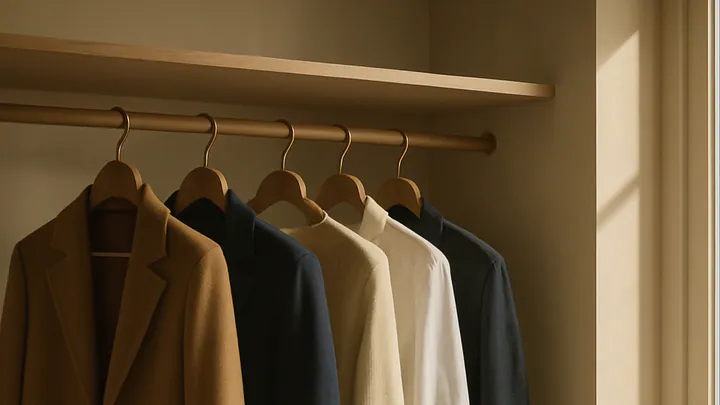
- Two base neutrals (about 60% of the closet). Common pairs: black + cream, navy + tan, charcoal + white, chocolate + oatmeal.
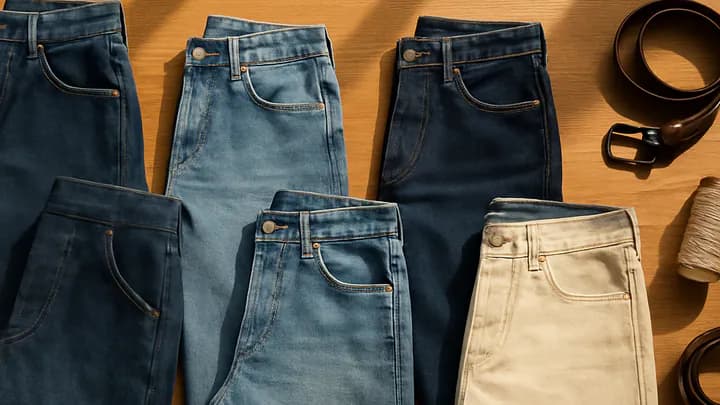
- One bridge neutral (about 25%). Denim usually plays this role, along with gray or camel.
- One or two accent colors (about 15%). Pick shades that flatter your complexion — burgundy, olive, forest, rust, and soft blues have been standout picks lately.
Prints count as a color. A striped shirt is really two colors plus a pattern, so make sure both shades already exist in your palette.
Step 3: Fill the core piece slots
Every capsule needs certain workhorse categories. Adjust quantities for your climate and lifestyle — a remote worker in Portland needs different ratios than a teacher in Miami.
Tops (8–12 pieces)
- 3–4 plain tees or fine-knit tops in your neutrals
- 2–3 button-downs (crisp cotton, brushed flannel, or silky)
- 2–3 sweaters or sweatshirts
- 1–2 "nicer" tops for dinners or meetings
Bottoms (5–7 pieces)
- 2 pairs of jeans in different washes and fits
- 1 pair of tailored trousers
- 1 pair of casual pants (chinos, wide-leg, or cargo, depending on style)
- 1–2 skirts or shorts, if you wear them
Layers and outerwear (3–5 pieces)
- A structured jacket (blazer, denim, or leather)
- A casual jacket (bomber, chore coat, or overshirt)
- A proper coat for your climate
- A rain layer if you need one
Dresses or jumpsuits (0–3 pieces)
Include only if you actually reach for them. One easy day dress and one dressier option covers most people.
Shoes (4–6 pairs)
- Clean white or neutral sneakers
- A loafer, ballet flat, or moc
- A boot appropriate for your weather
- Something dressier if your life requires it
Bags and accessories
One everyday bag, one smaller crossbody or clutch, and a tote will cover 95% of situations. Add a belt or two in your neutral leathers, plus jewelry you actually wear.
Step 4: Build outfit "formulas" you trust
The point of a capsule is that dressing becomes a matter of picking a formula, not agonizing over pieces. We recommend writing down 10–15 outfit combinations that always work, then photographing them on your phone.
Example formulas:
- Tee + tailored trouser + loafer + gold hoops
- Button-down + jeans + white sneaker + tote
- Knit + midi skirt + boot + long coat
- Blazer + tee + jeans + loafer (the eternal formula)
On a chaotic morning, you're no longer choosing an outfit — you're choosing a formula. That's the productivity unlock.
Step 5: Shop with a filter, not a feed
Once your capsule is in place, new purchases should be rare and deliberate. Before adding anything to a cart, ask three questions:
- Does it fit my color palette? If not, it will orphan itself in your closet.
- Can I name three specific items I already own that it works with? If you can't, it's a lonely piece.
- Am I replacing something, or adding? Replacements are easy yeses. Additions need a real reason.
We also recommend a 72-hour wait on anything over a modest threshold — the exact amount depends on your budget, but the pause itself matters more than the number. Impulse fades. Genuine wants don't.
Common capsule wardrobe mistakes
- Buying a whole capsule in one weekend. Real capsules build over months as you learn what you reach for.
- Choosing pieces because they're "classic" rather than because you love them. A closet of unloved beige is still an unworn closet.
- Ignoring fit for the sake of a brand or a deal. The best-fitting mid-tier sweater beats a designer one that pulls at the shoulders.
- Copying someone else's list. A Parisian influencer's capsule will not survive a Chicago winter or a Phoenix summer.
- Forgetting shoes and outerwear. These carry outfits. Underinvesting here undoes everything.
Fabrics and quality signals in 2026
You don't need luxury labels to build a lasting capsule, but a few quality cues help you spot pieces that will actually endure:
- Natural fibers (cotton, linen, wool, silk) or high-quality blends tend to age better than pure synthetics
- Check seam allowances — wider, cleaner seams usually mean the garment can be tailored and will hold up in the wash
- Buttons sewn with cross-stitching and spare buttons attached signal care
- Lined jackets, skirts, and trousers generally drape better and last longer
Secondhand and consignment platforms are also worth a look — often you'll find better construction at mid-tier prices than buying new fast fashion at similar price points.
Refreshing your capsule seasonally
Every three to four months, do a 20-minute check-in:
- Rotate out clearly off-season pieces if closet space is tight
- Repair anything with a loose button, small hole, or stuck zipper
- Identify one or two genuine gaps for the new season
- Refresh worn basics (tees stretched out, sneakers scuffed beyond saving)
That's it. No dramatic overhaul. A well-tended capsule evolves quietly.
Key takeaways
- A capsule wardrobe is a coordinated system of 25–40 pieces per season, not a strict number or aesthetic
- Start with an honest audit — you likely already own most of what you need
- A tight color palette (two neutrals, one bridge, one or two accents) is what makes everything mix
- Build 10–15 outfit formulas so getting dressed becomes automatic
- Shop with a three-question filter and a short waiting period
- Refresh gently each season — repair, replace, refine, don't overhaul
Editorial note: This guide reflects our team's practical experience helping readers rebuild wardrobes and is intended as general style guidance. Individual body types, climates, and lifestyles vary — treat any specific piece count or brand suggestion as a starting point rather than a rule.
Frequently asked questions
How many pieces should a capsule wardrobe have?
Most capsule wardrobes work well with 25 to 40 pieces per season, including tops, bottoms, outerwear, and shoes. The exact number matters less than making sure every piece pairs with at least three others in your closet.
What colors work best for a capsule wardrobe?
Choose two neutrals as your base (like black and cream, or navy and tan), one secondary neutral, and one or two accent colors that flatter your skin tone. This keeps almost every piece mix-and-match ready.
Do I need to throw everything out to start a capsule wardrobe?
No. Most people already own 60 to 80 percent of a solid capsule. Start by pulling out what you actually wear and love, then identify small gaps to fill intentionally over time.
How often should I refresh a capsule wardrobe?
A light seasonal swap every three to four months works well. Deeper reviews once or twice a year help you replace worn basics and adjust for lifestyle changes without falling into constant shopping.
Is a capsule wardrobe the same as quiet luxury?
They overlap but aren't identical. Quiet luxury is an aesthetic focused on refined, understated pieces. A capsule wardrobe is a system — you can build one in any aesthetic, from streetwear to preppy to romantic.
Can I still follow trends with a capsule wardrobe?
Yes. Keep your core pieces classic and use one or two flexible slots each season for trend pieces you genuinely love. Secondhand shops are a low-risk way to test a trend before committing.