Skin Cycling in 2026: A Smarter Nightly Routine
Skin cycling is the four-night rotation that lets actives work without wrecking your barrier. Here is how to build a smarter version for 2026.

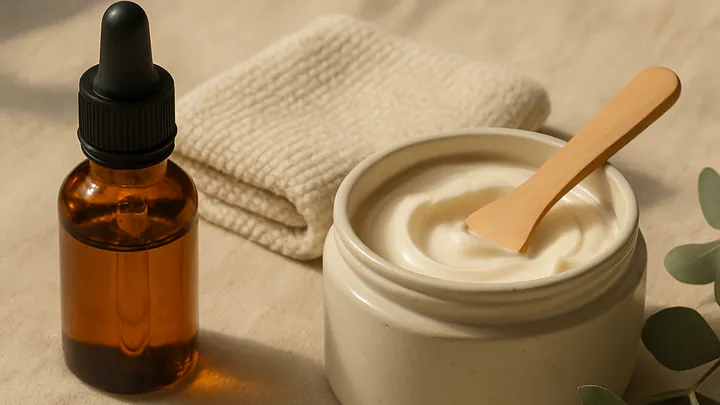
TL;DR: Skin cycling is a simple four-night nightly rotation — exfoliate, retinoid, recover, recover — that lets powerful actives do their job without inflaming your skin. In 2026 the approach is even more refined: gentler acids, lower-strength retinoids used more strategically, and two full recovery nights built around barrier repair. Below, our team breaks down exactly what to do each night, how to adapt the routine to your skin type, and the small mistakes that quietly undo the results.
What skin cycling actually is
Skin cycling is a structured four-night rotation for your evening routine. Instead of layering acids and retinoids every night and hoping your skin adjusts, you assign each active its own night and give your barrier two nights to rebuild.
The standard rotation looks like this:
- Night 1: Exfoliation (a leave-on chemical exfoliant)
- Night 2: Retinoid (retinol, retinal, or a prescription tretinoin)
- Night 3: Recovery (barrier-focused moisturizer, no actives)
- Night 4: Recovery (same idea — nourish, do not challenge)
Then you repeat. The logic is straightforward: actives create controlled irritation to trigger renewal, and the barrier needs time to catch up. Skip the recovery and you get redness, flaking, and stinging that people often mistake for "purging."
Why the approach still makes sense in 2026
The skincare aisle keeps getting more potent. Over-the-counter retinals, poly-hydroxy acids, azelaic acid blends, and higher-percentage vitamin C serums are all more accessible than they were even a few years ago. That is good news for results and bad news for anyone stacking everything at once.
What has shifted recently is the emphasis on the recovery half of the cycle. Dermatologists and estheticians increasingly talk about the skin barrier — the lipid-and-protein layer that keeps water in and irritants out — as the foundation of every visible result. Bright, smooth, even-toned skin is almost always well-hydrated skin with an intact barrier. Skin cycling is popular because it protects that foundation while still allowing progress.
The four nights, in detail
Night 1 — Exfoliation
Cleanse, pat dry, and apply a leave-on chemical exfoliant. Most people do well with an AHA (like glycolic or lactic acid) for tone and texture, or a BHA (salicylic acid) if they are prone to congestion and blackheads. PHAs are a gentler option for reactive skin.
Wait a minute or two, then follow with a plain moisturizer. Do not add a retinoid, vitamin C, or a second acid on this night. One active is the whole point.
Night 2 — Retinoid
Cleanse and dry your skin fully — damp skin absorbs more product and increases irritation. Apply a pea-sized amount of your retinoid across the whole face, including forehead and jawline, then moisturize.
If you are new to retinoids, start with a low-strength retinol or a gentler retinaldehyde and consider a "sandwich" technique: moisturizer, retinoid, moisturizer. This slows absorption without eliminating benefits, and it is one of the most reliable ways beginners avoid the classic retinoid flare.
Nights 3 and 4 — Recovery
Recovery nights are not "off" nights. They are working nights with a different job: rebuilding the barrier so the next cycle lands well.
Look for ingredients like:
- Ceramides
- Cholesterol and fatty acids
- Squalane
- Glycerin and hyaluronic acid
- Niacinamide (generally well-tolerated at around 4–5%)
- Panthenol and centella asiatica
Layer a hydrating serum or essence, then a rich moisturizer. If your skin is very dry or the weather is harsh, slugging with a thin layer of an occlusive balm on top can be an excellent recovery-night move.
How to adapt skin cycling to your skin type
Sensitive or reactive skin
Consider a five- or six-night cycle: one exfoliation night, one retinoid night, and three to four recovery nights. Use a PHA instead of a stronger AHA, and pick a low-strength encapsulated retinol. If a specific product stings for more than a few seconds, that is data — swap it, do not push through.
Oily or acne-prone skin
Salicylic acid on exfoliation night is often ideal because it works inside the pore. Azelaic acid can slot into recovery nights for people dealing with post-acne marks; it is generally gentle enough not to break the recovery principle. Do not skip moisturizer — dehydrated oily skin overproduces oil in response.
Mature skin
Retinoids remain one of the most evidence-supported ingredients for long-term skin quality. A steady, sustainable cycle beats aggressive short-term use. Pair retinoid nights with a peptide-rich moisturizer and be diligent with daytime sunscreen — retinoids do their best work when you are not undoing them at noon.
Combination skin
You can "zone" the routine: BHA only on the T-zone on exfoliation night, retinoid across the whole face, and a slightly richer moisturizer on drier cheeks during recovery.
The mistakes that quietly undo your progress
- Doubling up actives. Adding a vitamin C serum, an acid toner, and a retinoid to the same night is not "maximizing" — it is compounding irritation.
- Skipping sunscreen. Exfoliants and retinoids increase sun sensitivity. Broad-spectrum SPF every morning is non-negotiable if you want results to stick.
- Chasing the tingle. A strong sting is not evidence a product is working. It is often evidence your barrier is protesting.
- Changing everything at once. Introduce one new product at a time and give it at least four full cycles (about two weeks) before judging.
- Ignoring the neck, chest, and hands. Extend your recovery-night moisturizer down. These areas age visibly and are usually under-cared-for.
How long before you see results
Realistic timelines matter. Hydration and smoothness often improve within one to two cycles. Tone and texture changes generally take 8 to 12 weeks of consistent use. Deeper concerns like stubborn pigmentation or fine lines are a months-long project, not a weekend one. If your skin is worse after three cycles — persistently red, tight, or stinging — that is a signal to scale back, not push harder.
A sample two-week schedule
- Monday — Exfoliate
- Tuesday — Retinoid
- Wednesday — Recover
- Thursday — Recover
- Friday — Exfoliate
- Saturday — Retinoid
- Sunday — Recover
- Monday — Recover
- …and repeat.
Life will interrupt this. Travel, stress, hormonal shifts, and cold weather all count as inputs. When in doubt, add a recovery night. You will not lose progress by being gentler for a week; you can lose progress by being harsher.
Editorial note: This article is general beauty and skincare information, not medical advice. If you have a diagnosed skin condition such as rosacea, eczema, cystic acne, or melasma, or if you are pregnant or breastfeeding, please consult a qualified dermatologist before starting retinoids, acids, or other active ingredients.
Key takeaways
- Skin cycling is a four-night rotation: exfoliate, retinoid, recover, recover.
- Recovery nights are working nights — they rebuild the barrier that makes results visible.
- Adapt the cycle length and product strength to your skin type, not to a trend.
- One active per night, sunscreen every morning, and patience over months beats aggression over weeks.
- If your skin is angry after several cycles, add recovery — do not add more actives.
Frequently asked questions
Is skin cycling suitable for beginners?
Yes — it is arguably the best structure for beginners because it introduces actives slowly and builds in barrier recovery. Start with a low-strength retinol and a gentle exfoliant, and lengthen the recovery portion if your skin feels reactive.
Can I do skin cycling if I have sensitive skin?
You can, but extend the cycle. Try one exfoliation night, one retinoid night, and three or four recovery nights. Choose a PHA over stronger AHAs and use an encapsulated or buffered retinol to reduce irritation.
What should my morning routine look like?
Keep mornings simple and protective: a gentle cleanser or water rinse, an antioxidant serum if you tolerate one, moisturizer, and a broad-spectrum sunscreen with SPF 30 or higher. Sunscreen is essential when using retinoids and exfoliants.
Can I use vitamin C while skin cycling?
Yes — most people use vitamin C in the morning, which pairs well with any night of the cycle. Avoid stacking a strong vitamin C serum onto your exfoliation or retinoid night, since that combination often triggers irritation.
How long until I see visible results?
Hydration and smoothness can improve within one to two cycles. More meaningful changes in tone and texture generally take 8 to 12 weeks of consistent use. Deeper concerns like pigmentation take several months and are best supported by a professional.
Do I need expensive products for skin cycling to work?
No. The method matters more than the price tag. A well-formulated drugstore exfoliant, a basic retinol, and a ceramide-rich moisturizer can deliver excellent results when used consistently within the cycle.
What if I miss a night?
Just pick up where you left off. Skin cycling is a rhythm, not a rigid rule. If your skin feels irritated, replace the next scheduled active night with an additional recovery night before resuming.