Sleep Hygiene in 2026: Build Nights That Restore You
A practical 2026 guide to sleep hygiene: how to build calming evenings, steady mornings, and a bedroom setup that helps you fall asleep faster and wake up rested.


TL;DR: Good sleep hygiene in 2026 is less about gadgets and more about rhythm. Anchor your wake time, get bright light early, wind down for 30–60 minutes with dim lighting and low stimulation, and keep the bedroom cool, dark, and boring. Small, boring habits beat elaborate routines. If sleep problems persist for weeks, talk to a qualified healthcare professional rather than layering on more supplements.
We've spent the last few years watching sleep advice swing between two extremes: hyper-optimized biohacking on one side, and "just try harder to relax" on the other. Neither is very useful. What actually works is unglamorous — a handful of steady habits that make it easier for your body to do what it already knows how to do.
This guide is our practical 2026 take on sleep hygiene: what to keep, what to drop, and how to build a routine that survives busy weeks, travel, and the occasional bad night.
What sleep hygiene actually means
Sleep hygiene is the set of daily behaviors and environmental choices that make quality sleep more likely. It is not a cure for clinical sleep disorders, and it is not a moral test. Think of it as stacking the deck: none of these habits guarantees a perfect night, but together they meaningfully raise your odds.
Two systems drive your sleep. The first is your circadian rhythm — the roughly 24-hour internal clock that responds strongly to light and timing. The second is sleep pressure, which builds the longer you're awake and is influenced by caffeine, naps, and activity. Good sleep hygiene works with both.
Anchor your wake time first
If we could only give one piece of advice, it would be this: pick a consistent wake time and protect it, even on weekends. Bedtime tends to drift; wake time is easier to control, and it stabilizes everything downstream.
- Choose a wake time you can hit at least six days a week.
- Allow a small window — say, 30 minutes — for weekend flexibility, not two hours.
- Let bedtime float slightly based on when you actually feel drowsy.
A steady wake time strengthens your circadian rhythm faster than almost any other single change. It also makes travel and shift changes easier to recover from.
Use morning light as a signal
Light is the strongest cue your internal clock receives. Getting outdoor light within the first hour of waking helps set your rhythm and typically makes it easier to feel sleepy at a reasonable hour that night.
- Aim for 5–15 minutes of outdoor light in the morning, even on cloudy days.
- A window helps, but outdoor light is dramatically brighter than indoor lighting.
- Pair it with something you already do — coffee on the porch, a short walk, taking out the trash.
In winter or in low-light climates, a bright light lamp used briefly in the morning can help. If you have a mood disorder or eye condition, check with a clinician before starting light therapy.
Design a wind-down that fits your life
The 30–60 minutes before bed are more important than most people realize. Your nervous system needs a runway to shift from "handling things" to "letting go." A wind-down doesn't have to be elaborate — it has to be repeatable.
What tends to help
- Dim the lights in your home in the last hour before bed.
- Do something low-stimulation: reading, stretching, a warm shower, tidying quietly.
- Write down tomorrow's top tasks so your brain can stop rehearsing them.
- Keep the last hour predictable — novelty is stimulating.
What tends to backfire
- Doomscrolling, work email, or emotionally charged conversations right before bed.
- Intense exercise in the last hour (earlier in the evening is usually fine).
- Heavy meals or a lot of fluid close to bedtime.
- Using the bed for work, arguments, or long stretches of scrolling.
The goal is to teach your brain that the bed means sleep. The more consistently you protect that association, the faster you'll fall asleep over time.
Make the bedroom cool, dark, and boring
Your environment does a surprising amount of the work. A few small adjustments often outperform a new supplement or app.
- Cool: Most people sleep better in a cooler room. Try lowering the thermostat a couple of degrees and adjust bedding by season.
- Dark: Blackout curtains or a comfortable sleep mask can make a real difference, especially in cities or during long summer evenings.
- Quiet: A steady white or brown noise source can mask sudden sounds better than silence in noisy environments.
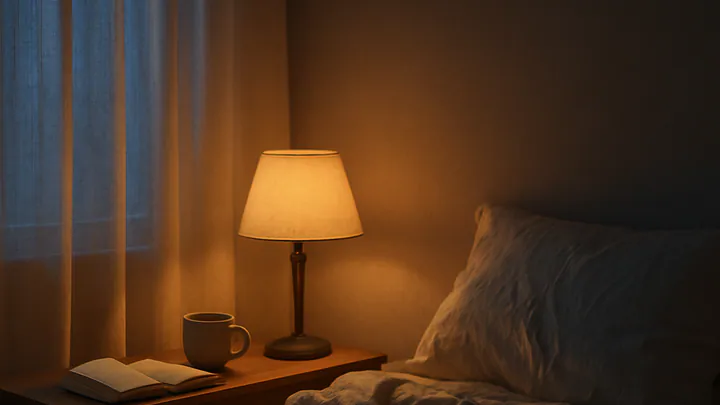
- Uncluttered: A tidy bedside table lowers visual stimulation. Charge the phone across the room if you can.
Your mattress and pillow matter too, but only up to a point. If you wake up sore or numb regularly, that's a signal worth acting on; otherwise, chasing the "perfect" mattress is rarely the fix.
Handle caffeine, alcohol, and late meals
These three inputs quietly shape more nights than most people realize.
- Caffeine: It has a long half-life and lingers in your system for many hours. A useful rule of thumb is to stop caffeine by early afternoon and see how you feel after two weeks.
- Alcohol: It can help you fall asleep but tends to fragment sleep later in the night, which is why you may wake at 3 a.m. after a couple of drinks. Earlier and lighter is gentler on sleep quality.
- Late meals: Eating a large meal close to bedtime often disrupts sleep. A light snack is usually fine if you're genuinely hungry.
What to do about the phone
The blue light debate gets more attention than it deserves. The bigger issue is behavioral: phones are designed to be engaging, which is the opposite of what a wind-down needs.
- Set a nightly "phone bedtime" 30–60 minutes before yours.
- Charge the phone in another room, or at least across the bedroom.
- Use a physical alarm clock so you don't need the phone at the bedside.
- If you must check something, use the shortest path in and out — don't open social apps.
When you can't sleep
Everyone has bad nights. How you respond to them shapes whether they become a pattern.
- If you've been in bed awake for about 20 minutes, get up. Lying frustrated in bed strengthens the wrong association.
- Go to another room with dim light and do something calm — reading a paper book works well.
- Return to bed when you feel drowsy, not just tired.
- Keep your wake time the next morning. Sleeping in tends to push the next night's insomnia later.
One rough night is not a crisis. A rough month is a signal to seek professional help.
Naps, weekends, and travel
Sleep hygiene has to survive real life. A few adjustments help.
- Naps: Short (10–20 minute) early-afternoon naps generally don't disrupt night sleep. Long or late naps often do.
- Weekends: Try to keep your wake time within about 30 minutes of weekdays. The "social jet lag" from sleeping in until noon on Saturday is real.
- Travel: When crossing time zones, get outdoor light at the destination's morning and eat meals on local time. Both cues help your rhythm shift faster than melatonin alone.
Trackers and wearables: useful, not gospel
Sleep trackers can be helpful for spotting trends — consistent late bedtimes, unusually restless nights after alcohol, the effect of a new routine. They are less reliable at grading any individual night, and obsessing over a nightly score can create anxiety that itself hurts sleep.
We recommend using data weekly, not nightly. Look for patterns you can act on, and ignore the noise.
When to see a professional
Sleep hygiene helps a lot of people, but it isn't a treatment for sleep disorders. Talk with a qualified healthcare provider if you notice any of the following:
- Loud snoring, gasping, or pauses in breathing during sleep.
- Persistent insomnia lasting more than a few weeks despite reasonable habits.
- Severe daytime sleepiness that interferes with driving, work, or relationships.
- Restless legs, chronic nightmares, or sleep that never feels restorative.
These are common, treatable conditions — but they need proper evaluation, not more tweaks to your evening tea.
Key takeaways
- Anchor a consistent wake time; let bedtime follow drowsiness.
- Get bright outdoor light early in the day and dim your home in the evening.
- Design a boring, predictable 30–60 minute wind-down and protect it.
- Keep the bedroom cool, dark, quiet, and reserved for sleep.
- Manage caffeine, alcohol, and late meals before adding supplements or gadgets.
- See a professional for snoring, chronic insomnia, or ongoing daytime fatigue.
Editorial disclosure: This article is for general informational purposes only and does not constitute medical advice. Sleep issues can have many underlying causes. Please consult a qualified healthcare professional about your individual situation, particularly before starting or stopping any supplement, medication, or treatment.
Frequently asked questions
How long does it take to see results from better sleep hygiene?
Most people notice small improvements within a week, but a stable routine usually takes three to four weeks to feel automatic. Consistency matters more than perfection on any single night.
Is it bad to use my phone in bed?
Phones tend to keep the mind alert and delay sleep onset, even with night mode enabled. The bigger issue is stimulation and endless scrolling, so keeping the phone out of arm's reach is usually more effective than tweaking screen settings.
What is the ideal bedroom temperature for sleep?
Cooler rooms generally support deeper sleep. Many people sleep well somewhere in the mid to upper 60s Fahrenheit (around 17–20°C), but the right number is whatever lets you fall asleep without waking up too hot or too cold.
Should I take melatonin every night?
Melatonin can help with occasional schedule shifts, like jet lag, but it is not designed as a nightly sleep aid. Talk with a qualified healthcare professional before using it long-term.
How much sleep do adults actually need?
Most healthy adults do well on roughly seven to nine hours per night. Individual needs vary, and how rested you feel during the day is a better gauge than hitting a specific number.
What should I do if I wake up in the middle of the night?
If you are still awake after about twenty minutes, get out of bed and do something calm and dim, like reading a paper book. Return to bed when you feel drowsy so your brain keeps associating the bed with sleep.