Stress-Relieving Hobbies for Adults: What Actually Works
Not every relaxing-looking hobby relaxes you. We compare seven stress-relieving hobbies for adults by cost, friction and session length, then cover the four mistakes that turn a calming pastime into one more thing you are failing at.
Rewritten with AI and republished automatically. Our editors set the standards and fix reported errors — how we work.
TL;DR: The hobbies that reliably lower stress share three traits — they occupy your hands or attention fully, they have no score, and they take under two minutes to start. Pick by friction, not by how relaxing it looks on someone else's feed. Ten focused minutes beats a three-hour session you never schedule.
What exactly counts as a stress-relieving hobby?
A stress-relieving hobby is a voluntary, low-stakes activity absorbing enough to interrupt rumination — the looping anxious thinking that keeps the body in a stress response. That definition rules more out than in. Passive consumption does not qualify, because attention is stimulated but never fully occupied.
The concept behind this is flow, described by psychologist Mihaly Csikszentmihalyi: the state where a task is hard enough to hold your whole attention but not so hard that it frustrates you. Painting, knitting, jigsaw puzzles, playing an instrument and gardening all land in that band for most beginners. That is why they show up on every list — not because they are trendy, but because they are difficulty-adjustable and forgiving.
One useful test: if you can do it while checking your phone, it is probably not doing the work.
Which stress-relieving hobby should I pick for my schedule?
Choose by friction first and interest second. The best hobby on paper loses every time to the one you can start in ninety seconds. Below is how the seven most common options actually compare once you account for setup, cost and mess.
| Hobby | Realistic startup cost | Shortest useful session | Setup friction | Best if… |
|---|---|---|---|---|
| Journaling | $0–$15 | 5 minutes | Very low | Your stress is mental clutter and unfinished decisions |
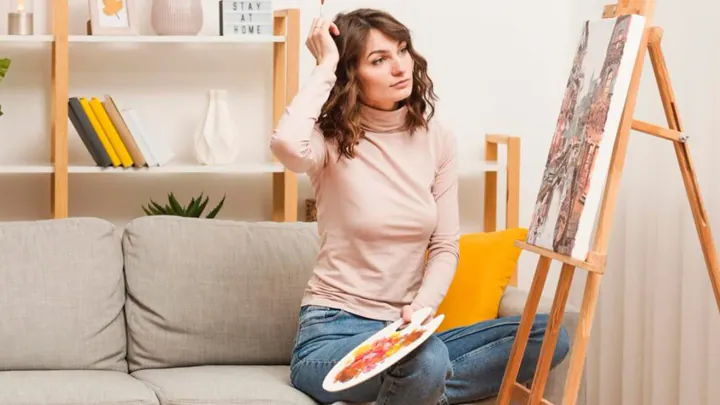
| Drawing / painting | $10–$45 | 10 minutes | Low (digital) to medium (wet media) | You want a visible result from a short sitting |
| Photography | $0 (phone) | 15 minutes | Low, but requires leaving the house | You sit all day and need movement plus attention |
| Knitting / crochet | $15–$30 | 10 minutes | Very low once started | You want something for hands during conversation or TV |
| Puzzles / LEGO / models | $15–$60 | 15 minutes | Medium — needs a surface you can leave out | Decision fatigue is your main symptom |
| Music-making | $0 (apps) to $120 (used instrument) | 15 minutes | Medium — noise and neighbors | You need emotional release, not just distraction |
| Gardening | $20–$50 | 10 minutes | Medium to high, weather-dependent | You want slow progress and time outdoors |
Two edge cases the generic lists skip. First, pottery and woodworking are excellent but have the worst friction profile of anything here — a studio session or a garage setup is at minimum an hour, so they work as a weekly ritual, not a daily reset. Second, gardening is seasonal in most of the country; if you start in November, start indoors with herbs or you will conclude you hate it when you actually hated the cold.
Does the research actually support hobbies for stress?
Research on leisure and creative activity generally supports the idea that regular hobby engagement is associated with lower self-reported stress and higher life satisfaction. The effect is consistent enough across studies that it is safe to treat a hobby as a reasonable, low-risk stress management tool. What the evidence does not support is a precise dose — nobody can tell you that 22 minutes of watercolor lowers cortisol by a fixed percentage, and articles that claim otherwise are usually inventing the number.
The more reliable framing is mechanistic. Absorbed attention competes with rumination for the same cognitive resources. When you are counting stitches or matching a color, you cannot simultaneously rehearse tomorrow's meeting. That is a modest, repeatable benefit — not a cure.
An important boundary: hobbies are not a substitute for treatment. If low mood, anxiety or exhaustion has persisted for weeks, is disrupting your sleep, or is affecting your ability to work, consult a qualified professional. A hobby supports recovery; it does not diagnose or treat anything.
Why do most new hobbies get abandoned within a month?
Almost never because the hobby was wrong. Four failure modes account for the majority of quiet abandonments, and each has a fix.
- You turned it into a performance. The moment you photograph the piece for an audience, you have added an evaluator. Keep at least one hobby entirely off social media — no progress posts, no before-and-afters. If you want the accountability of an audience, use a separate hobby for it.
- You waited for a big block of time. Saturday-afternoon plans collapse. Fifteen minutes after lunch survives. The schedule that works is the one that fits inside the day you already have, which is also the argument we made in our guide to building a morning routine that actually works.
- You bought the gear first. A $300 setup creates an obligation. Obligation is stress. Spend under $40 until you have shown up ten times — and if you do eventually want the good camera or the kiln time, save for it in a small sinking fund rather than putting it on a card in a burst of enthusiasm.
- You picked what looked relaxing rather than what interests you. Gardening is genuinely wonderful and genuinely miserable if you dislike being outdoors. Curiosity is the only sustainable fuel here.
Our decision rule: if you have dreaded the hobby twice in a row, lower the stakes once — then swap it. Dread means the activity has acquired an expectation. Either strip the expectation out or find something without one. No guilt, no sunk-cost reasoning.
How do I make a new hobby stick past week three?
Reduce friction rather than recruiting willpower. Willpower is the resource stress depletes first, so any plan that depends on it fails precisely when you need the hobby most.
- Anchor it to something automatic. Journal while the coffee brews. Knit during the evening show you already watch. The existing habit does the remembering.
- Keep supplies in the open. A guitar in a closet stays in a closet. A sketchbook on the kitchen counter gets picked up. Visibility is the single highest-leverage change most people can make, and it pairs well with clearing the competing inputs — our digital declutter guide covers the other half of that equation.
- Cap the session before you start. Twelve minutes, timer on. Stopping while you still want to continue is what makes tomorrow easy.
- Run a four-week trial, not a rebrand. "I'll do watercolor every other evening through the month" is testable. "I'm a painter now" is an identity you can fail at.
- Add one low-commitment community. A casual local photo walk or a beginner-friendly craft forum gives you enough momentum without adding deadlines.
What does a realistic first month look like?
Here is a worked example, using sketching, for someone with a full-time job and no free evenings. Week one: buy nothing, use a notebook and a pen you own, draw the same mug for ten minutes on three days. Week two: same three days, add one 20-minute session on the weekend. Week three: the mug gets boring, so switch to whatever is on the kitchen table — this is the week most people quit, and the fix is changing the subject, not the schedule. Week four: decide. If you looked forward to it even twice, buy the $18 sketchbook. If you did not, try something from the table above with a different physical profile — hands-busy instead of eyes-busy, or outdoors instead of seated.
Total cost through the trial: under $20. Total time: about three hours across a month. That is the honest scale of the commitment, and it is why we prefer trials to resolutions.
When is a hobby not the right fix?
When the underlying problem is physiological or structural, a hobby is a patch. Chronic under-sleeping is the most common culprit — no amount of knitting compensates for a persistent deficit. The same applies to an unsustainable workload, an unresolved conflict or a schedule with no unclaimed minutes in it.
A hobby also backfires if it becomes a second job. Monetizing a craft is a legitimate choice, but the moment there are customers, deadlines and pricing decisions, it stops functioning as a rest activity. If you sell what you make, protect a separate, unmonetizable pastime for actual recovery.
And if you have tried five hobbies in five months without one sticking, the problem may not be selection. It may be that your day contains no reliably protected window, in which case the schedule is the project, not the hobby.
Key takeaways
- A stress-relieving hobby is one that fully occupies attention, has no score, and starts in under two minutes — choose by friction, not by reputation.
- Ten to twenty absorbed minutes is a real session; waiting for a free afternoon is how hobbies die.
- Spend under $40 and keep supplies visible for the first month; upgrade only after roughly ten sessions.
- The four classic killers are performance pressure, oversized time blocks, premature gear purchases, and picking something you do not actually find interesting.
- If you dread it twice in a row, lower the stakes once, then switch without guilt.
- Hobbies support stress management but do not treat clinical conditions — if stress is persistent and disruptive, consult a qualified professional.
Frequently asked questions
What is the best stress-relieving hobby for adults?
There is no single best one — the best hobby is the one with the lowest friction for your actual life. If you have 15 scattered minutes a day, journaling or sketching wins. If you need to move after sitting all day, gardening or a photo walk wins. If your stress is mental overload, a puzzle or LEGO kit wins because it occupies working memory without demanding decisions.
How long does a hobby session need to be to reduce stress?
Ten to twenty minutes is enough for most people to notice a shift, provided the activity is absorbing. The benefit comes from attention moving away from rumination, not from duration. A focused 15-minute sketch does more than a distracted two-hour session with your phone face-up beside you.
Do hobbies actually help with stress, or is that just a feel-good idea?
Research on leisure and creative activity generally points in a positive direction — people who engage regularly in hobbies tend to report lower stress and higher life satisfaction. The mechanism most psychologists point to is flow, the absorbed state where a task holds your full attention. Hobbies are not a treatment for clinical anxiety or depression; if stress is affecting your sleep, appetite or work for weeks at a time, consult a qualified professional.
How much should I spend to start a new hobby?
Under $40 for the first month, and ideally close to zero. Expensive gear creates an obligation to justify the purchase, which is the opposite of a zero-pressure hobby. Use the phone camera, the library, a borrowed instrument or a $12 sketchbook, and only upgrade after you have shown up roughly ten times.
Why do I keep abandoning hobbies after a few weeks?
Usually because the setup cost per session is too high, or because the hobby became something to be good at rather than something to do. Keep supplies visible and ready, attach the activity to an existing daily anchor like your morning coffee, and commit to a four-week trial rather than an identity.
Can screen-based hobbies count as stress relief?
Yes, if they are creative and absorbing rather than passive and infinite. Digital drawing, music production and photo editing all produce flow. Scrolling and autoplay do not, because they offer stimulation without absorption and leave the decision of when to stop entirely to you.
What if I genuinely do not enjoy any of the usual relaxing hobbies?
Then stop auditioning hobbies for their reputation and look at what you already lose track of time doing. Repairing things, cooking without a recipe, birdwatching, learning a language, restoring furniture and organizing a collection all produce the same absorbed attention as painting or knitting.