25 DIY Home Projects, Ranked by Time, Cost and Skill
A practical, sorted list of 25 DIY home projects — grouped by whether they take an hour, an afternoon or a weekend — with realistic costs, renter-safe picks, the mistakes that cost the most money, and a simple rule for choosing what to build first.
Rewritten with AI and republished automatically. Our editors set the standards and fix reported errors — how we work.

TL;DR: You don't need a contractor or a renovation budget to improve your home. These 25 DIY home projects are sorted by how long they actually take — under an hour, one afternoon, or a full weekend — with realistic costs, the renter-safe picks flagged, and the mistakes that turn a $30 project into a $300 repair.
What counts as a DIY home project, and which ones are genuinely beginner-safe?
A DIY home project is any improvement, repair or décor upgrade you complete yourself without hiring a licensed trade. Beginner-safe means it involves no electrical circuits, no plumbing supply lines, no structural elements and no permit — which describes 22 of the 25 ideas below.
The three exceptions are flagged where they appear. Our rule of thumb: if a mistake can flood a room, energize a wire or compromise something holding up a ceiling, it stops being a DIY project and becomes a quote.
Which 25 DIY home projects are worth your weekend?
We've grouped these by time commitment rather than room, because time is the thing people actually run out of. Everything in the first group is finishable before dinner.
Under an hour: instant wins
- Magnetic knife strip. Frees a full block's worth of counter. Mount into studs or use toggle anchors — knives are heavier than they look, and a strip that pulls out of drywall is a safety problem.
- Labeled pantry jars. Decant flour, rice, pasta and oats into matching glass jars. Write the purchase date on the label underside; it's the only way to keep decanting from hiding stale stock.
- Under-sink stackable bins. Pull everything out, group by task, use clear bins on a riser so the plumbing trap stops wasting the space around it.
- Swap the bathroom mirror. The single highest-impact hour in the house. Measure the existing wall marks before you buy — a smaller replacement exposes unpainted drywall.
- Cleaning-supply pegboard. Mount a small pegboard inside a closet door for brooms, sprays and brushes. Cheap, removable, and it ends the floor pile.
- Macramé plant hangers. Hand-tied cotton cord, four knots to learn. Use a ceiling hook rated for at least five times the wet pot weight.
An afternoon: two to five hours
- Gallery wall. Lay the arrangement on the floor first, trace each frame on kraft paper, tape the paper to the wall, then drill through the paper. It removes all the guesswork.
- Paint an interior door. Remove the hardware, scuff-sand, and use a cabinet-grade enamel. A deep navy or olive door reads intentional; a half-sanded one reads unfinished.
- Re-caulk a tub or sink. Remove all the old caulk first — new silicone will not bond to old silicone. Use 100 percent silicone in wet areas and let it cure a full 24 hours before running water.
- Peel-and-stick backsplash. Fast and renter-friendly only on smooth, clean, semi-gloss or satin walls.
- Reupholster dining chair seats. Unscrew the seat pad, staple new fabric over fresh 1-inch foam, screw it back. The cheapest convincing furniture makeover there is.
- Spray-paint patio furniture. Clean, scuff, prime for metal, then two thin coats. Thin coats — one thick coat is what causes runs.
- Reframe an old mirror. Add mitered trim, mosaic tile or rope for a coastal look.
- Pour scented candles. Soy wax, a thermometer, and wick sizing matched to jar diameter. Tunneling is almost always an undersized wick.
- Make bath bombs. Great gifts. Skip heavy fragrance oils if anyone in the house has sensitive skin, and speak with a qualified healthcare professional before using new topical ingredients if you have a skin condition.
- Blanket ladder. Two side rails, four dowel rungs, one afternoon. Lean it at a 10-degree angle so it can't walk away from the wall.
A full weekend: six hours and up
- Floating shelves. Anchor into studs. A 3-foot shelf loaded with books can carry 40 pounds or more, and drywall alone will not hold it.
- Stencil an accent wall. Use a nearly dry roller and pounce, don't drag. Overloading the roller is what causes bleed.
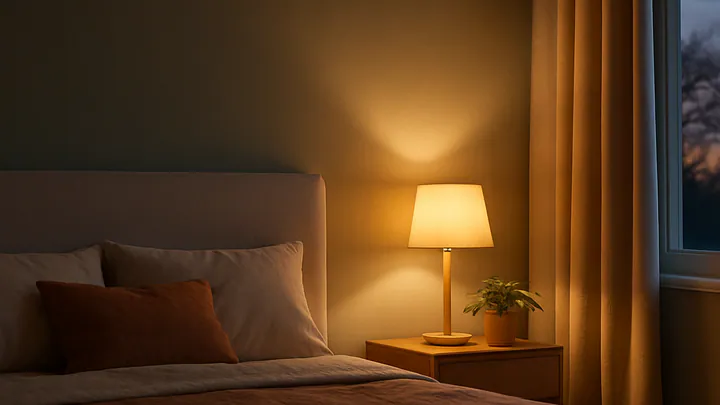
- Build a headboard. Planked, tufted or painted. French cleats make it removable — which matters more than you think at move-out. If the bedroom is the room you want to fix, our guide to calm, cozy bedroom upgrades pairs well with this one.
- Vertical herb garden. Pallet or hanging pots for basil, mint and rosemary. Mint goes in its own container, always — it will strangle everything else.
- Rolling laundry cart. Scrap plywood, four locking casters, sized to the gap between washer and wall. Measure that gap twice.
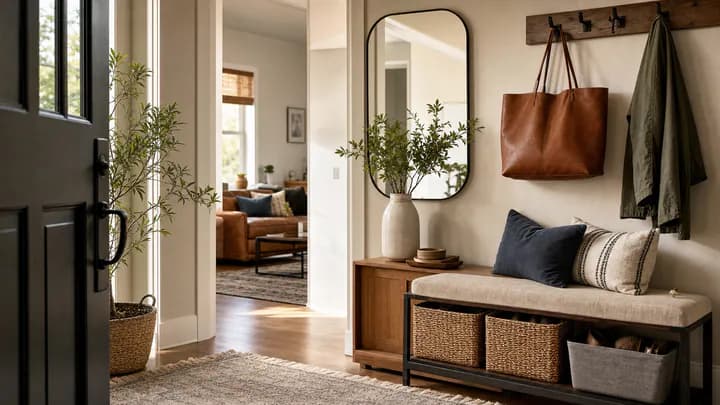
- Mudroom drop zone. Hooks, a bench and baskets turn any hallway into a landing strip. Our breakdown of how to make the first three feet of an entryway work covers layout for tight footprints, and there are more compact layouts in small entryways that work hard.
- Mason jar pendant lights. Use UL-listed plug-in cord kits and LED bulbs. Hardwiring into a ceiling box is licensed-electrician work in most jurisdictions.
- Upcycle a thrifted dresser. Clean with degreaser, sand, prime with a bonding primer, paint, replace hardware. Skipping the bonding primer on a glossy laminate piece is why DIY furniture paint peels.
- Standing desk. Butcher block or plywood on adjustable legs. Set the surface at elbow height with the monitor top at eye level. While you're rebuilding the home office, it's worth checking whether a Wi-Fi 7 router upgrade is justified for your setup.
How much do these DIY projects cost and how long do they take?
Rough material estimates, assuming you already own basic tools. Prices vary widely by region and finish level, so treat these as planning ranges rather than quotes.
| Project | Material cost (est.) | Time | Skill | Renter-safe? |
|---|---|---|---|---|
| Labeled pantry jars | $25–$60 | 45 min | None | Yes |
| Magnetic knife strip | $20–$40 | 30 min | Beginner | With permission |
| Re-caulk tub or sink | $10–$20 | 2 hrs + cure | Beginner | Usually yes |
| Peel-and-stick backsplash | $60–$150 | 3 hrs | Beginner | Ask first |
| Reupholster 4 chair seats | $50–$120 | 3 hrs | Beginner | Yes |
| Floating shelves (pair) | $40–$90 | 4–6 hrs | Intermediate | No |
| Plank headboard | $60–$180 | 1 day | Intermediate | Yes, if leaning |
| Standing desk | $150–$400 | 1 day | Intermediate | Yes |
If you're funding several of these across a year, a small monthly set-aside works better than absorbing each one into a single month's budget. That's general budgeting guidance, not financial advice.
Which projects will actually cost you your security deposit?
Paint, adhesive tile and wall anchors are the three that generate deposit disputes. Everything freestanding — jars, bins, ladders, benches, painted patio furniture, candles — is invisible to a move-out inspection.
Two edge cases renters get burned by. First, adhesive hooks and peel-and-stick tile bond aggressively to flat and matte paint, and removal pulls the paper layer off the drywall with them. Second, paint applied less than about three weeks before you attach anything hasn't fully cured, and the adhesive will take the paint with it. Get approval in writing, and photograph every surface before you start.
What are the most common and most expensive DIY mistakes?
- Caulking over old caulk. The most repeated bathroom mistake. Silicone bonds to clean substrate, not to itself, so the new bead peels within months and water gets behind the tub surround.
- Hanging weight on drywall alone. Plastic expansion anchors are rated for picture frames, not shelves. Find the stud or use a rated toggle bolt.
- Skipping primer on glossy surfaces. Laminate, melamine and previously oil-painted trim need a bonding primer. Without it, the paint scratches off with a fingernail.
- Sanding painted surfaces in a pre-1978 home. Paint from that era may contain lead. Don't dry-sand it — check EPA Renovation, Repair and Painting guidance and, if in doubt, test or hire a certified contractor.
- Buying the tool before scoping the project. A miter saw bought for one headboard is an expensive headboard. Rent or borrow first; buy the tool on its second use.
One more that's less obvious: drilling into plaster-and-lath walls in older homes with a standard bit. Plaster crumbles. Use a masonry bit at low speed with painter's tape over the mark.
How do you choose which project to do first?
Use the rule of three: pick the project that fixes something that annoys you at least three times a week. Daily friction compounds; a decorative upgrade in a room you rarely use does not.
If two projects tie, choose the one that's reversible. Reversible projects let you learn on real walls without permanent consequences, which is the whole point of starting small. And if the annoyance is that the house feels unfinished rather than broken, start at the front door — that's where perception of a home is set, as we cover in small entryways that make a big first impression.
When does a DIY project stop being a DIY project?
Stop and call a licensed trade the moment the work goes behind a wall, panel or fixture. That means new circuits, hardwired lighting, moving supply or drain lines, gas appliances, load-bearing changes and any suspected asbestos or lead abatement.
There's also a quieter stopping point: when the project no longer fits your actual life. A half-stenciled accent wall left for six weeks costs more in daily irritation than the finished wall returns in pleasure. Finish the one-hour list before you start the weekend list.
Key takeaways
- Sort projects by time, not by room — six projects here are done in under an hour, and those build the anchoring and finishing skills the bigger ones require.
- Prep is where DIY succeeds or fails: full caulk removal, bonding primer on gloss, studs or rated anchors for anything carrying weight.
- Renters should stick to freestanding and reversible projects, and get any paint or adhesive work approved in writing with before-photos.
- Peel-and-stick tile needs smooth, cured, non-matte walls — test one tile for a week before covering a backsplash.
- Anything behind a wall or panel belongs to a licensed professional; the permit is cheaper than the repair.
- Choose your first project with the rule of three: fix what irritates you three times a week.
Frequently asked questions
What is the best first DIY project for a complete beginner?
Swapping a bathroom mirror or installing a magnetic knife strip is the best first project, because both take under an hour, need only a drill and a level, and teach you wall anchoring — the skill that most later projects depend on. Start with something you'll see daily so the win feels real.
How much should I budget for a weekend DIY project?
Most weekend-scale projects in this list land somewhere between roughly $40 and $200 in materials, assuming you already own basic tools. Add a 20 percent buffer for the second trip to the hardware store, which almost always happens. Tool purchases are separate and should be treated as one-time costs.
Which DIY projects are safe to do in a rental?
Pantry jars, under-sink bins, blanket ladders, macramé plant hangers, freestanding mudroom benches, candles, painted patio furniture and most décor projects are fully renter-safe because they leave no marks. Anything involving paint, adhesive tile or wall anchors needs written landlord approval first.
Does peel-and-stick backsplash work on every wall?
No — peel-and-stick tile needs a smooth, clean, non-porous surface. It fails on textured or knockdown drywall, freshly painted walls that haven't cured for about three weeks, and flat or matte paint. Test one tile in a corner and leave it a week before committing to the whole run.
When should I stop and hire a professional?
Hire a licensed pro for anything behind a wall or panel: new circuits, hardwired light fixtures, moving water supply lines, gas appliances, structural changes and asbestos or lead-paint removal. The cost of a permit and a licensed trade is almost always less than the cost of undoing a failure.
What tools do I need before starting?
A cordless drill with a driver bit set, a 24-inch level, a tape measure, a stud finder, a utility knife, a caulk gun and a staple gun will cover more than 20 of the 25 projects here. Buy tools as projects require them rather than all at once.
Is it cheaper to DIY or to buy furniture ready-made?
DIY usually wins on décor and organization, and often loses on complex furniture. Lumber, hardware and finish for a simple shelf or headboard cost less than a retail equivalent, but a built-from-scratch desk or cabinet can cost more than a flat-pack version once you factor in tools and wasted material.