7 Underrated Travel Gems — And How to Visit Them Well
Some "hidden gems" are anything but hidden anymore. Here are seven genuinely rewarding destinations, plus the visitor caps, weather buffers, and booking rules that decide whether the trip works or falls apart.
Rewritten with AI and republished automatically. Our editors set the standards and fix reported errors — how we work.
TL;DR: Most "hidden gem" lists are out of date. The seven destinations below still reward the detour — but the skill is timing, caps, and buffer days, not secrecy. Book Jiuzhaigou and Kalanggaman in advance, treat Hallstatt and Matera as shoulder-season stays, and never schedule a tight connection out of the Faroes.
What actually counts as a hidden gem in 2026?
A hidden travel gem is a destination that delivers a first-rate experience — landscape, food, history, or wildlife — without the price inflation, queue times, and crowd pressure of a headline city. Note what that definition does not require: obscurity. Plenty of places on every "secret" list have been geotagged into oblivion.
We draw the line differently. A destination still qualifies if you can have an unhurried, high-quality day there by choosing the right month, the right hour, and the right base. By that test, a village with a famous viewpoint can still be a gem at 7 a.m. in October, and a remote island can be a disappointment in the one week a cruise ship calls.
So read the list below as seven places worth building a trip around, each paired with the specific constraint that decides whether your visit works.
Which seven destinations are worth the detour?
1. Hallstatt, Austria — beautiful, and busier than you think
Hallstatt is a lakeside village of a few hundred residents wedged between the Dachstein massif and the Hallstätter See, and it is emphatically no longer undiscovered. Coach tours from Salzburg and Vienna deliver waves of day visitors, and the village has spent years experimenting with ways to manage them.
Visit anyway — but sleep there. The salt mine above the village is among the oldest worked salt deposits in Europe, and the surrounding Iron Age burial finds gave their name to the entire Hallstatt culture. That history is genuinely rare. The crowds thin dramatically after the last bus leaves, which makes an overnight stay the single highest-value decision of the trip.
2. Kalanggaman Island, Philippines — a sandbar with a headcount
Kalanggaman is a narrow island off Palompon in Leyte, famous for the white sandbars that curl off both ends into shallow turquoise water. It is managed with a daily visitor limit and an environmental fee, and that cap is the whole reason it still looks the way it does.
There are no resorts. Most people come as a day trip by outrigger boat from Palompon, roughly an hour each way depending on conditions; limited camping is sometimes permitted. Bring your own water, shade, and reef-safe sunscreen, and confirm boat schedules directly with the municipal tourism office rather than relying on a third-party listing.
3. Jiuzhaigou Valley, China — book it or don't go
Jiuzhaigou, in northern Sichuan, is a UNESCO World Heritage site built around terraced lakes so mineral-clear they read as turquoise, jade, and cobalt in the same frame. It sits at high elevation — much of the valley floor is well above 2,000 meters — and was significantly affected by a 2017 earthquake before reopening under tighter management.
Entry now runs through a reservation system tied to an ID or passport number with a daily cap, and peak autumn dates disappear quickly. Go for the second half of October if foliage is your priority, allow a day to acclimatize, and expect shuttle buses rather than free-roaming access.
4. The Azores, Portugal — volcanic, green, and weather-dependent
The Azores are a nine-island Portuguese archipelago in the mid-Atlantic, with São Miguel as the usual entry point via Ponta Delgada. The draw is geology you can walk into: the twin crater lakes of Sete Cidades, the fumaroles and thermal pools around Furnas, sea cliffs, and whale watching as migrating species pass through in spring.
One correction worth making — the Azores have hot springs and steaming fumaroles, not geysers. The islands are also genuinely changeable; a clear morning at Sete Cidades can become a whiteout by lunch. Build your itinerary around flexible days and be willing to swap islands or activities at short notice. This is a destination that rewards the slow travel approach of fewer places and longer stays.
5. Boulders Beach, South Africa — a colony, not an attraction
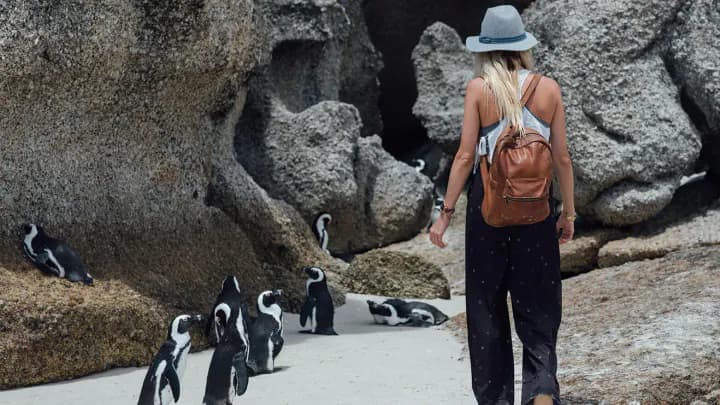
Boulders Beach sits near Simon's Town on the Cape Peninsula, about an hour from central Cape Town, and hosts a colony of African penguins within Table Mountain National Park. You pay an entrance fee, walk elevated boardwalks over the nesting area, and can swim in the sheltered granite coves nearby.
The important context: African penguins are endangered, and the boardwalks are there to keep people off burrows. Don't touch, feed, or corner a bird for a photo — they bite, and stress affects breeding. Pair the stop with Cape Point and the Kalk Bay coast rather than treating it as a standalone destination.
6. Matera, Italy — an ancient cave city that has already been found
Matera, in Basilicata, is built around the Sassi — cave dwellings carved into a limestone ravine and inhabited for millennia. It was one of the poorest places in postwar Italy, controversially cleared in the 1950s, then rehabilitated and recognized as a UNESCO World Heritage site. It served as European Capital of Culture in 2019 and has appeared in major films, which ended its anonymity permanently.
It remains quieter than Rome or Venice, and the experience of walking the Sassi at dawn is unlike anywhere else in Italy. The nearest practical airport is Bari, roughly an hour and a half away by car or bus. Stay in a cave hotel for one or two nights; a day trip wastes the light that makes the place extraordinary.
7. The Faroe Islands — the one where logistics decide everything
The Faroe Islands are an autonomous territory of Denmark: eighteen islands of sheer sea cliffs, turf-roofed hamlets, and roughly as many sheep as people. Flights land at Vágar, minutes from the Múlafossur waterfall at Gásadalur. Puffins nest seasonally on Mykines, reached by ferry and typically requiring a guide on parts of the island.
The scenery is spectacular and the weather is the boss. Fog closes the airport, wind cancels ferries, and some of the best-known viewpoints cross private land where landowners charge access fees or restrict entry. Rent a car, accept that plans will move, and treat the forecast as a daily rather than weekly instrument.
When should you go to each one?
The short answer: shoulder months for the European entries, autumn for Jiuzhaigou, dry season for Kalanggaman, and peak summer only for the Faroes if you want ferries running reliably. The table compares the constraints that actually matter.
| Destination | Best window | Main access point | Booking constraint | Crowd reality |
|---|---|---|---|---|
| Hallstatt, Austria | Late Sept–Nov, or midweek winter | Salzburg by train/bus | Overnight beds limited | Heavy by day, quiet by night |
| Kalanggaman, Philippines | Dry season, avoid typhoon months | Palompon, Leyte by boat | Daily visitor cap + fee | Genuinely low |
| Jiuzhaigou, China | Mid-to-late October | Jiuzhaigou/Chengdu | ID-linked online reservation | High in autumn peak |
| Azores, Portugal | Apr–Jun and Sept | Ponta Delgada (São Miguel) | Car rental sells out in summer | Moderate, rising |
| Boulders Beach, South Africa | Oct–Mar (Southern summer) | Cape Town, ~1 hr drive | Park entry fee, early arrival | Busy midday, calm early |
| Matera, Italy | Apr–May, Sept–Oct | Bari airport, ~90 min | Cave hotels book early | Moderate, concentrated |
| Faroe Islands | Jun–Aug for ferries, May/Sept for quiet | Vágar airport | Weather; limited rooms and cars | Low, but concentrated at hotspots |
If your dates are fixed by work or school, invert the process: pick the destination that suits your window rather than forcing the window to fit a destination. Our guide to shoulder season travel and how to time it covers how to find those overlaps.
What's the most common and costly mistake on off-the-radar trips?
Booking a tight onward connection out of a weather-exposed destination. A single delayed ferry from Mykines or one fogged-in morning at Vágar can cascade into a missed international flight, and remote destinations rarely have a second daily departure to rescue you.
Our decision rule is simple: if a destination is reached by one ferry, one small-airport runway, or one seasonal boat, add a buffer night before your next flight. The cost of one extra guesthouse night is trivial compared with rebooking a long-haul ticket on the day.
The second frequent error is assuming a capped destination can be arranged on arrival. Jiuzhaigou's reservation window and Kalanggaman's boat schedule are not negotiable at the gate — travelers do get turned away. Confirm both before you book non-refundable domestic transport.
A third, quieter mistake: treating a village of a few hundred residents like a photo studio. Drone flights, blocked driveways, and trespassing for a viewpoint are the behaviors that push small communities toward restrictions and fees for everyone who follows.
When is a lesser-known destination the wrong choice?
Skip these places if your trip requires guaranteed weather, fast medical access, step-free infrastructure, or a compressed schedule. Remote destinations trade convenience for quiet, and that trade is not always worth it.
Specific cases where we'd advise against:
- Short trips. If you have four days total, two of them spent on ferries and connections is a poor return. Choose a well-connected small city instead.
- Managing a health condition. High-altitude Jiuzhaigou and island destinations with limited clinics warrant a conversation with a qualified medical professional before you commit.
- Traveling with limited mobility. Matera's Sassi are stairs and cobbles; Faroese trails are mud and wind. Check specific accessibility rather than assuming.
- First solo trip. Self-sufficiency matters more when taxis and public transport are scarce — our first-timer's guide to solo travel is a better starting point.
How do you keep the trip affordable?
Off-the-radar rarely means cheap. The Faroes, the Azores in summer, and Hallstatt overnight stays all carry real premiums, usually because supply is fixed and small. The saving comes from shoulder-season pricing, staying put rather than moving every two days, and cooking some meals where restaurants are limited.
A useful habit is treating a big trip as a scheduled expense rather than a surprise one — a dedicated travel fund removes the temptation to book peak dates on credit.
Key takeaways
- Timing beats secrecy. Hallstatt and Matera are famous now; an overnight stay in the shoulder season still delivers the experience the crowds miss.
- Caps are real. Jiuzhaigou and Kalanggaman both limit daily numbers — reserve before you lock in flights or domestic transport.
- Add a buffer night anywhere reached by a single ferry, small airport, or seasonal boat. Faroese fog is the classic trip-wrecker.
- Respect the place. Endangered penguins at Boulders, private land in the Faroes, and residents in tiny villages all set limits worth honoring.
- Match the destination to your constraints — dates, mobility, health, and trip length — rather than forcing an itinerary around a photograph.
Frequently asked questions
Is Hallstatt still a hidden gem?
No — Hallstatt is one of the most photographed villages in Europe and receives heavy day-tripper traffic from coach tours out of Salzburg and Vienna. It is still worth visiting, but only if you stay overnight or arrive in the shoulder season, when the buses leave and the village returns to its 800 or so residents.
Which of these destinations needs advance booking?
Jiuzhaigou Valley and Kalanggaman Island both operate visitor limits, so book before you travel. Jiuzhaigou uses an online reservation system tied to a passport or ID number and sells out in peak autumn; Kalanggaman is managed by the municipality of Palompon with a capped day-trip boat schedule and an environmental fee.
What is the best month to visit the Azores?
Late spring through early autumn gives the most reliable hiking weather, with April to June favored for whale watching as migrating species pass through. The Azores sit in the mid-Atlantic, so weather changes fast in any month — plan flexible days rather than fixed itineraries.
Are the Faroe Islands expensive?
Yes, relative to mainland Europe — accommodation is limited, restaurant prices are high, and rental cars book out in summer. The bigger cost risk is weather: fog regularly disrupts flights to Vágar and ferry or helicopter links to smaller islands, so budget at least one buffer day before any onward flight.
Can you swim with the penguins at Boulders Beach?
You can swim in the sheltered coves near the Boulders colony in Table Mountain National Park, and African penguins sometimes share the water. Keep your distance and never touch or feed them — the species is endangered, and the boardwalks exist to protect nesting sites.
How do I avoid contributing to overtourism at small destinations?
Stay overnight rather than day-tripping, spend money with local operators and guesthouses, travel outside the peak weeks, and follow posted access rules on private land. Small communities absorb visitors well when arrivals are spread out; the damage comes from concentrated surges at a single viewpoint.
Are off-the-radar destinations a good choice for a first solo trip?
Sometimes, but they demand more self-sufficiency — fewer taxis, sparser public transport, limited medical facilities, and patchy cell coverage. A first solo traveler is usually better served by a well-connected small city, then graduating to remote islands once the logistics feel routine.