Solo Travel in 2026: A First-Timer's Confident Playbook
A first solo trip succeeds or fails on four decisions: where you go, how you land, what you budget for the solo premium, and which safety habits you make automatic. A first solo trip succeeds or fails on four decisions: where you go, how you land, what you budget for the solo premium, and which safety habits you make automatic. Here is the playbook.
Drafted with AI; reviewed by Najam Kausar on . How we work.
TL;DR: A great first solo trip comes down to four decisions: pick a forgiving destination, engineer a soft landing for the first 48 hours, budget honestly for the solo premium, and turn a handful of safety habits into defaults. Do those four well and the trip stops being a test and starts being a vacation.
Solo travel is independent travel undertaken without a companion, where every decision — route, pace, budget, and bedtime — belongs to one person. More people are taking their first solo trip than ever, usually for unglamorous reasons: a life transition, calendars that no longer sync with friends, or the realization that waiting for the perfect travel partner means not going at all.
Travelers who thrive alone are not braver than everyone else. They are better prepared in four specific places. Here is a practical playbook.
Why is 2026 an easier year to travel alone than it used to be?
Because the infrastructure that used to punish solo travelers has quietly matured. Hostels now routinely offer private rooms with hotel-grade bathrooms, so you get the social atmosphere without the dorm compromise. eSIMs mean you have data before you leave the jet bridge, which removes the single most stressful gap in any arrival.
Translation apps handle menus, signage, and short transactional conversations well enough that language is rarely a hard barrier in a tourist-facing city. Day trips, food tours, and cooking classes are bookable on your phone the morning of, which solves the biggest emotional hurdle of traveling alone: meeting people without committing to a two-week group tour.
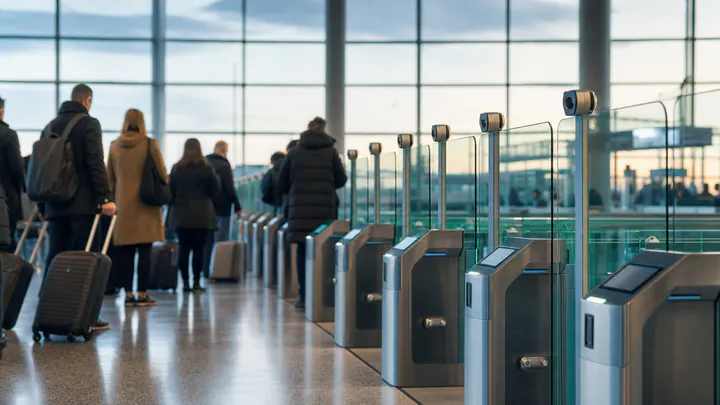
One thing that has gotten more complicated is paperwork. Entry rules for Europe in particular have been in flux, with biometric border systems and pre-travel authorization schemes phasing in on repeatedly revised timelines. Do not rely on a blog post — including this one — for entry requirements. Check the official government source for your passport and your destination within a month of departure, and again a week out.
Three details catch first-timers at the counter: many countries refuse entry, and airlines deny boarding, when a passport has less than six months of validity; several countries require proof of onward travel; and some hostels in Europe still set upper age limits on dorm beds.
Which destination should you pick for a first solo trip?
Pick the one that is safe, walkable, and forgiving of small mistakes. Your first solo trip is not the place to test your resilience; it is the place to build confidence. The specific things to look for are reliable public transit or established ride-hailing, a compact central neighborhood where food and sights cluster, widespread English or excellent signage, and visible tourism infrastructure so you are never the only foreigner in the room.
| Destination | Why it works alone | Watch out for | Relative daily cost |
|---|---|---|---|
| Japan | Exceptional safety, punctual rail, solo dining is culturally normal (counter seats everywhere) | Cash still matters in small towns; peak cherry-blossom lodging sells out months ahead | Moderate to high |
| Portugal | Compact cities, warm hospitality, affordable by Western European standards | Lisbon and Porto hills are brutal with a heavy bag; pickpocketing on tourist trams | Moderate |
| Iceland | English everywhere, tiny population, a self-drive Ring Road that is hard to get lost on | Highest cost on this list; winter driving demands real caution | High |
| New Zealand | A well-worn backpacker circuit and genuinely social hostel culture | Long flights, long driving days, seasons inverted from the Northern Hemisphere | Moderate to high |
| Thailand | The largest solo-traveler community anywhere; low daily costs; easy to meet people | Scooter rentals and insurance exclusions; scam-prone tourist transport in Bangkok | Low |
| Costa Rica | Small-group adventure activities make socializing automatic | Domestic transit is slow; costs higher than neighbors | Moderate |
What to skip on a first trip: complex overland border crossings, remote wilderness you would have to self-navigate, and anywhere under an active advisory warning against travel. Government advisory systems tier destinations by risk level — read the actual text, not just the number, because a warning often applies to one border region rather than the whole country.
The three-thing rule for choosing cities
Here is a simple decision rule: if you cannot name three specific things you want to do in a city, do not book three nights there. Most first-timers overstuff the route, spend a third of the trip in transit, and arrive home exhausted. Two cities in ten days beats five, every time — an argument we make at length in our guide to slow travel and deeper trips in 2026.
How should you plan the first 48 hours after landing?
Lock them down completely, and improvise after that. Many difficult solo travel stories trace back to a chaotic arrival: jet lag, unfamiliar currency, and a curbside taxi negotiation are a bad combination at any age.
- Pre-book arrival transport. Airport train, official taxi desk, or an arranged pickup — never a curbside price negotiation while disoriented.
- Book the first two nights firmly at a central, well-reviewed property with 24-hour reception. Late flights and missed connections make self-check-in lockboxes a gamble.
- Activate an eSIM before you fly so maps and translation work the second the plane door opens.
- Download offline maps of your arrival city as a backup for when the eSIM does not provision cleanly. It happens.
- Schedule one anchor activity for day two — a walking tour is ideal. It gives you a mental map of the city and introduces you to other travelers before loneliness has a chance to form.
The most common costly mistake: booking the cheapest itinerary with a tight self-transfer, then landing in a new country at 11:40 p.m. with no pre-booked ride. The $90 you saved on the flight buys you the worst two hours of the trip. Pay for the daytime arrival. If you cannot, build a buffer night near the airport rather than a midnight cross-city transfer.
The opposite trap is a red-eye landing at 7 a.m. into a property with a 3 p.m. check-in. Pay for the previous night so the room is yours on arrival. Where there is a choice, land between roughly 9 a.m. and 4 p.m. local time, when transit desks, reception, and ATMs are open.
A go/no-go rule: before boarding, you should be able to say your accommodation's address out loud, describe how you will get there, and name the payment method for that ride. If any of the three is missing, fix it at the gate.
Jet lag deserves a plan too. Getting outside into daylight within an hour of waking on your first morning is the simplest lever you have, and it is worth pairing with a realistic approach to recovering sleep debt before you leave rather than after you land.
How much more does solo travel cost, and how do you cut it?
Plan on roughly 1.3 to 1.8 times the per-person cost of the same trip taken as a couple, because lodging is the biggest line item and it does not split. That is the solo premium, and it is the number that surprises first-timers most.
A worked example, using round illustrative numbers rather than real quoted prices: a $180 hotel room costs a couple $90 each per night and costs you $180. Over ten nights that is a $900 gap — which is often the entire flight. Swap five of those nights for a $95 private room in a well-rated guesthouse and you claw back about $425 without ever sleeping in a dorm.
The single supplement is a separate beast. Organized tours and cruises price cabins and rooms for double occupancy and charge solo travelers a surcharge that can approach the full second fare. Two things help: some operators run limited solo-share matching or waive the supplement on specific departures, and small-group adventure operators are far more likely to do so than cruise lines. Ask before you assume.
One Japan-specific catch: business hotels sell true single rooms, but traditional inns (ryokan) price per person with meals included, and a solo guest's rate can be well above half the double rate.
| Trip type | Size of the solo premium | Best countermeasure |
|---|---|---|
| Independent city trip | Moderate — lodging only | Guesthouses and hostel private rooms; weekly apartment rates |
| Organized small-group tour | Moderate to high | Ask about solo-share matching or waived-supplement departures |
| Cruise | Highest | Look for dedicated single cabins; otherwise consider a land trip instead |
| Road trip / self-drive | High — car costs do not split either | Shorter driving legs, shoulder-season rental rates |
| Hostel-based backpacking | Lowest — pricing is per bed | None needed; this is the cheapest way to travel alone |
The other levers are straightforward. Travel in the shoulder months, when flights and lodging drop while the weather stays pleasant — our shoulder season travel guide for 2026 covers the specific windows. Stay longer in fewer places to capture weekly rates. Make lunch your main meal, since set lunch menus are often a fraction of dinner prices. And use the free walking tours and free museum days that nearly every major city runs.
Fund the trip the boring way: a dedicated travel category you contribute to monthly, which is exactly the sinking fund approach we recommend for any large planned expense. Track spending in three loose buckets — sleep, food, everything else — in a notes app. You need awareness, not a spreadsheet. This is general budgeting guidance, not financial advice.
What safety habits actually matter when you're traveling alone?
The ones you can perform without thinking. Solo travel safety is not vigilance; it is a short list of defaults that free your attention for the trip itself.
- Share your itinerary with one trusted person at home, including property names and dates, and check in daily — a photo counts.
- Carry two payment methods in two places. One card in your wallet; a second card and emergency cash in your bag or room safe. A frozen card on day two of a solo trip is a genuine emergency.
- Handle cards defensively. Keep those two cards on different networks, turn on travel mode or notify the bank, withdraw from ATMs inside bank branches during opening hours, and always decline dynamic currency conversion by paying in the local currency.
- Treat the phone as a single point of failure. Carry a charged power bank daily, and keep your accommodation's name and address on paper in the local script.
- Photograph your passport, visa, and insurance policy and store them in a secure cloud folder you can reach from a borrowed device.
- Use a zippered cross-body bag in crowds and keep it in front of you on transit.
- Save local emergency numbers and your embassy's contact details before you need them. Many countries offer a free traveler enrollment program that lets your embassy reach you in a crisis.
- Trust the gut check. If a taxi, a room, or a new acquaintance feels wrong, leave. You do not owe a stranger your politeness.
Two additions that matter more alone than in a pair. First, buy travel insurance that includes medical evacuation, and read the exclusions — scooter and motorbike accidents are a leading cause of denied claims in Southeast Asia, and many policies require a license class you may not hold. Second, tell the front desk roughly when you expect to be back if you are heading somewhere remote for the day.
Solo female travelers may want to add destination-specific dress norms, a firm rule against arriving in a new city after dark, and a portable door lock for guesthouses where lock quality is inconsistent. None of this is personalized safety, insurance, or legal advice — confirm requirements with official sources.
What if you get lonely — or want to be left alone?
Both are normal, and most first-timers discover the real challenge is not loneliness but choosing when to be social. Give yourself permission to do either without guilt.
When you want company, the easiest onramps are group cooking classes, food tours, day trips, and hostel common areas around dinner. Solo dining gets easier fast if you start at bar or counter seating and eat slightly early, before the room fills with couples. When you want solitude, a book, a long walk, and a quiet cafe are a complete plan. A solo trip is one of the few stretches of adult life where the entire day is designed around one person's preferences. That is the point, not a consolation prize.
Expect a flat day or two around day three or four, when novelty fades and fatigue lands. A familiar breakfast, a short call home, a journal entry, a proper night's sleep, or a walk without your phone usually resets things within a day. If a bad day stretches into a bad week, shortening the trip or changing the route is a reasonable call, not a defeat.
What should you pack for a solo trip, and what should you leave?
Pack one carry-on you can lift overhead without help — because no one is going to help you, and checked bags strand you when a connection fails. Beyond that: a securely closing day bag, a power bank sized for a full day of navigation, a universal adapter, a basic first-aid kit with any personal medications in original labeled packaging, one dressier outfit for restaurants or cultural sites with dress codes, and a printed copy of your passport page and first night's address.
Test the bag before leaving: if you cannot walk briskly with everything for 20 minutes, including up a flight of stairs, it will feel far worse on day one with jet lag.
Leave behind valuables you would be devastated to lose, full-size toiletries you can buy locally, a rigid daily itinerary, and the expectation that every day will be transformative. Most days will be pleasant and ordinary. A few will be extraordinary. That ratio is fine. A tight, repeatable clothing plan makes this much easier.
When is solo travel the wrong call?
When you need support you cannot arrange abroad. If you have a medical condition requiring monitoring or assistance, sort that with your clinician and your insurer first — and consult a qualified professional before making plans around it, rather than after.
Solo travel is also a poor substitute for treatment. It amplifies your internal state rather than replacing it; if you are in an acute mental health crisis, a trip alone in an unfamiliar country will not do the work, and support is harder to reach. And if a destination sits under an active advisory warning against travel, no amount of preparation offsets that. Choose a different map pin and go anyway.
Key takeaways
- Start with a forgiving destination: safe, walkable, and accustomed to independent travelers. Japan, Portugal, Iceland, New Zealand, Thailand, and Costa Rica are the reliable six.
- Engineer the first 48 hours — pre-booked transport, two firm nights with 24-hour reception, an active eSIM, and one anchor activity on day two.
- Budget for the solo premium of roughly 1.3 to 1.8 times the per-person couple cost, then offset it with shoulder-season dates, longer stays, and lunch specials.
- Apply the three-thing rule: no city gets three nights unless you can name three things you want to do there.
- Make six safety habits automatic — shared itinerary, daily check-in, two payment methods, cloud document copies, saved emergency numbers, and an unnegotiable gut check.
- Verify entry requirements, visas, and travel advisories with official government sources close to departure; rules have been changing.
Editorial note: this is general travel guidance, not personalized safety, insurance, medical, or legal advice. Always check current government travel advisories, confirm visa and entry requirements with official sources, and consider a reputable travel insurance policy before you go.
Frequently asked questions
Is solo travel safe for first-timers in 2026?
Yes, for most travelers going to mainstream destinations with sensible preparation. Choose a country with reliable transit and visible tourism infrastructure, book well-reviewed lodging with 24-hour reception, share your itinerary with one person at home, carry two payment methods stored separately, and check your government's current travel advisory before booking and again before departure.
What is the best country for a first solo trip?
Japan, Portugal, Iceland, New Zealand, Thailand, and Costa Rica are the six that consistently work for beginners. They combine strong safety records, easy transit or simple self-drive routes, widespread English or excellent signage, and enough independent travelers that you are never the only person eating dinner alone.
How much more does solo travel cost than traveling as a couple?
Expect to pay roughly 1.3 to 1.8 times the per-person cost of the same trip taken as a pair, because lodging is the largest line item and it does not split. The gap is smallest in Japan and Southeast Asia, where single rooms are standard, and largest on organized tours and cruises that charge a single supplement.
How do I avoid feeling lonely when traveling alone?
Book one small-group activity — a walking tour, cooking class, or day trip — inside your first 48 hours, before loneliness has a chance to set in. Social hostels and guesthouses with communal dinners do most of the work for you, and the dinner hour is when solo travelers are most likely to want company.
Should I plan every day of a solo itinerary?
No. Plan a skeleton: confirmed lodging, pre-booked arrival transport, and one anchor activity per day. Leave the rest open so you can follow a local recommendation, stay an extra night somewhere you love, or rest when jet lag hits. Over-booked solo itineraries are the most common regret first-timers report.
What should solo travelers pack that couples usually skip?
A portable door lock or door-stop alarm, a second payment card stored away from your wallet, a power bank large enough for a full day of navigation, and offline maps downloaded before you land. Couples share these functions between two bags and two phones; alone, every backup has to be yours.
Is solo travel harder for women?
It involves additional considerations around harassment, local dress norms, and nighttime movement, but millions of women travel alone safely every year. Practical steps include researching destination-specific norms in advance, booking lodging in central and well-lit areas, avoiding arrival after dark in an unfamiliar city, and tapping women's travel communities for firsthand, current advice.
When is solo travel a bad idea?
Skip it if you need medical support you cannot arrange abroad, if you are in an acute mental health crisis, or if your chosen destination sits under an active government advisory warning against travel. Solo travel amplifies whatever you bring to it; it is a wonderful trip, not a treatment plan.