Capsule Wardrobe 2026: How to Build a Year-Round Closet
A capsule wardrobe is about 30 versatile pieces in one cohesive palette that restyle into dozens of outfits. Here is the exact item list, the color math, the fabrics that survive real wear, and the decision rules that stop you from buying the wrong thing.
Drafted with AI; reviewed by Najam Kausar on . How we work.
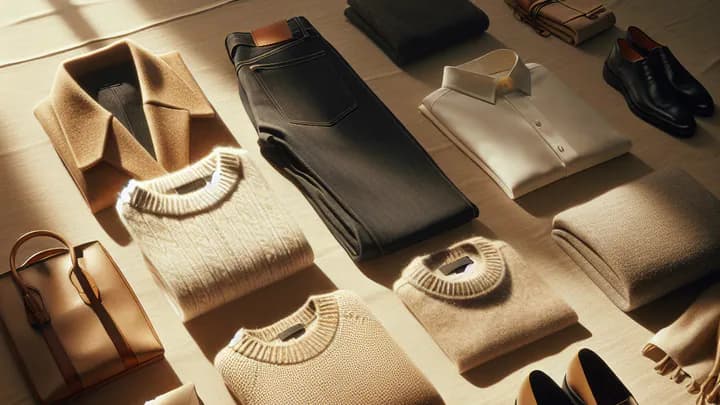
TL;DR: A capsule wardrobe is roughly 30 versatile garments in one cohesive palette that restyle into dozens of outfits. Use two anchor neutrals, one accent color, durable natural fibers, and a 70/30 split of timeless basics to current shapes. Audit before you buy — most people already own two-thirds of their ideal closet.
What is a capsule wardrobe in 2026, exactly?
A capsule wardrobe is a deliberately small set of garments chosen so that nearly every piece can be worn with nearly every other piece. The term came from London boutique owner Susie Faux in the 1970s and reached a wider audience through Donna Karan's "Seven Easy Pieces" collection in the mid-1980s, which showed how a handful of interchangeable items could carry a working week.
The 2026 version is looser about numbers and stricter about intent. The count matters less than the rule behind it: every item must pair with at least three others already in your closet, across at least two different contexts. A blouse that only works with one skirt is not a capsule piece; it is a costume component.
What has changed is the pressure behind it. Garment prices have risen while garment lifespans have fallen, and textile waste keeps growing. Buying fewer, better things is now a mainstream response rather than a minimalist subculture — and it sits close to the quiet luxury approach to building a timeless wardrobe, which trades logos for cut and cloth.
How is a capsule different from a minimalist or seasonal wardrobe?
A capsule optimizes for combinations; a minimalist wardrobe optimizes for the lowest possible item count. They overlap but they are not the same goal, and confusing them is why some people end up with a closet that is small, beige and joyless.
| System | Core goal | Typical size | Best for | Main risk |
|---|---|---|---|---|
| Capsule | Maximum outfits from minimum pieces | 25–40 | Mixed work and social life | Over-neutral, feels flat |
| Minimalist | Own as little as possible | 15–25 | Mild climates, low dress-code jobs | Faster wear-out, no slack |
| Personal uniform | Remove choice entirely | 10–20 in repeats | High-decision jobs, creatives | Hard to dress up or down |
| Seasonal rotation | Right clothes for the weather | 50+ across boxes | Extreme four-season climates | Storage cost, duplicate buying |
You can absolutely run a colorful, pattern-rich capsule. Pattern simply has to behave like a neutral — repeat the palette colors within the print and it will layer with everything.
What 30 pieces should a year-round capsule contain?
Treat the counts as a starting ratio, not a quota.
- 5 tops: 2 white or ivory tees, 1 fine-knit sweater, 1 button-down shirt, 1 silk or satin blouse
- 4 bottoms: 1 dark straight-leg jean, 1 wide-leg trouser, 1 tailored skirt or short, 1 relaxed casual pant
- 3 dresses: 1 simple day dress, 1 dressier evening option, 1 seasonal or printed swap
- 4 layers: 1 tailored blazer, 1 cardigan, 1 lightweight jacket, 1 heavier coat
- 5 shoes: 1 clean sneaker, 1 loafer or flat, 1 ankle boot, 1 heel or dressy flat, 1 sandal
- 4 bags: 1 structured tote, 1 crossbody, 1 small evening bag, 1 weekend bag
- 5 accessories: 2 scarves, 1 belt, 1 pair of everyday earrings, 1 statement piece
Underwear, sleepwear, activewear and specialty gear — ski kit, black tie, safety boots — sit outside the capsule and should never be counted against it. If your jeans are the weak link, our guide to the denim shapes actually worth buying in 2026 covers which cuts hold up. For a longer breakdown of how these 30 items restyle in practice, see our companion piece on 30 pieces and the outfit combinations they produce.
How many outfits does 30 pieces actually make?
Fewer than the internet claims, and still plenty. Five tops against four bottoms gives 20 base combinations; add four layers and you reach 80 top-bottom-layer looks, plus 12 more from three dresses with layers — about 92 on paper.
In real life, expect roughly half to survive the sniff test. Some proportions clash, some colors fight, some combinations are simply not office-appropriate. A realistic target is 45 to 55 wearable outfits from 30 pieces, which is more than a year of non-repeating workweeks. That is the honest number, and it is more than enough.
How do I choose a color palette that genuinely mixes?
Use three tiers: two anchor neutrals, one or two soft neutrals, and exactly one accent. Anchors carry the heavy pieces — black, charcoal, navy, chocolate brown, camel. Soft neutrals lighten everything: ivory, cream, oatmeal, stone, warm gray. The accent is one shade you actually love; burgundy, forest green, slate blue and butter yellow all layer well over grounded neutrals.
The costly mistake is undertone clash. Black and camel photograph beautifully but can look muddy together in person because one is cool and one is warm. Test candidate pieces side by side in daylight, not under store lighting, before committing your two anchors. If they fight, pick two anchors from the same temperature family and let the soft neutral bridge them.
Pick one leather tone and one metal tone too, so every later belt, bag, and buckle already matches. Buy base neutrals in person, or buy one piece first and match the rest against it in daylight: black cotton, black wool, and black technical fabric read as different colors, and navies vary widely between brands.
The 70/30 split
Aim for about 70 percent timeless shapes — straight-leg trousers, a well-cut blazer, a crew-neck knit — and 30 percent pieces that feel current. The current 30 percent is where you allow yourself a wider leg, a statement collar or this year's boot shape. It keeps the closet from reading like a period costume without putting your expensive items at fashion risk.
Which fabrics are worth paying for?
Fibers decide whether a capsule lasts three years or three months. Cheap blends pill at the underarm and lose their shape after a few washes, which quietly destroys the whole economic argument.
- Cotton for tees, shirts and casual pieces — check for heavier weights, around 180 gsm and up for tees
- Merino wool for knitwear; it regulates temperature and resists odor, so it needs washing far less often
- Linen for warm weather, accepting that it will crease and that this is the point
- Tencel or lyocell where you want drape without polyester
- Wool blends for trousers and outerwear, where a little synthetic adds genuine durability
- Silk or silk-cotton for one or two elevated pieces, no more
Read the care label before the price tag. A blouse that needs dry cleaning twice a month at $8 a visit costs nearly $200 a year to own — often more than the blouse itself. That is not a low-maintenance piece, however good it looks on the hanger.
Four construction checks take under a minute in a store:
- Hold a tee up to the light; if you can see your hand through it, it will thin at the shoulders within a season.
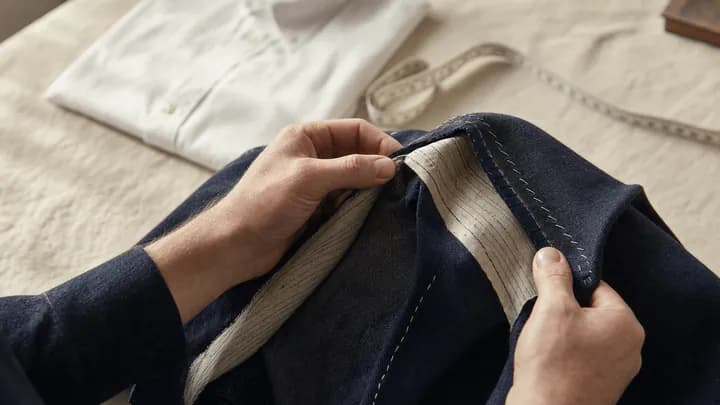
- Turn the garment inside out; wider, cleanly finished seam allowances mean it can be altered and will hold shape through washing.
- Look for buttons sewn with cross-stitching and a spare attached.
- Prefer lined jackets, skirts, and trousers, which drape better and wear longer than unlined equivalents.
How do I build it step by step without wasting money?
Step 1: Audit before you shop
Empty the closet onto the bed and sort into four piles: love and wear, love but rarely wear, dislike, damaged. The "love but rarely wear" pile is the diagnostic one — it usually reveals a missing partner piece rather than a bad purchase. Most people find they already own two-thirds of their ideal capsule.
Unsure what actually gets worn? Turn every hanger backwards and rehang each piece facing forward after wearing it; after 30 days you have an honest map. For undecided pieces, ask four questions: worn in the last 12 months? Fits the body you have today? Pairs with three other pieces? Would you buy it again at full price? Fail three and it leaves. Fail two and it goes into a dated box for 90 days; if nothing gets reached for, the box goes to donation or resale unopened.
Step 2: Write down five to eight specific gaps
Not "more tops." Write "a mid-weight ivory knit that works under the navy blazer and over the straight-leg jean." Specific gaps are shoppable; vague ones turn into browsing.
Step 3: Buy slowly, one or two pieces at a time
Live with each addition for two weeks before buying the next. End-of-season sales, consignment platforms and reliable mid-market brands all work — the sourcing matters less than the pacing. If cash flow is the obstacle, treating wardrobe replacement as a planned category using a sinking fund rather than a credit card removes most of the pressure to buy cheap.
Before each purchase, run three filters in order: name three things you already own that it pairs with; name three specific occasions in the next 90 days where you would wear it; then read the fabric composition label before the price. Anything above a threshold you set yourself gets a 72-hour wait. Impulse usually fades within three days; a genuine want does not.
Step 4: Pre-style 10 to 15 outfits and photograph them
Do this once, on a quiet Sunday, and keep the photos in a phone album. On a rushed Tuesday you pick a formula instead of solving a problem. This single step is what converts a tidy closet into an actual time saving.
What are the most common and costly mistakes?
- Skipping alterations. A $40 tailor visit turns a $120 trouser into something you reach for weekly. Hem length and waist suppression do more for how clothes look than brand does.
- Tailoring the wrong things. Alter length and width, never structure. Hems, sleeves, waist suppression, and side seams are straightforward; shoulders, armholes, and trouser rise are expensive to change and rarely worth it.
- Ignoring laundry cadence. Multiply the days between laundry loads by 1.5 for a workable top count: weekly laundry needs roughly ten tops in rotation, while washing twice a week can work with six.
- Building for an imagined life. If you work from home four days a week, you do not need three blazers. Look at last month's calendar and match the ratio to it.
- Going fully neutral. An all-beige closet is photogenic and dull to wear. One accent color measurably changes how often you enjoy getting dressed.
- Replacing everything at once. A capsule assembled in one weekend is just a shopping spree with better branding. Nothing has been tested against your real week.
- Counting outerwear as one slot in a cold climate. Below freezing, a coat is a system — shell, insulation, boots — and it needs its own budget line outside the 30.
A quick cost-per-wear example
A $220 wool coat worn three times a week for four winter months across three years comes to roughly 150 wears, or about $1.45 per wear. A $70 coat that loses its shape after one season and gets worn 40 times costs $1.75 per wear — and you own a worse coat. The expensive option is often the cheaper one, but only when the wear count is genuinely high. It does not hold for occasion pieces you wear twice a year.
When does a capsule wardrobe not make sense?
Skip it, temporarily, if your body or your life is mid-change. Pregnancy, postpartum, a significant weight shift, a career pivot, or a move from Phoenix to Chicago all invalidate the assumptions a capsule is built on. Build a cheap 12-piece bridge wardrobe in forgiving shapes, accept that it is disposable, and start the real capsule when things settle.
It also fits awkwardly around uniformed or PPE-heavy jobs. If you spend 50 hours a week in scrubs or work boots, your capsule is really a weekend wardrobe and should be sized accordingly — around 18 to 22 pieces, weighted toward comfort and social wear.
How do I maintain a capsule over years, not months?
Run a 20-minute seasonal review: what got worn, what didn't, what needs repair. Anything untouched for two consecutive seasons goes on notice. Anything untouched for four leaves.
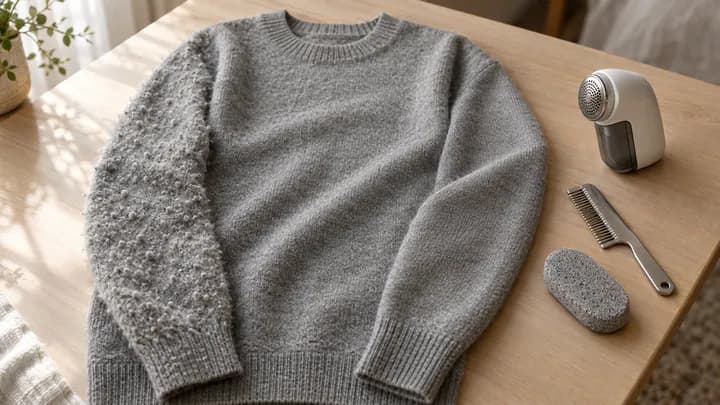
Three tools pay for themselves quickly — a handheld steamer, a sweater shaver, and cedar shoe trees. Wash knitwear less and air it more; merino in particular rarely needs a full wash after a single wear. When something finally dies, you already know which slot it filled, which makes the replacement decision fast and unemotional. Our guide to building a closet you actually reach for goes deeper on the emotional side of editing.
Key takeaways
- A capsule is defined by combinability, not item count — every piece should pair with three others in two contexts.
- Two anchor neutrals, one or two soft neutrals and a single accent color will out-perform any larger palette.
- Expect 45 to 55 genuinely wearable outfits from 30 pieces, not the hundreds sometimes claimed.
- Audit first; most people need only five to eight targeted additions, not a full rebuild.
- Check care labels and cost per wear before price — a dry-clean-only blouse can cost more to own than to buy.
- Pause the project entirely if your size, climate or job is about to change.
Editorial note: style is personal, and the right capsule depends on your climate, body, profession and taste. Use this as a framework to adapt, not a rulebook to obey.
Frequently asked questions
How many pieces should a 2026 capsule wardrobe have?
Most workable capsules land between 25 and 40 pieces including shoes and outerwear. We suggest starting at 30 and adjusting for climate and profession — four-season closets usually need 34 to 38, mild climates can sit closer to 26.
What colors work best for a year-round capsule wardrobe?
Two anchor neutrals, one or two soft neutrals and a single accent color. Black, navy, charcoal, chocolate and camel anchor well; ivory, oatmeal and stone lighten the palette; one accent you genuinely love keeps the closet from feeling flat.
Is a capsule wardrobe actually cheaper in the long run?
Usually, but not immediately. You pay more per garment and less per wear, and the savings come from eliminating impulse buys and replacements rather than from the clothes themselves. Expect the first year to cost about the same as a normal year.
How often should I refresh my capsule wardrobe?
Do a 20-minute review each season and one deeper edit a year. Replace worn-out basics, retire anything that no longer fits your actual life, and add at most one or two pieces that reflect a current shape or color.
Can I build a capsule wardrobe on a tight budget?
Yes — start with the audit, not the shopping. Most people already own 60 to 70 percent of their ideal capsule and only need five to eight targeted additions, which you can fill gradually through secondhand platforms, end-of-season sales and tailoring what you own.
Does a capsule wardrobe work for both office and casual life?
Yes, if you choose pieces that cross contexts — a tailored blazer over a tee, a knit dress under a coat, loafers with either jeans or trousers. The failure mode is buying single-context items, like a blazer that only works with one suit trouser.
Does a capsule wardrobe work in a four-season climate?
It does, but you need a layering system rather than seasonal duplicates. Keep a shared core of tops and bottoms year-round and rotate only outerwear, knitwear weight and shoes — roughly six to eight pieces move in and out of storage.
When should you NOT build a capsule wardrobe?
Skip it if your body or life is mid-change — pregnancy, postpartum, a significant weight shift, a career pivot or a move to a different climate. Build a cheap 12-piece bridge wardrobe instead and start the real capsule once things settle.