Sustainable Packaging in 2026: Cut Waste and Cut Costs
Sustainable packaging only pays off when the material, the disposal route and the shipping math line up. Here is what the switch actually costs, which certifications carry weight, and the common change that increases waste instead of cutting it.
Rewritten with AI and republished automatically. Our editors set the standards and fix reported errors — how we work.
TL;DR: Sustainable packaging pays off when three things line up — the right material, a disposal route your customers can actually reach, and smaller box dimensions. Right-sizing usually saves more money and carbon than swapping materials. Compostable film without composting access is the most common expensive mistake.
Sustainable packaging is packaging designed so that its material sourcing, weight, protective performance and end-of-life disposal together cause less environmental harm than the option it replaces. That definition does real work. It rules out a compostable pouch that ends up in a landfill, and it rules out a thinner box that lets 4% of orders arrive broken.
This guide looks at this from the money side, because that is where the decision actually gets made. A packaging change is a recurring per-order cost, and a recurring per-order cost is the most powerful lever a small product business has. Below is what the switch involves in 2026, where the savings hide, and where the whole thing quietly backfires.
What exactly counts as sustainable packaging?
Four categories cover almost everything on the market: recyclable fiber (corrugated cardboard, kraft paper, molded pulp), recycled-content plastic, certified compostable material (PLA, PHA, mycelium, bagasse), and reusable or refillable systems. A fifth, quieter category is simply less packaging — fewer components, smaller dimensions, no void fill.
That fifth category outperforms the others more often than the industry likes to admit. Eliminating a box insert removes 100% of that component's footprint and 100% of its cost. Swapping a plastic insert for a paper one removes maybe a third of the footprint and usually adds cost.
The three questions that classify any material
- Where does it end up? Curbside recycling, industrial compost, home compost, or landfill — and which of those can your average customer actually reach?
- Does it protect the product? A damaged-goods rate above your baseline erases the benefit instantly.
- What does it weigh and measure? Weight and cubic volume drive freight cost and freight emissions.
Which materials actually work, and what do they cost?
Fiber-based materials win for most shippers because collection infrastructure already exists. Compostable plastics win in a narrow band — food-contaminated packaging, closed-loop events, and markets with real composting access. Reusables win when the same customer orders repeatedly and the return logistics are short.
| Material | Relative unit cost | Realistic end of life | Best for | Main weakness |
|---|---|---|---|---|
| Corrugated cardboard (recycled content) | Baseline | Curbside recycling, widely accepted | Almost any boxed shipment | Poor moisture resistance; over-sized boxes waste freight |
| Kraft paper mailer / padded paper | Moderately higher than poly | Curbside recycling if not mixed-material | Apparel, books, soft goods | Tears under rough handling; hybrid paper-plastic versions are not recyclable |
| Molded pulp inserts | Higher, plus tooling for custom shapes | Recycling or compost | Electronics, cosmetics, fragile items at volume | Tooling cost only amortizes over large runs |
| Certified compostable film (PLA/PHA) | Several times poly at low volume | Industrial compost only, in most cases | Food-contact, compost-access markets | Contaminates plastic recycling; most consumers lack access |
| Mycelium / bagasse forms | High, niche supply | Home compost | Protective void fill, premium unboxing | Limited suppliers, long lead times, bulky to store |
| Reusable / refill systems | High upfront, low per-cycle | Many cycles, then recycling | Subscriptions, local delivery, personal care | Return rates collapse without a real incentive |
Treat the cost column as a relative guide and get live quotes. Fiber pricing moves with pulp markets, and compostable film pricing moves with resin and certification costs, so any hard number published today is stale within a quarter.
How much does switching cost a small business in 2026?
Model it per order, not per year, then multiply. A brand shipping 2,000 orders a month that moves from a plastic poly mailer to a paper mailer at roughly ten cents more per unit adds about $200 a month, or $2,400 a year. That is the honest number — and it is the number most "go green, save money" articles skip.
Now find the offset. Carriers charge on dimensional weight, meaning a light box priced as if it were heavy because of its cubic size. Cutting two inches off a box's longest dimension can drop it into a cheaper rate band, and that saving is per shipment, every shipment. Right-sizing often recovers more than material swaps cost.
Budget it like a known expense, not a surprise
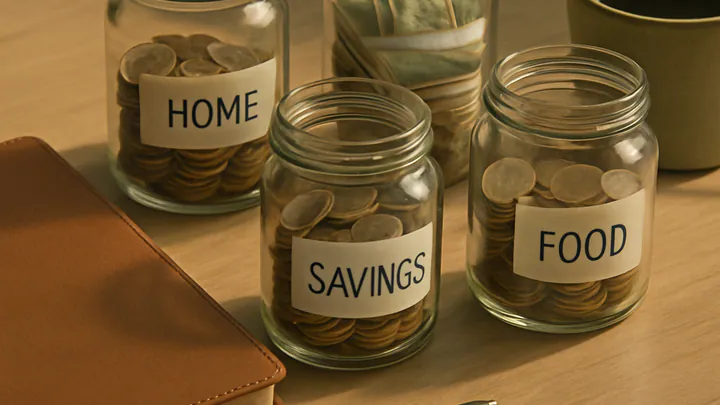
Custom tooling, plate charges for printing, and minimum order quantities arrive as lumps, not as a smooth monthly line. This is exactly the situation a sinking fund approach to budgeting handles well: set aside a fixed amount each month against a packaging changeover you know is coming in nine months, instead of financing it in a panic. None of this is financial advice — run your own numbers against your own margins.
What packaging rules apply in 2026?
Two regulatory forces matter for most sellers: extended producer responsibility (EPR) laws in a growing set of US states, and truth-in-advertising scrutiny of environmental claims. EPR shifts part of the recycling system's cost onto the companies that put packaging on the market, usually via registration and per-tonne fees administered by a producer responsibility organization.
Maine, Oregon, Colorado, California and Minnesota have all enacted packaging EPR frameworks, with obligations phasing in on different timetables. Most include small-producer exemptions tied to revenue or tonnage. Do not assume you fall under the threshold — check the current figures for each state you ship into, because thresholds and start dates have shifted more than once.
On claims, the safe pattern is specificity. "Biodegradable" without qualification invites trouble, because almost nothing biodegrades meaningfully in a sealed landfill. "Certified compostable to ASTM D6400, industrial facilities only" is defensible. Name the standard, name the facility type, and say what the customer should physically do.
Which certifications mean something?
A certification is only worth printing if it names a testable standard and a disposal route. Logos that assert a vibe rather than a test result are marketing, and increasingly, a liability.
- FSC (Forest Stewardship Council) — chain-of-custody for fiber sourcing. Meaningful for paper and board.
- BPI certified compostable — third-party verification against ASTM composting standards in North America.
- TÜV Austria OK compost HOME — the stricter one; it tests breakdown at ambient backyard temperatures, not industrial heat.
- How2Recycle — a standardized on-pack label that tells customers what to do with each component. Cheap to adopt, disproportionately useful.
- Cradle to Cradle — broad product-level certification covering material health and circularity. Thorough, and a heavier lift.
What is the most expensive mistake brands make?
Switching to compostable film in a market with no composting access. The packaging cannot be recycled, cannot be composted by the customer, and actively contaminates plastic recycling streams if it is thrown in the wrong bin. The brand pays several times more per unit for an outcome that is measurably worse than a recycled-content poly mailer.
The second-most expensive mistake is under-protecting to hit a material target. If lighter packaging raises your damage rate from 1% to 3%, you have added two replacement shipments per hundred orders — each one a full product, a full box and a full truck journey. That almost always exceeds anything the material change saved.
Decision rule: before any switch, record your current damage-and-return rate. Run the new packaging on 200 shipments. If damages rise at all, the material is wrong for your product, not the handling.
How do you run a packaging audit in one week?
Pull twelve months of packaging invoices, list every component with unit cost, annual quantity, unit weight and disposal route, then sort by total annual spend. Almost always, three line items account for the great majority of both cost and material weight — and those three are the only ones worth redesigning first.
- Day 1–2: Build the component list from invoices. Include tape, void fill, inserts, labels and inks, not just boxes.
- Day 3: Measure your five most-shipped orders. Note the empty space inside each box. Empty space is money.
- Day 4: Check disposal reality for your top three markets by ZIP code, not by assumption.
- Day 5: Request samples and quotes at your real annual volume, plus one tier above it.
Then change one thing at a time. Simultaneous changes make it impossible to tell which one caused a damage spike.
When is sustainable packaging the wrong move?
When it shortens shelf life. For perishable food, barrier films exist to stop spoilage, and food waste generally carries a far larger footprint than the packaging that prevented it. Stripping a barrier layer to win a materials talking point can be a net loss — the honest answer here is that some products are not ready for a paper solution yet.
It is also the wrong first move for very low-volume sellers. Below a few hundred orders a month, minimum order quantities mean you buy 5,000 custom mailers to ship 300 — and store the rest for two years. Use stock unbranded fiber options, get the box size right, and revisit custom work at scale.
What do brands doing this well have in common?
They close the loop rather than just changing the material. Refill and return-for-reward schemes in cosmetics, compostable wrappers in confectionery, and plant-based biopolymer cases in consumer electronics all share one trait: the company designed the disposal step, not just the package. They tell the customer exactly what to do, and they make doing it worth something.
They also accept that packaging is one part of a consumption story. The same logic that makes a 30-piece capsule wardrobe work — fewer, better, used more often — is the logic behind reusable packaging systems. And the same reasoning shows up in slow travel's fewer-trips-done-properly approach: reducing the number of movements beats optimizing each one.
Key takeaways
- Right-sizing boxes usually saves more money and more carbon than any material swap, because dimensional weight charges apply to every single shipment.
- Choose the disposal route your customers can actually reach — recyclable fiber beats compostable film in most US markets today.
- Model the cost per order, budget lumpy tooling and minimum-order costs in advance, and test on 200 shipments before committing.
- Qualify every environmental claim with a named standard and a disposal instruction; unqualified "biodegradable" is a liability.
- Check EPR obligations for every state you ship into rather than assuming a small-producer exemption applies to you.
- If a change raises your damage rate, it is not a sustainable change — replacement shipments outweigh packaging savings.
Frequently asked questions
What is sustainable packaging?
Sustainable packaging is packaging designed so that its material sourcing, weight, protective performance and end-of-life disposal together cause less environmental harm than the alternative it replaces. That last part matters: packaging that fails and causes a replacement shipment is not sustainable, no matter what it's made of.
Is compostable packaging better than recyclable packaging?
Usually no, for most businesses. Recyclable paper and corrugated cardboard have mature collection systems in most US markets, while certified compostable plastics need industrial composting facilities that many households cannot access. Choose compostable only when the packaging is contaminated with food or when your customers demonstrably have collection access.
How much more does sustainable packaging cost?
At small volumes, expect paper-based mailers to cost meaningfully more than plastic poly mailers, and certified compostable films to cost several times more per unit. The gap narrows sharply with volume and can be partly or fully offset by right-sizing boxes, which reduces dimensional weight shipping charges.
Do I have to comply with EPR packaging laws?
If you sell physical goods into states with extended producer responsibility laws for packaging — including Maine, Oregon, Colorado, California and Minnesota — you may have registration and fee obligations, typically with small-producer exemptions based on revenue or tonnage. Check each state's current thresholds and your own numbers rather than assuming you are too small.
What is a packaging audit and how do I run one?
A packaging audit is a count of every packaging component you buy, its unit cost, annual volume, weight and realistic disposal route. Run it from purchase invoices over one week, then sort by total annual spend — the top three lines almost always contain the entire opportunity.
Can I call my packaging biodegradable?
Only with strong qualification. Unqualified degradability claims are the kind of marketing statement that draws regulatory scrutiny under US truth-in-advertising guidance, because most materials will not break down in a landfill within a reasonable timeframe. Name the certification, the standard number and the disposal route instead.
Does sustainable packaging actually improve sales?
It rarely drives first purchases on its own, but it reduces friction for buyers who already care and it strengthens repeat purchase and unboxing sentiment. Treat it as a retention and brand-trust investment, not a customer acquisition channel.