Sea-Inspired Fashion: 7 Marine Outfits That Work in 2026
Sea-inspired fashion works when it suggests the coast rather than announcing it. Here are seven outfits, the fabrics that hold up in salt air, the one-signal rule that keeps nautical from tipping into costume, and how to stop sunscreen from ruining white linen.
Rewritten with AI and republished automatically. Our editors set the standards and fix reported errors — how we work.
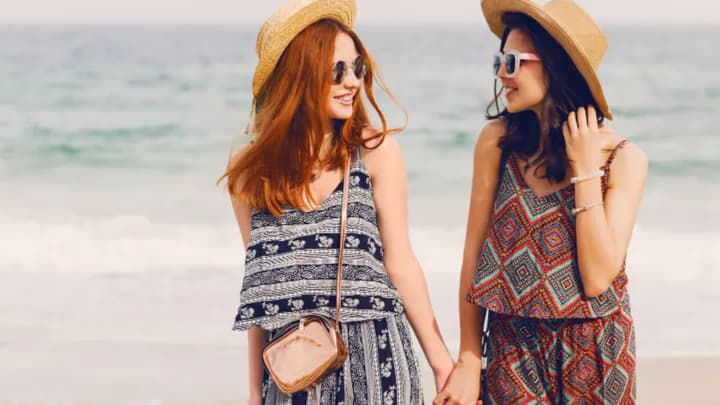
TL;DR: Sea-inspired fashion works when it suggests the coast instead of announcing it. Build outfits from navy, ecru, seafoam and sand in linen, cotton jersey and raffia — then limit yourself to one obvious nautical signal per look. Below: seven outfits, the fabrics that survive salt air, and the mistakes that cost the most.
What exactly is sea-inspired fashion?
Sea-inspired fashion is a styling approach that borrows the palette, fabrics and hardware of maritime and coastal life and applies them to everyday clothing. It is not a category of garment — there is no such thing as "a marine aesthetic dress" — it is a set of cues: cool blues and warm neutrals, breathable natural fibers, rope and raffia texture, and metal or shell details that catch light the way water does.
The oldest cue is the Breton stripe, a navy-on-ecru cotton jersey that began as French naval kit and moved into fashion in the early twentieth century, largely through Coco Chanel's interest in sailors' workwear. That history matters practically: the stripe reads as classic rather than themed, which is why it does the heavy lifting in almost every outfit below.
The audience is wide — this is one of the few aesthetics that works across ages and body types, because the silhouettes are relaxed and the colors are flattering in daylight. If you already lean toward restrained, tonal dressing, it overlaps heavily with quiet luxury and its timeless wardrobe logic.
Which seven sea-inspired outfits actually work off the beach?
All seven below are built to function in a city, not just on a boardwalk. Each one names the piece that carries the coastal reference, so you can see the single signal doing the work.
1. The Breton stripe with faded denim
A navy-and-ecru striped cotton tee or fine knit with straight-leg or wide-leg jeans is the most wearable version of this entire aesthetic. Flat sandals or white sneakers keep it daytime; loafers push it toward dinner. Choose a stripe roughly 4–8 mm wide — very thin pinstripes read corporate, very wide ones read children's wear. If your denim drawer is due an update, our guide to the jeans worth buying in 2026 covers the cuts that sit best under a boxy stripe.
2. A linen dress in ivory, sand or soft blue
Linen moves, breathes and wrinkles — accept all three. A mid-weight linen (roughly 150–200 gsm) holds its shape better than the gauzy stuff, which can go transparent in bright sun. Wear it with woven espadrilles or leather slides. For a cooler evening, a fine cardigan tied at the shoulders adds warmth without breaking the line.
3. White or ecru trousers with a navy top
The crispest version of the sailor palette, and the most office-compatible. Tailored trousers sharpen it; wide legs relax it. Choose ecru or bone over optic white if you are over 30 or under strong sunlight — optic white against tan skin can go clinical. Gold-toned jewelry warms the navy; silver keeps it cool and modern.
4. A maxi skirt in seafoam, turquoise or coral
Long skirts in ocean tones solve the proportion problem that trips people up in hot weather: volume below, fitted above. A rib tank, a simple white tee tucked in, or a cropped knit all balance the sweep. One shell-adjacent accent — mother-of-pearl earrings, a single beaded anklet — is enough.
5. A jumpsuit in sand, teal or deep navy
The one-and-done option. Look for a defined waist (drawstring, tie or elastic) and a fabric with body: a limp viscose jumpsuit sags by mid-afternoon, while cotton twill, linen blend or Tencel holds. A woven or rope belt and canvas sneakers finish it for daytime; swap to sandals and a gold cuff for evening.
6. Layered knitwear for coastal evenings
Coastal weather turns at sunset, and this is where most sea-inspired capsules fail — everything in the suitcase is sleeveless. A cream or pale blue cardigan, a cotton cable knit, or a fine merino crew worn over a striped tee handles a 10-degree drop. Keep everything else plain so the texture reads as the statement.
7. Accessories that carry the reference on their own
A raffia or straw hat, a rope-handled tote, a canvas belt, mother-of-pearl buttons, a slim shell or pearl hair clip. These are the cheapest entry point to the aesthetic and the easiest to overdo. Pick natural materials over printed motifs — woven jute always looks more expensive than an anchor print.
Which fabrics survive salt air, sun and repeated washing?
Fabric choice decides whether a coastal wardrobe looks good on day five of a trip. Fast-drying natural fibers win; heavy elastane and delicate silk lose.
| Fabric | Wrinkles | Dries | Best for | Watch out for |
|---|---|---|---|---|
| Linen (flax) | Heavily, by design | Fast | Dresses, shirts, wide trousers | Transparency in lightweight weaves |
| Cotton jersey | Barely | Medium | Breton tops, tees | Stretches out at the neckline |
| Seersucker | Hides them | Fast | Shirts, relaxed shorts | Can look costume-y in bold stripes |
| Chambray | Lightly | Medium | Overshirts, shirtdresses | Dye transfer onto white bags |
| Cotton knit / fine merino | No | Slow | Evening layers | Pilling under bag straps |
| Viscose / rayon blends | Creases oddly | Slow in humidity | Drapey skirts | Goes limp and clingy in sea air |
One rule when shopping: if a garment will meet chlorinated water or sit wet against skin for hours, keep elastane content low. Chlorine degrades elastic fibers, and a pool-adjacent top with 10% spandex loses its shape within a single season.
How do I keep it from tipping into costume?
Apply the one-signal rule: a single overt nautical element per outfit, two at the outside. Stripes are a signal. So are gold anchor buttons, a sailor collar, rope trim, a shell necklace, boat shoes and anything printed with a compass rose. Stack four of them and you are in fancy dress; use one and you look like a person who lives well near water.
This is the single most common and most expensive mistake in the category, because the pieces that break the rule — the anchor-button blazer, the shell-heavy statement necklace — are the ones that feel most "on theme" in the store and least wearable at home. Cost-per-wear on a themed piece is brutal.
A decision rule that works: if you removed the coastal element entirely, would the outfit still function as a good outfit? Striped tee plus jeans still works. A sailor-collar dress with rope-trim wedges does not survive the removal of its theme, because the theme is all it is.
What does a sea-inspired capsule cost to build?
Less than people expect, because most of the pieces are wardrobe staples in a specific color story. Nine items will carry a full week: a striped top, a plain ecru tee, a linen shirt, ecru or white trousers, a navy or chambray dress, a maxi skirt, a cream cardigan, flat leather sandals, and one raffia or canvas tote.
At high-street prices that set is achievable for a moderate outlay; mid-market linen and a good leather sandal roughly double it. The pieces worth spending on are the ones with structure — trousers and the cardigan. The pieces to buy cheaply are the trend-adjacent accents: raffia bags and shell jewelry date faster and get destroyed by sand.
If you want a systematic version of this, the same logic is laid out at full length in our 30-piece capsule wardrobe guide, and the color-coordination approach in building a closet you actually love applies directly here.
How do I stop white linen and pale trousers from staining?
The usual culprit is not dirt — it is sunscreen. Chemical UV filters such as avobenzone can react with minerals in water and leave rust or amber marks on white and pale fabric, and a hot wash sets them permanently.
- Let sunscreen dry fully before putting clothes on. Two or three minutes is usually enough.
- Rinse marks cold, immediately. Hot water bonds the stain.
- Use an oxygen-based whitener rather than chlorine bleach, which can yellow cotton and destroy linen fibers over time.
- Rinse saltwater out the same day. Dried salt crystals abrade fibers and leave white tide lines on dark navy.
- Do the daylight test on white trousers: stand in front of a window before you commit. Lightweight white linen is far more transparent than it appears under store lighting.
Does this work if you do not live near the coast?
Yes, with one adjustment: drop the literal motifs. Anchors, ship's wheels and "Ahoy" embroidery read as souvenir clothing hundreds of miles inland. What travels is the palette and the texture — navy, ecru, gray marl, sand, seafoam, plus linen, jute and mother-of-pearl. Those look like considered neutrals anywhere.
It also does not apply well in two situations worth naming honestly. First, strict corporate dress codes: relaxed linen and raffia rarely clear them, though navy trousers and a fine ecru knit do. Second, genuinely cold climates in deep winter, where the fabrics simply are not appropriate and the aesthetic survives only as color.
What does a worked example look like for a five-day trip?
Here is a packing set, built from the nine-item capsule above and yielding a different outfit each day without repeating a silhouette.
- Day one, travel: striped tee, wide-leg jeans, sneakers, cardigan for the plane.
- Day two, daytime: linen dress, flat sandals, straw hat, canvas tote.
- Day three, walking: ecru tee tucked into the maxi skirt, sneakers, cardigan tied at the waist.
- Day four, dinner: white trousers, navy or chambray shirt half-tucked, leather sandals, gold hoops.
- Day five, home: linen shirt over the ecru tee, jeans, sneakers.
Nine garments, five outfits, one bag. The cardigan appears three times and nobody notices, because layers are read as context rather than as outfits.
Key takeaways
- Sea-inspired fashion is a palette and texture system — navy, ecru, seafoam, sand in linen, cotton jersey and raffia — not a set of themed garments.
- Apply the one-signal rule: a single overt nautical element per outfit keeps it stylish rather than costume.
- If the outfit collapses when you remove the coastal element, the theme was doing all the work. Don't buy it.
- Choose fast-drying natural fibers and keep elastane low in anything meeting chlorine or saltwater.
- Sunscreen, not dirt, is what ruins white linen — let it dry, rinse cold, skip chlorine bleach.
- Nine well-chosen pieces cover a full week; spend on trousers and knitwear, save on seasonal accessories.
Frequently asked questions
What is sea-inspired fashion?
Sea-inspired fashion is a styling approach that borrows the colors, fabrics and hardware of coastal and maritime life — navy, ecru, seafoam, linen, cotton jersey, rope, raffia and mother-of-pearl — and applies them to ordinary clothes. It is a palette-and-texture idea rather than a fixed set of garments, which is why it survives trend cycles.
How do I wear nautical stripes without looking like a sailor costume?
Use one nautical signal per outfit, two at absolute maximum. A Breton striped top is a signal; so are gold buttons, an anchor motif, a rope belt and a sailor-collar. Stripes plus white trousers plus navy blazer plus anchor pendant plus boat shoes is a uniform. Stripes plus faded jeans plus flat sandals is a look.
Does sea-inspired fashion work in winter or away from the coast?
Yes, but the emphasis shifts from fabric to palette. In cold weather the same idea lives in cream cable knits, navy wool, gray marl, oatmeal scarves and mother-of-pearl buttons; the linen and raffia disappear until spring. Inland, drop the literal motifs — anchors and shells look pointed 400 miles from the sea — and keep the colors and textures.
Why do my white pants and linen shirts turn yellow?
Usually sunscreen. Chemical UV filters such as avobenzone can react with minerals in water and leave rust-toned marks on white fabric that ordinary washing sets rather than removes. Let sunscreen dry fully before dressing, rinse marks in cold water quickly, and treat with an oxygen-based whitener rather than chlorine bleach.
What fabrics hold up best in salt air and sea wind?
Linen, cotton jersey, seersucker and chambray handle heat, humidity and salt well because they dry fast and tolerate frequent washing. Avoid heavy elastane content in anything that meets pool chlorine or repeated saltwater soaking — chlorine degrades elastic fibers, and a swim-adjacent top loses its shape within a season.
How many pieces do I need to build a sea-inspired capsule?
Eight to ten well-chosen items cover a week. A striped top, a plain ecru tee, a linen shirt, white or ecru trousers, a navy or chambray dress, a maxi skirt, a cream cardigan, flat sandals and one raffia bag will generate more outfits than a closet of single-use beach pieces.
Is sea-inspired dressing appropriate for the office?
The tailored end of it is. Navy wide-leg trousers with an ecru knit, or a crisp white shirt with a fine navy stripe, read as classic workwear rather than vacation clothing. Keep the fabric structured, skip the shell jewelry and the rope belt, and the coastal reference stays subtle.