Sustainable Home Products in 2026: What's Actually Worth It
Not every eco swap is an upgrade. We break down ten sustainable home products by upfront cost, real payback, and honest failure modes — including the two popular picks that do almost nothing for your air quality.
Rewritten with AI and republished automatically. Our editors set the standards and fix reported errors — how we work.
TL;DR: The sustainable home products worth buying in 2026 are the ones that keep saving after you forget about them — a WaterSense showerhead, cleaning tablets, a refillable coffee pod. Beeswax wraps and shampoo bars are good with caveats. Salt lamps and charcoal bags do not purify your air.
What counts as a sustainable home product in 2026?
A sustainable home product is a household item engineered to consume fewer resources across its lifetime — water, energy, plastic, or virgin fiber — without asking you to accept worse performance. That last clause is the whole game. A swap you abandon in six weeks because it is annoying has a worse footprint than the conventional product you replaced, because you paid the manufacturing cost and got none of the use.
The category has matured. Ten years ago, buying eco meant accepting scratchy, beige, and underpowered. Today the honest split is between products where the sustainable version is simply better engineering (low-flow showerheads, solar lighting, concentrated cleaners) and products where it is a lifestyle trade you either enjoy or don't (bars instead of bottles, wraps instead of film). We'll tell you which is which.
Which sustainable swaps actually save money, and how fast?
The fastest payback comes from anything that reduces hot water or eliminates shipping water around the country. Textile and packaging swaps are worthwhile but mostly break even rather than profit. Here is how the common ten rank.
| Product | Typical upfront cost | What it displaces | Realistic payback | Where it falls down |
|---|---|---|---|---|
| WaterSense showerhead | $20–$60 | Water + water heating | Weeks to a few months | Won't help if you simply shower longer |
| Cleaning tablets | $2–$5 per tablet | Bottled spray cleaner | From the third refill | Starter kits with new bottles reset the math |
| Refillable coffee pod | $15–$25 | Single-use pods | 1–2 months of daily use | Machine compatibility; extra 30 seconds per cup |
| Solar path lights | $25–$60 per set | Wired low-voltage lighting | Immediate (no wiring, no meter) | Batteries fade in 2–3 seasons; shade kills output |
| Beeswax wraps | $15–$20 for three | ~70% of plastic wrap use | Roughly one year | No raw meat, no heat, no airtight liquid seal |
| Shampoo/conditioner bars | $10–$15 each | 2–3 plastic bottles | Near break-even | Soap-based bars fail in hard water |
| Bamboo or recycled toilet paper | Premium over store brand | Virgin-forest pulp | Never — you pay more | You're buying impact, not savings |
| Soy or coconut wax candles | $15–$35 | Paraffin candles | Never — comparable or pricier | Any candle adds particles to indoor air |
| Organic cotton totes | $8–$20 | Plastic checkout bags | Only after ~100+ uses | Owning twelve defeats the purpose |
| Charcoal bags / salt lamps | $15–$40 | Nothing measurable | None | Not air purification — see below |
Is a water-saving showerhead worth it if my pressure is already low?
Usually yes, because good low-flow heads restore perceived pressure rather than reduce it. US federal law caps showerheads at 2.5 gallons per minute; WaterSense certification requires 2.0 gpm or less and independent testing for spray force and coverage, so a certified head is the only category where the eco version is verified to feel good.
The worked example: an eight-minute shower at 2.5 gpm uses 20 gallons; at 1.75 gpm it uses 14. For a two-person household that is roughly 12 gallons a day, most of it heated — and water heating is one of the largest energy loads in a typical home. The head pays for itself well before the year is out.
The edge case: if your home has an old-style gravity-fed or genuinely low-pressure supply, an aggressive flow restrictor can turn a weak shower into a drip. Look for models rated to perform below 45 psi, and keep the original head for a week before you recycle it.
Do beeswax wraps really replace plastic wrap?
They replace about two-thirds of what plastic film does and fail cleanly at the rest. They shine on bowls, cheese, halved avocados, hard vegetables, and bread, where a warm-hands press makes a workable seal. They cannot touch raw meat or fish, cannot go in the microwave or oven, cannot be washed above lukewarm, and will not seal soup.
Care is what determines the one-year lifespan: cold water, mild soap, air dry flat. When a wrap loses tack, lay it between two sheets of parchment and press with a warm iron to redistribute the wax. Vegan households can buy the same product in candelilla or soy wax. If your leftovers routinely come from fast, balanced sheet-pan dinners, a couple of glass containers with lids will do more work than a stack of wraps.
Do salt lamps and charcoal bags actually purify the air?
No, and this is the correction we most want to make to the standard eco-home listicle. Himalayan salt lamps have no credible evidence of cleaning air; the negative-ion output attributed to them is negligible at room scale. Activated charcoal bags do adsorb certain odor molecules and gases in a small enclosed space — a closet, a car, a gym bag — but they capture no dust, smoke, pollen, or cooking particulate, and their capacity fills up long before the two-year marketing claim runs out.
Houseplants are in the same bucket. Research generally suggests that at realistic household densities, ordinary ventilation moves far more air than foliage ever could. If your goal is genuinely cleaner indoor air, the sustainable hierarchy is: open a window, fix the source, run an extractor fan while cooking, then add a HEPA purifier sized to the room. Anyone managing asthma or another respiratory condition should discuss indoor air strategy with a qualified professional rather than relying on any decorative product.
Which reusable coffee pod fits my machine?
Check the pod geometry before you order, not the brand name. Most single-serve machines accept a standard stainless refillable basket, but several newer models use redesigned pod shapes or lid-sensing brew heads that third-party baskets do not fit. Manufacturers list compatible model numbers; if yours is absent, assume it won't work.
Two practical notes. Grind matters more than with a paper pod — too fine and the basket chokes, too coarse and the cup tastes thin, so start at a medium drip grind. And a refillable pod adds roughly 30 seconds of fill-and-rinse per cup, which is exactly the friction that sends people back to disposables. If that bothers you, a pour-over cone or French press is the cheaper and more durable answer.
Are soy candles better, and are bars worth the hassle?
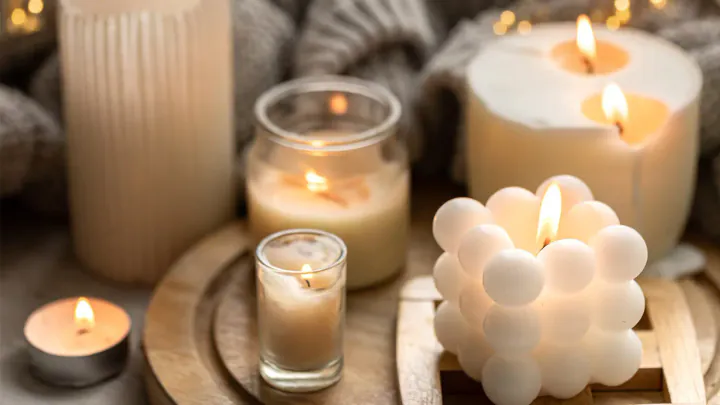
Soy and coconut wax candles avoid paraffin, a petroleum byproduct, and tend to burn cooler and longer, which is a genuine improvement in materials. What they do not do is make an open flame neutral for indoor air — any candle releases combustion particles, so ventilate and trim the wick to a quarter inch. For ambience without combustion, warm, layered lamp light does more for a room, as we covered in our guide to calm, cozy bedroom upgrades.
Shampoo and conditioner bars eliminate two bottles and travel brilliantly. The failure everyone blames on the bar is actually water chemistry: soap-based bars react with calcium and magnesium in hard water and leave a waxy film. Buy a syndet bar — a synthetic detergent formulation — and it lathers and rinses like liquid shampoo anywhere. Store it on a draining dish; a bar left in a puddle dissolves in a month.
How many tote bags do you actually need?
Four to six, kept where you will grab them. An organic cotton tote has a meaningfully higher manufacturing footprint than a thin plastic bag and only breaks even after a great many uses — so the twelfth free conference tote in your closet is not an environmental win, it is inventory.
The system beats the product here. Hooks inside the door and a shallow basket by the threshold mean the bags come back to the car instead of accumulating in the trunk; our guide to making the first three feet of your entryway work covers the layout. The same buy-less discipline that powers a 30-piece capsule wardrobe applies to household goods: fewer, better, used until worn out.
Will solar outdoor lights survive a real winter?
The housing usually will; the battery usually won't. Solar path and string lights run on a small NiMH cell that degrades after two or three seasons, and in a shaded yard or a high-latitude December the panel may never deliver a full charge. Cold also temporarily reduces battery capacity, so winter runtime is shorter even on a healthy unit.
The decision rule: only buy fixtures with a user-replaceable AA-size rechargeable cell and a panel you can angle toward the southern sky. A $3 battery then revives a fixture that would otherwise be landfill. Sealed, glued-shut solar lights are disposable products wearing a green label.
What's the costliest mistake people make going low-waste at home?
Throwing away working things. The most common version is binning a cupboard of perfectly good plastic containers to buy a matching glass set — you generate waste today in exchange for a benefit that arrives over years. The rule that survives contact with reality is use it up, wear it out, then swap. Replace at the moment of failure or refill, never preemptively.
The second mistake is the starter-kit trap: buying a new bottle, new caddy, and new dispenser every time you try a refill system, which reintroduces the plastic you were avoiding. Buy the concentrate, reuse the bottle you already own, and label it clearly.
The third is the rebound effect. A low-flow showerhead saves nothing if you enjoy it for fifteen minutes instead of eight, and an efficient appliance saves nothing if you run it half-empty more often. Measure the behavior, not just the hardware.
What order should I buy these in on a small budget?
Buy in payback order, one item per month. Start with the showerhead, because it works whether or not you remember it exists. Then move to consumables you already repurchase — cleaning concentrate, toilet paper, coffee — where the swap is a decision you make once. Only then buy durable goods like wraps, bars, and totes, and only as the current item runs out.
One honest exception: this does not apply if you rent and cannot change fixtures. In that case, skip the plumbing entirely and put the budget into consumables and a good drying rack, which cuts dryer energy with zero landlord involvement. Efficiency spending is about your own circumstances and cash flow, and nothing here is financial advice — a swap that strains your budget this month is not a sustainable one.
Key takeaways
- The best sustainable home products save resources passively — a WaterSense showerhead at 2.0 gpm or less pays back fastest because it cuts hot water without changing your routine.
- Salt lamps, charcoal bags, and houseplants are not air purifiers; ventilation, source control, and a properly sized HEPA unit are.
- Beeswax wraps handle roughly 70% of plastic-wrap jobs — never raw meat, heat, or liquids — and last about a year with cold-water washing.
- Choose syndet shampoo bars in hard water and solar lights with replaceable batteries; both fixes prevent the most common disappointments.
- Never discard functional items to buy greener ones. Swap at the point of failure or refill, one product per month, in payback order.
Frequently asked questions
What is the single best sustainable home swap to start with?
A WaterSense-certified showerhead, because it cuts both water and the energy used to heat it, costs little, installs in minutes, and keeps paying you back every single day without requiring any change in habit. Most other swaps depend on you remembering to use them.
Do beeswax wraps actually replace plastic wrap?
They replace roughly 70% of its uses — covering bowls, wrapping cheese, hard produce, and bread — but not raw meat, not anything going in the microwave, and not a true airtight seal for liquids. Keep a small roll of plastic or a set of lidded containers for the rest.
Are salt lamps and charcoal bags real air purifiers?
No. Salt lamps have no credible evidence of purifying air, and activated charcoal bags adsorb some odors and gases in a small enclosed space but do not remove dust, smoke, or allergen particles. For actual particulate filtration you need a HEPA unit or open windows.
Is bamboo toilet paper better than recycled toilet paper?
Recycled-content toilet paper generally has the lower footprint of the two, because it uses no new fiber at all, while bamboo is a fast-growing crop that usually ships from Asia. Bamboo wins on softness and plastic-free packaging; recycled wins on raw material.
Do cleaning tablets really save money?
Yes, once you reuse the bottle — tablets typically cost a couple of dollars each and make a full spray bottle, so the savings appear from about the third refill onward. The savings vanish if you buy a new starter kit with a new bottle each time.
Why don't my shampoo bars lather in my shower?
You most likely have hard water and a soap-based bar, whose fatty acids react with calcium and magnesium to leave a waxy film. Switch to a syndet (synthetic detergent) bar, which lathers and rinses normally in hard water.
How long do solar outdoor lights actually last?
The light itself often lasts years, but the built-in NiMH battery typically fades within two to three seasons, and shaded or northern winter yards may never fully charge it. Buy models with a user-replaceable AA-size cell so a $3 battery revives the fixture.
Should I throw out my plastic containers to switch to glass?
No. Discarding functional items to buy greener replacements creates waste immediately in exchange for a benefit that arrives slowly. Replace items only as they break, wear out, or run out — that timing is what makes the swap a net gain.