Healthy Meal Prep Ideas You'll Actually Stick To
Most meal prep plans collapse in week three because they are too ambitious, not because people lack willpower. Here is a smaller, sturdier system: pick a prep style, cook three components instead of five meals, and know exactly what keeps for five days.
Rewritten with AI; reviewed by Najam Kausar on . How we work.
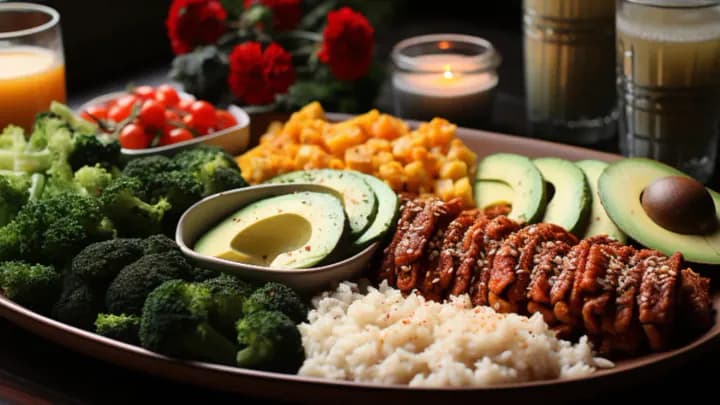
TL;DR: Meal prep fails when it is too ambitious. Cook three components — a grain, a protein, a tray of roasted vegetables — plus one good sauce, in 90 minutes. Plan three days of fridge meals, freeze the rest. Assemble fresh each morning. That is the version people keep doing in month three.
What is healthy meal prep, and why do most people quit by week three?
Healthy meal prep is the practice of cooking or partially cooking food in advance so that balanced meals are available during the week without daily decision-making. It works because it removes choices from moments when you are tired, hungry, and standing in front of an open fridge at 7 p.m.
The reason it collapses is almost never willpower. It is that week one's plan was built for an enthusiastic version of you: five distinct recipes, a four-hour Sunday, and a fridge full of identical containers you are sick of by Wednesday. Our rule of thumb is that a meal prep system you can execute on a bad week is worth more than a perfect one you execute once.
The second quiet failure point is the calendar. Cooked food is generally safe for three to four days refrigerated, so a Sunday session does not actually cover Friday. People who plan five days of fridge meals end up throwing out the last two, conclude that meal prep is wasteful, and stop.
Which meal prep style fits your week?
There are five common approaches, and picking the wrong one for your life is the most expensive mistake in this whole topic. Match the style to your morning time, not to what looks best in photos.
| Style | What you do | Prep time | Variety | Best for |
|---|---|---|---|---|
| Component prep | Cook grains, proteins, vegetables, and sauces separately; assemble daily | 60–90 min | High | Most people; anyone who gets bored fast |
| Portioned meals | Build complete meals into individual containers | 90–120 min | Low | Zero morning time; office lunches; portion control |
| Ingredient prep | Wash, chop, marinate only — cook at dinnertime | 30–45 min | High | People who like cooking but hate prep work |
| Freezer batch | Double a stew, chili, or curry and freeze half in portions | Adds ~15 min to a normal cook | Medium | Unpredictable schedules; shift work |
| Hybrid (our default) | Two components + one frozen backup meal | 60 min | High | Beginners and anyone restarting after quitting |
Decision rule: if you have less than ten minutes in the morning, prep portioned meals. If you have fifteen or more, do component prep — the variety it buys you is the single strongest predictor of whether you are still doing this in a month.
What equipment do you actually need to start?
Less than most guides suggest: airtight containers in two matching sizes, two sheet pans, one sharp knife, a cutting board, and a few small jars for dressing. That is the whole list.
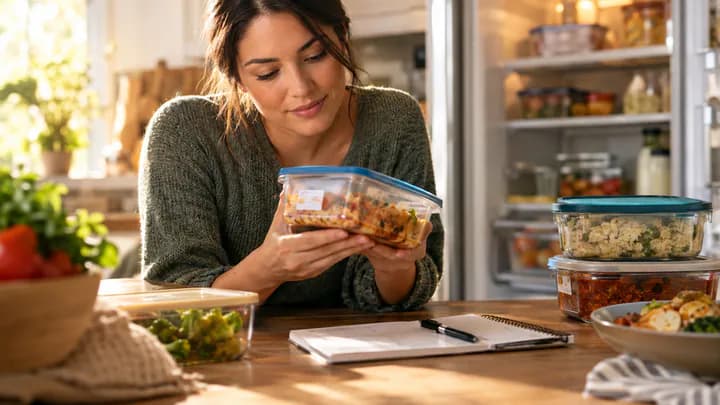
Matching container sizes matter more than the material, because matching containers stack and stacked containers are visible. Food you cannot see does not get eaten. Glass reheats more evenly and does not hold onto curry stains; BPA-free plastic is lighter for commuting. A kitchen scale is optional unless you are tracking portions deliberately.
One habit beats every gadget: label each container with what it is and the date it was made. A strip of masking tape is enough. Undated leftovers get thrown out on suspicion, and suspicion is expensive.
What does a realistic 90-minute prep session look like?
Here is a worked example you can run this weekend. It produces roughly nine assembled meals from three components and one sauce, and it is sequenced so the oven does most of the work while you handle everything else.
- 0:00 — Oven to 425°F. Toss sweet potato cubes, bell peppers, red onion, and drained chickpeas with olive oil, cumin, and salt across two sheet pans.
- 0:10 — Pans in. Start a pot of brown rice or quinoa.
- 0:15 — Season chicken thighs or press and cube tofu. Rest on a plate.
- 0:25 — Flip the vegetable pans. Whisk a tahini-lemon-garlic dressing; taste and add water until it pours.
- 0:35 — Vegetables out. Chicken or tofu goes in on a fresh pan.
- 0:40 — Spread the hot rice on a clean sheet pan to cool fast. Assemble four jars of overnight oats while you wait.
- 0:55 — Protein out and resting. Everything is now cooling in a single layer.
- 1:10 — Portion into containers, lids on, dated, in the fridge. Freeze two portions immediately for Friday.
- 1:30 — Kitchen clean.
Notice that nothing sits at room temperature for long. That is deliberate, and it is the part most guides skip. If you want the same logic applied to dinner rather than to a weekly batch, our guide to sheet-pan dinners that stay fast and balanced uses identical timing.
Which meal prep ideas actually survive five days in the fridge?
Sturdy meals share one trait: low free moisture. Grain bowls, lentil curries, roasted vegetables, and braised proteins hold up. Anything crisp, creamy, or cut-and-exposed degrades fast. These five have earned their place in our rotation:
- Mason jar salads. Layer in strict order — dressing at the bottom, then protein, then grains, then hard vegetables, then greens on top, never touching the dressing. Invert and shake at the table. Good for four days.
- One-pan roasted vegetable and chickpea bowls. Sweet potato, peppers, onion, chickpeas, brown rice, tahini on the side. Reheats well; the chickpeas soften but stay pleasant.
- Turkey taco lettuce wraps. Store the seasoned turkey, the salsa, and the lettuce separately. Avocado is sliced the morning you eat it, never on prep day.
- Lentil and vegetable curry. The one meal that genuinely improves by day three. Freezes without texture loss, which makes it the ideal Friday backup.
- Peanut butter oat balls. Oats, natural peanut butter, a little honey, chia. A snack that keeps two weeks and stops the 4 p.m. vending machine decision.
What does not survive: dressed greens, cut avocado, anything breaded, cucumber in a hot dish, and pasta that has been sauced and refrigerated in the same container. If pasta is your weeknight default, cook it fresh instead — it takes twelve minutes, and our one-pot pasta weeknight guide cuts the cleanup to a single pan.
Some textures never come back in the microwave: breaded items go limp, creamy sauces split and roasted potatoes turn leathery. If you love those foods, prep the components and finish them hot in a toaster oven or air fryer at 375°F for about five minutes. For raw crunch, store chopped carrots and cucumber in a dry container lined with a paper towel.
How do you keep prepped food safe to eat?
Three rules cover almost everything: get cooked food into the fridge within two hours, keep the fridge at or below 40°F, and eat refrigerated cooked food within three to four days. Reheat until steaming hot throughout rather than merely warm.
The edge case worth knowing is rice. Cooked rice left at room temperature for several hours can support Bacillus cereus, and the toxin it produces is not reliably destroyed by reheating. Spreading hot rice on a sheet pan to cool quickly — rather than leaving a covered pot on the stovetop while you finish everything else — removes that risk entirely.
Deep containers are the other hidden hazard. A three-inch-thick block of chili cools from the outside in and can sit in the danger zone for hours in a home fridge. Portion hot food into shallow containers before chilling, and leave the lid off until steam stops.
When reheating, aim for 165°F throughout and stir halfway, especially with dense grains and casseroles, where microwaves leave cold pockets.
If you are managing a medical condition, pregnancy, or a diagnosed food allergy, treat this as general guidance and confirm specifics with a qualified professional such as a registered dietitian.
How do you stop prepped food from getting boring?
Change the sauce, not the ingredients. The same chicken, rice, and roasted vegetables read as three different meals under tahini-lemon, a soy-ginger-rice vinegar mix, or a chipotle-yogurt drizzle. Sauces take four minutes and cost almost nothing.
Two more fixes that work: keep a jar of quick-pickled red onion in the fridge to add acid and crunch to anything reheated, and finish every reheated plate with something raw — herbs, a squeeze of lemon, scallions. Reheating dulls aromatics, and a fresh element puts them back.
Season prepped food a little bolder than a fresh plate, since it has to survive both reheating and repetition. Rotating the format helps too: the same base works as a bowl, a wrap, a salad, a soup base or a topped baked potato.
Breakfast is where variety collapses first, because most people prep the same oats for a month. Rotating between overnight oats, egg muffins, and a savory option keeps it alive; our roundup of high-protein breakfast ideas for busy mornings is built specifically for make-ahead formats.
Does meal prep actually save money?
Usually yes, and the savings come from two places rather than one: replacing weekday takeout, and using whole ingredients across multiple meals so less produce rots in the drawer. A bunch of cilantro used in three dishes is thrift; a bunch bought for one recipe is waste with a receipt.
The savings evaporate when a plan calls for five specialty ingredients that each appear once. Our practical test: every item on the grocery list should show up in at least two meals, or it needs to justify itself. Build the week around three or four base ingredients and let the sauces create the difference.
The other leak is prepping more than you eat. Food that gets thrown out can erase the benefit entirely, which is another argument for starting with a few portions rather than a full week of them.
Groceries are also one of the easiest categories to smooth out across a month rather than absorbing in spikes. That is a budgeting framework, not financial advice.
When does meal prep not work?
It does not work well if you live with an unreliable refrigerator, share a fridge shelf the size of a shoebox, or work rotating shifts where the days you are home change weekly. In those cases the freezer batch style is the only one worth attempting — portion and freeze as you cook normally, and the three-day fridge clock never becomes your problem.
It also does not work if you are prepping food you do not actually like. A week of joyless containers teaches you to dread your own fridge. If you open it and feel resigned, the menu is wrong, not you.
And if exhaustion, not logistics, is what sends you to takeout, meal prep is treating a symptom. Consistent sleep changes weeknight decision-making more than any container system does.
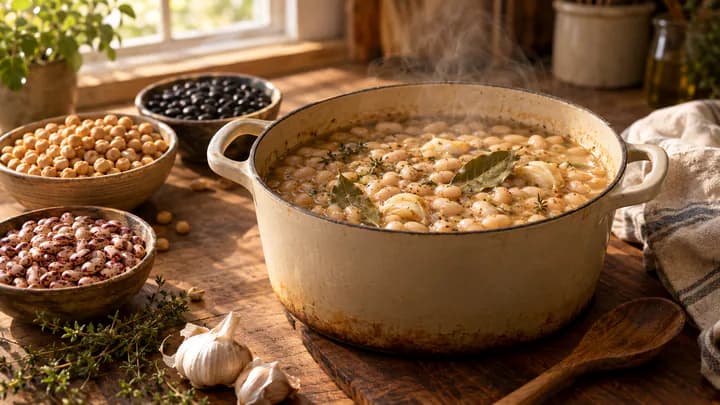
Households with different appetites and tastes struggle when everything is pre-portioned. Component prep fixes that as well: a shared pot of beans and a shared tray of rice let each person build a different plate.
And if prepped food feeds anxious counting or rigid rules around eating, raise that with a qualified professional before scaling the habit up. Systems should reduce pressure, not add it.
How should a beginner start this week?
Prep one meal slot, not all of them. Pick lunch — it is the meal most often outsourced and the easiest to standardize — and cook exactly three components for three days. Do nothing else for two weeks.
Round those components out with one fresh element that is bought, not prepped: a bag of greens, a lemon, herbs, feta or pickles. Cooking for one works the same way: change the sauce and the fresh add-on each day, and freeze two portions right away so day-four boredom does not end the habit.
Then add one thing: a freezer backup, or breakfast, or a second protein. Building the habit at a size you can sustain during a bad week is the entire strategy. A clean eating plan, in practice, means lean protein, complex carbohydrates, healthy fats, and vegetables showing up consistently — not eliminating food groups or eating identically every day.
Key takeaways
- Cook components — grain, protein, roasted vegetables, sauce — rather than five finished recipes; variety is what keeps the habit alive.
- Plan three days of fridge meals and freeze the rest, because cooked food keeps three to four days refrigerated, not five.
- Cool food fast in shallow containers and refrigerate within two hours; spread hot rice on a sheet pan rather than leaving it in the pot.
- Store dressings, avocado, and greens separately, and finish every reheated plate with something fresh or acidic.
- Every grocery item should appear in at least two meals — that single rule is where most of the cost savings come from.
- Cap your prep session at 90 minutes. Sessions that run long are the most common reason people quit.
Frequently asked questions
How long does prepped food actually last in the fridge?
Cooked food kept at or below 40°F is generally considered safe for three to four days, which is why a Sunday prep session realistically covers Monday through Wednesday or Thursday. Anything intended for Friday should be frozen on prep day and thawed in the fridge overnight, not left sitting for six days.
Is it better to prep full meals or individual components?
Component prep — cooked grains, a roasted vegetable tray, one or two proteins, and a sauce — is easier to stick to for most people because you assemble a different plate each day instead of eating the same box five times. Full portioned meals win only when you need grab-and-go speed with zero morning assembly.
How much time does a weekly meal prep session take?
A realistic first session is 60 to 90 minutes, including cleanup, if you cook three components rather than five complete recipes. Sessions that stretch past two hours are the single most common reason people abandon meal prep, so cap the clock before you cap the menu.
Do I need special containers for meal prep?
No. Any airtight container works, though glass reheats more evenly and does not stain, and a few small jars for dressings prevent soggy salads. Matching container sizes matters more than material because they stack, which is the difference between a fridge you can see into and one you cannot.
Is it safe to reheat rice that has been in the fridge?
Yes, if the rice was cooled quickly and refrigerated within about two hours of cooking. Cooked rice left at room temperature for hours can support Bacillus cereus, a bacterium whose toxin is not destroyed by reheating, so spread hot rice on a sheet pan to cool fast rather than leaving the pot on the stove.
Does meal prep really save money?
It usually does, mostly by replacing weekday takeout and by using whole ingredients across several meals so less produce rots. The savings shrink if you buy specialty ingredients for a single recipe, so build your week around three or four base ingredients that appear in more than one meal.
What if my schedule is too unpredictable for a Sunday prep session?
Split the work: prep one component on two different evenings instead of doing everything at once. Shift workers and people with variable schedules often do better freezing individual portions as they cook, so the fridge clock never runs out on food nobody was home to eat.