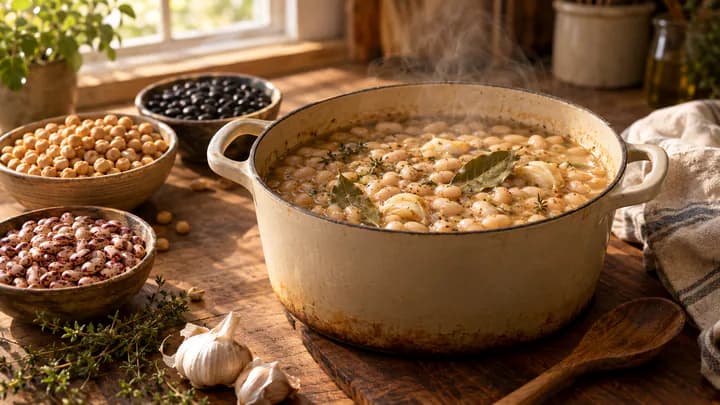
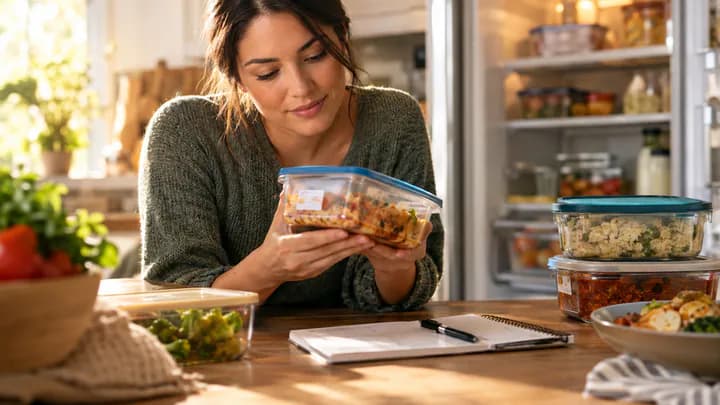
Pantry Cooking in 2026: Great Meals From What You Have
Pantry cooking works when the pantry is small, honest, and actually used. Here is the staple list we keep, the six templates that cover most weeknights, and the weekly rhythm that stops shelf staples from turning into archaeology.
Drafted with AI. This version has not been reviewed by an editor, so it is kept out of search results and carries no ads — how we work.
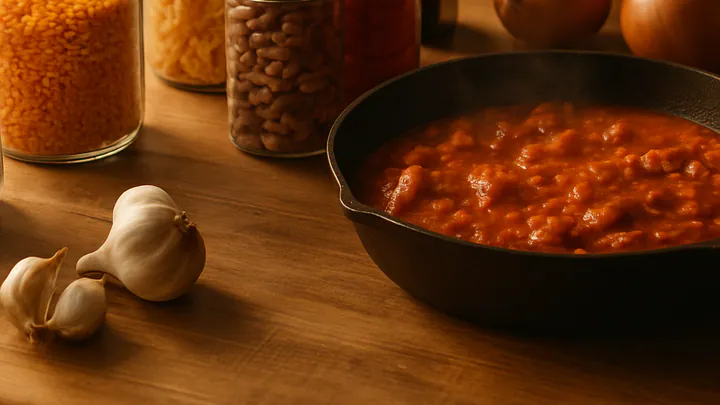
TL;DR: Pantry cooking means building meals from staples you already own, with fresh food as the accent. Keep the pantry small and honest, treat the freezer as part of it, and learn six flexible templates instead of collecting recipes. Fewer grocery trips, less waste, and weeknights that stop starting with "what should I make?"
What is pantry cooking, exactly?
Pantry cooking is a method of meal-making in which shelf-stable and frozen staples form the base of a dish and fresh ingredients act as finishing accents. Instead of choosing a recipe and shopping for its ingredient list, you look at what you have and choose a pattern that fits.
The practical difference is where the decision happens. Recipe-first cooking makes the store the bottleneck; pantry-first cooking makes the shelf the starting point.
Why is pantry cooking having a moment in 2026?
Three pressures converged: grocery prices that people talk about daily, delivery and service fees that keep climbing, and recipe fatigue from apps that demand a dozen specific ingredients for one dinner. Pantry cooking answers all three at once without asking anyone to enjoy cooking more than they already do.
There is a waste angle too. Most household food waste is produce bought with good intentions and never used. When fresh ingredients are accents rather than foundations, a wilting half-bunch of cilantro or one lonely zucchini becomes the finishing touch on a meal that was already going to happen — not the load-bearing element of a plan you abandoned on Tuesday.
What should a working pantry actually contain?
A working pantry is smaller than most people expect: roughly two dozen items across grains, legumes, canned goods, fats, acids, umami boosters, and aromatics. Anything that has not been opened in three months is clutter, not a staple. Our decision rule is blunt — if you have never made risotto, arborio rice is not stock, it is furniture.
| Tier | Items | Why it earns the space |
|---|---|---|
| Grains | Long-grain rice, short pasta, rolled oats (optional: farro or barley) | Three shapes of starch cover breakfast, bowls, and dinner |
| Legumes | Canned chickpeas and black beans; dried brown or red lentils | Cans for speed, lentils for a 25-minute pot with no soaking |
| Canned goods | Whole peeled and crushed tomatoes; tuna or sardines; coconut milk | Canned tomatoes are the most versatile shelf item in any kitchen |
| Liquid base | Bouillon paste or cubes | Takes a fraction of the space of cartons and keeps far longer once opened |
| Fats | Workhorse olive oil, a better finishing oil, one neutral high-heat oil | Fat carries flavor; one bottle cannot do all three jobs well |
| Acids | Red wine or sherry vinegar; lemons when you can keep them | Acid is what makes shelf-stable food taste alive |
| Umami | Soy sauce, tomato paste, miso, anchovies or fish sauce, Parmesan rinds | Replaces the depth that fresh ingredients would otherwise provide |
| Aromatics | Onions, garlic, shallots | Store for weeks and begin nearly every savory dish |
Two small notes that change results more than any new ingredient. Bloom tomato paste in oil for a full two minutes until it turns brick-red before adding liquid — raw tomato paste tastes tinny, cooked tomato paste tastes like it simmered all afternoon. And do not drain the liquid from canned beans automatically; it is starchy enough to thicken a brothy pot into something that clings to bread.
Does the freezer count as part of the pantry?
Yes, and treating it that way is the single upgrade most home cooks have not fully made. Frozen peas, spinach, corn, and edamame are frozen near peak ripeness and go from bag to plate in minutes, which makes them more reliable than the fresh vegetable you forgot in the crisper drawer.
Beyond vegetables: frozen shrimp thaws in cool water in about fifteen minutes, sausage and ground meat portion well if you freeze them flat, and sliced bread, tortillas, and cooked rice all freeze beautifully. That last group is your delivery insurance — the difference between a nine o'clock quesadilla and a nine o'clock checkout screen.
How do templates beat recipes on a weeknight?
A template tells you the shape of a meal and lets the pantry fill the blanks; a recipe tells you the exact contents and fails if one is missing. Learn six templates and you stop asking "what should I make?" and start asking "which pattern fits what I have?"
- Brothy beans. Sauté aromatics, add a can or two of beans with their liquid plus broth, simmer, finish with greens, olive oil, and lemon. Serve over toast.
- Grain bowl. Warm grain + protein + something crunchy + something acidic or pickled + a sauce. Fill all five slots and almost any combination works.
- Pantry pasta. Garlic, anchovy, tomato paste, and chili flakes bloomed in oil; or tuna, lemon, and parsley; or just butter, Parmesan, and pasta water. If you want the science of the starchy-water ratio, our guide to one-pan pasta and why the liquid ratio makes it silky is the deep dive.
- Skillet eggs. Simmer tomatoes or beans, crack eggs on top, cover until the whites set. Adapts across every cuisine you season it toward.
- Soup-stew hybrid. Onion + garlic + canned tomato + broth + a grain or bean + whatever vegetable is closest to the edge.
- Fried rice or noodles. The most forgiving template ever invented for leftovers, eggs, and frozen vegetables.
Two adjacent methods pair well with this thinking. Sheet-pan dinners built on a no-recipe formula handle the nights when you have produce to roast, and one-pot pasta covers the nights when you want exactly one thing to wash.
How do I stop pantry meals from tasting the same?
Rotate three levers — fat, acid, and seasoning — rather than buying new base ingredients. The base repeats; the identity changes. This is the whole answer to repetition fatigue, and it costs nothing.
A worked example with one pot of brown lentils, cooked plain with salt and a bay leaf:
| Direction | Fat | Acid | Seasoning | Serve as |
|---|---|---|---|---|
| Italian-leaning | Olive oil | Red wine vinegar | Rosemary, garlic, Parmesan rind | Soup with toast |
| South Asian–inspired | Ghee or butter | Lime | Cumin seed, garam masala, chili | Over rice |
| Mexican-leaning | Neutral oil | Lime | Cumin, oregano, a spoon of salsa | In tortillas with cabbage |
Keep the spice shelf focused rather than enormous: kosher salt, black pepper, smoked paprika, cumin, coriander, chili flakes, oregano, a curry powder you actually like, cinnamon, and bay leaves. Buy smaller jars more often. Stale ground spices are the quiet reason a lot of careful home cooking still tastes flat.
Then keep at least two finishing items in the house at all times — good olive oil, a wedge of Parmesan, plain yogurt, fresh herbs, or a jar of quick-pickled red onions. The drizzle at the end is what separates a meal from an obligation.
How long do pantry staples really last?
Dried grains and canned goods generally hold their quality for one to two years in a cool, dry cupboard; opened oils and ground spices fade in six to twelve months; dried beans get progressively harder to cook soft after about two years. Most package dates signal peak quality, not a safety cliff.
The edge case worth knowing: very old dried beans may never fully soften no matter how long you simmer them, because their skins have dried past the point of rehydrating evenly. If a pot of beans is still chalky after two hours, the beans are the problem, not your stove. Buy dried beans from a store with turnover and use them within a year or so.
Safety is simpler than the internet suggests. Discard any can that is bulging, leaking, deeply rusted, or that spurts when opened. Otherwise, trust your nose and your eyes.
What weekly rhythm keeps the pantry from going stale?
Four small habits, about forty minutes total, keep the system alive: a scan, a small shop, one cook-ahead task, and two use-it-up nights. Pantry cooking fails when it becomes a daily decision and works when it becomes a light scaffolding.
- Once a week, a five-minute scan. What needs using? What ran out? Pull older items to the front while you look.
- One small shop. Mostly produce, dairy, and one or two proteins. Skip anything you already own, even if it is on sale.
- One cook-ahead task. A pot of grains, a tray of roasted vegetables, or a jar of vinaigrette. This is the highest-leverage thirty minutes of the week.
- Two use-it-up nights. Built from odds and ends — nearly always fried rice, a frittata, or soup. If mornings are the pressure point instead, our high-protein breakfast ideas run on the same staples.
On the money side, the savings show up as absence: fewer forgotten vegetables, fewer impulse buys, fewer delivery orders. If you want to make that visible rather than vague, pairing a pantry rhythm with sinking funds for predictable expenses is a reasonable way to track it. That is general budgeting practice, not financial advice.
What are the costly pantry-cooking mistakes?
- Stockpiling what you don't cook. Three curry pastes used twice a year are clutter with a shelf life. Buy for the meals you actually repeat.
- Under-seasoning. Shelf-stable ingredients have less inherent brightness than fresh ones, so salt, acid, and fat have to work harder — not less.
- Ignoring the freezer. A freezer without vegetables and portioned protein is a freezer that will lose to a delivery app on a Wednesday.
- Adding acid too early to dried beans. Tomatoes, vinegar, and wine slow the softening of dried beans. Get them tender first, then build the acidic part of the dish around them.
- Letting the shelf become archaeology. Pull everything forward every couple of months and cook the oldest thing first.
When does pantry cooking not work?
It struggles in three situations: severe storage limits, strict medical diets, and households with multiple non-overlapping food restrictions. A tiny apartment with one cupboard and a freezer-over-fridge cannot support the freezer-as-pantry approach, and in that case a shorter, fresher, more frequent shop genuinely beats stocking up.
Sodium deserves an honest flag too. Canned beans, bouillon, soy sauce, and jarred sauces stack up fast. Rinsing canned beans, diluting bouillon below the package ratio, and salting at the end rather than the start all help. If you are managing a health condition, a food allergy, or a prescribed eating pattern, treat everything here as general cooking guidance and check with a registered dietitian or your healthcare provider before changing how you eat.
Key takeaways
- A working pantry in 2026 is small, well-chosen, and actively rotated — about two dozen items, not a stockpile.
- Templates beat recipes: six flexible patterns cover the overwhelming majority of weeknights.
- Vary fat, acid, and seasoning to make one base ingredient read as three different meals.
- The freezer is pantry. Frozen vegetables, flat-packed protein, and cooked rice are your weeknight insurance.
- Buy dried beans fresh and cook them tender before adding anything acidic; age, not technique, is why beans stay hard.
- A weekly scan, one small shop, and one cook-ahead task are what keep the whole system from quietly collapsing.
Frequently asked questions
What is pantry cooking?
Pantry cooking is the practice of building meals primarily from shelf-stable and frozen staples — grains, beans, canned tomatoes, oils, vinegars, and seasonings — with fresh ingredients used as accents rather than foundations. The method relies on flexible templates instead of rigid recipes, so dinner depends on what you already own rather than on a specific shopping list.
What are the most useful pantry staples to keep on hand?
A strong core is rice, short pasta, oats, canned chickpeas and black beans, dried lentils, canned tomatoes, bouillon paste, olive and neutral oil, one vinegar, soy sauce, tomato paste, eggs, onions, and garlic. That list alone supports dozens of meals. Everything beyond it should earn its shelf space by being used at least once a month.
How long do pantry staples actually last?
Canned goods and dried grains generally hold up for one to two years stored cool and dry, dried beans soften poorly after about two years, and opened oils and ground spices fade within six to twelve months. Dates on packages usually indicate peak quality rather than safety, but discard any can that is bulging, leaking, or rusted through.
Can pantry meals still be nutritious?
Yes — legumes, whole grains, canned fish, frozen vegetables, eggs, and olive oil are the backbone of many long-standing traditional diets. The variables worth watching are sodium in canned goods, broths, and sauces, and whether you are getting enough produce. If you are managing a health condition or a prescribed diet, treat this as general guidance and consult a qualified dietitian or your healthcare provider.
How do I cook from the pantry without getting bored?
Rotate the fat, the acid, and the spice rather than the base ingredient. The same pot of lentils reads Italian with olive oil, red wine vinegar, and rosemary; South Asian–inspired with ghee, lime, and garam masala; and Mexican-leaning with neutral oil, lime, cumin, and salsa. Three levers on one base gives you weeks of variety without a bigger shopping list.
Is pantry cooking actually cheaper than meal planning?
Usually yes, because the savings come from waste you no longer create and takeout you no longer order rather than from cheaper ingredients. Fewer impulse buys, fewer forgotten vegetables, and beans stretching a single protein across two meals all add up. The effect is most noticeable when one or two delivery orders a week get replaced by a pantry dinner.
Do I need to soak dried beans before cooking?
No — soaking mainly shortens cooking time and does not make or break the result, and lentils and split peas need no soaking at all. The bigger variable is bean age: beans more than about two years old can stay stubbornly firm no matter how long you simmer them. Salt the cooking water from the start; it seasons the beans through without toughening them.