Sheet Pan Dinners in 2026: Smarter Weeknight Meals
One protein, one sturdy vegetable, one tender vegetable, one finishing sauce, and a 425°F oven. Here is the timing ladder, the five combinations our test kitchen rotates, and the crowding mistake that turns a tray bake soggy.

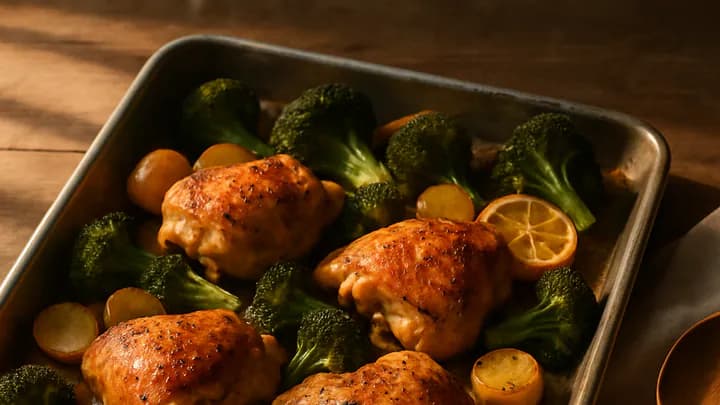
TL;DR: A sheet pan dinner is one protein, one sturdy vegetable, one tender vegetable, and one finishing sauce, roasted at 425°F on a heavy half-sheet. Stagger what goes in when, keep everything in a single layer, and salt every component. That is the whole method — the rest is variation.
A sheet pan dinner is a complete meal roasted on a single flat tray in one oven cycle, with protein and vegetables added at different times so they finish together. That last clause is the part most recipes skim over, and it is the difference between a tray you repeat weekly and one you quietly abandon.
Our test kitchen has been cooking this way for years, but the technique has earned new attention for unglamorous reasons: groceries cost more, weeknights are shorter, and nobody wants to run three burners and a food processor for a Tuesday. One tray, one oven, one round of dishes.
Why are sheet pan dinners still worth it in 2026?
Because they cut the two things that actually stop people from cooking: active attention and cleanup. Chopping takes ten minutes, the oven takes over, and there is one pan to wash instead of a skillet, a pot, a colander, and a cutting board's worth of collateral damage.
There is a smaller, underrated benefit too. Roasting concentrates flavor through dry heat, so you need less added fat and far fewer ingredients to make vegetables taste good. A cauliflower floret that has browned properly needs salt and lemon, not a sauce to hide behind.
The honest limitation: sheet pan cooking is a browning technique, not a simmering one. Anything that needs to soften in liquid — braises, curries, saucy pastas — belongs elsewhere. For those nights, our one-pot pasta weeknight guide covers the same speed with a different mechanism.
What is the sheet pan formula that works every time?
Four components, no recipe required: one protein, one sturdy vegetable, one tender vegetable, one finishing element. Scale it to roughly 1 to 1.5 pounds of protein and 1.5 pounds of vegetables total for four people.
- Protein: bone-in chicken thighs, salmon fillets, sausages, extra-firm tofu, shrimp, or a can of drained chickpeas.
- Sturdy vegetable: potatoes, sweet potatoes, carrots, butternut squash, cauliflower, Brussels sprouts.
- Tender vegetable: broccoli, asparagus, bell peppers, zucchini, green beans, cherry tomatoes.
- Finishing element: a yogurt or tahini sauce, chopped herbs, citrus, crumbled feta, hot honey, grainy mustard.
The finishing element is the one people skip and the one that matters most. Roasted food is browned and concentrated; it needs something bright, acidic, or creamy on top to read as a composed dinner rather than a tray of ingredients. Add it after the pan leaves the oven, never before.
Our default settings
- Temperature: 425°F (220°C). Hot enough to brown, forgiving enough not to scorch spices.
- Pan: heavy uncoated aluminum half-sheet, about 18 by 13 inches. Preheat it empty for five minutes if you want a crisper underside.
- Fat: 2 to 3 tablespoons of olive oil, neutral oil, or melted butter — enough to coat, not pool.
- Seasoning floor: generous salt, fresh pepper, and one assertive spice (smoked paprika, cumin, za'atar, Italian seasoning).
How long does each ingredient need at 425°F?
Use this as a timing ladder: find the longest item, start it first, and work backward so everything finishes in the same minute. These are approximate times on a bare metal pan at 425°F, with a single layer and space between pieces.
| Ingredient | Cut size | Total time | Add to pan at |
|---|---|---|---|
| Potatoes, carrots, squash | 1-inch pieces | 35–40 min | Minute 0 |
| Brussels sprouts, cauliflower | Halved / florets | 25–30 min | Minute 10 |
| Bone-in chicken thighs | Whole | 25–30 min | Minute 10 |
| Sausages, cubed tofu | Whole / 1-inch cubes | 22–25 min | Minute 13 |
| Broccoli, peppers, green beans | Florets / strips | 18–20 min | Minute 18 |
| Salmon fillets | 6 oz portions | 10–12 min | Minute 26 |
| Shrimp, asparagus, cherry tomatoes | Whole | 7–9 min | Minute 29 |
Worked example. For a 6:30 dinner: potatoes in at 5:50, chicken thighs and cauliflower at 6:00, broccoli at 6:08, out at 6:28, lemon and parsley at 6:29. Total active time, including chopping, is about twelve minutes spread across forty.
Which five sheet pan combinations actually work?
These are the rotations we return to. None require specialty shopping, and each serves four.
1. Lemon-herb chicken thighs, potatoes, broccoli
Halved baby potatoes with oil and salt go in first for 15 minutes. Add bone-in, skin-on thighs and broccoli florets. Finish with lemon juice and chopped parsley. Skin side up, always — steam from below will ruin it otherwise.
2. Harissa salmon, chickpeas, peppers
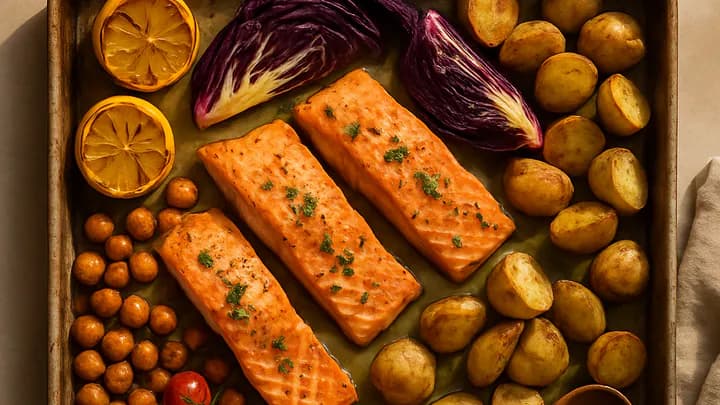
Roast drained chickpeas and sliced bell peppers for 15 minutes, then nestle in harissa-rubbed fillets for the final 10 to 12. Greek yogurt and dill on top balance the heat. Pat the chickpeas very dry first or they will never crisp.
3. Sausage, apple, Brussels sprouts
Italian sausages, quartered firm apples, and halved sprouts roast together in roughly 25 minutes. A drizzle of grainy mustard whisked with honey at the end makes it feel deliberate. Use a tart apple — sweet varieties collapse.
4. Crispy tofu, sweet potato, green beans
Press extra-firm tofu for 15 minutes, cube it, and toss with soy sauce then cornstarch. Roast with sweet potato cubes for 20 minutes, add green beans for the last 10, finish with peanut-lime sauce. Cornstarch after the liquid, not before, or it clumps.
5. Shrimp fajita tray
Peppers and onions go in alone for 12 minutes. Add shrimp tossed with cumin, chili powder, and lime for 8 more. Serve from the pan with warm tortillas and avocado. This is the fastest tray in the rotation and the easiest to overcook.
What are the mistakes that ruin a sheet pan dinner?
Five habits account for nearly every disappointing tray. The first one causes more failures than the other four combined.
- Overcrowding. If pieces touch, trapped moisture steams them. You should see bare pan between items. Two trays is not a failure of planning, it is the plan.
- Uneven cuts. A 2-inch potato chunk will never finish alongside a thin asparagus spear. Match sizes within each component or stagger entry times.
- A half-heated oven. Most ovens signal "preheated" before the walls and rack are genuinely at temperature. Give it an extra five minutes — that initial blast is what triggers browning.
- Underseasoning. Roasting concentrates flavor; it does not create it. Salt the vegetables separately from the protein so neither gets shortchanged.
- Saucing too early. Anything with sugar — honey, teriyaki, barbecue — burns at 425°F. Brush it on during the last 5 minutes.
The edge cases nobody mentions
Dark nonstick pans run hot. They absorb more radiant heat than bare aluminum, so the undersides scorch while the tops lag. Drop to 400°F if that is what you own.
Warped pans pool oil. A thin pan that buckles at high heat sends all the fat to one corner, which is why half your tray browns and half does not. This is the strongest argument for buying heavy gauge.
Small and apartment ovens change the math. If a half-sheet does not clear the walls by an inch on all sides, airflow suffers and cook times stretch by five to ten minutes. Measure before buying.
This does not apply if you are cooking breaded cutlets, anything that needs a lid, or delicate fish like sole. Those want a skillet, and no amount of tray discipline will fix it.
How do you turn one tray into a week of lunches?
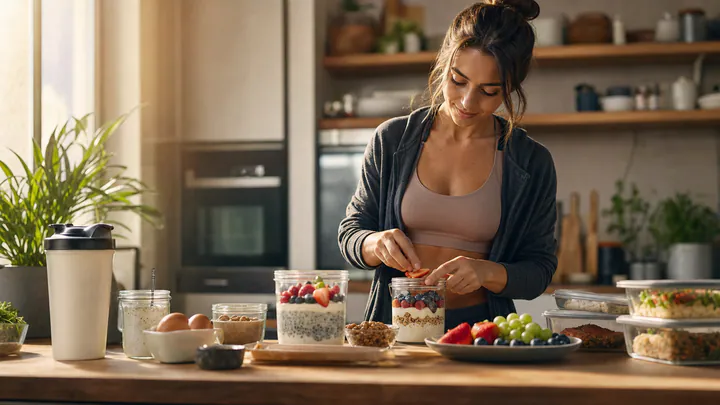
Roast a double batch, undercook the vegetables by about three minutes, and store every sauce in a separate container. The undercooking matters because reheating finishes the job — fully cooked broccoli reheated on day three is mush.
Reheat at 350°F in an oven or air fryer for 6 to 8 minutes to restore crisp edges. If a microwave is your only option, add a small splash of water, cover loosely, and accept that texture is the trade. Roasted proteins and vegetables hold well for three to four days refrigerated in shallow containers.
Pairing this with a repeatable morning routine removes most of the weekday decision-making; our high-protein breakfast ideas cover the other end of the day with the same low-effort logic.
Which small upgrades are actually worth the money?
A second sheet pan, first and always. It is the cheapest possible fix for the crowding problem, and it doubles your capacity without any new skill.
- A finishing-sauce shortlist. Tahini, plain Greek yogurt, and hot honey cover most weeknights between them.
- Frozen pre-cut vegetables. Broccoli, green beans, and pepper strips roast well straight from the freezer at 425°F. Never thaw them.
- Parchment sheets, pre-cut. Worth the small dip in browning on the nights when cleanup is the deciding factor.
- An instant-read thermometer. More useful than any pan upgrade. Chicken thighs are done at 175°F, salmon at 125–130°F for medium.
If you want the compressed version of this method to keep on your phone, our no-recipe sheet-pan formula strips it to the essentials. And on nights when you want the same one-vessel ease with a silkier result, the one-pan pasta liquid ratio is the stovetop counterpart we reach for.
A note on nutrition
This article is general culinary information, not medical or nutritional advice. If you have specific dietary needs, food allergies, or a chronic health condition, please consult a qualified registered dietitian or your physician before making significant changes to how you eat.
Key takeaways
- The formula is fixed, the ingredients are not: one protein, one sturdy vegetable, one tender vegetable, one finishing element.
- 425°F on a heavy uncoated half-sheet is the default; drop to 400°F on dark nonstick pans and reduce 25°F for convection.
- Use the timing ladder — roots at minute 0, chicken at 10, broccoli at 18, salmon at 26, shrimp at 29 — instead of hoping everything lands together.
- Crowding causes soggy trays. Leave visible space between pieces and use a second pan without guilt.
- Add acid, herbs, or sauce only after the pan comes out; sugary glazes go on in the final five minutes.
- Double the batch once a week, undercook the vegetables slightly, and store sauces separately for lunches that survive to Wednesday.
Frequently asked questions
What temperature is best for sheet pan dinners?
425°F (220°C) is the default that works for nearly everything. It is hot enough to caramelize vegetables and crisp chicken skin, but forgiving enough that garlic and spices do not scorch before the protein is cooked. Drop to 400°F only if your pan is dark or your oven runs hot; go to 450°F for potatoes and cauliflower when nothing delicate shares the tray.
Why do my sheet pan vegetables turn out soggy?
Crowding is almost always the cause. When pieces touch, the moisture they release cannot evaporate, so they steam in their own liquid instead of browning. Spread everything in a single layer with visible pan between pieces, and split across two trays whenever you are feeding more than four people.
Should I line my sheet pan with parchment or foil?
Parchment for easy cleanup, bare metal for maximum crispness. Parchment insulates the food slightly from the pan, so you lose some of the deep browning on the underside — a fair trade on a hectic night. Foil is best for saucy or sticky bakes like honey-mustard sausages, where cleanup would otherwise be punishing.
How do I keep the protein and vegetables from finishing at different times?
Stagger when things go in, using a rough timing ladder: dense root vegetables get 35 to 40 minutes, chicken thighs and sausages about 25, broccoli and peppers about 20, salmon about 12, and shrimp and asparagus about 8. Start the longest item first and add the others so everything lands together. Matching cut sizes helps too.
Can sheet pan dinners work for meal prep?
Yes, with two adjustments: slightly undercook the vegetables and store every sauce separately. Roasting a double batch on Sunday gives you three to four lunches. Reheat in a 350°F oven or air fryer for 6 to 8 minutes rather than the microwave, which softens the crisp edges you worked for.
What is the best sheet pan to buy?
A heavy uncoated aluminum half-sheet pan, roughly 18 by 13 inches, is the workhorse most professional kitchens use. It heats evenly, resists warping at high heat, and holds a full dinner for two to four people. Buy two — a second pan is the cheapest fix for overcrowding.
Can I roast frozen vegetables on a sheet pan?
Yes, and they work better than most people expect — but do not thaw them first. Toss frozen broccoli, green beans, or pepper strips straight from the bag with oil, spread them out, and give them their own pan or their own half of the tray. Thawed vegetables release water onto everything else and sabotage the browning.
Does a convection or air-fry setting change the timing?
Convection cooks faster and browns harder, so drop the temperature by about 25°F and start checking 5 minutes early. It is genuinely better for potatoes, tofu, and chicken skin. Be more careful with fish and shrimp, which can go from perfect to dry in the time it takes to set the table.