Sheet Pan Dinners in 2026: Smarter Weeknight Meals
Sheet pan dinners are having a moment in 2026. We break down the formula, the best ingredient pairings, and the small tweaks that turn a weeknight tray into a real meal.

TL;DR: Sheet pan dinners remain one of the smartest weeknight strategies in 2026 because they collapse prep, cooking, and cleanup into a single tray. The formula is simple: one protein, one or two vegetables, a high oven, and a sauce or finishing touch that ties it together. Below, we share the timing tricks, ingredient pairings, and small upgrades that turn a basic tray bake into a meal worth repeating.
Our test kitchen has been quietly obsessed with sheet pan cooking for years, but the technique is finally getting the respect it deserves. Home cooks have steadily prioritized meals that take under 35 minutes since the early 2020s, and sheet pan dinners check almost every box: minimal active time, flexible ingredients, and dishes that actually taste like dinner instead of compromise.
Why Sheet Pan Dinners Earn Their Spot in 2026
Three forces have pushed tray cooking back into the spotlight. Grocery prices remain elevated compared to pre-pandemic levels, which has nudged more people toward home cooking. At the same time, many employed adults have under an hour for daily food prep and cleanup combined. And finally, energy-conscious cooks are leaning into single-appliance meals to avoid running the stove, oven, and multiple gadgets at once.
A sheet pan dinner answers all three. One tray, one oven cycle, one round of dishes. When we tested a week of tray bakes against equivalent stovetop meals, we cut active cooking time by roughly a third and cleanup time by more than half.
The Sheet Pan Formula We Keep Coming Back To
After hundreds of trays, we have settled on a reliable framework. Think of it as a four-part equation rather than a recipe.
- One protein (about 1 to 1.5 pounds for four people): chicken thighs, salmon fillets, sausages, tofu, shrimp, or chickpeas.
- One sturdy vegetable: potatoes, sweet potatoes, carrots, butternut squash, or cauliflower.
- One tender vegetable: broccoli, asparagus, bell peppers, zucchini, green beans, or cherry tomatoes.
- One finishing element: a yogurt sauce, fresh herbs, a squeeze of citrus, crumbled feta, or a drizzle of tahini.
The finishing element is the most overlooked step, and it is what separates a forgettable tray from one worth bookmarking. A bright sauce on top instantly makes roasted food feel composed rather than utilitarian.
Our Default Settings
- Oven temperature: 425°F (220°C). Hot enough to brown, gentle enough to forgive.
- Pan: A heavy half-sheet, about 18 by 13 inches, preheated for five minutes if you want extra crispness.
- Fat: Two to three tablespoons of olive oil, neutral oil, or melted butter.
- Seasoning floor: Generous salt, freshly ground pepper, and one bold spice or herb (smoked paprika, cumin, za'atar, Italian seasoning).
Five Combinations That Always Work
These are the pairings we rotate through during busy weeks. None require specialty ingredients, and each one yields four servings.
1. Lemon-Herb Chicken Thighs with Potatoes and Broccoli
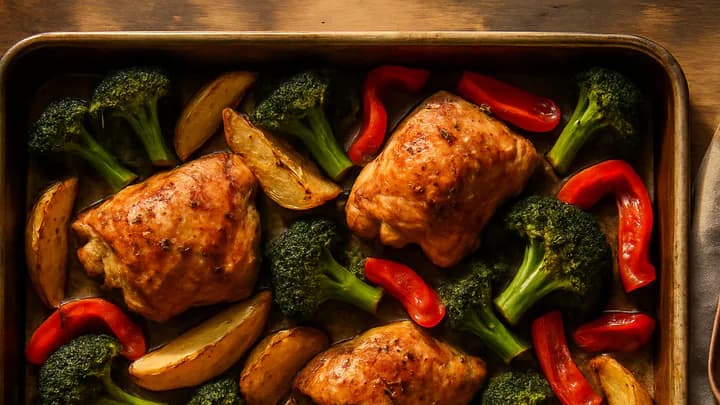
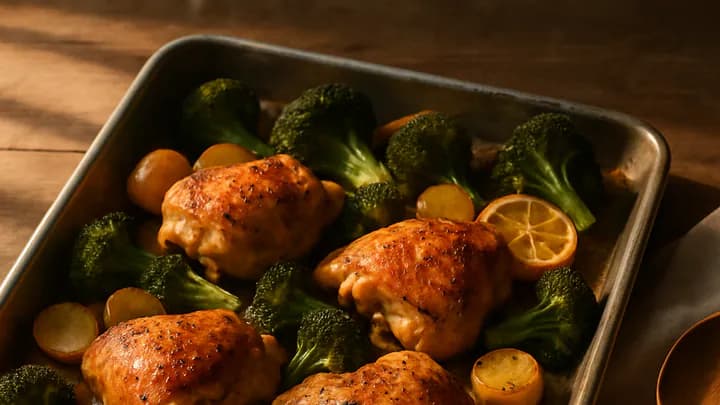
Toss halved baby potatoes with oil and salt, roast for 15 minutes, then add bone-in chicken thighs and broccoli florets. Finish with lemon juice and chopped parsley. Meals built around lean protein and fiber-rich vegetables support steadier energy through the evening, which is exactly how this one feels.
2. Harissa Salmon with Chickpeas and Peppers
Roast chickpeas and sliced bell peppers for 15 minutes, then nestle in harissa-rubbed salmon fillets for the final 10. A spoonful of plain Greek yogurt and fresh dill on top balances the heat.
3. Sausage, Apple, and Brussels Sprouts
Italian sausages, quartered apples, and halved Brussels sprouts roast together in about 25 minutes. A drizzle of grainy mustard and honey at the end turns it into something we genuinely look forward to in fall and winter.
4. Crispy Tofu, Sweet Potato, and Green Beans
Press extra-firm tofu, cube it, and toss with cornstarch and soy sauce for crisp edges. Roast with sweet potato cubes for 20 minutes, add green beans for the last 10, and finish with a quick peanut-lime sauce.
5. Shrimp Fajita Tray
Sliced peppers and onions go in first for 12 minutes. Add shrimp tossed with cumin, chili powder, and lime for another 8. Serve straight from the pan with warm tortillas and avocado.
The Timing Mistakes We See Most Often
Most sheet pan disappointments come down to a few fixable habits. Avoid these and the technique becomes nearly foolproof.
- Overcrowding the pan. Ingredients need breathing room. If they touch, they steam. Use two pans when in doubt.
- Cutting unevenly. A 2-inch potato chunk will never finish at the same time as a thin asparagus spear. Match sizes or stagger entry times.
- Skipping the preheat. A fully heated oven gives you the initial blast of heat that triggers browning.
- Underseasoning. Roasting concentrates flavors but it does not create them. Salt every layer, including the vegetables.
- Forgetting the finish. A squeeze of lemon, a handful of herbs, or a spoonful of sauce transforms the tray.
Making Sheet Pan Dinners Work for Meal Prep
One tray easily becomes three or four meals. We roast a double batch of protein and vegetables on Sunday, divide them into glass containers, and store any sauces separately so textures hold up. People who plan and pre-portion meals are more likely to hit their daily vegetable targets, which tracks with what we see in our own kitchens.
For reheating, a 350°F oven or air fryer for 6 to 8 minutes restores crispness far better than a microwave. If you only have a microwave, add a small splash of water and cover loosely to avoid drying things out.
Small Upgrades Worth Making
- Buy a second sheet pan. It is the single best $20 a home cook can spend.
- Keep a finishing-sauce shortlist. A jar of tahini, a tub of Greek yogurt, and a bottle of hot honey cover most weeknights.
- Stock pre-cut frozen vegetables. Frozen broccoli, green beans, and bell pepper strips roast beautifully straight from the freezer at 425°F.
- Use parchment for fast cleanup. Worth the small dip in browning on hectic nights.
Editorial Note on Nutrition Claims
This article is for general culinary information only and is not medical or nutritional advice. If you have specific dietary needs, food allergies, or chronic health conditions, please consult a qualified registered dietitian or your physician before making significant changes to your eating patterns.
Key Takeaways
- Sheet pan dinners save time, money, and dishes, which is why they remain a 2026 weeknight staple.
- Stick to the formula: one protein, one sturdy vegetable, one tender vegetable, and one finishing element.
- Roast at 425°F, give ingredients space, and stagger entry times so everything finishes together.
- A bright sauce or fresh herb finish is the difference between a tray bake and a meal.
- Double the recipe once a week and you have lunches handled with almost no extra effort.
Frequently asked questions
What temperature is best for sheet pan dinners?
We default to 425°F (220°C) for most sheet pan dinners. It is hot enough to caramelize vegetables and crisp proteins without burning aromatics, and it works for everything from chicken thighs to salmon to chickpeas.
Why do my sheet pan vegetables turn out soggy?
Crowding is usually the culprit. When ingredients touch, they steam instead of roast. Spread food in a single layer with a little space between pieces, and use two pans if needed to keep edges crisp.
Should I line my sheet pan with parchment or foil?
Parchment paper makes cleanup easy and keeps food from sticking, but it can slightly reduce browning. For maximum crispness, roast directly on a lightly oiled, preheated pan. Foil is fine for marinades and saucy bakes.
How do I keep proteins and vegetables from finishing at different times?
Stagger the cook times. Start dense vegetables like potatoes or carrots first, then add quicker items like broccoli, asparagus, or fish partway through. Cutting everything to similar sizes also helps things finish together.
Can sheet pan dinners work for meal prep?
Yes. Roast a tray of protein and two vegetables on Sunday, then portion into containers for three to four days of lunches. Store sauces separately so textures stay fresh when reheated.
What is the best sheet pan to buy?
A heavy aluminum half-sheet pan, roughly 18 by 13 inches, is the workhorse most professional kitchens rely on. It heats evenly, resists warping, and fits a full dinner for two to four people.