Sheet Pan Dinners in 2026: Easier Weeknight Meals
Sheet pan dinners are the quiet hero of the 2026 weeknight kitchen. Here is how we build them so they roast evenly, taste bright, and clean up in minutes.

TL;DR: Sheet pan dinners work when we respect three things: pan space, ingredient timing, and heat. Roast at 425°F on a large rimmed pan, group ingredients by how long they take, and finish with something bright — lemon, herbs, or a quick sauce. Do that and a single tray becomes a full weeknight meal with almost no cleanup.
In 2026, the sheet pan dinner is having another quiet moment, and for good reason. Grocery costs are still uneven, weeknights still feel compressed, and we still want food that tastes like it was cooked with intention. One pan, one oven, one wash-up — that is a formula worth taking seriously. Below, we share the framework our team uses to build sheet pan dinners that actually deliver: crisp edges, tender centers, and combinations you can rotate for months without boredom.
Why sheet pan dinners keep winning
The appeal is not just convenience. A hot oven does something that a rushed stovetop rarely does: it caramelizes. Sugars in vegetables brown, fats render, and edges crisp. That transformation is what makes simple ingredients — potatoes, cabbage, chicken thighs — taste like something you would order at a good neighborhood restaurant.
There is also a psychological win. When dinner lives on one pan, the mental load drops. You are not tracking three burners, two timers, and a colander in the sink. You are chopping, tossing, roasting, and eating. For anyone cooking after a long workday, that reduction in decisions matters more than any single recipe.
What sheet pan cooking is not
It is not a magic trick that fixes bad ingredients, and it is not truly hands-off — you still need to season well and check on things. But once you internalize the timing rules, you can improvise dinner from whatever is in the fridge, which is the real superpower.
The gear that actually matters
You do not need much, but the details make a real difference.
- A heavy half-sheet pan. Look for aluminum with a rolled rim, roughly 18 by 13 inches. Thin, warp-prone pans hot-spot and burn food unevenly.
- Parchment paper. For easy cleanup and delicate foods like fish. Skip it when you want maximum browning.
- A second pan. When you are feeding more than four, use two pans on separate racks rather than crowding one.
- An instant-read thermometer. Especially for chicken and pork, this ends the guesswork.
- A big mixing bowl. Toss ingredients in the bowl, not on the pan — you will coat everything more evenly with less oil.
The core framework: three tiers of timing
Almost every ingredient in a sheet pan dinner falls into one of three tiers based on how long it needs at 425°F. Once you memorize this, you can build meals without a recipe.
Tier 1: 35–45 minutes
- Bone-in chicken thighs and drumsticks
- Whole small potatoes or thick wedges
- Winter squash in chunks
- Whole heads of garlic
- Beets
Tier 2: 20–30 minutes
- Boneless chicken thighs, sausages, tofu
- Broccoli and cauliflower florets
- Carrots, parsnips, and small halved potatoes
- Brussels sprouts, halved
- Bell peppers and red onions in thick slices
Tier 3: 10–15 minutes
- Salmon and other fish fillets
- Shrimp
- Asparagus and green beans
- Cherry tomatoes
- Zucchini and thin summer squash
- Leafy things: kale, cabbage wedges
To build a meal, pick one protein and two vegetables from compatible tiers. If they do not match, stagger them: start the slow items first, then add faster ones partway through.
Seasoning that carries the whole meal
Most sheet pan dinners fail for one of two reasons: not enough oil, or not enough salt. Neither is a health issue at reasonable amounts, and both are essential for browning and flavor.
Our default approach is straightforward. In a large bowl, we toss vegetables with roughly a tablespoon of neutral or olive oil per pound, a generous pinch of kosher salt, freshly ground pepper, and one flavor direction. Then we spread everything on the pan in a single layer with real space between pieces.
Five flavor directions we rotate
- Mediterranean: olive oil, oregano, garlic, lemon zest, finished with feta and parsley.
- Smoky Spanish: smoked paprika, cumin, garlic powder, finished with a squeeze of lemon and a dollop of yogurt.
- Miso-maple: white miso whisked with maple syrup, rice vinegar, and neutral oil — brilliant on salmon, tofu, or Brussels sprouts.
- Harissa-honey: harissa paste, honey, olive oil, lemon — great with chicken and carrots.
- Garlic-herb classic: olive oil, minced garlic, thyme or rosemary, black pepper, finished with grated Parmesan.
Five sheet pan dinners we cook on repeat
1. Lemon chicken thighs with potatoes and broccoli
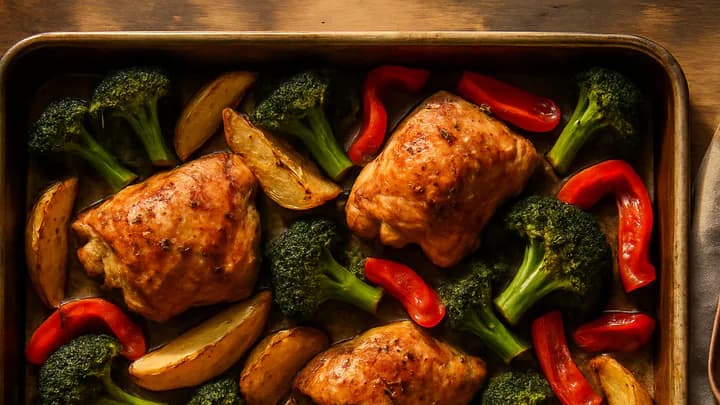
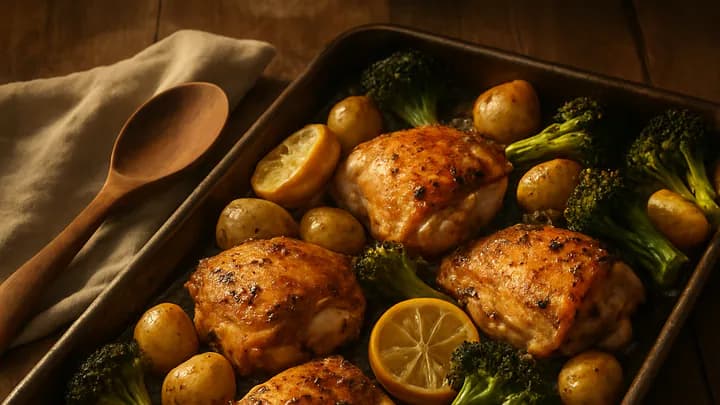
Toss halved baby potatoes and bone-in chicken thighs with olive oil, salt, pepper, garlic, and lemon zest. Roast 25 minutes. Add broccoli florets tossed in oil and salt, roast 15 more minutes. Finish with a squeeze of lemon.
2. Sausage, peppers, and onions
Italian sausages, thickly sliced bell peppers, red onion wedges, olive oil, fennel seed, and dried oregano. Roast 25–30 minutes, tossing once. Serve with crusty bread or over polenta.
3. Miso salmon with cabbage wedges
Roast cabbage wedges brushed with oil for 15 minutes. Add salmon fillets glazed with miso and maple, roast another 10–12 minutes. Finish with scallions and sesame seeds.
4. Harissa chickpeas and cauliflower
Drained chickpeas, cauliflower florets, red onion, harissa, honey, olive oil, cumin. Roast 25 minutes. Serve over yogurt with pita and fresh cilantro.
5. Shrimp, tomatoes, and asparagus
Cherry tomatoes with olive oil and garlic, roast 10 minutes. Add asparagus and shrimp tossed in oil, lemon zest, and paprika. Roast 8–10 more minutes until shrimp are pink.
Common mistakes and how we fix them
- Everything is soggy. The pan is crowded or the oven is not hot enough. Use two pans and confirm 425°F with an oven thermometer.
- Chicken is done but vegetables are raw. The vegetable pieces were too big. Cut Tier 2 vegetables into roughly 1-inch pieces.
- Nothing browns. Too little oil, too much moisture, or too little salt. Pat proteins dry and be generous with seasoning.
- Bland results. Add something bright at the end — lemon juice, vinegar, fresh herbs, or a spoonful of yogurt.
- Fish overcooks. Fish belongs in Tier 3. Add it late and pull it as soon as it flakes.
Making it work for the week
Sheet pan dinners are natural meal-prep candidates. Double a recipe on Sunday and you have lunches for Monday and Tuesday. Reheat on a hot pan or in an air fryer for a few minutes rather than the microwave — texture returns quickly, and roasted vegetables feel freshly made.
We also keep a running list on the fridge of proteins and vegetables that need using up. On a busy night, we pick one from each column, choose a flavor direction, and start the oven. The whole decision takes under a minute, which is often the difference between cooking and ordering out.
Key takeaways
- Roast at 425°F on a heavy half-sheet pan for reliable browning.
- Group ingredients into three timing tiers and stagger them accordingly.
- Use enough oil and salt, and never crowd the pan.
- Finish with acid, herbs, or a creamy element to lift the whole dish.
- Rotate five flavor directions to keep the same technique feeling fresh all year.
Editorial note: This article is for general home cooking guidance. If you have specific dietary restrictions, food allergies, or health conditions that affect what you can eat, please consult a qualified healthcare professional or registered dietitian for personalized advice.
Frequently asked questions
What is the ideal oven temperature for a sheet pan dinner?
For most sheet pan dinners we use 425°F (220°C). It is hot enough to caramelize vegetables and crisp proteins, but gentle enough that nothing burns before the center cooks through.
Do I need to line the pan?
Parchment paper makes cleanup effortless and prevents sticking, but it slightly reduces browning. For crispier results, roast directly on a lightly oiled pan and soak it afterward.
How do I stop vegetables from steaming instead of roasting?
Give ingredients space. Crowding traps moisture, which steams food instead of browning it. Use a large rimmed sheet pan, pat ingredients dry, and use two pans if needed.
Can I cook chicken and vegetables together safely?
Yes, as long as the chicken reaches 165°F (74°C) internally. Cut vegetables into pieces that finish at the same time as the chicken, or add quick-cooking vegetables partway through.
Are sheet pan dinners good for meal prep?
They are excellent for it. Roast a large batch, portion into containers, and refrigerate up to four days. Reheat in a hot oven or air fryer to bring back texture.
What is the best sheet pan size for a family of four?
A half-sheet pan, roughly 18 by 13 inches, comfortably holds dinner for four. Anything smaller crowds the food and leads to soggy vegetables.