Switzerland Travel Experiences: Cities, Lakes and Alpine Trains
Switzerland rewards planning more than most countries. Here is how to choose between cities, lakes, Alps and scenic rail — plus the pass math, seasonal trade-offs and the costly mistakes that quietly inflate a Swiss itinerary.
Rewritten with AI and republished automatically. Our editors set the standards and fix reported errors — how we work.
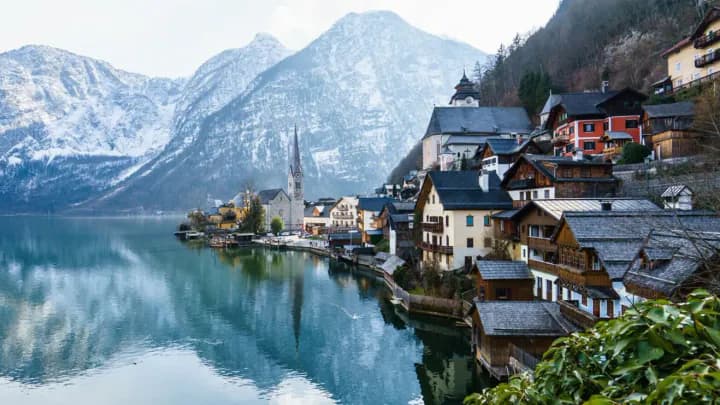
TL;DR: Switzerland works best as two bases, not six. Pair one city — Zurich, Geneva, Bern or Lucerne — with one lake or Alpine valley, connect them by scenic rail, and choose between a Swiss Travel Pass and a Half-Fare Card based on how many regions you actually cross. Timing and pass math matter more than the shortlist.
What makes Switzerland different from other European trips?
Switzerland is a compact Central European country where a dense, punctual public transport network makes glaciers, vineyards and medieval old towns reachable within the same day. That single fact shapes every good itinerary here. You are rarely choosing between mountains and cities; you are choosing how many transfers you are willing to absorb.
The trade-off is cost. Swiss prices sit at the top of the European range, so the difference between a well-planned week and an improvised one is measured in hundreds of francs, not tens. The country also spans four language regions — German, French, Italian and Romansh — which changes the food, the pace and the architecture far more than the short distances suggest.
Which Swiss cities are worth real time, not just a transfer?
Zurich, Geneva, Bern, Lucerne and Lugano each justify at least a full day, and each attracts a different traveler. Zurich delivers the strongest food, design and nightlife scene plus lake swimming from public Badis in summer. Geneva is the internationalist choice, with UN-era institutions, lakeside promenades and easy access to Lake Geneva's wine terraces.
Bern is our pick for anyone who wants the storybook version without the crowd load: a UNESCO-listed old town on a river bend, arcaded shopping in the rain, and bear parkland across the Aare. Lucerne is the practical base — compact, lake-facing, and within an hour of Rigi, Pilatus and Titlis. Lugano brings palm trees, Italian-speaking cafés and a warmer climate on the southern side of the Alps.
If you only have four or five nights, resist adding a fourth city. Our guide to slow travel with fewer cities and deeper trips explains why compressing stops usually produces a worse trip than removing one.
Which Swiss lakes should you build a stay around?
Lake Lucerne for scenery plus logistics, Lake Geneva for vineyards and food, Lake Brienz for color, and Lake Thun for value. Lake Lucerne's steamer network doubles as public transport, so a boat-plus-cogwheel loop to Rigi Kulm is genuinely a transport day rather than a tourist add-on.
Lake Geneva's Lavaux terraces — steep, stone-walled vineyard slopes between Lausanne and Montreux — are walkable on marked paths with cellar doors open in the afternoons. Lake Brienz's turquoise comes from glacial rock flour suspended in the water; it photographs best in bright midday light, which is the opposite of most landscape advice. Lake Thun, one stop away, typically costs less for lodging and still puts you inside the Bernese Oberland.
What can you do in the Swiss Alps if you do not ski?
Plenty — hiking, cable-car sightseeing, lake swimming at altitude, paragliding, via ferrata routes and cheese-dairy visits all run without skis, and most Alpine lifts operate through summer. Zermatt gives you the Matterhorn and a car-free village reached by shuttle train from Täsch. The Jungfrau region around Grindelwald, Wengen and Lauterbrunnen is the easiest place to hike between lift stations without carrying a full pack.
St. Moritz in the Engadin leans luxury and has a distinctly different, drier climate. Appenzell and the Alpstein massif offer the most photogenic ridge hiking for the least money, because it sits outside the famous marketing circuit.
An honest caveat: high-altitude excursions are weather-dependent and non-refundable once you board. Jungfraujoch, Schilthorn and Glacier Paradise cost a significant sum for a view that a cloud layer can erase entirely. Check the live summit webcams the morning of, and keep the excursion floating rather than locked to a fixed date.
Which scenic train is worth booking, and which can you skip?
Book the Bernina Express if you take only one; skip the full-length Glacier Express if you are short on time or budget. The Bernina line is a UNESCO World Heritage railway that climbs from Italian-speaking palm country to glacier level without a rack system, and the scenery changes constantly across roughly four hours.
The Glacier Express is famous for being the slowest express train in the world, covering Zermatt to St. Moritz in about eight hours. It is beautiful, but it is a full day, requires a paid seat reservation on top of any pass, and repeats scenery you may already have seen. The GoldenPass Line between Montreux and Interlaken is the underrated one: lakes, vineyards and peaks in a shorter, cheaper package.
The move most travelers miss: the panoramic services run on ordinary public track. You can ride the same routes on regular regional trains, included with a pass, with no reservation fee, opening windows for photography and the freedom to break the journey in Chur, Andermatt or Brig. You lose the curved glass roof and the onboard meal; you keep the landscape.
Swiss Travel Pass or Half-Fare Card — which actually saves you money?
Use this decision rule: if your itinerary crosses three or more regions and includes a panoramic route, the Swiss Travel Pass usually wins. If you are staying in one or two valleys, the Half-Fare Card plus Supersaver tickets almost always wins. Prices change every season, so treat the figures below as approximate orientation and confirm current fares before purchase.
| Option | Roughly what it costs | What it covers | Best for |
|---|---|---|---|
| Swiss Travel Pass (consecutive days) | A few hundred francs, scaling by day count | Trains, buses, boats, city transit, many museums; discounts on most mountain railways | Multi-region trips of 3–8 days with heavy movement |
| Swiss Travel Pass Flex | Modest premium over the consecutive version | Same coverage on chosen travel days within a month | Trips with two or three static bases and occasional big travel days |
| Half-Fare Card | A flat fee, valid one month | 50% off nearly all trains, buses, boats and many lifts | Longer stays, single-region trips, slow itineraries |
| Saver Day Pass | Varies sharply with demand and how early you book | One day of unlimited travel on the covered network | One or two big travel days on an otherwise local trip |
| Point-to-point Supersaver tickets | Up to a large discount when booked well ahead | One specific train at one specific time | Fixed, confident itineraries booked weeks in advance |
Two details that reverse people's math. First, Supersaver fares are tied to a specific departure — miss it and the ticket is void. Second, some marquee mountain railways are only discounted, not included, by the Swiss Travel Pass, while others such as the Rigi railways are fully covered. Look up your specific excursions, not the general claim.
Yellow PostBus routes deserve a mention too. They reach hamlets no train serves, run on the same clockface timetable, and are covered by the main passes.
When is the best time to visit Switzerland for each experience?
Go in winter for skiing and Christmas markets, summer for high-altitude hiking, and the shoulder weeks for the best price-to-crowd ratio. The country changes personality with the season more than most of Europe, because altitude compounds the calendar.
- December–February: Ski season in Zermatt, St. Moritz and the Oberland; Christmas markets in Zurich, Basel and Bern; short daylight and frequent valley fog.
- March–May: Thinning crowds, meltwater waterfalls at full volume, and lower prices — but many high trails remain snow-covered into June and some lifts close for maintenance.
- June–August: Peak hiking, warm enough lake swimming, open mountain huts, highest prices and busiest trains.
- September–October: The underrated window. Lavaux vineyards turn gold at harvest, trails empty out, and the light across the lakes is exceptional.
If you want snowy peaks and comfortable city walking in one trip, late November or early March threads the needle before or after peak pricing. Our broader shoulder season travel guide covers how to read those transition weeks in any destination.
What does a week in Switzerland realistically cost?
Budget in francs and assume lodging is the largest line. A mid-range double room in a city or resort typically runs in the low-to-mid hundreds of francs per night, a casual restaurant main sits in the CHF 25–40 band, and a single mountain excursion can rival a night's accommodation. Supermarket picnics — Coop and Migros are everywhere and have excellent prepared sections — cut food costs dramatically without feeling like deprivation.
Three structural savings: stay one valley away from the marquee resort, buy advance rail tickets rather than walk-up fares, and choose lodging with a kitchenette.
What should you eat, and where does it actually taste best?
Fondue and raclette are winter dishes and taste flat in August heat; rösti, lake fish and air-dried Bündnerfleisch travel better through the year. Cheese specialties belong to the German- and French-speaking mountain regions, so order them in the Valais, Fribourg or the Oberland rather than in Lugano.
In Ticino, eat in a grotto — a rustic stone tavern serving polenta, braised meats and local merlot. In Zurich, the signature dish is Zürcher Geschnetzeltes, veal in cream sauce with rösti. Buy chocolate from a local chocolatier rather than the airport; the fresh pralinés are a different product entirely from the shelf-stable bars.
What do travelers most often get wrong in Switzerland?
Underestimating transfer time is the number one error. Zermatt to St. Moritz is a full day even by train, and a map that looks small hides mountain ranges that rail must go around or under. Our rule: no more than one base change every three nights, and never a base change on the same day as a summit excursion.
The second mistake is buying a multi-day pass for a trip that does not move. Travelers routinely purchase an eight-day Swiss Travel Pass, then spend five of those days hiking from a single village — where the pass sits unused.
The third is arriving at a car-free resort by car. Zermatt, Wengen, Mürren and Saas-Fee require you to park at a valley station and transfer, which surprises people mid-drive with luggage. Solo travelers should also note that Switzerland ranks among the easier European countries for independent travel — our first-timer's solo travel guide covers the habits that make it smoother anywhere.
Key takeaways
- Pair one city base with one lake or Alpine base; three or more bases in a week costs you a day in transit each time.
- Choose your rail product by movement: multi-region travel favors the Swiss Travel Pass, single-region stays favor the Half-Fare Card.
- Panoramic trains require paid seat reservations; the same routes run on regular regional trains at lower cost and with openable windows.
- Keep high-altitude excursions flexible and check summit webcams the morning of — clouds make an expensive ticket worthless.
- September and October deliver the best balance of weather, price and crowd levels for most travelers.
- Verify current pass prices, lift coverage and seasonal lift closures before booking; Swiss fares and timetables change every season.
Frequently asked questions
Is the Swiss Travel Pass worth it?
The Swiss Travel Pass is usually worth it if you move between three or more regions and ride at least one premium panoramic route, because it bundles trains, buses, boats, city transit and around 500 museums into one price. If you are basing yourself in one valley for a week, a Half-Fare Card plus individual tickets almost always costs less. Compare your planned route against current published fares before buying.
How many days do you need in Switzerland?
Seven to ten days is the sweet spot for a first trip, allowing roughly two bases plus one scenic rail day. Anything under five days works best as a single-region trip — for example Lucerne and the Rigi, or the Jungfrau region alone — because Swiss transfers eat more of the day than the map suggests.
What is the cheapest month to visit Switzerland?
Late April through May and late October through November are typically the cheapest windows, falling between the ski season and the summer hiking peak. Rates for hotels and mountain resorts drop noticeably, though some high-altitude lifts close for maintenance during these shoulder weeks.
Do you need to reserve seats on the Glacier Express?
Yes. The Glacier Express and Bernina Express panoramic services require a paid seat reservation even if you hold a Swiss Travel Pass or Half-Fare Card. Reservations open months ahead and sell out in summer and around Christmas. Regular regional trains cover the same tracks without reservations at a lower cost.
Is Switzerland expensive compared to the rest of Europe?
Yes — Switzerland is consistently among the most expensive countries in Europe for lodging, restaurants and mountain lifts. The main levers travelers control are self-catering breakfasts, supermarket picnics, staying one valley away from marquee resorts, and buying advance Supersaver rail tickets rather than walk-up fares.
Can you visit Switzerland without renting a car?
Yes, and most travelers should. Trains, PostBuses and lake boats reach virtually every village on a coordinated timetable, and several resorts including Zermatt and Wengen are car-free anyway, requiring you to park at a valley station and transfer by rail.
Which is better for a first trip: Lucerne or Interlaken?
Lucerne suits travelers who want a walkable historic city with lake boats and easy mountain day trips; Interlaken suits those whose priority is hiking, Jungfrau excursions and adventure sports. Lucerne is the stronger single base for a short first trip because it combines urban evenings with mountain access.