Crochet Home Decor: Patterns, Yarn Picks, and Fixes
Crochet decor fails for boring reasons: the wrong fiber, a skipped gauge swatch, a pouf that pancakes. Here is which yarn belongs in which room, what each project costs in yarn and hours, and how to block work so it looks bought, not attempted.
Rewritten with AI and republished automatically. Our editors set the standards and fix reported errors — how we work.
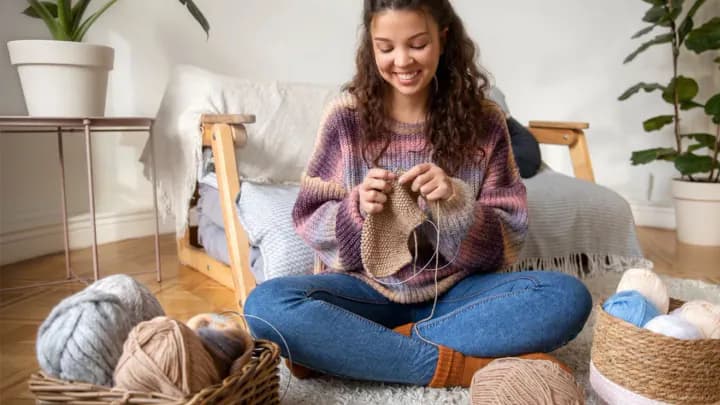
TL;DR: Match fiber to room — cotton for kitchen, bath, and anything load-bearing; acrylic or wool blends for blankets and pillows; never acrylic near heat. Swatch before large projects, block anything with straight edges, and start with a dishcloth or basket before committing to a blanket.
Crochet home decor is handmade interior textiles — blankets, pillow covers, baskets, poufs, wall hangings — built from yarn using a single hook to pull loops through loops. It sits in the same corner of the home as ceramics and woodwork: slow to make, obviously human, and impossible to replicate exactly at a big-box price.
The original version of this guide told you crochet was cozy and customizable. True, but not useful. What actually separates a finished piece that lives on your sofa for a decade from one that ends up in a closet is fiber choice, gauge, and finishing. That is what we cover here.
Why does crochet suit home decor better than knitting or store-bought textiles?
Crochet produces a denser, more structural fabric than knitting at the same yarn weight, which is exactly what home items need. A crocheted basket stands up on its own; a knitted one slumps. That density also means crochet holds shape in three dimensions — poufs, planters, and storage bins are natural crochet territory.
The practical advantages over shopping are control and repairability. You choose the exact color to bridge two pieces of furniture, you size a runner to your actual table, and when a stitch snags you can repair it instead of replacing the item. Mass-produced throws offer none of that.
Honest caveat: crochet uses noticeably more yarn than knitting for the same area — expect roughly a third more. For a large blanket in a premium fiber, that gap is the difference between a sensible project and an expensive one.
What supplies do I actually need, and what do they cost?
A working starter kit runs about $25 to $40: one 5mm or 5.5mm hook, two or three skeins of worsted-weight cotton or acrylic, a tapestry needle for weaving in ends, stitch markers, and small sharp scissors. Everything else is optional for months.
Two upgrades earn their money early. An ergonomic hook with a soft grip prevents the hand fatigue that ends sessions after twenty minutes, and a set of locking stitch markers makes round-based projects — baskets, poufs, hats — trackable instead of guesswork. Skip hook sets with fifteen sizes until you know which two you actually reach for.
If you are building a stash across several projects, treat yarn like any other recurring household purchase and set aside a small monthly amount rather than absorbing a $90 blanket haul in one week.
Which yarn belongs in which room?
Cotton goes anywhere that gets wet, hot, or bears weight. Acrylic and wool blends go anywhere that needs softness and drape. Getting this backward is the single most common reason handmade decor fails.
| Fiber | Best for | Avoid for | Why |
|---|---|---|---|
| 100% cotton | Dishcloths, potholders, baskets, plant hangers, bath scrubbies | Large blankets | Absorbent, heat-safe, low stretch under load; heavy and hard on the hands over big areas |
| Acrylic | Throws, pillow covers, wall hangings, kids' items | Anything touching a hot pan | Cheap, machine washable, endless colors — but it is plastic and will melt |
| Wool / wool blend | Heirloom blankets, floor cushions, textured pillows | Machine-wash households | Superb stitch definition and springiness; most wool felts if washed warm |
| Jute or twine | Rugs, sturdy baskets, entry mats | Anything against skin | Extremely durable and structural; rough texture, brutal on hooks and hands |
| Chenille / velvet | Chunky pillows, poufs | Detailed stitch patterns | Lush and fast to work; "worms" — loose fibers pull out — and hides stitch detail |
One more rule worth memorizing: for plant hangers, use cotton or hemp, never acrylic. Acrylic creeps under sustained load, meaning a hanger that fits perfectly in March droops several inches by August and can eventually drop the pot.
Which projects give the biggest visual payoff for the least skill?
Baskets, pillow covers, and simple textured throws deliver the most visible change per hour invested. All three use repetitive stitches over large areas, which means your tenth row looks better than your first and nobody will ever inspect the middle.
- Cotton storage baskets — worked in continuous rounds of single crochet with doubled yarn. One evening, immediately useful, and they tame the clutter that accumulates in a hallway. Pair them with the layout thinking in our entryway ideas for small spaces.
- Envelope pillow covers — a flat rectangle folded and seamed, so there are no zippers or closures to learn. Fit them to an insert one inch larger than the cover for a plump, store-bought look.
- Textured throws — bobble, waffle, or moss stitch in a single neutral. Texture reads as expensive in photographs in a way multicolor stripes rarely do.
- Wall hangings — lightweight, quick, and the fastest way to fill awkward vertical space above a bed or dresser.
- Dishcloths and face scrubbies — the training ground. Cheap enough that a ruined one costs nothing.
For bedrooms specifically, a chunky throw across the foot of the bed and two matching pillow covers changes the whole room's temperature. That layering logic is the same one we use in our bedroom refresh guide.
How long does each project really take, and how much yarn does it need?
A dishcloth takes about an hour and one skein; a full throw takes 30 to 50 hours and seven to twelve skeins. Most beginners dramatically underestimate blankets and then abandon them at 40 percent complete.
| Project | Yardage | Hours | Skill level |
|---|---|---|---|
| Dishcloth | 80–120 | 1–2 | Absolute beginner |
| Storage basket (medium) | 250–400 | 4–6 | Beginner |
| Pillow cover (18 in) | 350–500 | 6–10 | Beginner |
| Plant hanger | 100–150 | 2–3 | Advanced beginner |
| Floor pouf | 800–1,200 | 15–25 | Intermediate |
| Throw blanket (50 × 60 in) | 1,500–2,500 | 30–50 | Patient beginner |
Ranges are wide because stitch choice changes everything. Single crochet eats roughly twice the yarn of double crochet for the same coverage, and bobble or cable stitches can add 50 percent on top of that. Buy one extra skein of the same dye lot — returning it is easier than matching it later.
Do I need to block crochet, and how do I do it without ruining the piece?
Block anything with straight edges or joined motifs: granny squares, runners, wall hangings, doilies. Blocking is the process of wetting or steaming finished fabric and pinning it to shape until dry, and it is the difference between homemade and handmade.
Wet blocking works for cotton and wool. Soak the piece in cool water, press out moisture in a towel without wringing, pin it to a foam mat with rustproof pins at the measurements the pattern specifies, and leave it to dry completely — usually 12 to 24 hours.
Steam blocking is for acrylic, held above the fabric and never pressed onto it. Be careful: applying full heat to acrylic permanently flattens and softens it, a technique crafters call "killing" the yarn. It is useful for making a stiff wall hanging drape, and disastrous if you wanted a springy pillow. There is no undo.
What mistakes cost people the most time and yarn?
The expensive errors are structural, not decorative. Each of these has ended projects we have watched people work on for weeks.
- Skipping the gauge swatch on a large project. Four inches of test fabric takes ten minutes. Discovering at row 60 that your blanket is eight inches too narrow costs a week.
- Acrylic potholders. They look finished and behave like a hazard. Only cotton, and make them thick — a single layer of any fiber conducts heat straight through.
- Under-stuffing a pouf. Poufs pancake within a month unless they are packed far tighter than feels reasonable. Cut-up old t-shirts and fabric scraps outperform loose polyfill, which compresses.
- Mixed dye lots in one piece. The color shift is invisible in the skein and obvious in daylight across a finished blanket.
- Not weaving in ends properly. Ends woven in a single direction work loose in the wash. Weave three to four inches, change direction once, then trim.
- Turning chains counted inconsistently. The most common cause of a blanket that starts 40 stitches wide and ends at 33. Decide whether your turning chain counts as a stitch and never change mid-project.
What looks current right now — and what ages badly?
Restrained palettes and heavy texture are what read as contemporary: creams, oatmeal, clay, moss, and rust in bobble, waffle, or linen stitch. Multicolor variegated yarn and bright rainbow granny squares are having a genuine revival, but they date faster and are harder to live with across a whole room.
The discipline that works for clothing works for textiles too — a limited palette makes unrelated pieces look intentional together.
Mixed-material pieces — yarn joined to wooden dowels, brass rings, or leather handles — bridge crochet into rooms that would otherwise feel too rustic for it. A cotton basket with leather handles reads as design; the same basket without them reads as a craft project.
Where should I find patterns I can actually trust?
Look for patterns that state gauge, finished dimensions, yarn weight, and total yardage. A pattern missing any of those four is not tested, and you will find out the hard way. Ravelry's database, established craft publishers, and designers who list errata pages are reliably better than a screenshot on a social feed.
Also check whether a pattern is written in US or UK terminology. A US single crochet is a UK double crochet, and a pattern worked in the wrong system produces fabric that is too dense or too loose throughout — not an error you can spot in the first three rows.
Free patterns are plentiful and often excellent; paid patterns typically buy you clearer photos, multiple sizes, and someone to email when round 14 does not add up. For a first blanket, that support is worth a few dollars.
Key takeaways
- Fiber decides the project: cotton for heat, water, and load; acrylic or wool for softness and drape. Acrylic near a hot pan is a genuine safety issue.
- Swatch before anything larger than a pillow, and buy all yarn in one dye lot plus one spare skein.
- Block anything with straight edges. Steam-block acrylic from a distance — over-heating it permanently flattens the fabric.
- Start with a dishcloth or basket, not a blanket; a throw is 30 to 50 hours and 1,500 to 2,500 yards.
- Stuff poufs far tighter than feels right, and use cotton or hemp for plant hangers so they do not stretch under sustained weight.
- Pick a three- or four-color palette and stay in it — that, more than stitch complexity, is what makes handmade decor look deliberate.
Frequently asked questions
Can I use acrylic yarn for potholders and trivets?
No — acrylic is a plastic and melts or scorches under a hot pan, so potholders and trivets should always be 100% cotton, worked doubled or in a dense stitch. Save acrylic for blankets, pillow covers, and wall hangings where heat is never a factor.
What hook size should a beginner start with?
A 5mm (H-8) or 5.5mm (I-9) hook paired with worsted-weight yarn is the easiest combination to learn on, because the stitches are large enough to see clearly and the fabric grows fast enough to stay motivating. Use a light, solid color so you can actually count your stitches.
Why do my granny square blankets come out wavy or curled?
Wavy edges mean too many stitches in the rows or rounds, and curling means too few — it is almost always a stitch-count problem, not a tension problem. Count each round against the pattern, add corner increases exactly where specified, and block the finished piece to settle the rest.
How much yarn does a crochet throw blanket need?
A generous throw in worsted-weight yarn typically takes somewhere between 1,500 and 2,500 yards, which is roughly seven to twelve standard skeins depending on stitch density. Buy all of it at once in the same dye lot, because color shifts between lots are visible under daylight.
Do I have to block crochet projects?
Blocking is optional for soft items like pillow covers and poufs, but close to mandatory for anything with straight edges or joined motifs — granny squares, wall hangings, table runners, and doilies. Wet blocking with rustproof pins on a foam mat is the safest method for cotton and wool.
What is the best first crochet project for a home?
A cotton dishcloth is the best first project because it is small, cheap, forgiving, and immediately useful, so mistakes cost you an evening rather than a month. It also teaches the two skills every larger project depends on: consistent tension and accurate stitch counting.
Is crochet home decor actually cheaper than buying it?
On materials alone, usually yes for small items and roughly break-even for large ones; a cotton basket may cost $12 in yarn versus $25 in a store, while a wool throw can easily exceed the price of a machine-made equivalent. The savings argument works best for cotton kitchen and bath items.