Foods That Support Hormone Balance: An Honest Guide
Food will not override a thyroid disorder, but it does shape the systems hormones run on: blood sugar, inflammation, fiber, gut bacteria and sleep. Here is what the evidence supports, what is oversold, and the mistakes that quietly make things worse.
Rewritten with AI and republished automatically. Our editors set the standards and fix reported errors — how we work.
TL;DR: No food rebalances hormones directly. What food does well is stabilize blood sugar, supply the fats and micronutrients hormone synthesis needs, feed the gut bacteria involved in estrogen clearance, and lower inflammation. Fatty fish, eggs, legumes, cruciferous vegetables, berries, flax and fermented foods all earn a place. Persistent symptoms need a clinician, not a grocery list.
What does a "hormone-balancing food" actually mean?
A hormone-balancing food is any whole food that supports the biological systems your endocrine glands depend on — blood sugar control, fat and protein supply, micronutrient status, gut function and inflammation — rather than one that raises or lowers a specific hormone on demand. That distinction matters, because most marketing collapses it.
Your thyroid, adrenal glands, ovaries or testes, and pancreas all respond to inputs: how much energy you eat, how steadily, how well you sleep, how much you move. Food is one of the strongest levers you control daily. It is also, on its own, a weaker lever than sleep for cortisol or medication for a diagnosed thyroid condition. We say that upfront because honest expectations are what make dietary changes stick.
Which foods have the best case behind them, and why?
Ten foods keep appearing in credible nutrition guidance for hormone health — not because any is magic, but because each covers a specific gap. Here is what each one actually contributes and a realistic serving to aim for.
| Food | What it supplies | Why it matters hormonally | Realistic target |
|---|---|---|---|
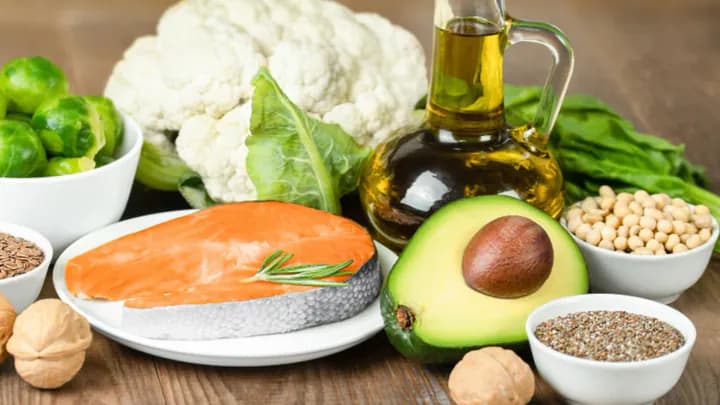
| Fatty fish (salmon, sardines, mackerel) | Omega-3 EPA/DHA, vitamin D, iodine, protein | Anti-inflammatory fats; vitamin D and iodine are direct inputs to thyroid and steroid hormone pathways | 2–3 servings per week |
| Eggs | Choline, vitamin D, B12, complete protein | Cholesterol and protein are raw materials for steroid hormones; protein blunts glucose spikes | Most days, whole eggs |
| Cruciferous vegetables (broccoli, cabbage, Brussels sprouts) | Glucosinolates, which yield indole-3-carbinol and DIM; fiber; folate | Supports liver phase II detoxification pathways that process estrogens | 1 cup, 4–5 times weekly |
| Leafy greens | Magnesium, folate, potassium, nitrates | Magnesium is a cofactor in hundreds of enzymatic reactions, including glucose handling | Daily, large handfuls |
| Flax and chia seeds | Lignans, ALA, soluble fiber | Lignans are converted by gut bacteria into weak estrogen-receptor modulators; fiber aids hormone excretion | 1–2 tbsp ground flax daily |
| Legumes and soy foods | Isoflavones, resistant starch, plant protein | Among the most studied phytoestrogen sources; excellent for post-meal glucose | 3–5 servings per week |
| Berries | Polyphenols, fiber, low glycemic load | Sweetness with minimal glucose disruption; polyphenols feed gut bacteria | A cup most days |
| Fermented foods (kefir, kimchi, sauerkraut, plain yogurt) | Live cultures, organic acids | Gut bacteria influence how estrogens are recirculated versus excreted | Small amount daily |
| Nuts (walnuts, almonds, Brazil nuts) | Magnesium, selenium, unsaturated fat | Selenium is essential for converting thyroid hormone T4 into active T3 | A small handful daily |
| Green tea | Catechins including EGCG, L-theanine | A low-sugar swap for sweetened drinks; modest effects on insulin sensitivity | 1–3 cups daily |
Notice what carries the most weight in that table: protein, fiber, fat quality and a handful of specific micronutrients. Selenium — two Brazil nuts cover a day's worth, and more is not better — and iodine matter for thyroid function specifically. If you are already eating this way and still feel off, the problem is probably not food.
How much can diet realistically change hormone levels?
Meaningfully for insulin, modestly for sex hormones, and only indirectly for thyroid or cortisol. Insulin responds within a single meal, which is why the protein-and-fiber structure below produces noticeable changes in energy within days. Estrogen metabolism shifts more slowly and more subtly, over weeks of consistent fiber and cruciferous intake.
Cortisol is the one people most want to eat their way out of, and the one food handles worst. Chronic under-sleeping raises it far more than any anti-inflammatory meal lowers it. If cortisol-driven symptoms are your concern, recovering accumulated sleep debt and a ten-minute morning sunlight habit are more useful starting points than a shopping list.
Why does fiber keep coming up in hormone advice?
Because estrogens that the liver has packaged for disposal can be unpackaged in the gut and reabsorbed. Certain gut bacteria produce enzymes that free these conjugated estrogens, sending them back into circulation instead of out. Fiber shortens transit time, binds bile, and shifts the bacterial population — which is the real mechanism behind the vague word "detox."
The practical version: aim for 25 to 35 grams of fiber a day from varied sources, not from one supplement. Beans, ground flax, oats, berries, and vegetables with their skins on. If your fiber intake is currently low, add five grams a week rather than doubling overnight — otherwise bloating convinces you the food was the problem. Our practical guide to gut health covers the ramp-up in more detail.
What does a realistic day of hormone-supportive eating look like?
Here is a worked example built around one rule: every meal gets a protein anchor, a fiber source and a fat source. Nothing exotic, nothing expensive.
- Breakfast: Two eggs with sautéed spinach, plus a slice of whole-grain toast. Or plain Greek yogurt with a cup of berries and a tablespoon of ground flax.
- Lunch: Lentil or chickpea salad with olive oil, plenty of raw vegetables, and half an avocado.
- Snack: A small handful of walnuts and two Brazil nuts, or a boiled egg.
- Dinner: Salmon with roasted broccoli and a baked sweet potato.
- Drinks: Water and green tea. Sweetened drinks are the single easiest win for glucose stability.
Cook the flax fresh if you can — ground flaxseed oxidizes, so buy whole seeds and grind small batches, or keep pre-ground flax in the freezer. Rancid flax tastes bitter and delivers less of what you bought it for.
What mistakes make "hormone diets" backfire?
The most common and most costly is eating too little. Low energy availability — consistently under-fueling relative to training and daily activity — is one of the more reliable ways to suppress reproductive hormones and disrupt menstrual cycles. People arrive at a hormone-balancing food list already restricting, then cut further, and their cycles get worse.
Three more that we see repeatedly:
- Fat phobia. Steroid hormones are built from cholesterol. Very low-fat diets are a poor fit for hormone health, and they also impair absorption of vitamins A, D, E and K.
- Very low carbohydrate intake combined with hard training. Tolerated well by some, disruptive for others — particularly women with a history of cycle irregularity. If your cycle changes after cutting carbs, that is data.
- Buying supplements before fixing meals. Magnesium is a reasonable, well-tolerated exception for many people; our breakdown of magnesium glycinate dosing and safety covers what is and is not supported. Most of the rest of the "hormone support" shelf is not.
Seed cycling deserves its own note. Rotating flax and pumpkin seeds through the follicular phase and sesame and sunflower through the luteal phase has no credible human evidence behind it. The seeds are good food. The calendar is decoration.
Are there people this advice does not apply to?
Yes, and skipping this section is how generic articles cause harm. If you take levothyroxine, soy, calcium and iron all reduce absorption — take the medication on an empty stomach and separate it from those foods by roughly four hours. If you take blood thinners, large increases in leafy greens change your vitamin K intake and should be discussed with your prescriber.
If you have a history of an eating disorder, structured food lists can be a trigger rather than a tool, and any dietary change is best made with professional support. And if you have had a hormone-sensitive cancer, decisions about concentrated soy or flax supplements belong with your oncology team — whole foods and isolated extracts are not the same thing.
When should I stop adjusting my diet and see a clinician?
When symptoms are persistent, worsening, or new. Cycles that stop for three months or more, cycles shorter than 21 or longer than 35 days, unexplained weight change, new hair loss or excess hair growth, persistent cold intolerance, a visible neck swelling, or exhaustion that sleep does not touch — these warrant blood work, not another superfood.
Thyroid disease, PCOS, endometriosis and perimenopause all have real diagnostic criteria and real treatments. Diet supports every one of them and replaces none of them. Please treat everything here as general information and consult a qualified healthcare professional about your own situation, especially before starting supplements or making large dietary changes.
What else moves the needle besides food?
Three things, roughly in order of impact. Sleep quantity and regularity, which shape cortisol, ghrelin, leptin and insulin sensitivity — a practical sleep hygiene reset often outperforms any dietary tweak. Alcohol reduction, since alcohol is metabolized by the same liver pathways involved in clearing hormones and reliably degrades sleep quality.
And movement, specifically the combination of resistance training for insulin sensitivity and muscle mass with easy aerobic work. If you are training hard and feeling worse, adding volume at a lower intensity — the approach we outline in our Zone 2 cardio guide — is usually more productive than adding more hard sessions.
Key takeaways
- Food supports hormone systems; it does not command individual hormones. Expect steadier energy and better glucose control first, and cycle-related changes over two to three cycles.
- Build every meal from a protein anchor, a fiber source and a fat source. That structure outperforms any single "hormone-balancing" ingredient.
- Fiber and gut bacteria are the real machinery behind estrogen clearance — aim for 25 to 35 grams daily from varied whole foods, increased gradually.
- Under-eating, very low fat intake and supplement-first thinking are the three mistakes that most often make hormone symptoms worse.
- Seed cycling is unsupported; the seeds are fine, the schedule does nothing.
- Sleep, alcohol and training load often matter more than the grocery list — and persistent symptoms deserve a qualified clinician's evaluation.
Frequently asked questions
Can food alone balance my hormones?
No — food supports the systems hormones depend on, but it cannot correct a diagnosed condition such as hypothyroidism, PCOS or premature ovarian insufficiency on its own. Diet works best alongside medical care, sleep and movement, and persistent symptoms deserve a qualified clinician's assessment rather than another grocery list.
Do flaxseeds raise or lower estrogen?
Neither dramatically. Flaxseed lignans are converted by gut bacteria into enterolignans that bind weakly to estrogen receptors, producing a mild modulating effect that depends on your own hormone levels and gut microbiome. A tablespoon or two of ground flax a day is a reasonable food, not a hormone therapy.
Are cruciferous vegetables bad for the thyroid?
For almost everyone, no. Raw brassicas contain goitrogenic compounds that can interfere with iodine uptake, but the amounts in normal servings are small and cooking reduces them further. The concern applies mainly to people with genuine iodine deficiency eating very large raw quantities daily.
What should I eat first if I have insulin resistance or PCOS?
Start with protein and fiber at every meal, and stop drinking your carbohydrates. Anchoring meals around 25 to 40 grams of protein plus vegetables, beans or intact grains flattens glucose swings far more reliably than any single hormone-friendly superfood. PCOS management should be guided by a clinician.
Does seed cycling work?
There is no good human evidence that rotating flax and pumpkin seeds in one cycle phase and sesame and sunflower in another changes hormone levels. The seeds themselves are nutritious, so the habit is harmless — just do not expect the calendar part to do anything.
Is dairy or soy bad for hormones?
For most people, no. Soy foods like tofu, tempeh and edamame have been studied extensively and are generally considered safe and often beneficial; dairy is neutral for most adults. If you take levothyroxine, separate soy, calcium and iron from your dose by about four hours, since they reduce absorption.
How long before diet changes show up in how I feel?
Energy and appetite stability often shift within one to two weeks, while cycle-related changes typically need two to three full cycles to judge. Track sleep, energy and symptoms rather than weighing yourself daily, and give any change at least eight weeks before deciding it failed.