Lead Dust in an Older Home: A Weekly Checklist for Toddlers
In a pre-1978 home, the lead that reaches a toddler is often fine dust on floors and windowsills rather than paint chips. Here is a weekly cleaning, handwashing and toy-washing routine, plus the DIY jobs to put off.
Drafted with AI. This version has not been reviewed by an editor, so it carries no ads — how we work.
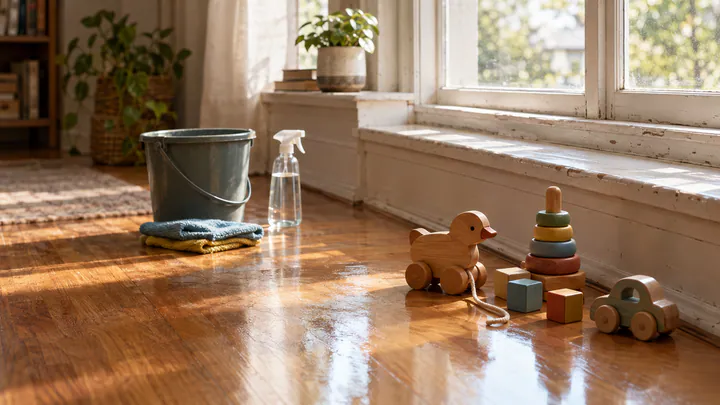
In a house or apartment built before 1978, the lead most likely to reach a baby or toddler is often not a paint chip they chew but fine dust: it settles on floors and windowsills, sticks to hands, toys and pacifiers, and goes into the mouth during ordinary play. This checklist is for parents who can't renovate or move right now and want to cut that exposure with a routine they can keep up every week. It covers where the dust collects, how to clean it without stirring it up, the handwashing and toy-washing habits that matter most, other sources worth checking, and the home jobs to put off.
Two groups need something different. If your child has already had a raised blood lead result, follow your pediatrician and local health department rather than a general list. If you are planning major renovation, that work calls for certified lead-safe contractors, not a cleaning routine.
Why crawlers and toddlers pick up the most lead dust
Young children are exposed more than anyone else in the house because of how they move and play. A crawling baby spends the day with palms and knees on the floor, pulls up on window ledges, and puts fingers, toys and the edge of furniture into the mouth many times an hour. Lead dust is fine enough that you usually can't see it, so a floor that looks clean can still leave it on a child's hands.
Small, growing bodies also take in lead more readily than adults do, and the developing brain and nervous system are especially sensitive to it. Effects on learning and behavior can be lasting, and most children with lead exposure show no obvious signs. That is why the aim here is prevention: reducing the dust that is there, and reducing how much of it gets from the floor into a child's mouth.
Where lead dust collects in an older home
The age of the building is the first clue. The EPA's page on reducing the risk of lead exposure at home explains that the federal government banned lead-based paint for residential use in 1978, so homes built earlier are more likely to contain it. The same page names dust and chips from that paint among the most common ways people are exposed to lead at home.
Old paint becomes dust in a few predictable ways:
- Friction surfaces. Window sashes sliding up and down in their frames grind painted surfaces every time they move. The sill and the trough below the sash (the window well) collect the result. Doors that rub their frames do the same, which is one more reason to understand why an interior door sticks or won't latch rather than living with the scraping.
- Impact surfaces. Stair treads, baseboards, door edges and crib or furniture surfaces that get bumped, kicked or chewed.
- Deteriorating paint. Peeling, chipping, cracking or chalky paint anywhere, including porches, railings and exterior trim near play areas.
- Tracked-in soil. Dirt near the foundation of an older house can hold paint residue from decades of weathering, and it comes inside on shoes and paws, so floors near entry doors tend to be dustier.
Intact paint in good condition under newer coats is much less of a concern than any of these. Focus your effort where paint is moving, breaking down, or within a toddler's reach.
The weekly cleaning routine for floors and windowsills
Clean wet, not dry. Sweeping, dusting with a dry cloth, and using an ordinary vacuum or a leaf blower all lift fine dust into the air, where it settles again on clean surfaces and can be breathed in. A damp cloth or mop traps it instead.
What you need
- Disposable damp paper towels or a stack of microfiber cloths you keep only for this job
- Two buckets for mopping: one with warm water and an all-purpose cleaner, one with plain rinse water
- A mop with a removable, washable or disposable head
- Disposable gloves if you prefer
- A sturdy doormat inside and outside each entry door
- Optional: a vacuum with a HEPA filter, which captures fine particles that ordinary vacuums can blow back out the exhaust; budget roughly $150 to $400 if you decide to buy one
How to wet-clean
- Pick up toys and loose items from the floor first so you aren't working around them.
- Wipe high to low: windowsills and window wells, then baseboards and low ledges, then the floor last, so dust you dislodge lands on surfaces you haven't cleaned yet.
- Wipe in one direction, fold the cloth to a clean side, and keep going. Switch to a fresh towel or cloth when every side has been used, rather than spreading dust from one sill to the next.
- Mop with the cleaning bucket, then wring the mop into the rinse bucket so the cleaning water stays cleaner. Change both when the water looks cloudy.
- Pour used mop water down the toilet rather than the kitchen sink, where you prepare food and bottles.
- Throw paper towels away in a bagged trash can, and wash reusable cloths and mop heads separately from clothing and baby items.
A weekly pass through the main rooms usually takes 30 to 45 minutes once you have the supplies set up. If time is short, do the windows and the floor where your child plays most, and leave the rest for another day.
| Spot | How often | What to do |
|---|---|---|
| Windowsills and window wells in rooms your child uses | Weekly, more often if windows are opened daily | Wet-wipe with a damp towel; fold to a clean side between sills |
| Floors near entry doors | Weekly, plus a quick wipe after muddy days | Wet-mop; shake or wash doormats outdoors away from play areas |
| Main play area floor | Weekly at minimum | Wet-mop, or HEPA-vacuum and then wet-mop |
| Hard toys | Weekly | Wash in warm, soapy water; rinse and air dry |
| Soft toys | Every week or two | Machine wash on a regular cycle |
| Pacifiers, teethers, bottle nipples | Every time they hit the floor | Wash with soap and water before giving back |
| Crib rails, high chair, low ledges | Weekly | Wet-wipe; check for chewed or worn paint |
Handwashing and toy-washing habits
Cleaning lowers the amount of dust in the house; handwashing removes what has already landed on your child's hands before it reaches the mouth. The CDC's guidance on how to wash hands calls for scrubbing with soap for at least 20 seconds, which is roughly how long it takes to hum "Happy Birthday" through twice. Running water can be warm or cold. Work the lather over the backs of the hands, into the spaces between fingers and under the nails, rinse it all off, then dry on a clean towel or let the hands air dry.
For a baby or young toddler, you do the scrubbing: hold their hands under the tap, lather your own hands and theirs together, and hum the song out loud so the timing becomes a game. An older toddler can stand on a stable step stool with you supervising. Key times:
- Before every meal and snack, including bottles held by the child
- Before naps and bedtime, since many toddlers suck fingers or thumbs to fall asleep
- After playing on the floor, outdoors, or in a sandbox
- After handling pets that go outside
Keep nails trimmed short, since dust packs in underneath. When soap and water aren't available, a wet wipe removes some dust from little hands, but a proper wash is better as soon as you can manage it.
For toys, the ones that go in the mouth matter most. Wash hard plastic and rubber toys, teethers and bath toys weekly in warm, soapy water. Clip a pacifier to clothing so it drops less, and when it does fall, wash it rather than rinsing it in your own mouth. Toys stored in closed bins or on shelves gather less floor dust than a heap on the rug, so toy storage that keeps things off the floor also cuts down how much you have to wash.
Water, soil and imported products to check
Paint is the big source in older homes, but not the only one.
Tap water
Older homes can have lead in service lines, older plumbing solder or brass fixtures. Your water utility can tell you whether your address is served by a lead line and whether it offers testing. Until you know, use cold tap water for drinking, cooking and mixing formula, since hot water draws more metal from pipes, and boiling water does not remove lead. If you use a filter, choose one certified to reduce lead and change the cartridge on the maker's schedule.
Yard soil
Soil near the walls of an older house, and near busy roads, can carry lead. Take shoes off at the door, keep play away from bare dirt along the foundation, and cover bare patches with grass, mulch or ground cover. A sandbox with a lid and fresh bagged sand gives a toddler somewhere to dig that you control.
Imported and old products
Some items bring lead into a home regardless of its age. Watch for:
- Some imported spices, candies and traditional remedies
- Traditional eye cosmetics such as kohl, and some imported cosmetics
- Glazed pottery used for food or drink, especially handmade, antique or imported pieces
- Old or secondhand painted toys and cribs, and cheap metal jewelry or keys a child might mouth
Adults can carry lead home too. If anyone in the household works in construction, painting, auto repair or battery recycling, or has hobbies such as stained glass, casting fishing weights or reloading, they should change clothes and shoes before holding the baby and wash work clothes separately.
Repairs and DIY jobs to put off
The fastest way to fill a home with lead dust is to disturb old paint. The EPA's lead-at-home guidance treats paint dust as a leading household source, and these jobs create a lot of it:
- Dry sanding or power sanding painted walls, trim, doors or floors
- Scraping peeling paint, inside or outside
- Using a heat gun or open flame to strip paint
- Planing down a sticking door or window that has old paint on its edges
- Removing or replacing old windows, doors, baseboards or trim
- Cutting into or knocking down walls and ceilings
- Pulling up old carpet laid over painted floors
If you assume any paint in a pre-1978 home contains lead until a test or certified inspector says otherwise, you won't be caught out. In the meantime, these are reasonable stopgaps: keep your child away from areas with peeling paint by moving furniture or using a gate, wet-wipe loose flakes into a bag rather than brushing them, and avoid opening windows that grind noisily in their frames.
If you rent, tell your landlord in writing about peeling or chipping paint, and ask your local health department or housing agency what your landlord must do and how repairs should be handled where you live.
When to ask about a blood lead test
Most children with lead in their blood look and act completely well, so a blood test is the only way to know. Raise it with your pediatrician at your child's next well visit, and sooner if you have found deteriorating paint where your child plays, if there has been renovation or repair work in the home recently, if you've seen your child chewing on sills or eating paint flakes, or if any of the imported products above are in regular use. Your pediatrician can explain when testing makes sense for your child, what kind of test is used, and what the result means, which depends on your child's age, history and where you live.
A normal result is not a reason to drop the routine. Lead dust builds up again every time a window opens and a toddler crawls toward it, and the weekly wipe-down, the handwashing before meals and naps, and the toy wash are what keep it from building up in your child.