Chemical Peel Benefits: What They Really Do for Skin
Chemical peels do more than exfoliate: they remodel collagen, fade sun damage, and clear stubborn breakouts. Here is what each depth actually delivers, what it costs, how recovery really goes, and the mistakes that turn a good peel into a pigmentation problem.
Rewritten with AI and republished automatically. Our editors set the standards and fix reported errors — how we work.
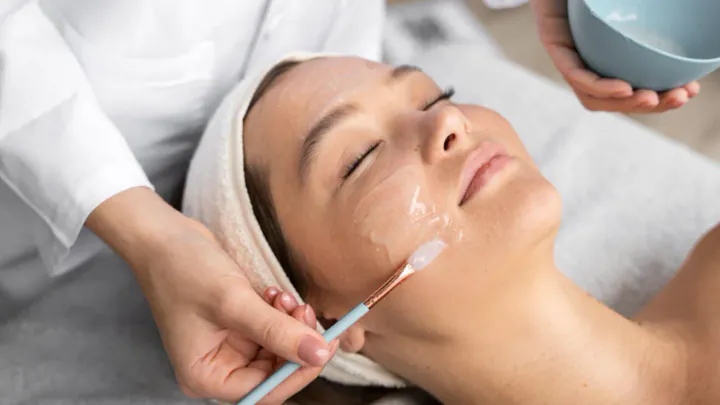
TL;DR: A chemical peel does more than slough off dead skin. By triggering a controlled healing response, it remodels collagen, fades sun damage and post-acne marks, and clears pore congestion. The depth you choose decides everything: results, downtime, cost, and risk. The wrong depth on the wrong skin causes pigmentation problems.
What is a chemical peel, and how does it actually work?
A chemical peel is a resurfacing treatment in which an acid solution is applied to the skin for a controlled period, dissolving the bonds between surface cells so they shed and are replaced by newer, more evenly pigmented tissue. That is the visible half. The more interesting half is invisible.
Acids penetrate to a predictable depth and create a measured, deliberate injury. The skin responds the way it responds to any wound: inflammatory signaling, then fibroblast activation, then new collagen and elastin laid down over the following weeks and months. That is why a peel's effect on firmness keeps developing long after the flaking stops, and why a series usually outperforms a single session.
Peel depth is controlled by three variables — the acid used, its concentration, and how long it stays on the skin before it is neutralized or self-neutralizes. A 30% glycolic acid left on for two minutes and the same solution left on for eight minutes are not the same treatment.
Which peel depth do I need for my concern?
Superficial peels handle dullness, mild texture, congestion, and active acne. Medium-depth peels address fine lines, sun spots, and shallow acne scarring. Deep peels are reserved for significant photoaging and are rarely performed today. Match the depth to the concern, not to your impatience.
| Depth | Typical agents | Best for | Visible downtime | Typical US price range |
|---|---|---|---|---|
| Superficial | Glycolic, lactic, mandelic, salicylic acid; low-strength TCA | Dullness, congestion, mild uneven tone, active acne | 0–4 days of light flaking | Roughly $100–$300 per session |
| Medium | TCA 20–35%, Jessner's plus TCA | Sun spots, fine lines, shallow scarring, stubborn pigment | 5–10 days of visible peeling and redness | Roughly $400–$1,000 |
| Deep | Phenol-croton oil | Deep wrinkles, severe photoaging; usually lighter skin tones only | 2–3 weeks, with redness for months | Several thousand dollars; often performed with sedation |
Prices vary widely by city and provider, and deep peels carry cardiac monitoring requirements that push them firmly into the medical-procedure category. Treat these as orientation figures and get a quote in your own market.
Which acid treats which problem?
Salicylic acid is oil-soluble and gets inside pores, so it suits oily and acne-prone skin. Glycolic acid has the smallest molecule of the alpha-hydroxy acids and penetrates fastest, making it the workhorse for texture and tone. Lactic and mandelic acids are gentler and better tolerated by sensitive or darker skin.
- Salicylic (BHA): comedonal and inflammatory acne, oily congestion, back and chest breakouts.
- Glycolic (AHA): rough texture, dullness, fine lines, general resurfacing.
- Lactic (AHA): dryness with dullness, sensitive skin, first-time peel candidates.
- Mandelic (AHA): pigment-prone skin, melasma, rosacea-adjacent sensitivity — its larger molecule penetrates slowly and evenly.
- TCA: sun spots, photoaging, acne scarring at medium depth.
Blended formulas such as Jessner's solution combine resorcinol, salicylic acid, and lactic acid to reach a controlled depth with less aggression from any single ingredient. Many clinics now use modified blends with added anti-inflammatory or pigment-inhibiting agents.
What benefits do people actually underestimate?
The underrated wins are collagen stimulation, improved absorption of your existing products, and better makeup wear. Most people book a peel for pigment and are surprised that skin feels firmer and behaves better for weeks afterward.
Collagen remodeling that keeps working
Medium-depth peels reach the papillary dermis, where fibroblasts live. The firming effect is gradual and cumulative rather than instant, which is exactly why one peel can feel underwhelming and a planned series does not.
Post-inflammatory pigment fades faster
Those brown marks left behind after a breakout clears are pigment sitting in the upper layers. Accelerated cell turnover moves them out faster than a topical alone typically manages. Note the distinction: post-inflammatory hyperpigmentation responds well; true melasma is deeper, hormonally driven, and prone to rebound.
Better product performance for the following weeks
With the dead, disorganized surface layer cleared, serums face less resistance. That is a genuine benefit and also a hazard — actives you tolerated before a peel can sting badly after one. Keep the post-peel routine boring for a week.
Scar softening
Medium peels can soften shallow, rolling acne scars by stimulating new collagen beneath them. Deep, narrow ice-pick scars respond poorly to peels and usually need targeted approaches such as TCA CROSS, subcision, or microneedling.
What does the original advice get wrong about pores?
Peels do not permanently shrink pores. Pore diameter is set by genetics and sebum output; no acid changes that. What a peel does is empty the plug of oxidized oil and dead cells that stretches a pore open, and smooth the rim around it, which reads as smaller pores in the mirror.
That improvement lasts weeks, not forever. If someone promises permanent pore reduction from a peel, adjust your expectations for everything else they tell you. Honest framing here matters more than a flattering claim, because unmet expectations are the single biggest reason people abandon a treatment plan that was actually working.
Who should not get a chemical peel?
Skip or delay peels if you are pregnant or breastfeeding (depending on the agent), currently on isotretinoin, have an active skin infection or open wound, recently waxed or used depilatory creams on the area, or have a history of keloid scarring. These are non-negotiable in most clinics.
Three cases deserve specific attention:
- Cold sore history. Medium and deep peels can reactivate herpes simplex across the treated area. Prophylactic antiviral medication is standard practice — mention it even if your last outbreak was years ago.
- Fitzpatrick types IV–VI. Peels are used successfully on deeper skin tones every day, but aggressive depth raises the risk of post-inflammatory hyperpigmentation. Superficial, gentler agents and pretreatment are the safer path.
- Rosacea or a compromised barrier. If your skin is already stinging from cleanser, fix that first. Our guide to repairing a damaged skin barrier is the right starting point before any acid touches your face.
Chemical peels are medical procedures at every depth beyond the mildest. Consult a board-certified dermatologist or a licensed, experienced provider who examines your skin in person before committing.
What does recovery actually look like, day by day?
After a superficial peel, expect tightness and mild redness for a day, then light flaking around days two to four. After a medium peel, expect noticeable redness and swelling for two days, darkening of pigmented areas, then sheeting of skin from roughly day three through day seven.
| Days | What you see | What to do |
|---|---|---|
| 0–1 | Redness, tight heat, mild swelling | Bland cleanser, occlusive ointment, no actives |
| 2–3 | Skin darkens and looks leathery; spots become prominent | Keep moist, do not pick, avoid the gym and steam |
| 4–7 | Sheeting and peeling, patchy appearance | Let it fall away on its own; heavy moisturizer |
| 8–14 | Pink new skin, sensitive to everything | Mineral SPF daily, reintroduce actives slowly |
One useful reassurance: a peel that produces little visible flaking is not a failed peel. Cell turnover and collagen signaling still occurred. Visible shedding is a side effect, not the mechanism.
What are the costliest mistakes people make?
The three that cause real damage are picking at peeling skin, stacking too many actives around the appointment, and treating sun protection as optional. Each one can convert a good result into months of correction.
- Pulling at loose skin. Peeling skin that is still attached is still protecting the new tissue underneath. Pull it and you invite scarring and pigment. If it is dangling, trim it with clean scissors rather than tearing.
- Stacking actives. Stop retinoids, exfoliating acids, and scrubs about five to seven days before a peel unless your provider says otherwise. Going in with pre-thinned skin means the peel travels deeper than intended.
- Loose sun habits. UV exposure on freshly resurfaced skin is the fastest route to post-inflammatory hyperpigmentation — precisely the thing most people booked the peel to fix. Daily broad-spectrum SPF and physical shade for at least two weeks is the minimum.
A simple decision rule: if you cannot commit to daily sunscreen and two weeks of sun avoidance, do not book a medium peel. You will spend money making pigmentation worse.
How do peels fit into a routine that already works?
Treat a peel as a reset, not a replacement for daily care. In the week before and the two weeks after, your home routine should be simplified to cleanser, moisturizer, and sunscreen, then rebuilt deliberately.
A structured approach helps. Our guide to skin cycling explains how to rotate exfoliation and retinoid nights against recovery nights, which is a natural framework for reintroducing actives after a peel. On the very driest post-peel nights, the occlusive approach described in our overnight slugging routine can keep the new surface comfortable while it settles.
One caution: do not layer a peel onto an already over-exfoliated routine. If you are using a daily acid toner, a retinoid, and a scrub, the problem is the routine, not a missing procedure.
Are chemical peels worth it in 2026?
For sun damage, uneven tone, post-acne marks, congestion, and early textural aging, a properly chosen peel remains one of the best value-per-dollar treatments in aesthetic dermatology. It is not the right first move for deep scarring, significant laxity, or true melasma, where other modalities do more.
The honest summary: a superficial peel series is a reliable, low-risk upgrade to good home care. A medium peel is a real procedure with real downtime that can deliver results topicals cannot. A deep peel is major dermatologic surgery. Choose according to which sentence describes your actual situation.
Key takeaways
- A chemical peel works by controlled, depth-specific injury that triggers shedding and new collagen — the mechanism is healing, not scrubbing.
- Match acid and depth to the concern: salicylic for oil and acne, mandelic or lactic for pigment-prone and sensitive skin, TCA for sun damage and shallow scarring.
- Peels temporarily make pores look smaller; they do not permanently change pore size, and any provider claiming otherwise is overselling.
- Post-inflammatory hyperpigmentation responds well; melasma is deeper and prone to rebound, so expectations should be set accordingly.
- Picking, stacking actives, and skipping sunscreen are the three mistakes that turn a good peel into a pigmentation problem.
- Peels are medical procedures — have your skin assessed in person by a qualified professional, and disclose cold sore history, isotretinoin use, and recent waxing.
Frequently asked questions
How often should you get a chemical peel?
Superficial peels are typically repeated every two to four weeks in a series of four to six, then maintained every one to three months. Medium-depth peels are usually spaced six to twelve months apart, and deep phenol peels are generally a once-in-a-lifetime procedure for a given area. Your clinician sets the interval based on how your skin recovers, not a fixed calendar.
Do chemical peels permanently shrink pores?
No. Pore size is largely determined by genetics and oil output, so no peel permanently changes it. What peels do is clear the keratin and sebum plugs that stretch pores open and smooth the surrounding surface, which makes pores look smaller. The effect fades within weeks or months unless you maintain treatment and control oil.
Are chemical peels safe for darker skin tones?
Yes, with careful selection. Superficial peels using salicylic, mandelic, or lactic acid are widely used on Fitzpatrick types IV to VI, often alongside pretreatment to calm pigment-producing cells. The real risk is post-inflammatory hyperpigmentation from overly aggressive peels or sun exposure afterward, so depth control and an experienced provider matter more than the specific acid.
What is the difference between a chemical peel and microdermabrasion?
A chemical peel uses acid to dissolve the bonds between skin cells and trigger a controlled wound-healing response, while microdermabrasion physically sands or vacuums away the outermost layer. Peels can be dialed to any depth and can reach the dermis; microdermabrasion is strictly superficial and does not meaningfully stimulate collagen.
Can you do a chemical peel at home?
Low-strength at-home acid products are fine for most people, but true professional-strength peels should not be self-applied. The risk with home kits is uneven application, leaving acid on too long, and having no neutralizer or medical support if the skin frosts or burns. Chemical burns and scarring from DIY peels are a recognized problem in dermatology clinics.
How long do chemical peel results last?
Superficial peel results typically last one to two months, medium-depth results often hold for six to twelve months, and deep peel results can last years. Longevity depends almost entirely on sun protection and home care; unprotected UV exposure will undo pigment and collagen gains faster than any treatment can build them.
Should you get a peel if you take isotretinoin?
Not during treatment, and usually not immediately after. Standard clinical practice is to delay medium and deep peels until well after isotretinoin is finished because the skin heals differently and scarring risk is higher. Tell your provider about isotretinoin, retinoids, cold sore history, and recent waxing before any peel is scheduled.