Denim Trends 2026: The Jeans Actually Worth Buying Now
Denim in 2026 is roomier, darker and better made. Here are the three silhouettes worth buying, the washes that already look dated, the fabric weights that hold their shape, and the fit tests to run before you pay.
Drafted with AI and published automatically. Our editors set the standards and fix reported errors — how we work.
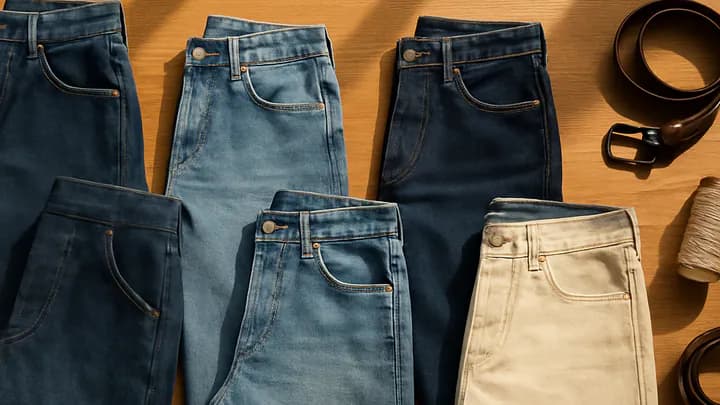
TL;DR: Denim in 2026 is softer, roomier and more grown-up. The shapes that matter are the relaxed straight, the curved barrel leg and a cleaner wide leg. Deep indigo, ecru and true black lead the washes; heavy whiskering and bleach splatter are done. Buy fewer pairs, in heavier mostly-cotton fabric, and get the length right.
Jeans are the one garment almost everyone owns, and the one that most reliably dates an outfit when the shape drifts out of step. Denim trends are the season's dominant combinations of silhouette, rise, wash and fabric weight — and for 2026 that combination is unusually coherent across runways, independent denim shops and the street. This is a good year to reset the denim drawer, as long as you know what you are actually looking for.
What's actually changing in denim for 2026?
The shift is from statement shapes to refined staples. The last few seasons ran loud — extreme low rises, floor-dragging hems, patchwork distressing, cargo hybrids — and 2026 pulls all of that back toward jeans that look considered rather than costumed. The interest has moved into the fabric, the wash and the curve of the leg.
Three forces are behind it. First, cost fatigue: shoppers are less willing to spend on a shape they'll wear twice. Second, the return of tailoring — when blazers, trousers and fine knits come back, jeans have to hold their own beside them. Third, genuine craft interest, with selvedge, raw denim and heritage mill fabric pulling attention back to how jeans are built. It's the same instinct driving the quiet luxury approach to building a timeless wardrobe: fewer decisions, better materials, no logos doing the talking.
Which jean silhouettes are worth buying in 2026?
Four cuts carry the year: the relaxed straight, the barrel leg, the refined wide leg and a slim-but-not-skinny straight. If you buy one pair, make it a mid-rise relaxed straight in mid-to-dark blue — it is the most outfit-compatible shape on this list and the least likely to look strange in two years.
| Silhouette | Rise & shape | Best with | Buy it if |
|---|---|---|---|
| Relaxed straight | Mid-rise, straight through thigh and ankle, hem grazing the top of the shoe | Almost anything — T-shirts, knits, blazers | You want one pair to do most of the work |
| Barrel (curved) leg | Roomy thigh, slight outward curve at the knee, taper to the ankle | Fitted or tucked tops, loafers, flat boots | You want the most current shape and will style around it |
| Refined wide leg | True waist or just below, clean vertical drape, stops at the shoe | Silk camisoles, tailored blazers, a low heel | You're tall-ish or happy to have the hem adjusted properly |
| Slim straight | Mid-rise, close through the thigh, straight ankle — not skinny | Chunky sweaters, Chelsea boots, long coats | You never made peace with volume |
A note on the barrel leg
The barrel is the shape that defines the season, and it is far more forgiving in person than on a hanger. But it is also the least tolerant of bad length. The widest point of the curve is drafted to sit at a specific place on the leg; shorten the hem too much and you cut into the curve, narrowing the opening until the jean just looks confused. More on that below.
Which denim washes look current — and which date you instantly?
Deep indigo is the headline wash of 2026: rich, almost inky, in either a rinse or a raw finish. Ecru and creamy undyed denim is the season's warm-weather alternative to true white, soft vintage mid-blue with minimal whiskering covers everyday wear, and a dense true black — not gray, not faded — is a genuine wardrobe upgrade in a straight or barrel cut.
Chocolate brown denim is the small emerging trend worth a look if you're bored of blue; it behaves like a neutral and sits beautifully next to camel, cream and navy.
What now looks dated: heavy factory whiskering across the front thigh, bleach splatter, aggressive rips at the upper leg, and the very pale "beach wash" blues that peaked a few seasons ago. If a wash has visible fake fade lines placed where your hands would go, it will age badly.
One honest caveat: raw and deep-rinse indigo crocks. New dark denim transfers dye onto pale leather bags, white sneakers and light upholstery for the first few weeks of wear. If you own a cream sofa, either commit to one cold soak before the first wear or choose a rinse wash over true raw.
How do you tell if a pair of jeans is well made?
Check fabric weight, composition and stitching — in that order. Denim weight is measured in ounces per square yard, and it tells you more about how a jean will age than the price tag does.
| Weight | Feel | Trade-off |
|---|---|---|
| Under 10 oz | Soft, drapey, comfortable immediately | Thins at the thigh and seat fastest; poor at holding a wide or barrel shape |
| 11–13 oz | Substantial but wearable year-round | The versatile default for almost everyone |
| 14 oz and up | Stiff for the first few weeks, structured leg | Real break-in period; too warm for high summer, but ages best |
For everyday jeans we prefer 98–100% cotton with no more than 1–2% elastane. Beyond that, jeans bag out at the knee and seat within months, and no amount of washing brings the shape back. This does not apply if you're on your feet or in and out of a car all day, or cycling to work — in those cases a little more stretch is a reasonable comfort trade, just accept a shorter lifespan.
- Stitching: tight and even at the crotch, back pockets and belt loops — the three places jeans fail first.
- Rivets and bar tacks: reinforced stress points signal a maker who expects the jean to last.
- Selvedge edge: not required, but a useful marker of heritage-mill fabric.
- Chain-stitched hem: produces the rope-like fading along the hem over time.
- Pocket bags: thin, papery pocket lining is a tell that the rest of the jean was built to a price.
What fit tests should you run before you pay?
Sit down, squat, and reach overhead in the fitting room. If the waistband gapes at the back, the thigh pulls into horizontal lines, or the rise digs in during any of those movements, the jeans will feel considerably worse an hour into a real day.
Then check yourself from the side. Rise height and back pocket placement do more for how jeans look than the leg shape does, and almost nobody looks at them in the mirror. Pockets that sit too low or too far apart will undercut an otherwise excellent pair.
The between-sizes decision rule
For rigid, all-cotton denim, size to the waist and accept a snug first week — cotton relaxes roughly half an inch to an inch with wear. For anything with elastane, size to your true measurement and never size down, because stretch denim only ever gets looser, never tighter. That single rule prevents most of the "these fit perfectly in the store" regret.
How do you style barrel and wide-leg jeans without looking swamped?
Balance volume: roomy jeans want a closer top half, slim jeans want a looser one. That one principle carries almost every 2026 denim outfit, and it's the same proportion logic that makes a small, well-chosen wardrobe work — the approach we walk through in our 30-piece capsule wardrobe guide.
- Barrel jeans, fine-gauge tucked knit, loafers, long trench — the uniform of the season.
- Relaxed straight, white T-shirt, leather belt, ballet flats or clean sneakers.
- Dark indigo wide leg, silk camisole, tailored blazer, heeled boot — dinner without trying too hard.
- Ecru denim, oversized striped shirt, suede mule — elevated weekend errands.
- Slim straight, chunky sweater, Chelsea boots, long wool coat.
Small upgrades that punch above their effort: a front-only tuck to define the waist, a real leather belt even under a sweater, and above all, hemming. The right length turns a modest pair into something that reads expensive.
The hemming exception nobody mentions
Straight and slim legs can be shortened freely. Barrel, curved and wide legs cannot. Taking more than about an inch and a half off a curved leg pulls the narrowest part of the taper up into the calf and shrinks the leg opening, which kills the architecture you paid for. If you're shorter than the model, buy a petite or short inseam rather than buying regular and cutting. If only regular exists, a good tailor can sometimes re-cut the side seam to preserve the curve — expect to pay more than a standard hem.
What are the costliest denim mistakes?
The expensive errors are rarely about taste. They're about fabric, length and quantity.
- Buying heavy stretch for a wide or barrel leg. Volume needs fabric with body. In 2% elastane, a barrel leg collapses into a shapeless tube by lunchtime.
- Chasing the extreme version of a trend. The puddle-length wide leg is already reading as a specific past season. The refined version will outlive it by years.
- Buying three pairs in the same wash. Pull your jeans out and lay them side by side before shopping; most people already own two near-identical mid-blues and no dark pair.
- Tumble drying. Heat degrades elastane and warps the leg permanently. One hot dry can undo an otherwise well-made jean.
- Skipping the tailor to save $20 on a $150 pair. Length is the single most visible quality signal in denim.
How much should you spend on jeans in 2026?
Spend what makes the math work over two years, not what a brand suggests. A worked example: a $160 pair worn twice a week for two years lands near 200 wears — roughly 80 cents a wear. A $50 pair that bags out at the knee after six months and gets worn maybe 50 times costs about a dollar a wear, and looks worse the whole time. The cheaper jean is only the better buy if it actually survives.
That said, solid everyday denim genuinely exists across a wide price range, and above a certain point you're paying for brand rather than construction. Use the fabric-weight and composition checks above as your filter, not the price. None of this is financial advice — just a way to make one purchase decision easier.
On quantity: three to five pairs cover almost everything. One dark wash that can go out to dinner, one everyday mid-blue, one relaxed casual pair, and optionally a black or ecru. If you're rebuilding from scratch, our guide to building a closet you actually love covers how denim slots in around the rest.
How should you wash and care for jeans so they last?
Wash less, and wash cold. Turn jeans inside out, use a gentle cycle in cold water, and hang them to dry — heat is what breaks down elastane and warps the leg shape. Spot-clean between washes and air them overnight instead of laundering after every wear.
For raw or selvedge denim, enthusiasts generally recommend waiting several months before the first wash so that fade lines develop at your own knees, thighs and hems rather than a factory's idea of them. If the smell becomes an issue before then, a cold soak in a bathtub with no agitation removes odor without flattening the contrast.
Denim is also one of the more resource-intensive garments to produce, which is a real argument for buying fewer and better. Brands increasingly publish their dye process, water use and mill sourcing; reading that section of a product page takes half a minute and tells you a great deal about who made the jean.
Key takeaways
- The defining 2026 silhouettes are the relaxed straight, the curved barrel leg and a refined, non-puddling wide leg — with slim straights quietly back in dark washes.
- Deep indigo, ecru, true black and soft vintage mid-blue look current; heavy whiskering, bleach splatter and beach-light blues do not.
- Target 11–13 oz fabric in 98–100% cotton for jeans that hold their shape; keep elastane at 2% or less unless comfort genuinely outranks longevity.
- Size rigid denim to the waist and expect it to relax; never size down in stretch denim, because it only loosens.
- Hem straight and slim legs freely, but never take more than about an inch and a half off a barrel or wide leg — buy the right inseam instead.
- Balance volume, get the length right, skip the dryer, and three to five pairs will cover nearly every occasion.
Frequently asked questions
Are skinny jeans still in style in 2026?
Skinny jeans are no longer the default silhouette, but they are not unwearable — they now read as a personal styling choice rather than a trend. They look most current in a dense dark wash, tucked into tall boots or balanced with a genuinely oversized top or long coat.
What is the most flattering jean silhouette for 2026?
There is no single most flattering cut, but a mid-rise relaxed straight works across the widest range of builds because it skims the thigh instead of clinging to it. Barrel legs are the next safest bet if you want something more current, provided the top half stays fitted.
How dark should my jeans be right now?
Deep, saturated indigo is the standout for 2026, especially in rinse and raw finishes that dress up easily. Soft vintage mid-blues remain the most versatile everyday option, while heavily bleached, whiskered and beach-light washes are the ones that now look dated.
Can I hem barrel or wide-leg jeans?
You can, but only a little. Barrel and curved legs are drafted so the widest point sits at a specific place on the leg — taking more than about an inch and a half off the hem cuts into the curve and narrows the leg opening, which flattens the whole shape. If you need more than that, buy a shorter inseam instead.
What denim weight should I look for?
Roughly 11 to 13 ounces per square yard is the versatile sweet spot for year-round jeans. Under 10 oz drapes softly but wears through faster at the thigh and seat; 14 oz and up takes weeks to break in but ages beautifully and holds a crisp leg shape.
How many pairs of jeans do I actually need?
Most people are covered by three to five well-chosen pairs: one dark wash that can go out to dinner, one everyday mid-blue, one relaxed casual pair, and optionally a black or ecru pair for variety. Adding a sixth pair usually adds storage, not outfits.
Will raw indigo denim stain my bag or sofa?
Yes, new raw and deep-rinse indigo transfers dye onto light leather, pale upholstery and white sneakers until the excess surface dye wears off. Wear them with darker accessories for the first few weeks, or give them one cold soak before wearing if you care more about your furniture than about sharp fade lines.