Quiet Luxury in 2026: Dress Beyond the Trend
Quiet luxury is no longer a runway moment — it's a wardrobe philosophy. Here's how to build the look in 2026 without overspending or looking sterile.

TL;DR: Quiet luxury in 2026 has matured from a viral aesthetic into a durable wardrobe philosophy. The look is built on natural fibers, precise tailoring, a narrow neutral palette, and an almost total absence of visible logos. You don't need a designer budget to achieve it — you need consistent rules about fit, fabric, and color. In this guide, our team breaks down exactly how to assemble a quiet luxury wardrobe that works for real life, real budgets, and real closets.
When the phrase first exploded online, quiet luxury looked like a fleeting moment — a reaction to maximalist logos and dopamine dressing. Two years later, the trend cycle has moved on, but the wardrobes haven't. Cream cashmere, camel coats, and barrel-leg trousers have quietly become the default uniform of people who care about clothes but are tired of chasing.
What Quiet Luxury Actually Means in 2026
Strip away the TikTok shorthand and the aesthetic comes down to three principles: fabric over branding, fit over flash, and palette over print. A quiet luxury outfit doesn't shout its price or its label. It signals through the way a shoulder seam sits, the way wool drapes, and the way a single chocolate-brown leather bag pulls together six other neutral pieces.
In 2026, the look has also broadened. Early iterations leaned heavily on a single 'old money' archetype — country club neutrals, Hermès-adjacent silhouettes. The current version is more flexible. We're seeing quiet luxury translated into streetwear-inflected uniforms, minimalist Scandinavian capsules, and even softer, more romantic interpretations with longer skirts and looser knits.
What it is not
- Not a logo ban with no substance. Removing branding isn't enough if the fit is wrong.
- Not all-beige-everything. The palette is neutral, but texture and tonal contrast matter.
- Not necessarily expensive. A well-chosen mid-market merino sweater can read more 'quiet luxury' than a logo-heavy designer piece.
- Not boring. Restraint is not the same as absence of personality.
The Five Pillars of a Quiet Luxury Wardrobe
1. Fabric content comes first
Before you look at the price tag or the silhouette, check the care label. The pieces that anchor a quiet luxury wardrobe are made from natural fibers: wool, cashmere, silk, linen, cotton, and leather. Blends are fine, but we generally look for natural fibers to dominate the composition. Pieces heavy on polyester, acrylic, or viscose tend to lose shape, pill quickly, and photograph as 'cheap' even when they aren't.
A practical rule we use: if a knit costs more than a casual dinner out, it should be at least mostly wool or cashmere. If it isn't, walk away.
2. Fit is non-negotiable
Quiet luxury lives or dies on tailoring. The shoulder seam of a blazer should sit exactly at the edge of your shoulder. Trousers should break cleanly at the shoe. A crewneck sweater should skim the body without clinging or ballooning.
Most off-the-rack clothing won't fit perfectly out of the box. Budgeting for a local tailor — hemming trousers, taking in a jacket, shortening sleeves — is often the single highest-leverage move you can make. A modest sweater that fits beautifully will outperform a luxury piece that doesn't.
3. A narrow, intentional palette
The core colors are familiar: cream, oatmeal, camel, chocolate brown, navy, charcoal, soft grey, and black. The discipline is keeping the palette narrow enough that almost everything in your closet works with everything else.
For 2026, we're seeing chocolate brown continue its run as the dominant 'statement' neutral, with butter yellow and soft burgundy appearing as occasional accent tones. If you're starting from scratch, build around two base neutrals (say, cream and camel) and one grounding dark (navy or chocolate).
4. Silhouettes that read 'considered'
Current quiet luxury silhouettes lean relaxed but precise: straight or barrel-leg trousers, longer single-breasted coats, fluid midi skirts, oversized but structured button-downs, and fine-gauge knits. Avoid anything too clingy, too cropped, or too obviously trend-driven. The test we use: could this piece have existed in 2018 and still look right in 2030?
5. Quiet accessories
Logos disappear here too. A solid leather tote in cognac or chocolate, simple gold or silver jewelry worn consistently, a leather belt, a discreet watch, loafers or ankle boots in a complementary leather tone. One or two well-chosen accessories will outperform a rotating cast of trendy bags.
How to Build the Look Without Overspending
The misconception that quiet luxury requires a five-figure budget is the single biggest barrier we hear about. It doesn't. Here's the approach our editorial team uses with readers on real-world budgets.
- Audit before you buy. Lay out everything you own in the relevant color family. You almost certainly have more usable pieces than you think.
- Identify the gaps. Most wardrobes are missing one or two anchor pieces — usually a well-fitting pair of trousers, a quality crewneck, or a structured coat.
- Shop secondhand for the expensive stuff. Cashmere sweaters, leather bags, wool coats, and silk blouses are abundant on resale platforms. Quality natural fibers age well, so secondhand often outperforms new fast fashion at the same price.
- Pay for tailoring. Even a $40 alteration can transform a $60 thrifted blazer into something that looks bespoke.
- Resist the next 'micro trend.' Every dollar spent chasing a six-week trend is a dollar not spent on something that lasts a decade.
A Sample Capsule for 2026
If you're building from a blank slate, here's a compact starting framework. Adjust quantities and silhouettes to your climate, body, and life.
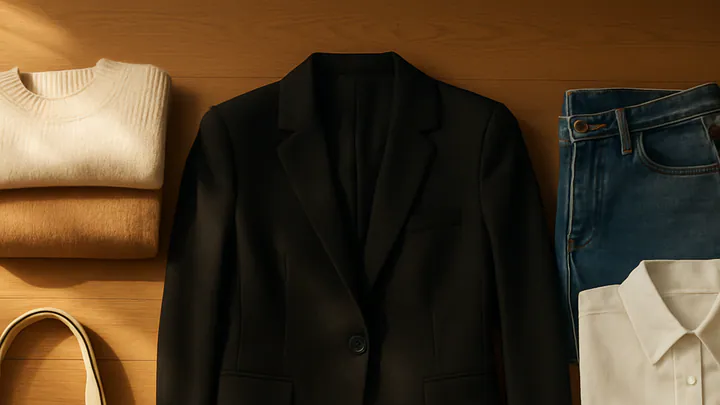
- 2 fine-gauge knit sweaters (one cream, one camel or chocolate)
- 1 oversized button-down in white or pale blue cotton
- 1 silk or silk-blend blouse in a soft neutral
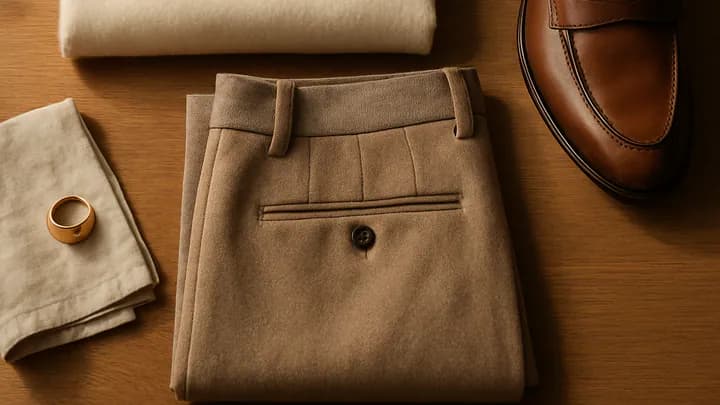
- 2 pairs of well-tailored trousers (one navy or charcoal, one cream or camel)
- 1 pair of dark, well-fitting straight-leg jeans
- 1 longer single-breasted wool coat in camel or chocolate
- 1 structured blazer
- 1 midi skirt or simple slip dress in a neutral
- 1 pair of leather loafers and 1 pair of ankle boots
- 1 quality leather tote or shoulder bag
That's roughly twelve to fifteen pieces, capable of generating dozens of cohesive outfits. The point isn't the exact list — it's the discipline of building intentionally.
Common Mistakes We See
- Confusing 'beige' with 'quiet luxury.' A head-to-toe beige outfit in cheap fabric looks worse than a thoughtful mix.
- Skipping tailoring. Buying expensive pieces and wearing them ill-fitted defeats the entire point.
- Overbuying basics. Owning eight nearly identical white t-shirts isn't a capsule — it's clutter.
- Chasing 'It' pieces. If a single bag or shoe is everywhere on social media, it's no longer quiet.
- Ignoring proportions. Quiet luxury is as much about silhouette balance as it is about color and fabric.
Will Quiet Luxury Still Matter in 2027?
Almost certainly, though probably not by that name. Trend labels are temporary; the underlying habits — buying fewer, better pieces, prioritizing natural fibers, and tailoring what you own — have been the foundation of well-dressed people for decades. The hashtag will fade. The wardrobe won't.
Key Takeaways
- Quiet luxury in 2026 is a wardrobe philosophy, not a price bracket — fabric, fit, and palette matter more than labels.
- Prioritize natural fibers (wool, cashmere, silk, linen, cotton, leather) and check care labels before buying.
- Tailoring is the highest-leverage investment you can make in how your clothes look.
- Build around a narrow neutral palette so nearly every piece works together.
- Secondhand markets are the most efficient way to access quality fabrics on a real budget.
- Resist micro-trends; the goal is a wardrobe that still looks right five years from now.
Editorial note: This guide reflects the experience and observations of our editorial team and is intended as general style guidance. Personal style is personal — adapt these principles to your body, climate, culture, and budget rather than treating them as rules.
Frequently asked questions
What is quiet luxury in fashion?
Quiet luxury is a style approach that prioritizes fabric quality, precise fit, and restrained design over visible logos or loud trends. The goal is clothing that signals taste through cut and material rather than branding.
Is quiet luxury still relevant in 2026?
Yes. While the hashtag has cooled, the underlying values — durability, neutral palettes, and logo-free pieces — have settled into mainstream style. Most major retailers now stock 'quiet luxury' adjacent staples year-round.
Do I need expensive designer pieces to pull off the look?
No. The aesthetic relies on fit, fabric content, and consistency, not price tags. A well-tailored merino sweater from a mid-market brand often reads more 'quiet luxury' than a logo-heavy designer piece.
What colors define a quiet luxury wardrobe?
Cream, camel, oatmeal, chocolate brown, navy, charcoal, black, and soft greys form the core. The palette is intentionally narrow so almost every piece works together.
What fabrics should I look for?
Prioritize natural fibers: wool, cashmere, silk, linen, cotton, and leather. Check labels for high percentages of these fibers and avoid pieces dominated by polyester or acrylic when possible.
Can quiet luxury work for casual or office settings?
Absolutely. The aesthetic translates well across contexts — a cashmere crewneck with straight-leg trousers works at the office, while the same sweater with denim and loafers reads weekend-appropriate.
How is quiet luxury different from minimalism?
Minimalism focuses on owning less; quiet luxury focuses on owning better. The two often overlap, but quiet luxury places more weight on craftsmanship, texture, and tailoring than on strict item counts.