Fragrance Layering in 2026: How to Make Perfume Last
Fragrance layering is the practice of building two or more scented products on skin so a perfume projects well and lasts longer. Here's how concentration, base notes, moisturized skin, and application order actually change wear time.

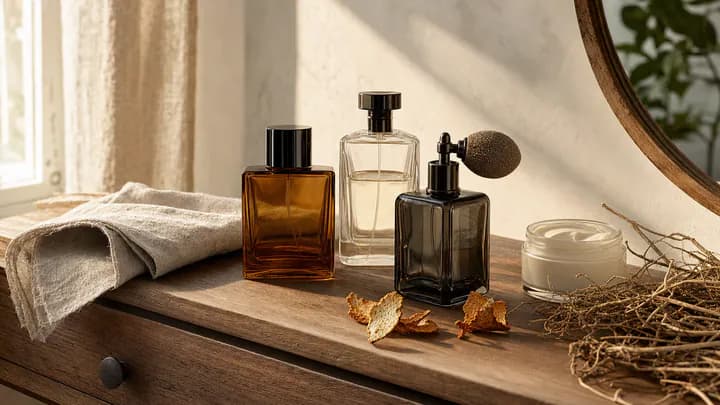
TL;DR: Fragrance layering means building scent in stages — hydrated skin first, then a base-rich fragrance, then anything lighter on top. Combined with the right concentration and the right application points, it reliably adds hours of wear to a perfume you already own, without buying anything stronger.
Every year our inbox fills with the same complaint: my perfume vanishes by lunch. Nine times out of ten the bottle isn't the problem. The skin underneath it is dry, the scent was chosen from a paper blotter, and it's being sprayed in one spot on a cold morning. All three are fixable in about ninety seconds a day.
What exactly is fragrance layering?
Fragrance layering is a technique in which two or more scented or unscented products are applied in sequence so that a perfume adheres better, projects more evenly, and lasts longer on skin. In its simplest form it's one product under one perfume. In its most deliberate form it's two fragrances combined to create something neither one smells like alone.
Two different goals hide inside the same word, and confusing them is why people end up smelling like a department store:
- Anchoring — using an unscented or scent-matched base (lotion, balm, body oil) to slow evaporation. Low risk, works almost always.
- Combining — wearing two perfumes together to build a custom accord. Higher risk, higher reward, needs rules.
If your only complaint is longevity, you want anchoring. Start there.
Why does perfume fade so fast on my skin?
Usually it hasn't faded — you've stopped noticing it, and the brightest molecules have already left. A fragrance is built in stages: top notes (citrus, aromatic herbs, light fruit) evaporate within roughly fifteen to thirty minutes, heart notes carry the middle hours, and base notes (woods, resins, musks, vanilla, ambroxan) are heavier molecules that can persist all day.
Four things genuinely shorten the window:
- Dry skin. Fragrance oil sits on the surface of dehydrated skin and flashes off. Skin with intact lipids holds it.
- Note structure. A cologne built on lemon, neroli, and green tea is engineered to be fleeting. That's the genre, not a defect.
- Heat and airflow. Warm skin projects hard and burns through the composition faster. Cold skin barely releases anything.
- Nose fatigue. Your olfactory receptors adapt to a constant stimulus within minutes. Other people can still smell you long after you can't.
There's also an honest exception worth knowing: a meaningful share of people are partially unable to detect certain synthetic musks. If a musky perfume smells like almost nothing on you but draws compliments, that's likely the reason — and no amount of layering will change it.
Which perfume concentration should I buy in 2026?
Choose by how long you need it to last and how much room you have to reapply, not by prestige. Concentration describes the proportion of fragrance oil in the alcohol base, and it's the single biggest lever on wear time.
| Type | Typical oil concentration | Typical wear time | Best for |
|---|---|---|---|
| Extrait / parfum | About 20–30% | Most of a day, close to skin | Evening, cold weather, minimal reapplication |
| Eau de parfum (EDP) | About 15–20% | Five to eight hours | The default all-purpose choice |
| Eau de toilette (EDT) | About 5–15% | Three to five hours | Office, heat, anyone who dislikes strong sillage |
| Eau de cologne | About 2–5% | One to two hours | Post-shower refreshment, summer splash |
| Body mist / hair mist | Under 3% | Under an hour | Layering base, gym bag, reapplication |
The nuance nobody mentions: a resinous, woody EDT will often outlast a citrus-forward EDP. Concentration sets the ceiling; the note structure decides whether the perfume reaches it.
Decision rule
- Need all-day wear with no touch-ups? Extrait or EDP with woody, amber, or musk base notes.
- Work in a shared office or a clinical setting? EDT, one or two sprays, applied low on the body.
- Hot, humid climate? Lighter concentration applied more often beats one heavy application that becomes cloying by noon.
How do I layer fragrance correctly, step by step?
Apply from heaviest and most occlusive at the bottom to lightest at the top, on warm, clean, slightly damp skin. The whole sequence takes under two minutes.
- Shower and pat — don't rub — dry. Slightly damp skin accepts product better.
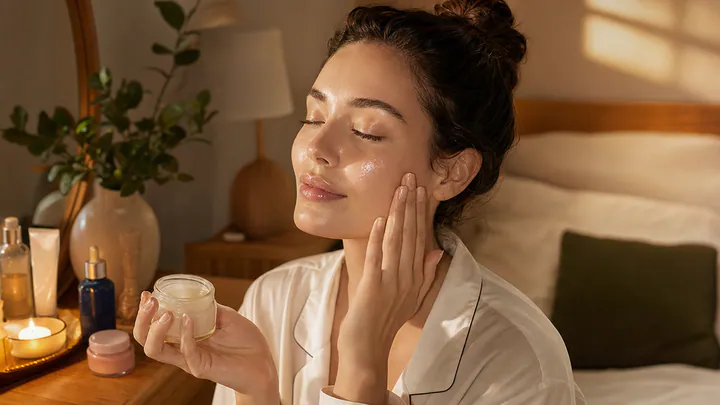
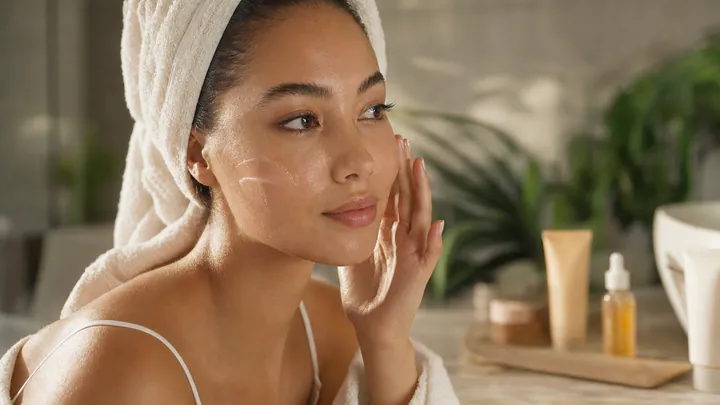
- Apply an unscented moisturizer to the areas you'll spray. Unscented matters: a lemon-scented body lotion will quietly fight your perfume.
- Optional anchor. A pinhead of plain petrolatum on each pulse point creates an occlusive film that slows evaporation. This is the same principle behind overnight slugging for the skin barrier, borrowed for a different purpose.
- Spray the heavier fragrance first, closest to skin, at a distance of roughly six inches.
- Spray the lighter fragrance second, over or beside the first, using fewer sprays.
- Let it dry untouched. No rubbing, no blotting, no dressing for sixty seconds.
Where should I apply it?
Spread the same number of sprays across several warm points rather than concentrating them in one place. Good targets: the base of the throat, behind the ears, inner elbows, the back of the neck, and — the most underrated of all — behind the knees and on the chest under a shirt, where scent rises with body heat throughout the day.
Hair holds fragrance beautifully because the cuticle traps oil molecules, but perfume alcohol is drying. Mist a hairbrush and run it through instead, or use a dedicated hair mist.
Which layering combinations actually work?
The reliable formula is one simple scent plus one complex scent, sharing at least one note family. Simple means something close to a single idea — vanilla, sandalwood, clean musk, a soft cotton accord. Complex means a full composition with a clear arc.
- Vanilla or tonka base + citrus or bergamot scent — softens sharpness and dramatically extends the top.
- Clean musk base + floral scent — makes a heavy floral wearable in an office.
- Sandalwood or cedar base + green or herbal scent — adds warmth and grounding to something that would otherwise disappear.
- Sea-salt or mineral base + woody scent — the airy, skin-like effect that dominated the last few fragrance seasons.
Combinations to avoid: two heavy orientals (they collapse into each other), two loud florals (they cancel out into soap), and anything gourmand layered over a smoky leather unless you enjoy the smell of burnt dessert. And stop at two. Three fragrances almost always turn muddy.
What are the most common — and most expensive — mistakes?
The costliest one is buying a full bottle after smelling a paper blotter. A blotter shows you the top notes and almost nothing else. Fragrance interacts with skin temperature, sebum, and pH, and the drydown — the part you'll actually wear for six hours — can be completely different from the opening. Spray one wrist, walk away, and decide at hour four.
Other frequent errors:
- Rubbing wrists together. The claim that it "crushes molecules" is chemically nonsense, but friction and heat do accelerate top-note evaporation. Let it sit.
- Storing the bottle on a sunny windowsill or in the bathroom. Heat, light, and humidity degrade fragrance faster than anything else. A closed drawer or the original box in a cool room is genuinely better.
- Spraying over a heavily scented body wash, deodorant, and hair product. Four competing perfumes is not layering, it's noise. Make everything under the perfume fragrance-free.
- Over-spraying because you can no longer smell it. Fix the number of sprays in advance and trust it.
- Layering onto compromised skin. Alcohol-based spray on freshly exfoliated, shaved, or irritated skin stings and can sensitize; if your face and neck are already reactive, work on restoring the skin barrier first and keep fragrance below the collarbone.
How do I build a small fragrance wardrobe without overspending?
Three bottles covers almost everyone: one light daytime scent, one warm evening scent, and one neutral "skin" scent that layers under both. That's the same logic behind a capsule wardrobe built from thirty versatile pieces — fewer items, chosen to combine.
Before committing to a full bottle, buy a decant or a 5–10 ml travel spray. Many brands now sell discovery sets, and the per-milliliter premium is worth it against the cost of a 100 ml mistake sitting unused on a shelf. A practical rule: if you haven't reached for a sample three times in two weeks, you won't reach for the bottle either.
Also be realistic about shelf life. Most fragrances stay good for several years unopened and roughly three to five years in use, but citrus-dominant compositions turn first. If a scent smells sour, metallic, or oddly like vinegar at the opening, it has oxidized. Buying two 30 ml bottles over time often beats one 100 ml bottle that outlives its freshness.
A note on fragrance and sensitive skin
Fragrance is one of the more common causes of contact allergy in cosmetics, and layering multiplies exposure. If you have eczema, rosacea, or a history of reacting to scented products, apply a small amount to the inner forearm and wait 24 to 48 hours before wearing a new fragrance broadly, and keep it off the face. Some citrus oils can also increase sun sensitivity, so apply below clothing lines before a day outdoors.
Editorial note: this article is general beauty information, not medical advice. Persistent rashes, burning, or pigmentation changes after using a scented product should be assessed by a board-certified dermatologist or another qualified healthcare professional.
Key takeaways
- Fragrance layering is mostly about anchoring — hydrated, lightly occluded skin holds scent for hours longer than dry skin.
- Concentration sets the ceiling on wear time, but base notes decide whether a fragrance reaches it; a woody EDT can outlast a citrus EDP.
- Layer heavy first, light second, share one note family, and never go past two fragrances.
- Spread sprays across several warm points instead of saturating one, and let everything dry untouched.
- Judge a fragrance at hour four on your own skin, not on a blotter — that single habit prevents most expensive purchases you'll regret.
- Store bottles away from heat, light, and bathroom humidity; buy smaller sizes if you rotate often.
Frequently asked questions
What is fragrance layering?
Fragrance layering is the practice of wearing two or more scented products together — such as an unscented or matching body cream under a perfume, or two complementary perfumes — so the final scent lasts longer and smells more personal. The goal is a longer, more even wear, not simply more smell.
Why does perfume disappear on my skin after an hour?
Most of the time it hasn't disappeared — the bright top notes have evaporated and your nose has adapted to what remains. Dry skin, a scent built mostly from citrus and light florals, and hot weather all shorten the window where a fragrance is obvious to you.
Does moisturizer really make perfume last longer?
Yes, within limits. Fragrance oils cling to hydrated, slightly occluded skin and evaporate faster from dry skin, so a plain unscented lotion or a thin dab of petrolatum under your pulse points typically buys you extra wear time without changing the scent.
Should I spray perfume on my skin or my clothes?
Skin gives a warmer, more natural development; fabric holds scent far longer but doesn't evolve and can stain. Spraying a light mist on a scarf or jacket lining is a good trick for all-day wear, but avoid silk, pale fabrics, and anything you can't clean.
Is it bad to rub your wrists together after spraying?
Rubbing doesn't 'crush' fragrance molecules — that's a myth — but the friction and added heat do speed up evaporation of the delicate top notes and can smear the scent unevenly. Spray and let it dry on its own.
Which perfume concentration lasts the longest?
Extrait de parfum lasts longest, followed by eau de parfum, then eau de toilette, then eau de cologne and body mists. Concentration matters, but the note structure matters just as much — a woody, resinous eau de toilette can outlast a citrus-heavy eau de parfum.
Can you layer two perfumes without them clashing?
Yes, if one is simple and the other is complex, and they share at least one note family. Apply the heavier, base-rich scent first and the lighter one over it, and stop at two — three fragrances usually turn muddy.