High-Yield Savings in 2026: Where to Park Your Cash
High-yield savings accounts still work in 2026 — but only if you pick the right one. Here's how to compare rates, avoid traps, and build a smarter cash strategy.

TL;DR: In 2026, a good high-yield savings account (HYSA) is still one of the most useful tools in personal finance — but the best home for your cash depends on when you'll need it. Use a HYSA for your emergency fund and short-term goals, consider a money market fund for larger balances, and use CDs or Treasury bills when you can lock money away for a fixed period. Always confirm FDIC or equivalent deposit insurance, watch for promotional rates that expire, and revisit your setup at least twice a year.
Cash used to be boring. For a stretch of the 2010s, keeping money in a savings account felt almost pointless — rates were near zero, and the difference between a big bank and a scrappy online bank was measured in pennies. That changed. Going into 2026, savers finally have real options again, and the gap between a lazy checking account and a well-chosen savings vehicle can add up to meaningful money each year on a mid-sized balance.
Our team put together this guide to help you think clearly about where to park your cash — not chase headlines. We'll walk through what a high-yield savings account actually is, how it compares to money market funds and CDs, what to watch out for, and how to build a simple cash setup you won't have to touch for months at a time.
What a high-yield savings account really is
A high-yield savings account is a deposit account, usually offered by an online-first bank or the online arm of a larger institution, that pays a variable interest rate significantly higher than the national average. Your money is held at the bank, protected by deposit insurance up to the applicable limit, and generally accessible within one to three business days via transfer to a linked checking account.
The important word is variable. Unlike a certificate of deposit, a HYSA rate can move at any time. When central banks cut rates, HYSA rates typically drift down within weeks. When rates rise, competitive banks tend to pass some of that along — though rarely all of it, and rarely immediately.
What a HYSA is good for
- Emergency fund. Money you might need on short notice for a job loss, medical bill, or major repair.
- Short-term savings goals. A wedding, a move, a car down payment, or a vacation planned within the next 12 to 24 months.
- Sinking funds. Predictable but irregular expenses like insurance premiums, holidays, or annual subscriptions.
- Cash you want separated from spending. Keeping savings at a different bank than your checking account creates a small but useful friction that reduces impulse withdrawals.
HYSA vs. money market fund vs. CD vs. T-bills
Once you have more than a few thousand dollars sitting in cash, it's worth understanding your options. Each has trade-offs on yield, access, and risk.
High-yield savings account (HYSA)
Bank product. Deposit-insured. Variable rate. Same-day to a few days to move money out. Simple, boring, and good enough for most people's emergency fund.
Money market fund
An investment product held inside a brokerage account, not a bank account. Money market funds invest in very short-term, high-quality debt and typically aim to hold a stable share price, though this is not guaranteed. Yields are often competitive with — sometimes higher than — top HYSAs, but money market funds are not FDIC-insured. They carry very low but non-zero risk. Access is usually next business day.
Certificates of deposit (CDs)
You agree to leave money at the bank for a fixed term — three months, one year, five years — in exchange for a fixed rate that won't drop even if market rates fall. Withdraw early and you'll usually pay a penalty. CDs are FDIC-insured. A common strategy is a CD ladder: split your cash across several CDs with staggered maturity dates so a portion comes due regularly.
Treasury bills
Short-term debt issued by the U.S. government (other countries have equivalents). Backed by the full faith and credit of the issuing government, and interest is often exempt from state and local income tax in the U.S. You can buy them directly through a government portal or inside most brokerage accounts.
How to choose a high-yield savings account in 2026
Rates get all the attention, but they're only one factor. A slightly lower rate at a well-run bank often beats a slightly higher rate at one that will frustrate you every time you log in.
What we look at first
- Deposit insurance. Confirm the bank is FDIC-insured (or NCUA for credit unions, or your country's equivalent). Check directly on the regulator's website, not just the bank's marketing page.
- The actual rate, not the teaser. Some accounts pay a promotional rate for a few months and then drop. Look for the ongoing rate on the standard tier.
- Fees and minimums. The best HYSAs charge no monthly fee and have no minimum balance. If either shows up, keep looking.
- Transfer limits and speed. Some banks cap outbound transfers or hold deposits for several business days. That matters if this is your emergency fund.
- App and web experience. You'll interact with this account for years. A clunky login or a support line that takes 40 minutes to reach is a real cost.
- Rate history. Some banks are consistently near the top of the market. Others advertise aggressively, attract deposits, then quietly let their rate slide. A quick search for the bank's rate over the past two years tells you a lot.
Common mistakes to avoid
- Chasing rates every month. Moving money for a fraction of a percent burns time and creates paperwork at tax time. Pick a solid account and revisit twice a year.
- Keeping too much in cash. Once your emergency fund and short-term goals are covered, additional cash sitting in savings for years usually loses ground to inflation. Long-term money belongs in long-term investments.
- Keeping too little in cash. On the flip side, an underfunded emergency buffer is the single most common reason people end up in high-interest debt.
- Using your primary checking account as savings. Money in checking rarely earns meaningful interest and is far too easy to spend.
- Ignoring taxes. Interest is taxable income in most jurisdictions. If you earned a meaningful amount, expect a tax form and budget for it.
- Assuming all “savings” products are insured. Money market funds, cash management accounts, and fintech “savings” wrappers are not always FDIC-insured. Read the fine print.
A simple cash setup that works for most people
You don't need a complicated system. Here's a template our team often points readers toward as a starting frame — adjust the numbers to your situation.
- Checking account: one month of expenses, for bills and day-to-day spending.
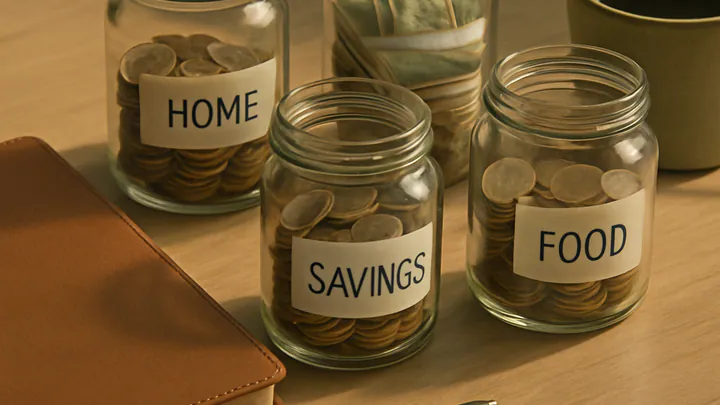
- High-yield savings account: your emergency fund (three to six months of essential expenses) plus any goals within the next 12 months. Nickname sub-accounts if your bank allows it.
- CD ladder, T-bills, or money market fund: cash earmarked for one to three years out — a home down payment, a planned sabbatical, upcoming tuition.
- Investment accounts: everything beyond that, invested according to a long-term plan appropriate for your goals and risk tolerance.
Automate a transfer from checking to savings on payday. Automation removes the willpower tax and is, in our experience, the single biggest predictor of whether a savings plan actually works.
When it makes sense to revisit your setup
Twice a year is plenty for most people. Put a recurring calendar reminder on January 1 and July 1. When it fires, spend 20 minutes checking three things:
- Is your current HYSA rate still within a reasonable range of the top of the market?
- Has your emergency fund kept pace with your current expenses (which tend to creep up)?
- Is there cash piling up beyond your short-term needs that should be invested?
Key takeaways
- A high-yield savings account is still the right home for your emergency fund and near-term goals in 2026.
- Confirm deposit insurance and read the fine print — especially with fintech “savings” products.
- Consider money market funds, CDs, or T-bills for larger balances or cash you can commit for a set period.
- Automate transfers, then leave the account alone. Rate-chasing every month rarely pays off.
- Revisit your cash setup twice a year — not twice a week.
Editorial disclosure: This article is for general educational purposes and does not constitute financial, tax, or investment advice. Rates, product features, and regulations change frequently. Before making decisions about where to hold your money, consult a qualified financial advisor or tax professional who understands your personal situation.
Frequently asked questions
What counts as a high-yield savings account in 2026?
A high-yield savings account (HYSA) is typically an online-first savings account paying meaningfully more than the national average, often several times what a big traditional bank offers. In 2026, the exact rate depends on where central bank rates sit, but the gap between top online banks and legacy brick-and-mortar banks remains wide.
Is my money safe in an online high-yield savings account?
If the bank is FDIC-insured (or NCUA-insured for credit unions), deposits are protected up to the standard insurance limit per depositor, per institution, per ownership category. Always confirm insurance status directly on the bank's website before opening an account.
Should I use a HYSA, a CD, or a money market fund?
Use a HYSA for money you might need at any time, a CD for cash you can lock away for a set term in exchange for a fixed rate, and a money market fund inside a brokerage for larger balances where you want competitive yield with same-day or next-day access.
How often do HYSA rates change?
Rates on high-yield savings accounts are variable and can change at any time, often shortly after the central bank adjusts its benchmark rate. Banks are not obligated to give notice, so it's worth checking your rate every few months.
Do I owe taxes on savings interest?
Yes. Interest earned in a taxable savings account is generally treated as ordinary income and reported to tax authorities. Your bank will typically send a year-end interest statement. Tax treatment varies by country, so confirm with a qualified tax professional.
How much should I keep in a high-yield savings account?
A common guideline is three to six months of essential expenses as an emergency fund, plus any short-term savings goals within the next one to two years. Money you won't need for many years may be better suited to long-term investments.