Sinking Funds in 2026: How to Budget Without the Stress
Sinking funds turn predictable-but-irregular expenses into scheduled monthly line items. Here is how many buckets to run, how to size each contribution, where to park the cash in 2026, and the mistakes that quietly break the system.

TL;DR: Sinking funds are labeled savings buckets you fill gradually so irregular expenses — insurance renewals, holidays, tires, a new phone — never break a month. The 2026 setup: a high-yield savings account with named sub-accounts, three to eight categories, one automatic transfer the day after payday.
Most people do not have a spending problem. They have a timing problem. Rent, groceries, and subscriptions arrive on a rhythm you plan for. Then February brings the car registration, June brings a wedding invitation, and November brings the water heater that finally quits. The money was technically there — just not in the right place at the right moment.
Sinking funds fix the timing. Our team has watched readers use this single structure to stop living paycheck to paycheck without earning more, cutting joy, or installing another app. Here is how to make them work this year.
What exactly is a sinking fund, and how is it different from an emergency fund?
A sinking fund is a labeled pot of money you build up in small, scheduled amounts to cover a specific future expense you already know about. The term comes from corporate finance, where a company sets cash aside over time to retire a bond or replace equipment. The household version works identically: you know the cost is coming, you know roughly when, and you fund it in pieces instead of one painful lump.
The distinction that matters most:
- Emergency fund — for the unknown. Job loss, an urgent medical bill, a car accident, a sudden move.
- Sinking fund — for the known but irregular. Annual car insurance, holiday gifts, a trip in August, a professional license renewal.
Mixing the two is where budgets quietly fall apart. If holiday shopping drains your emergency fund every December, you are structurally unprotected in January — the month layoffs and boiler failures both like to land. Naming the buckets is not decoration; it is the firewall.
Why are sinking funds easier to run in 2026 than they used to be?
Two practical shifts help. High-yield savings accounts remain widely available, so cash parked for eight months earns something instead of nothing. And most online banks and many traditional ones now let you create named sub-accounts — "buckets," "goals," "spaces," "vaults" — inside a single savings account.
That second change removed the historical friction. You no longer need a color-coded spreadsheet reconciling which dollars belong to which goal. You need one account, clear labels, and a recurring transfer. If you want a second pass on the same system from a slightly different angle, our companion piece on budgeting with sinking funds without panic covers the mindset side in more depth.
How do I decide which sinking funds to actually open?
Pull twelve months of bank and card statements and list every expense that did not repeat monthly. Use statements, not memory — memory undercounts irregular spending badly, and it undercounts gifts worst of all.
Then pick the three to eight categories that most reliably derailed you. Common high-value candidates:
- Vehicle — insurance renewal, registration, tires, maintenance, plus one "something broke" cushion.
- Home — property taxes (only if not escrowed), appliance replacement, seasonal maintenance, or a small repairs float if you rent.
- Gifts and celebrations — birthdays, Christmas or Diwali or Eid, weddings, graduations.
- Travel — one planned trip with a known month, plus a smaller fund for unplanned travel like funerals and last-minute weddings.
- Annual subscriptions and dues — software, warehouse clubs, professional memberships, domain renewals.
- Health — dental work, glasses, deductibles, copays.
- Technology replacement — the phone or laptop you know is on borrowed time.
The three-to-eight rule
Fewer than three buckets usually means you are still absorbing irregular bills with your checking balance. More than eight turns into admin, and admin is the first thing people quit. You can always add a category later; you rarely successfully manage twelve at once.
How much should I put into each sinking fund every month?
Estimate the annual total for each category, divide by twelve, then add a five to ten percent buffer because your estimate is optimistic. That number is your baseline monthly contribution.
| Category | Expected cost | Base monthly | With 10% buffer |
|---|---|---|---|
| Car insurance renewal | 1,200 / year | 100 | 110 |
| Holiday gifts | 600 / year | 50 | 55 |
| Summer trip | 1,800 / year | 150 | 165 |
| Phone and laptop replacement | 1,200 every 2 years | 50 | 55 |
| Total | — | 350 | 385 |
If that total looks uncomfortably large, it is telling you something useful: your actual lifestyle costs more than a month-to-month view suggests. Better to learn that in a spreadsheet than in a crisis. The usual fix is not heroic frugality but trimming one or two categories at the source — a longer stay in a single base instead of a multi-city itinerary can cut a travel fund by a third without cutting the trip.
What if I am starting mid-year and the bill is three months away?
Divide the remaining cost by the months until you need it, not by twelve. If insurance renews in five months and you need 1,200, that is 240 per month — not 100. Front-load the nearest deadlines aggressively, let the distant ones sit at a token amount, then settle into steady rates once each fund catches up. Sequencing by due date beats funding everything equally.
Where should I keep sinking fund money in 2026?
In a separate, interest-bearing, liquid account — almost always a high-yield savings account with named sub-accounts. Below is how the realistic options compare.
| Option | Earns interest | Separation from spending | Best for |
|---|---|---|---|
| HYSA with named buckets | Yes | Strong — labels deter raiding | Almost everyone |
| Multiple separate savings accounts | Yes | Strongest | People who raid labeled buckets anyway |
| Money market account | Yes | Strong | Larger balances, occasional check access |
| Checking "reserve" balance | Rarely | Weak — it gets spent | Nobody, honestly |
| Cash envelopes | No | Strong but fragile | Small gift funds only |
Two checks before you open anything: confirm the account carries deposit insurance in your country, and confirm whether your bank still caps the number of withdrawals from a savings account per statement cycle. Some do, and hitting that cap in December is an avoidable annoyance.
How do I set the whole system up in one sitting?
Sinking funds fail when they live in your head and succeed when they live in an account. One evening is enough.
- Open or identify the account. Choose one that supports named goals if your current bank does not.
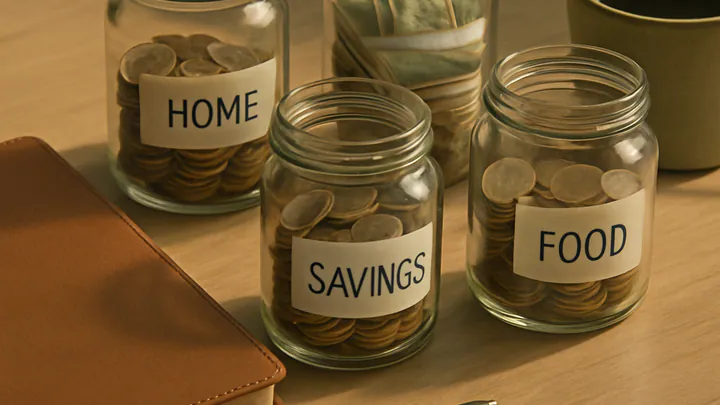
- Create one bucket per category, labeled specifically. "Car — insurance + tires 2026" resists raiding. "Savings 2" does not.
- Automate one transfer for the day after payday. Money you never see in checking is money you never negotiate with.
- Pay from the fund, not around it. When the bill lands, move the money to checking and settle it. If you pay by card for protection, reimburse yourself the same day — not "next month."
- Write the renewal dates somewhere visible. A shared calendar entry two weeks before each due date is enough.
What mistakes make sinking funds fail?
The failures are predictable, and nearly all are fixable in an afternoon.
- Double-funding escrowed bills. The most expensive quiet mistake we see: homeowners build a property tax fund while their mortgage servicer already collects taxes and insurance through escrow. Read the escrow statement first, then redirect that money to appliance replacement instead.
- Underestimating annual totals. Last year's actual spend, not last year's intentions. Tires cost more than you remember; so does everything else.
- Raiding the wrong bucket. The gifts fund is not the "rough week" fund. Specific labels do real psychological work here.
- Running too many buckets. If you dread opening the app, consolidate. Two well-maintained funds beat nine neglected ones.
- Keeping it in checking. It will get spent. Separation is the entire mechanism.
- Funding the fun categories first. Travel before tires feels better and ends worse.
An honest exception: this does not apply if you carry high-interest debt
If you are paying double-digit interest on a credit card, slow-building a travel fund alongside it usually costs you more in interest than the savings account earns. The common approach is a single small "irregular expenses" buffer so new surprises do not add to the balance, with everything else aimed at the debt until it is cleared. For anything involving significant sums, taxes, or debt strategy, talk to a qualified financial advisor or accountant licensed where you live.
How do sinking funds work with irregular or freelance income?
You switch from fixed amounts to percentages of every deposit. Instead of "150 per month to travel," it becomes "5% of every client payment to travel" — which self-adjusts for good months and lean ones.
A workable split for self-employed readers might be a set share to taxes first, then smaller shares to vehicle, equipment replacement, and gifts. Route every transfer the day the money lands, before the balance starts feeling like available cash. The tax bucket is non-negotiable and should never be borrowed from; treat it as money that was never yours.
When should I pause, stop, or reallocate a sinking fund?
Pause contributions once a bucket exceeds its annual target by roughly twenty percent, and redirect that money to high-interest debt, your emergency fund, or long-term investing. Overfunded buckets are not virtue; they are idle capital with a label.
Reassess every category once a year — January works well — and again after any major life change: new job, new home, new baby, new city. A category that made sense when you commuted 40 miles a day makes no sense after you move downtown. Similarly, if your clothing fund keeps overshooting, the fix may be structural rather than financial: a tighter capsule wardrobe reduces the underlying spend rather than budgeting for it more efficiently. The same logic applies to groceries, where a repeatable weeknight dinner formula tends to shrink the takeout line faster than willpower does.
Key takeaways
- Sinking funds solve timing, not income — they convert irregular bills into calm monthly line items.
- Keep them strictly separate from your emergency fund; the two jobs are different and mixing them leaves you unprotected.
- Three to eight specifically named buckets in a high-yield savings account is the sweet spot for most households.
- Size contributions from last year's real statements, add a 5–10% buffer, and sequence by due date if you are starting mid-year.
- Check your mortgage escrow before funding property taxes, and pause any bucket that overshoots its target by about 20%.
- Money needed within roughly two years belongs in cash, not in the market.
Editorial note: this article is general personal-finance education, not financial advice. Tax rules, debt obligations, and account availability differ by country and by household. For decisions involving significant sums, please consult a qualified financial advisor or accountant licensed in your jurisdiction.
Frequently asked questions
What is a sinking fund in simple terms?
A sinking fund is money you set aside gradually for a specific future expense you already know is coming — car insurance, holiday gifts, a replacement laptop. Instead of absorbing one large bill, you contribute small amounts each payday so the cash is waiting when the bill arrives.
How is a sinking fund different from an emergency fund?
An emergency fund covers the unknown — job loss, an urgent medical bill, a sudden move. A sinking fund covers the known but irregular: expenses with a purpose and a rough date, like annual property taxes, a summer trip, or new tires. Keeping them separate protects your emergency cash from December.
How many sinking funds should I have?
Three to eight active funds suits most households. Fewer than three usually misses the categories that actually derail budgets; more than eight becomes administrative work people abandon within a few months. Start with the categories that forced you onto a credit card last year.
Where should I keep sinking fund money?
A high-yield savings account — ideally one that supports named sub-accounts or goals — is the standard choice because the money stays liquid, earns interest, and sits outside your checking balance. Confirm the account is covered by deposit insurance in your country and check whether your bank limits savings withdrawals per month.
Do sinking funds work if my income is irregular?
Yes, but you fund them as a percentage of each deposit rather than a fixed monthly amount. Freelancers and commission earners typically route a set share of every payment into taxes first, then smaller shares into vehicle, tech, and gift funds on the day the money lands.
Should I invest sinking fund money instead of keeping it in cash?
Generally no, if the money is needed within about two years. A market dip in the month your insurance renews turns a solved problem back into a crisis. Cash or cash-equivalent accounts are the usual fit for short-horizon, near-certain expenses; longer, flexible goals are a different conversation with a qualified advisor.
Can a sinking fund replace a credit card for big purchases?
For planned expenses, yes — that is the point. Many people still pay with a card for protection or rewards, then immediately reimburse themselves from the fund the same day. The system only fails when the reimbursement never happens and the balance rolls over.
Do I still need a property tax sinking fund if I have a mortgage escrow?
Usually not. If your lender collects taxes and homeowners insurance through escrow, funding those separately double-counts the same bill. Check your escrow statement first, then redirect that money to a category escrow does not cover, such as appliance replacement.