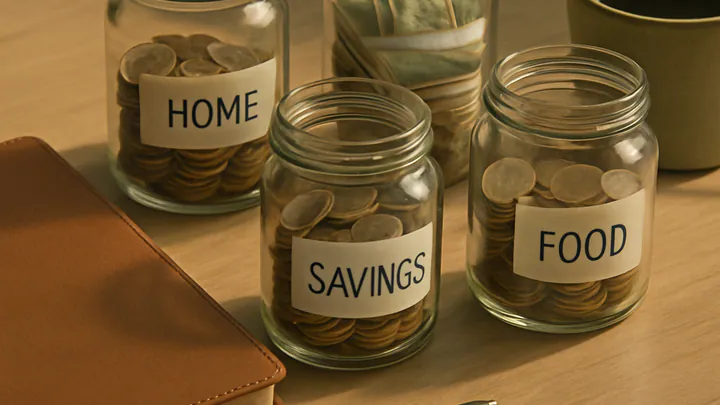
Sinking Funds in 2026: Budget Without the Stress
Sinking funds turn unpredictable expenses into calm, planned ones. Here's how to set them up in 2026, how many you actually need, and where to keep the cash.

TL;DR: A sinking fund is money you save gradually for a specific, expected expense — car registration, holiday gifts, a new phone, annual insurance — so it never hits your budget as a shock. In 2026, the simplest setup is a high-yield savings account with named sub-accounts, funded automatically on payday. Most households do well with three to seven sinking funds covering their biggest irregular costs. Done right, sinking funds are the difference between a budget that feels fragile and one that quietly absorbs real life.
Almost every budget that collapses does so for the same reason: an expense the person knew was coming, but hadn't set money aside for. Car tires. A wedding invitation. The vet. Property taxes. These aren't emergencies — they're normal life on a slightly longer clock than the monthly bill cycle. Sinking funds are how we stop treating them like surprises.
What a sinking fund actually is
The term comes from corporate finance, where companies set aside money regularly to pay off a future debt. In personal finance, we borrow the idea and shrink it: you decide what a future expense will cost, divide it by the number of months until it's due, and save that amount every month into a labeled bucket.
The mechanics are unglamorous. That's the point. Sinking funds are not a hack, a trick, or a secret. They're a scheduling tool for money. But the psychological payoff is real — when the bill arrives, the money is already there, tagged for exactly that purpose, and nothing else in your budget has to shift.
Sinking fund vs emergency fund
These two often get confused, and mixing them up is one of the most common budgeting mistakes we see readers make.
- Emergency fund: covers unexpected events — job loss, urgent medical care, a broken furnace in January. Ideally three to six months of essential expenses.
- Sinking fund: covers expected but irregular expenses — annual subscriptions, holidays, car maintenance, birthdays, insurance premiums.
If you're pulling from your emergency fund every few months, you probably don't have an emergency problem. You have a sinking fund gap.
Which sinking funds are worth opening in 2026
There is no universal list. Your sinking funds should map to your life, not a template. That said, a few categories reliably cause budget stress for most households, and they're the natural first candidates.
The high-value starting set
- Car costs. Registration, tires, repairs, and insurance if you pay annually. Anyone who owns a vehicle will use this fund every year, guaranteed.
- Holidays and gifts. Not just December. Birthdays, weddings, Mother's Day, teacher gifts. Track a full year of gift spending once and you'll see why this belongs in every budget.
- Home maintenance. Renters need a smaller version; owners need a bigger one. Roofs, appliances, HVAC service, and small repairs are not emergencies — they're inevitabilities.
- Travel. Flights, accommodation, and the smaller costs that ambush travelers: pet boarding, airport parking, travel insurance.
- Annual subscriptions and memberships. Streaming renewals, professional dues, software, warehouse club fees. Small individually, painful when they cluster in the same month.
- Medical and dental. Deductibles, glasses, orthodontics, therapy copays. Even with good insurance, out-of-pocket costs are predictable enough to plan.
- Tech replacement. Phones, laptops, and tablets die on a fairly regular schedule. Saving $20–$40 a month makes the next replacement a decision, not a crisis.
We suggest starting with the two or three categories that have caused you the most stress in the last twelve months. Add more only after those are running smoothly.
How to calculate the monthly contribution
The math is deliberately simple:
(Total annual cost) ÷ (Months until you need it) = Monthly contribution
A $900 annual car insurance premium due in nine months means $100 a month. December gifts totaling $600 with eight months to go means $75 a month. For open-ended categories like home repairs, pick a target balance — say, one percent of your home's value per year — and fund toward that.
If the total sinking fund contribution feels impossible when you add every category, that's useful information, not a failure. It means either the timeline needs to stretch, the target needs to shrink, or something in your fixed budget has to change. Better to see that now than at the checkout counter.
Where to keep the money
In 2026, most online banks and several credit unions offer high-yield savings accounts with sub-accounts, buckets, or spaces — different names for the same feature. You keep one account but split the balance across labeled goals. This is usually the cleanest home for sinking funds because:
- The money is physically separate from your checking account, so it's harder to spend by accident.
- It earns interest while it waits.
- You can automate transfers on payday.
- Withdrawals are typically free and settle in one to two business days.
If your bank doesn't support sub-accounts, a single savings account paired with a spreadsheet or budgeting app works just as well. The bucket doesn't need to be a real account — it just needs to be a real number you trust.
We generally don't recommend investing sinking fund money in stocks or bonds. The whole point is that the cash is there when the expense arrives; a bad market month shouldn't be able to derail your car registration.
Automation is what makes it stick
A sinking fund system that depends on you remembering to transfer money every month will fail. Not because you're irresponsible, but because willpower is a bad long-term budgeting strategy for anyone.
Set up a recurring transfer from checking to savings on the day after payday, for the total of all your sinking fund contributions combined. Then, inside your savings account, allocate the deposit across your named buckets. Most banks let you automate this second step too. After setup, the system should run without your attention for months at a time.
A monthly ten-minute review
Once a month, open the account and check three things:
- Did the automated transfer land?
- Are any categories about to be spent from soon, and is the balance right?
- Are any categories chronically overfunded or underfunded, and should the monthly amount change?
Ten minutes. That's the whole ongoing cost of the system.
Common mistakes to avoid
- Too many categories. Fifteen tiny buckets create decision fatigue. Merge related expenses (all car costs, all gifts) unless there's a clear reason to split them.
- Funding future wants before covering known bills. A vacation fund is exciting; an insurance fund is boring. Fund the boring ones first.
- Raiding sinking funds for unrelated spending. If the holiday fund keeps paying for takeout, the system isn't the problem — the checking account is under-resourced and needs a look.
- Ignoring inflation. Revisit your target amounts once a year. A $600 gift budget from three years ago may not stretch as far today.
- Perfectionism. A sinking fund at 70% of its target when the bill hits is still a win. You covered most of it without borrowing.
What good looks like after a year
A year into using sinking funds well, the change is quieter than people expect. There's no dramatic wealth transformation. What happens instead: the bills that used to cause arguments or credit card balances simply get paid. December feels like any other month. The car needs new brakes and it's annoying but not scary. You start noticing that your emergency fund is actually still there, because you stopped using it for non-emergencies.
That quietness is the product. A budget that doesn't ambush you is worth more than almost any single financial optimization.
Key takeaways
- Sinking funds are for expected irregular expenses; emergency funds are for the unexpected. Keep them separate.
- Start with three to five categories tied to your biggest recurring stress points — usually car, gifts, home, travel, and annual subscriptions.
- Divide annual cost by months until due to get your monthly contribution, and automate the transfer on payday.
- A high-yield savings account with labeled sub-accounts is the simplest 2026 setup for most households.
- Review once a month for ten minutes; adjust amounts once a year for inflation.
- Progress beats perfection — a partially funded category is still less painful than an unfunded surprise.
Editorial disclosure: This article is for general information only and is not financial advice. Personal finance decisions depend on your individual circumstances, income, and goals. For guidance tailored to your situation, please consult a qualified financial advisor or accountant.
Frequently asked questions
What is a sinking fund in simple terms?
A sinking fund is money you set aside a little at a time for a specific expense you know is coming, like car insurance, holidays, or a new laptop. Instead of being surprised by the bill, you fund it gradually over months.
How is a sinking fund different from an emergency fund?
An emergency fund covers unexpected events like job loss or a medical bill. A sinking fund covers expected but irregular costs, such as annual subscriptions or a vacation. You should generally have both.
How many sinking funds should I have?
Most people do well with three to seven. Too few and you miss real expenses; too many and the system becomes tedious. Start with your biggest irregular costs and add categories only when they solve a real problem.
Where should I keep sinking fund money in 2026?
A high-yield savings account with sub-accounts or savings 'buckets' is the most common choice. It keeps the cash separate from checking, earns interest, and stays liquid when the bill arrives.
Can I use sinking funds if my income is irregular?
Yes, and they may help even more. Fund your categories on a percentage basis whenever income arrives rather than a fixed monthly amount, and prioritize non-negotiable bills like taxes and insurance first.
What happens if I overfund a category?
Leave a small buffer for the next cycle and sweep the excess into another underfunded sinking fund, your emergency fund, or long-term investing. The goal is intention, not perfection.