How to Make a Long-Distance Relationship Work in 2026
Distance does not end relationships; ambiguity and exhaustion do. Here is a practical system for long-distance couples in 2026: how often to actually talk, how to pick channels, what visits really cost, and the closing-the-distance conversation most couples avoid.
Rewritten with AI and republished automatically. Our editors set the standards and fix reported errors — how we work.

TL;DR: Long-distance relationships fail from ambiguity and exhaustion, not from miles. What works: a call cadence built around your real time-zone overlap, shared activity instead of status updates, honest boundaries set early, a funded visit schedule, and a concrete plan for when the distance ends.
A long-distance relationship is a committed partnership in which the two people live far enough apart that regular in-person contact is the exception rather than the norm. That definition covers a couple two hours apart by train and a couple separated by an ocean and eleven time zones, and the practical advice for each is very different. Everything below is organized around that difference.
This guide is less about cute gestures and more about the systems that actually hold a relationship together across distance. The gestures still matter. They just don't survive on their own.
What actually makes a long-distance relationship work?
Three things: predictable contact, shared experience, and a known endpoint. Everything else — care packages, matching mugs, countdown apps — is decoration on top of those three. When couples struggle, it is almost always because one of the three has quietly collapsed.
Predictable contact means each of you knows roughly when you will next hear the other's voice. Shared experience means you are doing things together, not just reporting on things you did separately. A known endpoint means you both believe the distance is temporary and can describe, in rough terms, how it ends.
Notice what is not on that list: volume. Talking constantly is not a measure of health. Couples who spend four hours a night on video calls out of anxiety often burn out faster than couples who talk for twenty focused minutes and then get on with their lives.
How often should long-distance couples talk, and when?
Start with your genuine overlap window — the hours when you are both awake, off the clock, and not too tired to be good company — and build around it. For most couples that is a short daily touchpoint plus two or three longer conversations a week. Anything imposed on top of that becomes an obligation, and obligation is the enemy of intimacy.
| Gap | Realistic overlap | What usually works | Main risk |
|---|---|---|---|
| 0–3 hours | Most evenings | Daily short call, one long weekend call, frequent texting | Taking contact for granted; visits get postponed because "it's easy" |
| 4–7 hours | One partner's morning, the other's afternoon/evening | Fixed weekday check-in, two long calls at weekends | One person always calls from a rushed commute |
| 8–11 hours | Narrow: early morning or late night for one side | Alternate who takes the inconvenient slot; heavy use of voice notes | Chronic sleep loss for whoever absorbs the bad hour |
| 12+ hours | Effectively none without sacrifice | Asynchronous by default; two scheduled "summit" calls a week | Drift — weeks pass with only text |
The decision rule we'd offer: if the same person is losing sleep for the relationship every single week, the schedule is broken, not the person. Rotate the burden. Chronic short sleep degrades mood and patience, which then gets misread as the relationship going badly.
What's the best way to communicate when you can't be in the same room?
Match the channel to the message. Text is for logistics and small sparks. Voice notes carry tone across time zones with no scheduling cost. Video is for conversations with emotional weight. Letters and packages do something none of the others can: they occupy physical space in your partner's home.
| Channel | Best for | Weakness |
|---|---|---|
| Text | Logistics, small jokes, ambient presence | Tone collapses; sarcasm misreads as coldness |
| Voice note | Big time-zone gaps, stories, tone | Can become a monologue if never answered live |
| Video call | Hard conversations, celebrations, reading a face | Demands scheduling and energy from both sides |
| Shared photo album | Ordinary daily life without commentary | Easy to abandon after the novelty wears off |
| Physical mail | Anniversaries, low points, tangible reassurance | Slow, and postal delays ruin timing |
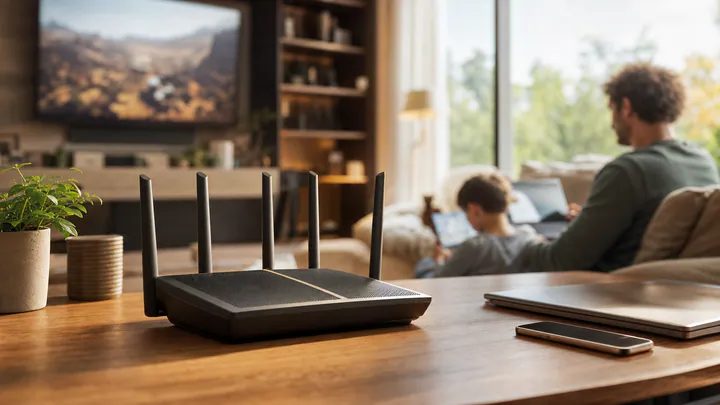
One overlooked fix: bad calls are often a network problem masquerading as a relationship problem. If your video freezes every evening because four devices are competing for a tired router, that friction gets attributed to the conversation. It's worth reading our take on whether a Wi-Fi 7 router upgrade is worth it before concluding that you two "can't talk anymore."
The difference between a call and co-presence
A call is an event. Co-presence is leaving a video window open while you both fold laundry, work, or read. Many couples find that an hour of low-pressure co-presence does more for closeness than an hour of intense catching-up, because it recreates the ordinary companionship that distance actually removes.
How do you spend real time together when you're apart?
Do things, don't just describe things. Watch the same show with a sync extension, play the same game, read a chapter each and argue about it, or cook the same meal at the same time. Shared activity generates the small, inside-joke material that relationships run on; status updates do not.
Cooking in parallel is the highest-return version of this, because it lasts forty minutes, involves both hands, and produces something at the end. Pick recipes that tolerate different kitchens and ingredient availability — forgiving, one-tray sheet-pan cooking works when one of you has a full kitchen and the other has a dorm oven.
Other combinations worth trying: a shared playlist you both add to weekly; a two-person book club with one chapter per week; a running photo thread of the same subject (doors, skies, cats) from two cities. These work because they are asynchronous — they survive a week when calls don't happen.
How much does a long-distance relationship cost, and how do you budget for it?
Price one visit honestly, then work backwards. Take flights, airport transport, accommodation if you're not staying with your partner, and any unpaid time off. If a round trip costs roughly $600 all-in and you want four visits a year, you need about $200 a month set aside — a real, recurring line item, not a surprise.
A costly mistake: treating visits as spontaneous romance and financing them on credit. The debt then becomes a source of tension inside the relationship, which is the exact opposite of what the trip was for. A dedicated savings category solves it. This is general budgeting guidance, not financial advice, and your own circumstances should drive the number.
A fairness note: if one partner earns significantly more or lives in a cheaper city, splitting travel costs 50/50 can quietly build resentment. Some couples split by proportion of income; others alternate who travels. Either is fine. Deciding nothing is not.
What boundaries should you agree on early?
Four, explicitly: exclusivity, what counts as crossing a line online, how much contact is expected during busy weeks, and what happens when one of you needs space. Assumptions that go unspoken in the same city become landmines at a distance, because there is no body language to correct a misunderstanding before it grows.
Be specific rather than principled. "Don't be shady" means nothing. "If you're going out and won't be reachable, send a message first so I'm not waiting" is a workable agreement. Write the important ones down somewhere you both can see; memory is a poor arbitrator months later.
On shared accounts and shared passwords
Sharing a streaming login is ordinary. Sharing your primary email or phone passcode as a proof of loyalty is a security problem and a trust problem at once. If you do share access to anything, use proper account-sharing features rather than handing over credentials — our guide to how passkeys replace passwords explains why credential-swapping ages badly, especially if the relationship ends.
Why does "when does this end?" matter more than anything else?
Because open-ended separation is the single heaviest load a couple can carry. A person can tolerate eight difficult months far more easily than an unspecified number of difficult months, and the difference shows up in patience, jealousy, and willingness to compromise.
The conversation has three parts: roughly when, roughly where, and what each of you must do to get there — a visa, a degree finished, a lease ending, a job transfer requested. The plan will change. Having one anyway changes how the waiting feels.
A useful edge case: if one partner consistently avoids this conversation, that avoidance is information. It doesn't necessarily mean they don't care. It often means they've privately concluded the move is impossible and haven't said so. Better to know.
What are the most common mistakes that break long-distance couples?
- Turning calls into performance reviews. If every conversation is an accounting of who called whom and how often, the call becomes something to dread.
- Saving all conflict for visits. Couples who bank grievances until they're together spend precious in-person days arguing. Handle disagreements as they arise, even over video.
- Letting one person carry all the logistics. Booking, scheduling, and remembering are labor. Split them.
- Over-idealizing visits. A four-day trip cannot be perfect. Plan one ordinary day — groceries, laundry, nothing scheduled — because ordinary time is the thing you're actually missing.
- Shrinking your own life. Declining plans to stay available for a call breeds resentment and gives you nothing to talk about. Independence is fuel, not betrayal.
When is long-distance not the right answer?
Honest answer: when the distance is indefinite and neither person is willing to move, or when the relationship was already unstable before the separation. Distance amplifies whatever is already there. It does not repair anything.
It's also worth naming the involuntary cases — military deployment, immigration backlogs, caring for a parent in another country — where the endpoint genuinely cannot be set. Those couples are not doing it wrong. They need different supports: a firm communication rhythm, local community on both sides, and, where the strain becomes persistent, a qualified therapist or counselor. If distance is contributing to sustained anxiety or low mood, please treat that as a health matter and consult a licensed professional rather than a checklist.
And a small perspective note that long-distance couples tend to enjoy: even the worst time-zone gap is trivial next to the communication delay engineers design around for interplanetary missions, as we covered in the eleven-minute lag between Earth and Mars. Latency is survivable. Silence is the problem.
Key takeaways
- Build your contact schedule around your real overlap window, and rotate who takes the inconvenient hour so one person isn't permanently sleep-deprived.
- Replace status updates with shared activity — cooking, watching, playing, reading — because that's what generates closeness.
- Agree on exclusivity, online boundaries, contact expectations, and space explicitly, in specific language, not principles.
- Budget visits as a monthly savings line, and decide how to split costs fairly rather than defaulting to 50/50.
- Have the closing-the-distance conversation early; an approximate plan beats an open-ended wait every time.
- Distance amplifies what already exists. If the relationship needs repair, it needs that before it needs better apps.
Frequently asked questions
How often should long-distance couples talk?
Most couples do well with one short daily touchpoint and two or three longer calls a week, rather than a mandatory hour-long video call every night. The daily contact keeps you in each other's ordinary life; the longer calls carry the real conversation. Cadence should match your time-zone gap and work schedules, not a rule you read online.
What is the biggest predictor that a long-distance relationship will last?
A shared, concrete plan for ending the distance is the strongest signal. Couples who can name a rough timeframe, a target city, and what each person has to do to get there tend to tolerate the separation far better than couples with an open-ended arrangement, even when the plan later shifts.
How do you handle a big time-zone difference?
Find your genuine overlap window first, then protect it. With gaps of eight hours or more, one partner is usually sacrificing sleep, so alternate who takes the awkward slot instead of letting the same person absorb it every week. Asynchronous voice notes and photos carry the rest of the day.
Are location-sharing and monitoring apps a good idea for long-distance couples?
Mutual, optional location sharing for logistics is fine; monitoring that exists to verify honesty is not. If an app is the only thing keeping anxiety manageable, the underlying issue is trust or unresolved anxiety, and a licensed couples or individual therapist is the more useful investment.
How much should you budget for visits?
Add up flights, local transport, time off work, and accommodation for one trip, multiply by how many visits you want per year, and divide by twelve to get a monthly savings figure. Treat it as a dedicated fund rather than an occasional surprise on a credit card. This is general guidance, not financial advice.
Is a long-distance relationship harder if it started long-distance?
Not necessarily harder, but different. Couples who met in person and then separated draw on shared physical memory and established routines; couples who started at a distance often communicate more deliberately but need an early in-person visit to test compatibility that video calls cannot reveal.
What should you do when you run out of things to say?
Switch from reporting to doing. Watch something together, cook the same recipe, play a game, or simply leave a call open while you both work. Conversational fatigue is usually a sign you are performing an interview rather than sharing ordinary time.