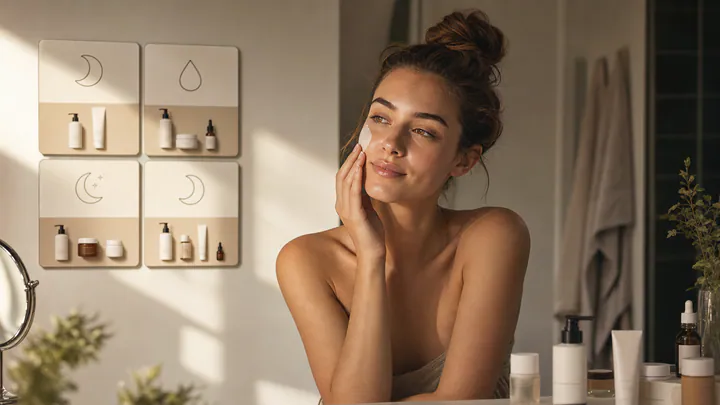
The 10-Step Korean Skincare Routine: A Practical Guide
The 10-step Korean skincare routine is a layering system, not a daily obligation. Here is the correct order, what each step actually does, how to compress it to four steps on busy nights, what it costs, and the layering mistakes that quietly waste your products.
Rewritten with AI and republished automatically. Our editors set the standards and fix reported errors — how we work.

TL;DR: The 10-step Korean skincare routine is a layering framework, not a daily rulebook. Cleanse twice, hydrate in thin layers from watery to rich, treat one concern at a time, seal with moisturizer, and finish every morning with sunscreen. Most people run four to seven of the steps, not ten.
What is the 10-step Korean skincare routine?
The 10-step Korean skincare routine is a sequencing system that applies skincare products from thinnest to thickest texture so each layer can absorb before the next one lands. It came out of Korean beauty culture's emphasis on prevention, hydration, and barrier protection rather than aggressive correction.
The number ten is the part people misread. It describes ten categories — cleansing, exfoliation, toning, essence, treatment, masking, eye care, moisturizing, and sun protection — not ten mandatory daily actions. Two of them (exfoliant and sheet mask) are weekly. One (sunscreen) is morning-only. Once you subtract those, the everyday routine is far shorter than the name suggests.
Why does layering thin products work better than one thick cream?
Because water-based layers deliver humectants — ingredients that pull and hold moisture — while the final occlusive layer stops that water from evaporating. One rich cream does the sealing but carries less water to seal in. Layering separates those two jobs.
It also lets you adjust one variable at a time. If your skin gets oilier in summer, you drop the cream and keep the essence. If it tightens in winter, you add a hydrating layer without changing anything else. That modularity is the actual advantage of the K-beauty approach, and it pairs well with a broader focus on repairing and protecting the skin barrier rather than stripping it.
What are the 10 steps, in order?
Here is the full sequence with realistic frequency. Follow the order top to bottom; the only non-negotiable rule is that sunscreen goes last in the morning.
| # | Step | What it actually does | Frequency |
|---|---|---|---|
| 1 | Oil cleanser | Dissolves sunscreen, makeup, and sebum, which water alone can't lift | PM only |
| 2 | Water-based cleanser | Removes sweat, grime, and leftover oil residue | AM and PM |
| 3 | Exfoliant | Loosens dead surface cells (AHA, BHA, PHA, or a soft physical scrub) | 2–3x weekly, PM |
| 4 | Toner | Rehydrates after cleansing; Korean toners are hydrating, not astringent | AM and PM |
| 5 | Essence | Lightweight watery hydration layer, often with ferments or humectants | AM and PM |
| 6 | Serum or ampoule | Targets one concern: tone, texture, congestion, or fine lines | AM or PM, concern-dependent |
| 7 | Sheet mask | A short, saturated hydration burst; largely a comfort step | 2–3x weekly |
| 8 | Eye cream | Lightweight moisture for thin, mobile skin around the eye | PM, optional AM |
| 9 | Moisturizer | Seals the water-based layers underneath | AM and PM |
| 10 | Sunscreen | SPF 30 or higher; the single highest-impact step for long-term skin | AM, every day |
One clarification worth having: essence, serum, and ampoule are marketing terms, not regulated categories. Brands use them inconsistently. Read the texture and the ingredient list instead of assuming an "ampoule" is automatically stronger than a "serum."
How should the routine change between morning and night?
Morning is for hydration and defense; night is for cleansing and repair. In the morning you skip the oil cleanser, skip exfoliation, and always end with sunscreen. At night you double cleanse and skip SPF.
A workable split looks like this:
- AM: water-based cleanser (or just water if your skin is dry) → toner → essence → antioxidant serum → moisturizer → sunscreen.
- PM: oil cleanser → water-based cleanser → exfoliant or treatment (not both) → toner → essence → eye cream → moisturizer.
If you want structure around when to use actives rather than piling them together, the logic behind skin cycling slots neatly into step 3 and step 6 — exfoliate one night, treat the next, recover for two.
Which steps can I skip when I only have five minutes?
Cleanser, moisturizer, and sunscreen. Those three carry most of the benefit. Everything else is optimization, and skipping it for a week costs you almost nothing.
| Version | Steps included | Time | Best for |
|---|---|---|---|
| Minimal | Cleanser, moisturizer, sunscreen | 2 minutes | Travel, illness, very oily skin, teens |
| Core | Double cleanse, toner, one treatment, moisturizer, sunscreen | 5 minutes | Most adults, most days |
| Full | All 10, with weekly steps rotated in | 10–15 minutes | Dry or dehydrated skin, dedicated evening ritual |
Decision rule: if you can't picture doing a routine on your worst night of the month, it's too long. Build the minimal version first and let it run for two weeks before adding anything.
What ingredients actually matter in K-beauty formulas?
A handful of ingredients do most of the work in Korean formulations, and each maps to a specific job. Matching ingredient to concern matters far more than the number of bottles on your shelf.
- Hyaluronic acid and glycerin — humectants that hold water in the upper layers. Always follow with an occlusive, or in dry air they can leave skin feeling tighter.
- Centella asiatica (cica) — the go-to soothing ingredient for reactive, flushed, or over-exfoliated skin.
- Snail mucin — a popular hydrating and texture-smoothing ingredient; well tolerated by most, but skip it if you're uneasy about animal-derived actives.
- Niacinamide — a versatile ingredient for tone and oil balance; some people find high concentrations flushing.
- Green tea and rice extracts — antioxidant and comfort-focused, common in toners and essences.
- Ceramides and fatty acids — barrier-supporting lipids, ideal in the moisturizer step.
Fragrance and essential oils appear frequently in K-beauty. They're not dangerous for everyone, but they're a leading cause of unexplained irritation. If your skin reacts unpredictably, eliminate fragrance before eliminating anything else.
What does it cost to start in 2026?
Less than the ten-product image implies. The three essentials — a gentle cleanser, a moisturizer, and a sunscreen — can be bought at drugstore prices, and K-beauty's reputation rests largely on well-formulated products at mid-market pricing rather than luxury tiers.
Two cost habits worth adopting: buy sample or travel sizes for anything with an active ingredient, and buy the sunscreen you genuinely enjoy wearing even if it's the most expensive item. A pleasant sunscreen used daily outperforms a cheap one used twice a week. Applied correctly, sunscreen for face and neck is roughly two finger-lengths of product, which means a bottle empties faster than most people expect — budget for that.
What are the most common and costly mistakes?
Four errors account for most disappointing results, and none of them involve buying the wrong brand.
- Stacking an exfoliant with another active on the same night. An AHA plus a retinoid plus a vitamin C serum isn't three times the benefit — it's a compromised barrier, stinging, and flaking that people then misdiagnose as "dry skin" and treat with more product.
- Applying layers too fast. Pilling — those little rolls under your fingers — happens when a layer hasn't absorbed. Wait 30–60 seconds between steps, and cut to one hydrating layer under sunscreen.
- Sheet masking on freshly exfoliated skin. A saturated mask pressed onto skin you just acid-exfoliated dramatically increases absorption of everything in it, including fragrance. Separate them by at least a day.
- Chasing the 10th step while skipping the 10th step. Plenty of people build an elaborate evening routine and then leave the house without sunscreen. Sun protection outperforms every other step in the list for long-term tone and texture.
One more nuance: if your evening routine has become your only wind-down ritual, it's doing double duty. That's fine — but hydration won't compensate for chronic short sleep, and recovering from sleep debt often does more visible good than adding an eleventh product.
Who should not run the full 10 steps?
Anyone with active eczema, rosacea flares, perioral dermatitis, or a prescription acne regimen should run a stripped-down version instead. More layers means more chances for a reaction, and irritated skin cannot tell you which of eight products caused it.
The same applies if you're patch-testing anything new: introduce one product at a time, on a small area, for several days. And if a product causes burning, swelling, or persistent redness, stop and consult a qualified dermatologist — a skincare routine is not a substitute for medical assessment of a skin condition.
Very oily or acne-prone skin also rarely benefits from the full stack. Dropping essence and eye cream and keeping a lightweight gel moisturizer usually produces better results than layering five hydrating products and blaming the moisturizer.
How do I build the habit without quitting in week two?
Add one step per week, in the order of impact: sunscreen first, then moisturizer, then cleanser, then everything else. Habit stacking works better than motivation — anchor the routine to something you already do without fail, like brushing your teeth.
Keep products visible and grouped in AM and PM sets so you're never deciding at 11pm. Treat the sheet mask step as the reward rather than the obligation. And if you want a second low-effort ritual that supports skin indirectly, pairing your morning routine with ten minutes of morning daylight helps anchor both habits to the same moment.
On nights when your skin feels tight and stripped, the simplest rescue is a heavier occlusive on top of your usual moisturizer — the approach behind overnight slugging. Use it as an occasional repair tool, not a nightly default, especially if you're acne-prone.
Key takeaways
- The 10 steps are categories, not a daily checklist — most people realistically use four to seven.
- Order matters more than product count: thinnest to thickest, sunscreen always last in the morning.
- Essence, serum, and ampoule are unregulated labels; judge products by texture and ingredients.
- Never stack exfoliants with other actives on the same night, and separate sheet masks from exfoliation by a day.
- Sunscreen is the highest-return step in the entire routine — protect the budget for it first.
- Simplify, don't expand, if your skin is inflamed or you're on prescription treatment, and seek professional advice for persistent reactions.
Frequently asked questions
Do I really need all 10 steps every day?
No — almost nobody does all 10 steps twice a day. The 10 steps are a menu of categories, not a daily checklist. A realistic pattern is four to five steps in the morning, five to seven at night, with exfoliation and sheet masks used only two or three times a week.
What is the correct order for the Korean skincare routine?
Oil cleanser, water-based cleanser, exfoliant (2–3x weekly), toner, essence, serum or ampoule, sheet mask (2–3x weekly), eye cream, moisturizer, then sunscreen in the morning. The governing rule is thinnest to thickest, with sunscreen always last.
What is the difference between an essence, a serum, and an ampoule?
Very little, legally — none of those three words is a regulated category, so the labels vary by brand. In general practice, essences are the most watery and hydration-focused, serums are thicker with targeted actives, and ampoules are concentrated short-course treatments. Judge by texture and ingredient list, not the name on the bottle.
Can I use a Korean routine if I'm on prescription retinoids or acne treatment?
Usually yes, but simplify it and check with your prescriber or dermatologist first. Prescription retinoids and benzoyl peroxide already stress the barrier, so drop the exfoliating step entirely and keep the routine to a gentle cleanser, one hydrating layer, moisturizer, and sunscreen.
Is Korean skincare expensive to start?
It doesn't have to be. A functional starter set — gentle cleanser, hydrating toner, moisturizer, and sunscreen — can be assembled at drugstore prices, and K-beauty is known for competitive pricing on well-formulated basics. Sample and travel sizes are the cheapest way to test tolerance before committing.
Why does my sunscreen pill or roll up after my routine?
Almost always too many layers underneath, applied too quickly. Give each layer 30–60 seconds to absorb, cut to one hydrating layer under sunscreen, and avoid stacking silicone-heavy products with gums or thick humectant gels, which tend to roll together.
How long before I see results?
Hydration and surface smoothness often improve within one to two weeks, while tone and texture changes take longer because skin renews gradually. If a product stings, burns, or triggers persistent redness, stop using it and consult a qualified dermatologist rather than pushing through.