Metallic Chrome Eyes: A Practical Guide to Frosty Shimmer
Chrome eyeshadow is reflective, not glittery, and that difference changes how you apply it. Here is our practical guide to formulas, shade matching, fallout control, hooded-lid placement and gentle removal.
Rewritten with AI and republished automatically. Our editors set the standards and fix reported errors — how we work.
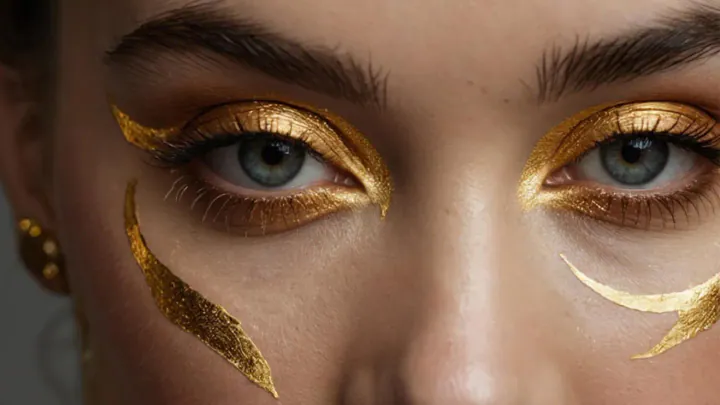
TL;DR: Metallic chrome eyeshadow is finely milled reflective pigment that produces a smooth, mirror-like finish rather than separate sparkles. It needs a tacky base, fingertip or flat-brush application, and oil-based removal. Pick your formula by how much fallout you can tolerate, and your shade by contrast with your eye color.
What exactly are metallic chrome eyes?
Metallic chrome eyeshadow is a category of eye makeup that uses ultra-fine reflective pigment to create a continuous, polished sheen across the lid, the way light behaves on brushed metal or foil. The look is often filed under "frosty eyeshadow shades" or "foil eyes," and it spans everything from icy silver to warm bronze to color-shifting duochromes.
The defining feature is coverage, not sparkle. A good chrome shadow should read as one smooth surface at arm's length, with the shift only becoming obvious when the eye moves. That is why chrome photographs so well and why it looks uneven on any lid that isn't prepped.
How is chrome different from glitter or a regular shimmer?
Chrome uses a very small particle size that lays flat and overlaps; glitter uses larger cut flakes that sit at random angles and read as individual points of light. Shimmer sits between the two, with visible sparkle suspended in a base color.
This matters practically. Glitter requires adhesive and travels across the face all night. Chrome requires grip and mostly stays where you put it, but it exaggerates texture, because a mirror surface shows every crease and dry flake underneath it. If your lids are dry, the fix is skincare, not more product — our guide to skin barrier repair covers the calm, fragrance-light approach that makes lids smoother to work on.
Which chrome formula should you actually buy?
Choose by the trade-off you care about: intensity, fallout, or ease. Loose pigment gives the brightest metal and the worst mess. Liquid chrome gives near-loose-pigment payoff with almost no fallout, but it sets fast and is unforgiving. Pressed pans are the beginner's choice.
| Format | Reflectivity | Fallout risk | Blendability | Best for |
|---|---|---|---|---|
| Pressed metallic pan | Medium to high | Medium | High | Beginners; palettes that pair chrome with mattes |
| Loose pigment / foil powder | Highest | High | Low | Photography, events, experienced hands |
| Liquid chrome shadow | High | Very low | Very low once set | Fast one-shade looks, oily lids, travel |
| Cream or balm chrome | Medium | Low | Medium | Mature or textured lids; sheer daytime wash |
| Duochrome topper | Variable | Medium | High | Reviving a matte look you already like |
Reliable places to start, if you want names: Urban Decay's Moondust line and ColourPop's Super Shock formula for pressed and cream-to-powder textures, Stila's liquid glitter-and-glow shadows for a wet metallic finish, and the Pat McGrath Labs metallics for the high end. Formulas and shade ranges change, so judge the swatch, not the marketing.
How do you apply chrome eyeshadow so it doesn't crease or fall out?
Prime, press, then blend only the edges. The single biggest error is sweeping a fluffy brush across metallic pigment, which breaks up the reflective layer and flings the rest onto your cheeks.
- Prime tacky, not silky. Use a grippy eyeshadow primer or a thin cream base in a matching tone. Silicone-heavy, slippery primers are the reason "my chrome disappeared by lunch."
- Set the crease first. Place a soft matte transition shade before any metal touches the lid. Doing it afterward drags the chrome upward.
- Press with a fingertip or a flat synthetic brush. Body warmth helps cream and pressed metallics melt onto the lid. Pat in two thin layers rather than one thick one.
- Blend the border, not the center. A small fluffy brush with nothing on it, used only at the outer edge, is enough.
- Brighten the inner corner. A lighter silver or champagne chrome in the inner V opens the eye in photos.
- Finish with liner and lashes, or just mascara. Chrome plus a sharp wing is evening; chrome plus mascara is daytime.
Worked example — the five-minute chrome eye. Minute one: tacky primer, both lids. Minute two: matte taupe into the crease with a pencil brush. Minutes three and four: press bronze chrome on the mobile lid with your ring finger, then a second pat in the center only. Minute five: inner corner highlight, curl lashes, one coat of mascara. No lower lash work, no liner. That is a full look that survives a commute.
Which chrome shades suit your eye color and skin tone?
Pick a metal that contrasts with your iris rather than matching it, then adjust the temperature to your skin. Matching your eye color exactly is the most common way chrome ends up looking flat in person.
- Brown eyes: copper, bronze, rose gold, violet. Deep brown eyes can also carry graphic silver.
- Blue eyes: warm champagne, peach-gold, icy pink, gunmetal. Pure blue chrome tends to cancel out the iris.
- Green eyes: bronze, burgundy-brown, warm rose. Emerald works as a liner rather than a full lid.
- Hazel eyes: olive, antique gold, mauve — these pull the green flecks forward.
On skin tone: cool undertones generally look sharper in silver, pewter and icy pink; warm undertones tend to look richer in gold, copper and bronze. Deep skin tones carry saturated duochromes exceptionally well because the pigment has more contrast to play against. None of this is a rule — swatch in daylight and trust your eyes.
What are the most common and costly chrome mistakes?
Three mistakes account for most bad chrome looks, and none of them are about the product being cheap.
- Applying chrome over a freshly moisturized or occlusive lid. If you have just done a rich nighttime routine or an occlusive layer like overnight slugging, the surface is too slick for pigment to grip. Leave lids clean and matte on makeup days.
- Using a retinoid near the lash line the night before. Actives can leave the lid flaky, and chrome magnifies flaking more than any other finish. If you follow a skin cycling schedule, plan your chrome days for recovery nights, not retinoid nights.
- Wet-setting loose pigment over a silicone primer. Water and silicone don't bond, and the whole layer lifts off in one sheet mid-evening. Use a water-based grip primer or a dedicated mixing medium instead.
Does chrome work on hooded, mature or textured lids?
Yes, with a placement change: keep the reflective pigment on the part of the lid that stays visible when your eyes are open, and use a cream or liquid rather than a dry powder. Reflective finishes push forward visually, so a full-lid chrome on a hooded eye can make the lid look heavier.
Our decision rule: open your eyes and look straight ahead in a mirror. Whatever strip of lid you can still see is your chrome zone. Everything above it gets a soft matte. On mature lids, a sheer cream chrome on the inner two-thirds plus a defined lash line usually reads more polished than a full metallic lid.
Honest caveat: if your lids are significantly crepey and you dislike how any shimmer sits on them, satin finishes will serve you better than chrome. No primer fully solves texture.
Is chrome eyeshadow safe for sensitive eyes and contact lens wearers?
Products sold for eye-area use are formulated with colorants permitted for that area, which is why craft glitter, nail pigments and some body-only products must never go near the eye — coarse or metal-based particles can scratch the cornea. Check that a loose pigment says "eye safe" on the label before it goes anywhere near your lash line.
If you wear contacts, insert them before makeup and remove them before cleansing, and consider skipping loose powders entirely in favor of liquid chrome, which sheds nothing. Persistent redness, itching, watering or blurred vision after wearing any eye product is a reason to stop using it and check in with a qualified eye care professional rather than to push through.
How do you remove metallic eyeshadow without wrecking your lashes?
Soak, don't scrub. Press an oil-based cleanser or a bi-phase remover onto closed lids for 20 to 30 seconds so the binders dissolve, then wipe in one direction with gentle pressure, and follow with your regular face wash.
Two exceptions worth knowing. If you have eyelash extensions, oil-based removers can weaken the adhesive — use an oil-free micellar or foaming lash cleanser instead. And if you get repeated irritation at the lash line, the culprit is more often aggressive rubbing during removal than the shadow itself. Finish with a bland moisturizer on the lid area; the same barrier-first thinking that applies to scalp care applies here, in that the skin does better when you stop stripping it.
Key takeaways
- Chrome is a reflective finish, not a sparkle finish — it rewards smooth lids and punishes texture and slip.
- Tacky primer plus pressed, patted application is the difference between all-day wear and a creased mess by noon.
- Choose formats by trade-off: pressed for ease, liquid for zero fallout, loose pigment for maximum impact and maximum mess.
- Contrast your shade against your eye color, and keep placement inside the visible lid strip on hooded eyes.
- Only use pigments labeled safe for the eye area, and remove by soaking rather than scrubbing.
- Persistent eye irritation is a signal to stop and consult a qualified professional, not to switch brands.
Frequently asked questions
What is the difference between chrome and glitter eyeshadow?
Chrome eyeshadow uses finely milled reflective pigment that lays flat and produces a smooth mirror-like sheen, while glitter uses larger cut particles that catch light as separate sparkles. Chrome reads as a polished metal surface; glitter reads as scattered points of light, and it migrates far more.
Do I really need a primer for metallic chrome eyeshadow?
Yes, in nearly every case. Metallic pigment is heavier than matte pigment and needs a tacky base to grip, otherwise it slides into the crease within a few hours. A thin layer of tacky eyeshadow primer or a cream shadow in a similar tone works; skip heavy silicone-based, silky primers, which give shimmer nothing to hold onto.
Which chrome shade works with brown eyes?
Copper, bronze, rose gold and violet chrome all flatter brown eyes because they sit opposite or adjacent to warm brown on the color wheel and add contrast rather than blending in. Deep brown eyes can also carry a true silver, which reads graphic rather than washed out.
How do I stop chrome eyeshadow from falling under my eyes?
Do your eye makeup before your base, or lay a loose translucent powder or a folded tissue under the lower lash line to catch fallout. Press the pigment on with a fingertip or flat brush instead of sweeping it, and tap excess off the brush first.
Is chrome eyeshadow safe around the eyes?
Cosmetic products labeled for eye-area use are formulated with colorants approved for that purpose, and craft glitter or body-only pigments should never go near the eye because coarse particles can scratch the cornea. If you wear contact lenses, insert them before makeup, and see a qualified eye care professional if you get persistent redness, itching or blurred vision.
Can I wear metallic chrome eyes to a conservative office?
Yes, if you keep it to one sheer wash of a skin-adjacent tone such as champagne, soft gold or taupe on the mobile lid only. The rule we use is that the shade should be within two steps of your skin tone and there should be no second color, no liner wing and no glitter topper.
Does chrome eyeshadow work on mature or textured lids?
It can, but placement matters more than product. Keep reflective pigment on the smoothest part of the lid, use a cream or liquid chrome rather than a dry pressed powder, and hydrate the lid area well in advance so the formula doesn't cling to dry patches.