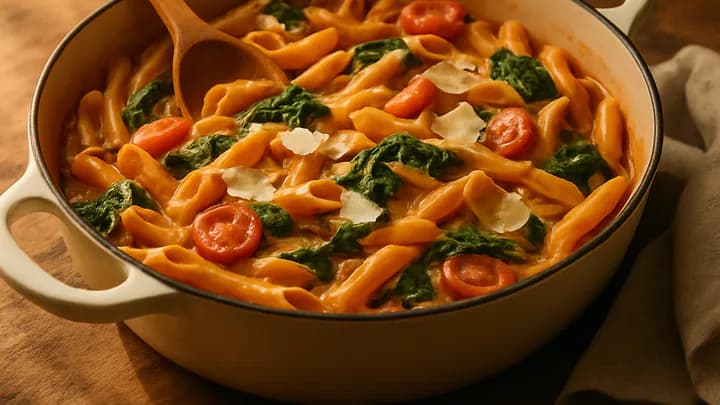
One-Pan Pasta in 2026: Fast, Silky, Foolproof
One-pan pasta is the weeknight technique worth mastering in 2026. We break down the method, ratios, and swaps that deliver silky, restaurant-style results in under 25 minutes.

TL;DR: One-pan pasta cooks dry noodles directly in a measured amount of seasoned liquid, so the released starch thickens everything into a silky sauce — no draining, no separate pot, no cream needed. Master a simple 3-cups-of-liquid-per-8-ounces-of-pasta ratio, keep the pan at an active simmer, and stir often. In under 25 minutes you get a glossy, restaurant-style bowl with one pan to wash. Below, we walk through the method, ratios, common mistakes, and the flavor variations we return to on busy weeknights.
We've been cooking pasta this way for years, and in 2026 it feels more relevant than ever. Grocery bills are tighter, weeknights are shorter, and home cooks want dinners that feel intentional without a sink full of dishes. One-pan pasta hits all three notes.
Why one-pan pasta works
Traditional pasta cooking treats water as a disposable medium. You boil, drain, and toss the noodles with a sauce made separately. It's flexible but wasteful — most of the flavor and starch goes down the drain.
One-pan pasta flips that logic. Because the noodles cook in just enough liquid to hydrate them, everything the pasta releases stays in the pan. Starch molecules that would normally leave with the drained water instead thicken the liquid into a naturally glossy sauce. Aromatics like garlic, shallots, and herbs infuse the pasta from the inside out.
The result is a bowl that tastes deeply seasoned, not sauced-on-top. And you use one pan.
The science, in one paragraph
Dried pasta is roughly two-thirds starch. As it cooks, some of that starch dissolves into the surrounding liquid — this is why classic pasta water is cloudy and prized in Italian cooking. When you cook the pasta in a limited amount of liquid, that starch concentrates, giving you a sauce with body without any thickener, cream, or roux.
The base method we use
Once you understand the framework, you can improvise endlessly. Here is the version we teach friends who are trying it for the first time.
What you need
- A wide skillet or shallow pan (12 inches works well) with a lid handy
- 8 ounces of dried pasta — linguine, spaghetti, penne, or rigatoni
- About 3 cups of liquid — broth, water, or a mix; add a splash of wine if you like
- Aromatics: sliced garlic, shallot or onion, a pinch of red pepper flakes
- Fat: olive oil or butter
- Salt, plus a finishing element (cheese, herbs, lemon, or a splash of cream)
The steps
- Bloom the aromatics. Warm the fat in the pan and cook the garlic and shallot until fragrant and just golden, about 2 minutes.
- Add the liquid and season. Pour in the broth or water, add salt (start with about a teaspoon and adjust), and bring to a simmer.
- Add the pasta. Lay long shapes flat and press them down as they soften; scatter short shapes evenly.
- Simmer actively, stirring often. Keep the liquid at a lively simmer, not a lazy bubble. Stir every 1–2 minutes so the noodles don't stick and the starch releases evenly.
- Finish. When the pasta is al dente and the liquid has reduced to a glossy sauce (usually 9–12 minutes for most shapes), kill the heat. Stir in grated cheese, herbs, a squeeze of lemon, or a knob of butter to emulsify.
Total time from pan-on-burner to bowl is typically 20 to 25 minutes.
Ratios that actually work
The single most common one-pan pasta failure is guessing on liquid. Here are the starting points we rely on, then adjust to taste and pan size.
- Long thin shapes (spaghetti, linguine, angel hair): about 3 cups of liquid per 8 ounces of pasta
- Medium short shapes (penne, rotini, fusilli): about 2.75 cups per 8 ounces
- Larger short shapes (rigatoni, paccheri, large shells): about 3.25 cups per 8 ounces
- Whole-grain pasta: add a quarter cup extra liquid — it drinks more
Your pan matters, too. A wider pan evaporates faster, so you may need a splash more liquid. A deeper pan holds steam and moisture, so you might finish with a bit extra sauce to stir off.
Five variations we cook on repeat
Garlicky tomato and basil
Use a can of crushed tomatoes plus water to hit your total liquid target. Cook spaghetti in the mixture with garlic, olive oil, and a pinch of sugar. Finish with torn basil and parmesan. This is the version to make when the pantry looks empty.
Lemon-parmesan (the "pasta al limone" shortcut)
Cook linguine in broth with garlic and a little butter. Off the heat, stir in grated parmesan, lemon zest, and a big squeeze of lemon juice. Bright, creamy-looking, no actual cream.
Mushroom and thyme
Sear sliced mushrooms first in butter until deeply browned, then add shallots, thyme, and a splash of white wine. Add broth and short pasta and cook through. Finish with a handful of parmesan and cracked black pepper.
Sausage, greens, and white beans
Brown crumbled Italian sausage, add garlic and red pepper flakes, then broth and pasta. In the last 3 minutes, stir in baby spinach or chopped kale and a drained can of white beans. Rustic and filling in one pan.
Coconut-lime noodles
Not traditional Italian, but the technique translates. Use half coconut milk and half broth as your liquid, add ginger, garlic, and a spoonful of curry paste, and cook spaghetti or rice noodles right in the pan. Finish with lime and cilantro.
Common mistakes and easy fixes
The pasta is gummy
Almost always caused by a weak simmer or infrequent stirring. Turn the heat up so the surface is actively moving, and stir every couple of minutes so the noodles don't nest together.
The sauce is too thin
Keep cooking uncovered for another minute or two. The starch is there — it just needs more evaporation to concentrate. A pat of butter or a handful of grated cheese swirled in at the end also tightens the sauce quickly.
The pasta is dry or crunchy in spots
You ran out of liquid before the pasta finished. Add a splash of hot water or broth (about a quarter cup at a time) and keep cooking. Next time, start with slightly more liquid, or use a smaller pan.
It's under-seasoned
Because you don't drain seasoned pasta water away, the salt you add stays with the dish. Start with about a teaspoon of salt per 3 cups of liquid, taste near the end, and adjust. Salty broths need less added salt.
Why we think this belongs in every weeknight rotation
One-pan pasta is not a novelty or a trend that will fade. It's a legitimate cooking technique with real advantages: fewer dishes, deeper flavor, better texture from starch retention, and enough flexibility to absorb whatever you have in the fridge. Once the ratios click, you stop needing a recipe at all.
That's the sweet spot for home cooking in 2026 — techniques we can improvise around, not recipes we're chained to.
Key takeaways
- Use roughly 3 cups of liquid per 8 ounces of dried pasta as your starting ratio, adjusting for shape and pan size.
- Keep the pan at an active simmer and stir often so starch releases evenly into a silky sauce.
- Season the liquid — it becomes the sauce, so it needs to taste good before the pasta goes in.
- Finish off the heat with cheese, butter, herbs, or acid to emulsify and brighten.
- If the sauce is thin, cook a minute longer; if it's dry, add liquid in small splashes.
- Master the base method once and you can improvise endless variations without a recipe.
Frequently asked questions
What is one-pan pasta?
One-pan pasta is a method where dry pasta cooks directly in a measured amount of liquid alongside aromatics and other ingredients. The starch released by the pasta thickens the liquid into a glossy sauce, so you never drain and never lose flavor.
How much liquid do I need for one-pan pasta?
A reliable starting ratio is about 3 cups of liquid per 8 ounces of dry pasta, adjusted for the shape. Short shapes like penne need slightly less, while long shapes like linguine may need a splash more if they aren't fully submerged.
Does one-pan pasta actually taste as good as traditional pasta?
When done right, many home cooks find it tastes better because the pasta absorbs the flavors of the broth, garlic, and aromatics as it cooks. The sauce is naturally silky from the released starch, without needing cream.
Can I use any pasta shape?
Most dried shapes work, but medium sizes like spaghetti, linguine, fettuccine, penne, and rigatoni are the most forgiving. Very small shapes like orzo cook too quickly, and very thick shapes like paccheri need extra liquid and time.
Why did my one-pan pasta turn out gummy?
Gumminess usually comes from too little liquid, too low a simmer, or not stirring often enough. Keep the pan at an active simmer and stir every couple of minutes so the pasta releases starch evenly instead of clumping.
Is one-pan pasta healthier than regular pasta?
It isn't inherently healthier, but it can be. You control the sodium, skip heavy cream by relying on starch, and can pack in vegetables that cook in the same pan. Portion size and toppings still matter most.
Can I make one-pan pasta ahead of time?
It's best served fresh because the pasta continues to absorb liquid as it sits. If you need to reheat, add a splash of broth or water and warm it gently over low heat, stirring to loosen the sauce.