Sheet Pan Dinners 2026: Easy Weeknight Wins
Sheet pan dinners are the weeknight hero of 2026. Our editors share the layering rules, timing tricks, and flavor combos that make one-pan cooking actually work.

TL;DR: Sheet pan dinners are the fastest route to a real, home-cooked weeknight meal in 2026 — one pan, one oven, one round of dishes. The trick isn't a special recipe; it's a repeatable method. Preheat to 425°F, cut ingredients to similar sizes, stage them by cook time, and give everything room to breathe on the pan. Master those four moves and you can improvise dinner from almost anything in your fridge.
Our test kitchen has been leaning hard on sheet pan cooking this year, and not because it's trendy. It's because on a Tuesday at 6:47 p.m., we want dinner without three simmering pots and a sink full of pans. If you've tried sheet pan recipes and ended up with soggy vegetables or dry chicken, the fix is almost always technique, not the recipe. Here's the full playbook.
Why sheet pan dinners work so well in 2026
Grocery prices, tighter schedules, and smaller kitchens have all nudged home cooks toward simpler, higher-leverage meals. A sheet pan dinner hits a rare trifecta: minimal active time, minimal cleanup, and genuinely good flavor thanks to high, dry oven heat that caramelizes edges and concentrates natural sugars.
There's also a quieter reason we keep coming back. Cooking everything on one surface forces the ingredients to interact. Chicken fat drips onto potatoes. Roasted lemon perfumes broccoli. Sausage renders into onions. That layered flavor is hard to replicate when each component lives in its own pan.
What you actually need
- A heavy, rimmed half-sheet pan (roughly 13x18 inches). Thin, warped pans hot-spot and burn. Aluminum or dark steel both work well.
- Parchment paper for easy cleanup, or a light coat of neutral oil directly on the pan for deeper browning.
- A sharp chef's knife so you can cut ingredients uniformly.
- An instant-read thermometer — the single best upgrade for cooking protein confidently.
The four rules that make any sheet pan dinner work
1. Preheat, seriously preheat
Most sheet pan failures start with a lukewarm oven. Give it a full 15 to 20 minutes at 425°F before anything goes in. For extra-crispy results, slide the empty pan in during the preheat so ingredients sizzle the moment they hit the surface.
2. Cut for uniformity
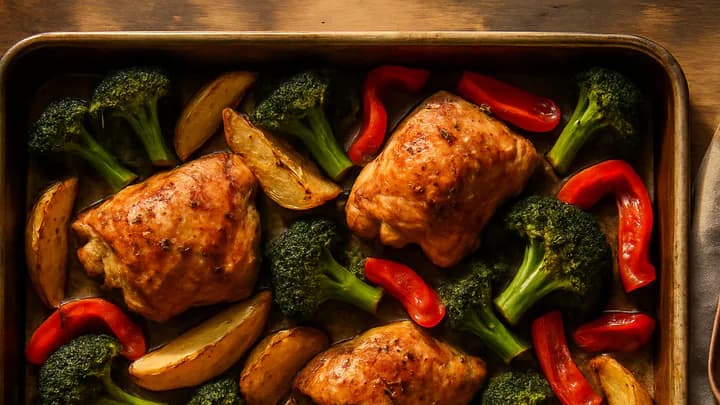
If your potatoes are the size of walnuts and your broccoli florets are the size of ping-pong balls, they will not finish at the same time. Aim for pieces of similar mass — small potatoes halved, carrots on a bias, broccoli in medium florets. Uniformity beats fancy knife cuts every time.
3. Stage by cook time
This is the single biggest upgrade to your sheet pan game. Dense root vegetables need 25–35 minutes. Chicken thighs need about 25–30. Broccoli, bell peppers, and zucchini want 15–20. Shrimp and asparagus are done in 8–12. Start the slowpokes alone, then add faster items partway through.
4. Give it room to breathe
Crowding is the enemy. When food is packed tight, it releases steam that has nowhere to go, and you end up with a pale, wet mess. Ingredients should be in a single layer with visible space between pieces. If it looks crowded, use two pans.
Five reliable flavor combinations
Once you have the method down, you can rotate flavor profiles endlessly. Here are combinations our team makes on repeat.
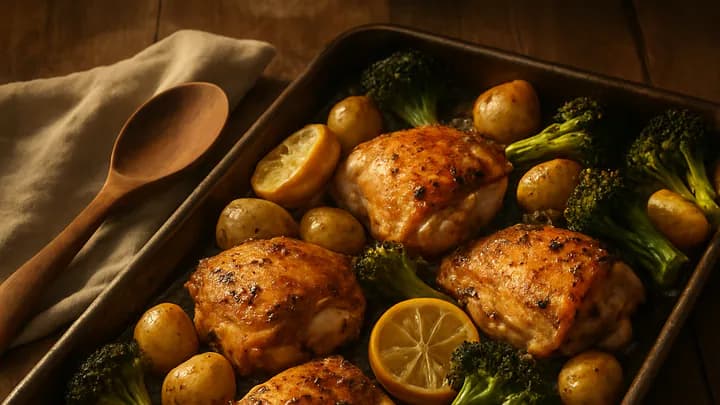
Lemon-herb chicken and potatoes
Bone-in chicken thighs, halved baby potatoes, olive oil, garlic, dried oregano, lemon slices, salt, and pepper. Start potatoes 10 minutes ahead, then add chicken skin-side up. Finish with fresh parsley.
Sausage, peppers, and onions
Italian sausage links, sliced bell peppers, red onion wedges, olive oil, fennel seed, and a splash of balsamic in the last five minutes. Serve with crusty bread or over polenta.
Miso-glazed salmon and broccoli
Whisk white miso with a little honey, rice vinegar, and sesame oil. Roast broccoli first for 10 minutes, then add glazed salmon fillets for 10–12 more. Top with scallions and toasted sesame seeds.
Sheet pan shrimp fajitas
Sliced peppers and onions tossed with chili powder, cumin, and lime. Roast 15 minutes, then add shrimp for the last 6–8. Serve with warm tortillas, avocado, and a squeeze of lime.
Crispy tofu with sweet potato and kale
Pressed, cubed tofu tossed in cornstarch and neutral oil. Roast with cubed sweet potato at 425°F for 25 minutes, then toss in torn kale for the last 6–8 minutes. Drizzle with tahini and lemon.
Common problems and how we fix them
Vegetables are soggy
Usually the pan was crowded, the oven wasn't hot enough, or the vegetables were still wet from washing. Pat everything dry, spread it out, and confirm your oven temperature with an inexpensive oven thermometer — home ovens often run cooler than the dial suggests.
Chicken is dry, but the outside looks fine
Switch to bone-in, skin-on thighs. They're far more forgiving than boneless breasts. Pull them at an internal temperature of 165°F for white meat or 175°F for dark meat, and let them rest five minutes before serving.
Everything finishes at different times
Rework the staging. Set a timer for the longest-cook item and add faster items in reverse order. Keep a small mental chart: 30 minutes for potatoes, 20 for chicken thighs, 15 for peppers, 10 for broccoli, 8 for shrimp.
Cleanup is still a chore
Line the pan with parchment. For sticky glazes and marinades, use parchment plus a light spritz of oil. Skip foil for anything acidic like lemon or tomato — it can pit and leave a metallic taste.
How to build your own sheet pan dinner from scratch
Once the method clicks, you don't need recipes. Use this simple framework:
- Pick a protein (chicken thighs, sausage, salmon, shrimp, tofu, pork tenderloin).
- Pick a sturdy vegetable for the base (potatoes, sweet potatoes, carrots, cauliflower, Brussels sprouts).
- Pick a quick-cooking vegetable for color and freshness (broccoli, bell peppers, zucchini, green beans, asparagus).
- Pick a flavor lane (Mediterranean, smoky Tex-Mex, miso-ginger, curry-spiced, lemon-herb).
- Finish bright — fresh herbs, citrus, a drizzle of yogurt, a spoonful of pesto, or flaky salt.
That last step is the one most home cooks skip, and it's what separates a fine sheet pan dinner from one you actually crave. Roasting concentrates flavor but also flattens it. A squeeze of lemon or a handful of parsley wakes everything back up.
Making it work for meal prep
Sheet pan dinners are meal-prep friendly, but a few adjustments help. Slightly undercook vegetables you plan to reheat so they don't turn mushy. Store protein and vegetables in separate containers when possible. And save the fresh finishes — herbs, citrus, sauces — for the moment you serve, not the moment you cook.
For families with mixed preferences, we like the "zones" trick: divide the pan mentally into thirds and season each section differently. Same technique, three little flavor worlds, one pan to wash.
Key takeaways
- Preheat fully to 425°F and don't crowd the pan — those two moves fix most sheet pan problems.
- Cut ingredients to similar sizes and stage them by cook time for even results.
- Bone-in chicken thighs, sausages, salmon, shrimp, and tofu are the most forgiving proteins.
- Finish with something bright — herbs, citrus, or a sauce — to lift the roasted flavors.
- Use a simple protein + sturdy veg + quick veg + flavor lane framework to invent your own combos.
Frequently asked questions
What temperature is best for sheet pan dinners?
For most sheet pan dinners with protein and vegetables, 425°F (220°C) is the sweet spot. It's hot enough to caramelize edges and roast vegetables quickly, but gentle enough that chicken thighs or salmon cook through without drying out.
Do I need to line my sheet pan with parchment or foil?
Parchment paper makes cleanup easier and prevents sticking, but it can slightly reduce browning. For maximum caramelization, roast directly on a well-oiled dark metal pan. Foil works too, but food browns less on shiny surfaces.
Why do my sheet pan vegetables steam instead of roast?
Steaming usually happens because the pan is overcrowded or the oven isn't hot enough. Spread ingredients in a single layer with space between pieces, and preheat the oven fully before the pan goes in.
Can I make sheet pan dinners ahead of time?
Yes. You can chop vegetables, marinate proteins, and mix seasoning blends up to 24 hours in advance. Store components separately in the fridge and combine on the pan just before roasting for the best texture.
What proteins work best on a sheet pan?
Bone-in chicken thighs, sausages, shrimp, salmon, tofu, and pork tenderloin all perform well. They cook in similar time frames to most sturdy vegetables and stay juicy without constant attention.
How do I keep everything from cooking at different rates?
Group ingredients by cook time. Add dense vegetables like potatoes and carrots first, then quicker items like broccoli, bell peppers, or shrimp partway through. Cut everything to a roughly uniform size for even roasting.