Sheet Pan Dinners: The Timing Rules That Make Them Work
A sheet pan dinner lives or dies on timing, not on the recipe. Here is the formula — one protein, two or three vegetables, a 425°F oven — plus a staggered timing chart, five pairings worth repeating, and the mistakes that make trays soggy.
Drafted with AI; reviewed by Najam Kausar on . How we work.
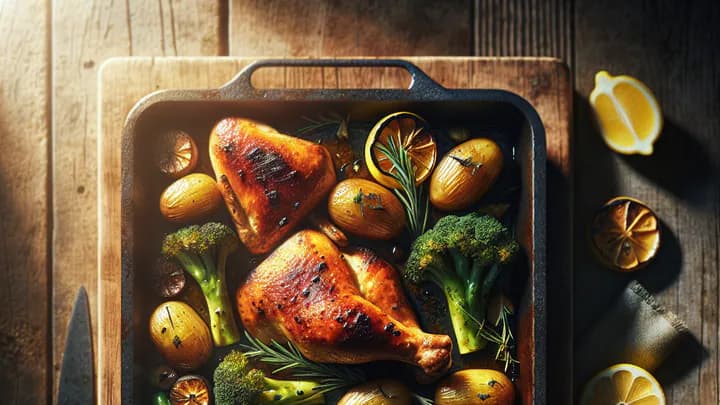
TL;DR: A sheet pan dinner is one protein, two or three vegetables, plenty of fat and salt, and a 425°F oven. What separates a crisp tray from a soggy one is not the recipe — it is spacing and staggered timing. Add ingredients in waves by cook time, never crowd the pan, and finish with acid.
A sheet pan dinner is a complete meal roasted on a single rimmed baking sheet, where the protein and the vegetables cook in the same dry heat and finish at the same moment. That definition is doing a lot of work: same dry heat is why the food tastes good, and finish at the same moment is the part most home cooks never quite nail.
Sheet pan failures always trace back to the same three causes — too much food on the pan, everything added at once, and not enough salt. Fix those and you can improvise forever without opening a recipe.
Why does a sheet pan dinner taste better than the same ingredients sautéed?
Because dry, radiant oven heat browns food instead of simmering it. A crowded skillet or a covered pot traps moisture, and food will not brown meaningfully until its surface climbs past the boiling point of water. A hot oven and a spacious pan let that moisture escape, so the surfaces of the chicken, the potatoes and the sprouts all hit the temperature range where Maillard browning and sugar caramelization happen.
The structural benefits are real too, and they are why this format keeps earning a place in the weeknight rotation:
- One pan, one cutting board, one mixing bowl. The cleanup load is roughly a third of a stovetop dinner.
- Vegetables become the headliner. When produce roasts alongside the protein, it gets the same seasoning and the same attention — not a microwaved afterthought.
- Built-in portioning. What fits in a single layer is what you serve.
- Forgiving margins. Three extra minutes rarely ruins a tray of thighs and potatoes the way it ruins a pan sauce.
If you like the one-vessel philosophy, it scales sideways nicely — the same logic drives our guide to one-pan pasta that turns out silky and foolproof.
What is the universal sheet pan formula?
Seven steps, no recipe required. Once this is in your head, dinner becomes a question of what is in the refrigerator rather than what is in a cookbook.
- One protein, roughly 1 to 1.5 pounds for four people.
- Two or three vegetables with compatible roasting times, or a plan to stagger them.
- Cut to matched sizes. Uniform pieces cook uniformly; that is the whole rule.
- 2 to 3 tablespoons of fat — olive oil, avocado oil or melted ghee. Under-oiling is more common than over-oiling.
- Season aggressively: salt, pepper, plus one spice blend, paste or marinade that gives the tray an identity.
- Roast at 425°F, adding ingredients in waves by cook time.
- Finish with brightness — lemon, vinegar, fresh herbs or a drizzle of sauce, added off the heat.
The one rule that matters most: space
Our decision rule is simple. If you cannot see bare pan between most of the pieces, you have too much food on that sheet. Move half of it to a second pan. Two lightly loaded pans on two racks, rotated once at the halfway mark, will always beat one heroic overloaded tray.
How do I stagger ingredients so nothing overcooks?
Group everything into four timing bands, start the slowest band first, and pull the pan out to add the next group as the clock allows. One extra trip to the oven transforms the result.
| Time needed | Proteins | Vegetables and starches |
|---|---|---|
| 35–40 minutes | Bone-in chicken thighs and drumsticks, pork tenderloin (check temp) | Whole baby potatoes, butternut squash, whole carrots, beets |
| 20–25 minutes | Boneless chicken breast, fresh sausages, extra-firm tofu, chickpeas | Broccoli, Brussels sprouts, cauliflower, sweet potato cubes, shelf-stable gnocchi |
| 12–15 minutes | Salmon and other fatty fillets, halloumi | Asparagus, bell peppers, zucchini, cherry tomatoes, red onion wedges |
| 6–8 minutes | Shrimp, scallops, thin white fish | Snap peas, spinach, thinly sliced onion, scallions, pre-cooked greens |
Worked example. Chicken thighs with potatoes and asparagus for four. At 0 minutes, thighs and halved baby potatoes go in. At 22 minutes, pull the pan, push everything to one side, add oiled asparagus. At 37 minutes, everything comes out together: thighs at 175°F internal, potatoes crisp, asparagus still green. Total active work: about eleven minutes.
Doneness and food safety. Food-safety minimums, checked with an instant-read thermometer, are 165°F for chicken, 145°F for fish, and 145°F for whole cuts of pork with a three-minute rest. Raw chicken and vegetables can safely share a pan as long as the chicken reaches 165°F at the thickest point, away from bone; use a clean board and utensils for anything added partway through. Shrimp are done when opaque and curled into a loose C; a tight O means overcooked.
The edge case nobody warns you about
Adding cold, wet vegetables to a hot pan mid-roast drops the pan temperature and releases a burst of steam that can soften what you have already browned. Two fixes: toss the late additions in oil and salt while the first wave roasts so they sit at room temperature, and pat wet items — washed broccoli, rinsed beans — genuinely dry with a towel before they touch the oil.
What about frozen ingredients?
Frozen vegetables roast straight from the freezer at 425°F. Do not thaw them, because thawed vegetables release water onto everything else and sabotage the browning; give them their own pan or their own half of the tray. Broccoli florets, green beans and pepper strips work best, while frozen zucchini and spinach turn to mush. Frozen proteins are different: a frozen chicken thigh or salmon fillet keeps releasing water long after the vegetables are done, so thaw those in the refrigerator first.
What are five sheet pan combinations worth putting on repeat?
Each of these pairings uses the formula above, so the technique transfers to whatever you swap in.
1. Harissa chicken with chickpeas and lemon
Toss bone-in thighs and well-drained chickpeas with olive oil, harissa paste, cumin and lemon zest. Roast 35 minutes at 425°F. Finish with parsley, a squeeze of lemon and a tahini or yogurt drizzle. The chickpeas crisp at the edges and soak up the rendered chicken fat, which is the whole point.
2. Miso salmon with broccolini and shiitakes
Whisk white miso, soy sauce, mirin and a touch of honey. Toss broccolini and torn shiitakes in sesame oil, roast 8 minutes alone, then nestle in the brushed salmon fillets and roast 10 to 12 minutes more until just opaque at the center. Miso browns fast — parchment is worth using here.
3. Sausage, peppers and grapes
The grapes are not a gimmick. They burst and go jammy, and their acidity cuts the richness of Italian sausage better than the peppers do alone. Add halved shallots and a rosemary sprig, roast 25 minutes, then hit the pan with balsamic vinegar while it is still hot so it reduces against the metal.
4. Crispy gnocchi with cherry tomatoes and white beans
Skip the boiling entirely. Shelf-stable potato gnocchi go straight onto the oiled pan with cherry tomatoes, drained cannellini beans and smashed garlic. Twenty-two minutes gives you gnocchi crisp outside and pillowy inside, with tomatoes collapsed into a rough sauce. Torn basil and grated Parmesan at the end.
5. Shawarma tofu bowls
Press extra-firm tofu for 15 minutes, cube it, toss with olive oil, shawarma spice, sliced red onion and red bell pepper, and roast 25 minutes. Serve over rice or warm pita with cucumber, pickled onion and garlic-yogurt sauce. Pressing is not optional — unpressed tofu steams itself.
What are the most common sheet pan mistakes, and how do we fix them?
- Overcrowding. The single most expensive mistake, because it wastes the entire premise. Two pans, always, when feeding more than four.
- Under-seasoning the vegetables. Season the protein and the produce separately in two passes. Vegetables absorb far more salt than people expect, and salting only the meat leaves half the tray flat.
- Salting watery vegetables too early. Salt draws water out of zucchini, summer squash and mushrooms. Toss them with oil, roast, and salt them near the end.
- Glazing at the start. Sugar burns long before a chicken thigh is done. Roast plain, then brush on honey, maple, miso or barbecue glazes for the final 8 to 10 minutes.
- Roasting straight from the refrigerator. Let meat sit out 15 minutes so the exterior does not overcook while the center catches up.
- Skipping the preheat, or under-preheating. Many ovens signal "ready" before the walls and racks are fully saturated with heat. Give it an extra five minutes past the beep. For maximum crust on potatoes, preheat the empty pan itself.
- No acid at the end. Roasted food without a finishing squeeze tastes muddy and one-note. This is the cheapest upgrade available.
- Nonstick coating at high heat. Many nonstick sheet pans are not rated for 425°F sustained roasting. Check the manufacturer's limit or use uncoated metal.
- Ignoring a dark pan. Dark nonstick pans absorb more heat than bare aluminum and scorch the undersides. Drop to 400°F if that is what you own.
What equipment actually makes a difference?
Very little, honestly — but three things matter enough to mention.
A heavy half-sheet pan, 18 x 13 inches, in aluminized steel. Thin pans warp with a bang when hot food hits them and create hot spots that burn one corner while another stays pale. This is the one purchase that meaningfully changes results.
Measure your oven before buying one. Some apartment and countertop ovens are narrower than 18 inches, and a half-sheet needs about an inch of clearance on all sides or airflow suffers and cook times stretch by five to ten minutes. Two quarter-sheet pans on separate racks give the same surface area.
An oven thermometer. Home ovens commonly run off their dial setting, sometimes significantly, and appliance testers have flagged this for years. A $10 thermometer tells you whether your 425°F is actually 400°F — which explains a lot of disappointing trays.
A sharp chef's knife, because even cutting is the entire basis of even cooking. Parchment is optional and situational: use it for sticky glazes and easy cleanup, skip it when you want the deepest browning on the underside.
If you do use parchment, trim it to the pan, because overhang can char or catch against a heating element, and check the box's temperature rating before going above 425°F.
How do I stretch one sheet pan across a whole week?
Roast one oversized tray of chicken and sturdy vegetables on Sunday, then treat it as a component rather than a meal. Sturdy is the key word — potatoes, squash, carrots, cauliflower and onions reheat well, while asparagus and zucchini turn limp by day two.
- Monday: grain bowls over quinoa with a tahini drizzle.
- Tuesday: warm wraps with hummus and arugula.
- Wednesday: a rustic salad with vinaigrette and feta.
- Thursday: tossed through pasta with olive oil, reserved pasta water and Parmesan.
Reheat leftovers in a 400°F oven or an air fryer for a few minutes rather than the microwave, which resurrects the sogginess you worked to avoid. If you want the same batch-cooking logic applied to the other end of the day, our roundup of high-protein breakfast ideas for busy mornings uses the same prep-once principle.
For meal prep, undercook the vegetables by about three minutes and store every sauce separately. Refrigerate leftovers in shallow containers within two hours of cooking and use them within about four days.
For a variation on this framework with a stronger focus on balancing macros across the plate, see our companion piece on building fast, balanced sheet-pan meals. And when the oven is already occupied, one-pot pasta covers the same weeknight ground on the stovetop.
When does the sheet pan method not apply?
It is not the answer for everything, and pretending otherwise is how people end up disappointed. Skip the sheet pan when you want a braise, a saucy curry or anything that depends on simmering in liquid — moisture is the enemy of this technique, not an ingredient in it.
It also struggles with very lean, thin cuts like chicken cutlets or pork chops under three-quarters of an inch, which overcook before any vegetable has softened. Pound them thin and sear them in a skillet instead. And if your oven runs small or has a single crowded rack, roasting two pans at once will underperform — cook in two rounds rather than fighting the physics.
Editorial note: this article is general culinary information. If you manage food allergies, dietary restrictions, or conditions such as diabetes or cardiovascular disease, consult a qualified healthcare professional or registered dietitian before making significant changes to how you eat.
Key takeaways
- 425°F is the default. Space on the pan, not the recipe, determines whether food roasts or steams.
- Stagger ingredients into four timing bands — 35–40, 20–25, 12–15 and 6–8 minutes — and add them in waves.
- Season protein and vegetables in two separate passes, then finish with acid off the heat.
- A heavy aluminized-steel half-sheet pan and a $10 oven thermometer fix more problems than any technique.
- Use two pans for more than four people; overcrowding is the mistake that undoes everything else.
- Sturdy roasted vegetables reheat into bowls, wraps, salads and pasta all week — delicate ones do not.
Frequently asked questions
What is the ideal oven temperature for sheet pan dinners?
425°F (220°C) is the right default for almost every sheet pan dinner. It is hot enough to caramelize vegetable sugars and crisp skin, but not so hot that lean proteins dry out before the produce softens. Drop to 400°F only if you are using a sugary glaze that scorches, and go to 450°F for dense root vegetables roasting alone.
Why do my vegetables steam instead of roast on a sheet pan?
Overcrowding is almost always the cause. Packed ingredients trap escaping moisture, which keeps the pan surface below the temperature needed for browning. Spread everything in a single layer with visible pan between the pieces, and split the food across two half-sheet pans rather than piling one high.
Can I assemble a sheet pan dinner ahead of time?
Yes, with one exception. You can chop vegetables, marinate proteins and load the pan up to 24 hours ahead, stored covered in the refrigerator. The exception is salt-heavy marinades on delicate fish and pre-cut zucchini or mushrooms, which weep water overnight and roast soggy — season those right before they go in the oven.
What proteins work best on a sheet pan?
Bone-in chicken thighs, salmon fillets, shrimp, fresh sausages, pork tenderloin and extra-firm tofu all roast well on a sheet pan. The variable is timing, not suitability: thighs need 35 to 40 minutes, salmon 12 to 15, and shrimp only 6 to 8, so quick proteins go on the pan last.
Do I need parchment paper or foil?
Neither is required, and both cost you some browning. Parchment makes cleanup painless and prevents sticking, which matters for glazed or sugary marinades, but a well-oiled bare metal pan gives the deepest crust. Foil traps more steam than parchment, so use it mostly for messy, saucy trays.
How do I keep a sheet pan dinner from tasting bland?
Season the protein and the vegetables separately, then finish with acid. Vegetables absorb far more salt than most cooks expect, and roasted food tastes flat without a squeeze of lemon, a splash of vinegar, fresh herbs or a spoonful of yogurt, tahini or pesto added after the pan comes out.
Can I use a convection or air-fry setting?
Yes, and it usually improves results. Convection moves hot air across the pan and speeds browning, so reduce the temperature by about 25°F and start checking 5 minutes early. If your oven has an air-fry mode, it is essentially aggressive convection and works well for potatoes, chickpeas and tofu.
How many people does one half-sheet pan feed?
One 18 x 13-inch half-sheet pan comfortably feeds three to four people. Beyond that you will crowd the surface and lose browning, so use a second pan on a separate rack and rotate the two halfway through roasting.