10 Budget DIY Home Projects That Actually Look Good
A realistic guide to ten low-cost DIY home projects: what each one actually costs, how long it takes, which ones renters can do safely, and the common mistakes that turn a cheap upgrade into a repair bill.
Rewritten with AI and republished automatically. Our editors set the standards and fix reported errors — how we work.

TL;DR: You can meaningfully change how a room looks for under $500 using ten projects: an accent wall, floating shelves, candle holders, a gallery wall, a vertical herb garden, refinished furniture, a lighting swap, peel-and-stick wallpaper, custom storage, and a reading nook. Below are realistic costs, time estimates, renter rules, and the mistakes that cause expensive damage.
A DIY home project is a small, self-contained improvement you complete yourself with basic tools, usually in a day or a weekend, that changes how a space looks or functions without structural work or permits. That last part matters: everything in this guide stays on the safe side of the line where a contractor, inspector, or landlord needs to get involved.
These are grouped by what they actually demand from you, because the real constraint is rarely money. It is whether you own a drill, whether you rent, and whether you have a free Saturday.
Which DIY projects give the biggest change for the least money?
Paint, lighting, and textiles. Those three change how a room reads faster than anything else you can buy, because they alter color, light temperature, and softness — the qualities your eye registers before it registers objects. A $45 gallon of paint on one wall shifts a room more than $300 of new decor scattered around it.
Here is an honest comparison for deciding where a limited budget goes first.
| Project | Typical cost | Time | Skill level | Renter-safe? |
|---|---|---|---|---|
| Accent wall paint | $30–$60 | 4–6 hours | Beginner | With permission |
| Floating shelves | $25–$90 per shelf | 1–2 hours | Beginner+ (drill) | With permission |
| DIY candle holders | $5–$25 | 1 hour | Beginner | Yes |
| Gallery wall | $40–$150 | 3 hours | Beginner | Yes, with removable strips |
| Vertical herb garden | $20–$70 | 2 hours | Beginner | Yes, if freestanding |
| Refinished furniture | $30–$80 | 2 days incl. drying | Intermediate | Yes |
| Light fixture swap | $40–$200 | 1 hour | Intermediate (electrical) | Usually not |
| Peel-and-stick wallpaper | $35–$120 | 3–5 hours | Beginner (patience) | Yes, on smooth walls |
| Custom storage system | $40–$150 | 2–4 hours | Beginner | Yes |
| Reading nook | $0–$250 | 2 hours | Beginner | Yes |
Costs are US estimates for 2026 and vary widely by region and by how much you already own. If cash flow is the obstacle rather than the total, setting aside a small amount each month so a project budget is ready before you need it is a calmer approach than putting a weekend project on a credit card. That is general budgeting guidance, not financial advice.
How do I paint an accent wall without it looking amateur?
Choose the wall the room already points at, cut in the edges with a brush before rolling, and use two thin coats rather than one thick one. Amateur accent walls usually fail for one of two reasons: the wrong wall was chosen, or the paint was applied too heavily and dried with roller lap marks.
The right wall is the one your eye lands on when you enter — typically the headboard wall in a bedroom or the wall behind the sofa. Painting a wall broken up by a door and a window rarely reads as intentional.
On finish: matte and eggshell hide wall imperfections and are best for older plaster; satin and semi-gloss bounce light and wipe clean, which suits kitchens, bathrooms, and trim. Semi-gloss on an uneven wall will magnify every dent.
The mistake that costs the most: peeling painter's tape after the paint has fully cured. It takes the new film with it in ragged strips. Pull tape while the final coat is still slightly tacky, at a 45-degree angle, slowly.
What do I need to install floating shelves that won't sag?
A stud finder, a level, a drill, and anchors rated well above your intended load. Studs are the only truly reliable mount for anything holding books; drywall anchors work for lighter decorative loads but degrade under sustained weight and vibration.
A practical decision rule: if the shelf will hold more than roughly 15 pounds, at least one bracket must land in a stud. Hardcover books are heavier than people estimate — a three-foot run can easily exceed 30 pounds.
Mark your bracket holes, check level twice, and drill pilot holes slightly narrower than your screws. In plaster-and-lath homes, drill slowly to avoid cracking the plaster face, and expect the stud spacing to be irregular rather than the standard 16 inches.
How do I lay out a gallery wall that actually looks balanced?
Trace each frame onto kraft paper or newspaper, tape the cutouts to the wall, and live with the arrangement for a day before you put a single hole in anything. This one step separates gallery walls that look curated from ones that look scattered.
Two rules keep the composition honest: keep the gaps between frames consistent — 2 to 3 inches is the usual sweet spot — and center the whole arrangement so its visual middle sits around 57 to 60 inches from the floor, roughly gallery eye level. Above a sofa, hang the lowest frames 6 to 10 inches above the back cushion.
Mixing frame materials is fine if one element repeats: all black mats, or all wood tones from the same family. Complete randomness in both frame and mat reads as clutter.
Is it safe to sand and repaint old furniture?
Test the existing finish for lead before you sand anything painted before 1978, when lead in residential paint was banned in the United States. Sanding lead paint creates fine dust that is genuinely hazardous, particularly around children and during pregnancy, and inexpensive swab test kits are widely sold at hardware stores.
If the test is positive, do not sand. Use a liquid deglosser and a bonding primer to paint over the surface intact, or consult a certified lead-safe renovator. If you are unsure about exposure, speak with a qualified health professional.
For a clean, non-lead piece: clean with a degreaser, scuff-sand with 150-grit, vacuum and tack-cloth the dust, prime with a bonding primer if the surface is laminate or glossy, then apply two thin topcoats. Skipping primer on laminate is why DIY furniture paint chips off in sheets three months later.
Allow real cure time. Most latex and acrylic furniture paints are dry to the touch in an hour but not fully hardened for two to three weeks. Stacking books on a tabletop after two days will leave permanent impressions.
Can I swap a light fixture myself, and when should I stop?
A like-for-like fixture swap is within reach for most careful DIYers, but stop immediately if you open the ceiling box and find no ground wire, cloth-insulated wiring, aluminum conductors, a cracked or loose box, or a fixture heavier than the box is rated to carry. Those situations need a licensed electrician.
The non-negotiables: shut off the breaker, not just the wall switch, and confirm the circuit is dead with a non-contact voltage tester at the box. Photograph the existing wiring before you disconnect anything. Support the fixture while you work rather than letting it hang from the wires.
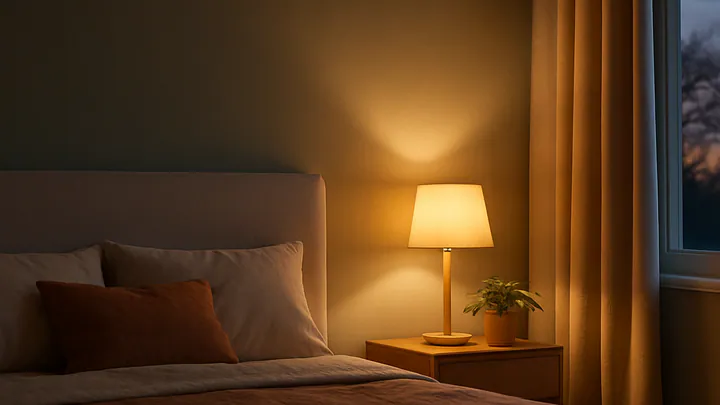
Warm LEDs in the 2,700K range give the cozy, lamp-like light most living rooms and bedrooms want; 3,000K to 4,000K suits kitchens and work areas. Getting the color temperature right matters more to how a room feels than the shape of the fixture does — a point we expand on in our guide to calm, cozy bedroom upgrades.
When does peel-and-stick wallpaper fail?
It fails on textured walls, on flat or matte paint, on paint less than three to four weeks old, and in unventilated bathrooms. The adhesive needs a smooth, fully cured, low-porosity surface, and a knockdown or orange-peel texture gives it almost nothing to grip.
There is also a removal risk renters underestimate. On walls painted with cheap builder-grade flat paint, even a "removable" wallpaper can lift the paint layer when peeled. Test a small piece in a closet, leave it a week, then remove it and inspect.
Where it genuinely shines: stair risers, the back panel of a bookcase, the inside of cabinet doors, and small accent areas. Order 15 percent more than your measured square footage to allow for pattern matching, and hang the first panel against a plumb line rather than the corner — corners are rarely square.
What storage projects actually reduce clutter?
Storage only works when it is placed where the clutter accumulates, not where it looks tidy. A basket by the door for mail and keys removes more visual mess than a beautiful cabinet across the room, because clutter follows habit, not intention.
Three that consistently earn their space:
- Drawer dividers — inexpensive, instantly effective, and they stop the "everything drawer" from reforming.
- Labeled bins on one shelf run — labels matter more than the bins; unlabeled bins become black holes within a month.
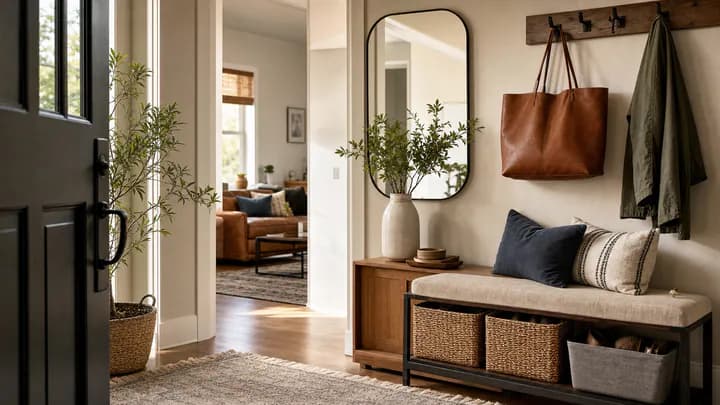
- A landing zone at the entry — a hook rail, a tray, and a bench. We break the geometry down in our piece on making the first three feet of your entryway work, and there are more compact options in small entryways that work hard.
How do I build a reading nook and a herb garden on almost nothing?
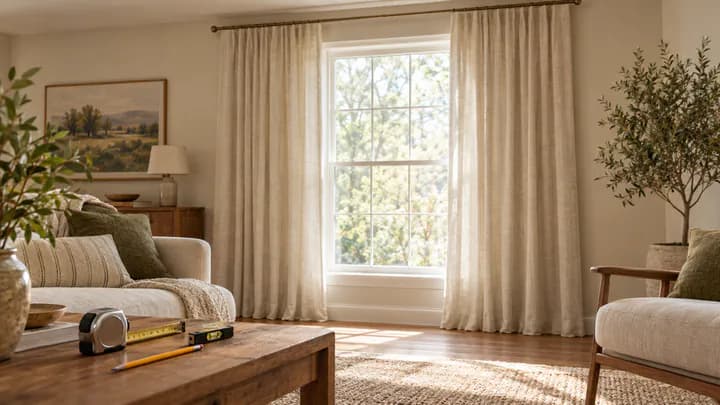
Both are placement problems more than purchase problems. A reading nook needs a chair, a light source aimed over your shoulder, and a surface within arm's reach — often assembled entirely from furniture you already own, relocated to a quiet corner with good daylight.
The single element people skip is the light. Overhead lighting behind you creates page glare; a floor lamp positioned slightly behind and to the side of the chair fixes it for under $40. If you read to wind down, a warm bulb and a timer help more than another cushion.
For a kitchen herb garden, the honest constraint is sunlight. Basil, thyme, rosemary, and oregano want roughly six hours of direct light; mint, parsley, and chives tolerate less. A north-facing window will not sustain basil no matter how nice the planter looks — in that case, choose a small grow light or grow mint and parsley instead. Every container needs drainage holes; a repurposed tin without them will rot roots within weeks.
Candle holders round out the list because they cost almost nothing. Mason jars with rope or twine wrapping, offcuts of scrap wood with a Forstner-bit recess, or thrifted glassware all work. Keep flames away from fabric and never leave a wrapped jar burning unattended — rope and twine are combustible.
What is the right order to tackle these in?
Work dirty to clean, top to bottom, and permanent to removable. Paint before you install shelves. Install shelves before you style them. Swap lighting before you paint the ceiling line. Do the reversible, renter-safe projects last, once the structural look of the room is settled.
One more sequencing rule: complete one room before starting another. Three half-finished rooms feel worse to live in than one unchanged room, and materials bought for a project you abandon are the most expensive thing in this entire guide.
Key takeaways
- Paint, light, and textiles change a room faster per dollar than furniture or accessories.
- Test before you commit: lead swabs on pre-1978 paint, a wallpaper sample in a closet, kraft-paper templates on a gallery wall.
- Know your stopping point. No ground wire, aluminum wiring, or a loose ceiling box means calling a licensed electrician, not improvising.
- Renters should get permission in writing before painting or drilling, and should assume "removable" wallpaper may still lift cheap flat paint.
- Anchors are not studs. Anything over roughly 15 pounds needs at least one bracket in framing.
- Finish one room before starting the next — abandoned materials are the real budget killer.
Frequently asked questions
What is the cheapest DIY project with the biggest visual impact?
Painting one accent wall is usually the cheapest high-impact project, typically running $30 to $60 for a quart or gallon of paint plus tape and a roller. It changes the perceived color temperature of an entire room in a single afternoon, and it is fully reversible with another coat of paint.
Which DIY home projects are safe for renters?
Peel-and-stick wallpaper, freestanding storage, gallery walls hung with removable strips, vertical herb gardens, candle holders, and reading nooks are all renter-safe because they leave no permanent alteration. Painting and shelf installation usually require written landlord permission, and light fixture swaps often do too.
How do I hang floating shelves without hitting a stud?
Use toggle bolts or heavy-duty self-drilling drywall anchors rated above the weight you plan to load, and treat the rated capacity as a ceiling rather than a target. Anchors fail in shear and pull-out over time, so keep books on stud-mounted shelves and reserve anchored shelves for lighter decorative objects.
Is it safe to sand old painted furniture?
Not always. Paint manufactured before the 1978 US ban on lead in residential paint can contain lead, and sanding it releases fine dust that is hazardous, especially around children and pregnant people. Test with an inexpensive lead swab kit first, and if it reads positive, use a liquid deglosser and a bonding primer instead of sanding, or consult a certified professional.
How much should I budget for a full room refresh?
Most DIY room refreshes using the projects in this guide land between $150 and $500 depending on how much you already own. Paint, hardware, and a single lighting change account for most of the spend; textiles and styling can often come from what you already have.
Can I replace a light fixture myself?
Often yes for a like-for-like swap after shutting off the correct breaker and confirming with a voltage tester, but stop and call a licensed electrician if you find no ground wire, cloth-insulated or aluminum wiring, a cracked ceiling box, or a fixture heavier than the box is rated to hold. Electrical rules vary by jurisdiction and rental agreement.
Why does peel-and-stick wallpaper keep falling off my wall?
Peel-and-stick adhesive needs a smooth, clean, fully cured surface. It fails on textured walls like knockdown or orange peel, on flat or matte paint that sheds its top layer, on fresh paint less than about three to four weeks old, and in steamy bathrooms without ventilation.