The Night Auditor Counts Stars Instead
On the slowest shift of his career, a hotel night auditor discovers a guest who checked in forty years ago has never checked out. What he finds in Room 207 will change how he counts everything.
Drafted with AI and published automatically. Our editors set the standards and fix reported errors — how we work.
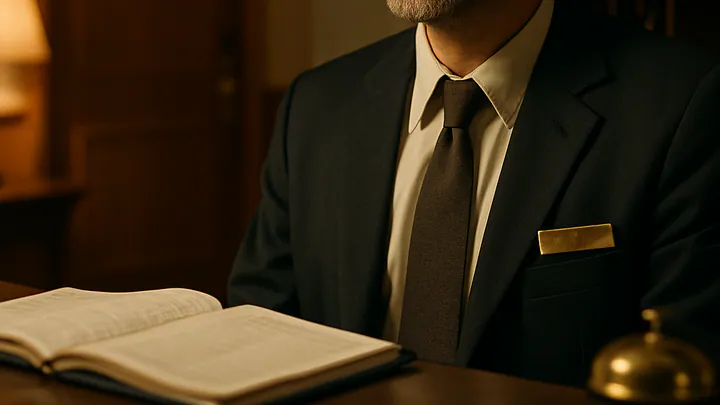
The lobby clock read 3:14 a.m. when Marco realized the guest in Room 207 had been staying at the Hotel Verbena for forty-one years.
He blinked at the screen, certain it was a glitch. The property management system was old enough to remember dial-up, and sometimes it hiccupped dates the way an aging uncle misremembered birthdays. But the entry was unambiguous. Eleanor Vance. Check-in: October 14, 1983. Check-out: —. Rate: $42.00/night. Billing: prepaid in full.
Marco scrolled. The folio went on for pages. Dinner trays. Newspaper deliveries that ended in 2009. A standing request for fresh tulips on Wednesdays, last fulfilled, according to the notes, in 2017. No charges had posted in years, but the room remained occupied. The system would not let him close it out.
He glanced around the lobby. The lamps cast their amber pools onto the carpet, and the brass railing of the staircase glowed faintly, as it had every night of the six months he had worked here. The Verbena was the kind of small downtown hotel that survived on weddings, anniversary trips, and the loyalty of people who refused to stay anywhere new. Marco had taken the job because it was quiet and because, after his divorce, he needed a place where nothing happened.
And yet here was something, happening.
The Walk Up
He told himself he was only going to verify. That was within his job description: confirm room status, note any discrepancies for the morning manager. He took the master key from its hook and rode the elevator to the second floor, where the hallway smelled of old wood polish and, faintly, of tulips.
Room 207 was at the end of the corridor, past the ice machine that no longer worked and the framed print of a harbor nobody had ever identified. Marco stopped outside the door. He listened. He thought he heard the rustle of a page turning, but it might have been the building settling, the way old buildings do, like dogs adjusting in their sleep.
He knocked. Softly. Then, when nothing answered, a little less softly.
"Housekeeping check," he said, which was a lie, but it was the lie the hotel had taught him to tell.
The door opened on its own, the way doors in dreams do — not flung wide, just drifting inward a few inches, as though the room had exhaled.
Inside, a woman sat by the window in a wingback chair that Marco was certain had not been ordered by any purchasing manager he knew of. She was perhaps sixty, perhaps older; it was hard to tell because the lamp beside her was the warm, forgiving kind. She wore a cardigan the color of weak tea. On her lap was a book, and on the small table beside her, a vase of tulips, fresh.
"You're new," she said, without looking up.
"I'm — I'm the night auditor. Marco. I'm sorry to disturb you, ma'am, I just — the system flagged your room."
"The system flags my room every few years," Eleanor said. She turned a page. "Usually someone comes up, looks around, decides they imagined it, and goes back downstairs. The last one was a young woman with a very serious ponytail. 2011, I think. Tell me, is the ice machine still broken?"
"Yes, ma'am."
"Good. I find its silence companionable."
Marco stepped inside without meaning to. The room was Room 207 and also not. The furniture was the hotel's, but arranged like a home. Photographs leaned against the mirror. A kettle sat on the dresser. On the wall above the bed, where the print of a generic seascape was supposed to hang, there was instead an unframed watercolor of two children on a pier.
"My niece and nephew," Eleanor said, following his eyes. "They would be in their fifties now. I imagine they are doing well. I hope so."
"Ma'am," Marco said carefully, "the records say you checked in in 1983."
"That's correct."
"That's forty-one years."
"Is it?" She finally looked at him. Her eyes were very clear and very tired, the way the sky is tired at the end of a long blue day. "I came here for a weekend. I was going to meet someone. He didn't come. I decided I would wait until he did, and somewhere in the waiting I forgot that waiting was a temporary condition."
"That's — " Marco searched for the word and could not find one that was not also a kind of accusation. "That's a long time."
"Yes." She smiled at him, not unkindly. "And the strange thing, Marco, is that for most of it I have not been unhappy. The hotel is gentle. The tulips come on Wednesdays. I read. I watch the street. I have learned to recognize the regulars — there is a man who walks a brown dog past the corner at 6:15 every morning, and a woman who eats her lunch on the bench across the way on Tuesdays. I have followed their lives from this window. I know the dog is the third one. I know the woman finally got her promotion."
Marco sat down on the edge of the bed before he remembered he was not supposed to.
The Count
"Can I ask you something?" he said.
"You may."
"Why did you stop coming down?"
Eleanor closed the book on her finger. "Because at first I was afraid I would miss him. And then I was afraid I would miss the version of myself that was waiting for him. And then I was afraid that if I went outside, the years would notice me, and present me with their bill." She tilted her head. "You understand that, I think."
Marco thought of his apartment, which had three chairs and only one of them dented from use. He thought of his sister's voicemails, accumulating like snow. He thought of how the night shift had begun as a refuge and become a residence.
"I might," he said.
"What do you do, on quiet nights?" Eleanor asked.
"I count things. Receipts. Room keys. I balance the books."
"And on the very quiet ones?"
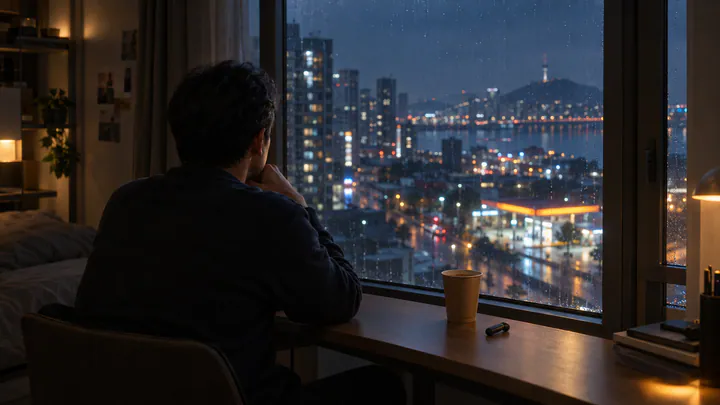
He hesitated. "There's a window by the back stairwell. You can see a slice of sky. Sometimes I count stars. I know it's only a handful. The light pollution, you know. But I count them anyway."
Eleanor nodded, as though this confirmed something she had long suspected about him, although they had only just met. "That is a much better use of a night," she said, "than balancing books."
They sat for a while. The radiator made the small honest sounds radiators make. Outside, somewhere down the avenue, a delivery truck shifted gears.
"Marco," Eleanor said finally, "would you do me a favor?"
"If I can."
"Tomorrow morning, when the manager comes in, tell him Room 207 is being vacated. Have housekeeping prepare it for the next guest. The tulips can stop."
He looked at her. "And you?"
"I think I'd like to come downstairs," she said. "I've never seen the lobby at dawn. Is it pretty?"
"It's the best part," Marco said, and was surprised to find he meant it. "The light comes in low through the east window and makes the brass look like honey."
"Then let's go and see."
She set the book on the table, marked her place with a tulip petal, and stood. She was smaller than he had expected, and steadier. At the door, she paused and looked back at the room — at the kettle, the photographs, the watercolor of the children on the pier — and then she clicked off the lamp, and the room became, finally, only a room.
The morning manager, when he arrived at seven, found Marco at the front desk balancing a tidy ledger and humming. Room 207 was listed as vacant and freshly cleaned, which was odd, because housekeeping did not arrive until eight. On the lobby couch, in a wedge of honey-colored light, an older woman in a tea-colored cardigan was drinking coffee from a paper cup and watching the street as though she had never seen one before.
"New guest?" the manager asked.
"Checking out," Marco said. "She's just admiring the view first."
That night, on his break, Marco went to the window by the back stairwell and looked up. The same handful of stars were there, faithful as always. He counted them, and then, because it seemed the thing to do, he counted them again, slower, the way you count something you intend to keep.