Minimalist Home Décor: How to Create Calm, Elegant Rooms
Minimalism isn't about owning less for its own sake — it's about giving the things you keep enough room to matter. Here's how to edit, paint, light, and furnish a calm home without ending up with a space that feels like a waiting room.
Rewritten with AI and republished automatically. Our editors set the standards and fix reported errors — how we work.
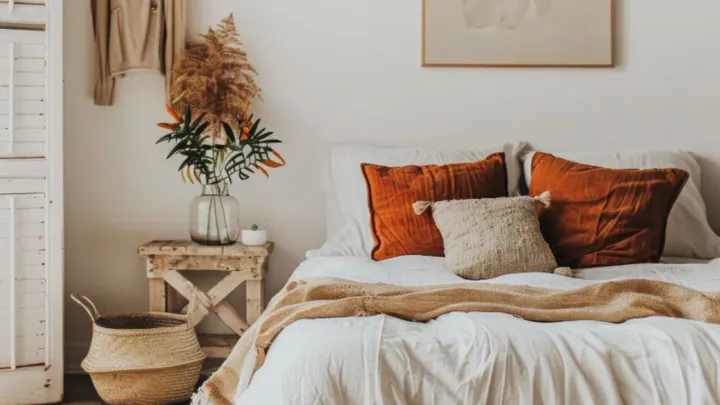
TL;DR: Minimalist home décor works when you edit first and shop last. Clear surfaces, keep a warm neutral palette, let furniture breathe, and add interest through texture and layered lighting rather than more objects. Done well, a room feels calm and generous. Done carelessly, it feels like a dentist's waiting room.
What is minimalist home décor, exactly?
Minimalist home décor is an interior design approach that keeps only the furniture and objects that are useful or genuinely meaningful, then arranges them with deliberate empty space so each piece reads clearly. Fewer things, better things, more air around them.
That definition matters because minimalism is routinely confused with two other things: austerity (owning as little as possible as a virtue) and the all-white aesthetic (a look, not a method). Neither is required. Warm minimalism, Japandi, and Scandinavian interiors are all minimalist in structure while being full of wood, wool, and color.
The practical test we use: stand in the doorway and count the objects your eye lands on before it rests. If it's more than five or six, the room is working harder than it needs to.
Where do you start — decluttering or shopping?
Decluttering, always. Every dollar spent before the edit is a dollar spent decorating a problem instead of solving it. The single most expensive mistake in this whole category is buying storage bins before you've reduced the volume of stuff, because bins simply make it possible to keep things you'll never use.
A method that holds up in real homes:
- Clear every horizontal surface completely. Counters, coffee table, dresser, nightstands. Put everything in one box.
- Return only what you used in the last week, plus a maximum of three decorative items per room.
- Live with the box unopened for two weeks. Whatever you haven't reached for goes to donation, recycling, or a labeled storage bin — not back onto the surface.
- Then measure what's left and buy storage sized to it.
This sequencing also protects your budget. If you do plan to replace furniture, setting money aside deliberately beats a panicked credit-card weekend, and it lets you plan for a single good sofa instead of five mediocre purchases.
Which minimalist style actually fits your home?
There isn't one minimalism. The right variant depends on your natural light, your climate, and how much visual warmth you personally need. Choosing deliberately prevents the most common complaint — "it looks nice but feels unfinished."
| Style | Palette | Signature materials | Best in | Watch out for |
|---|---|---|---|---|
| Scandinavian | Soft whites, pale gray, muted blue | Light oak, wool, sheepskin, linen | Rooms with limited daylight hours | Can drift cold without textiles |
| Japandi | Warm off-white, clay, charcoal | Dark wood, paper, ceramic, rattan | Small apartments, low furniture | Needs real craftsmanship to avoid looking flat |
| Warm minimalism | Cream, oatmeal, ochre, terracotta | Travertine, plaster, boucle, brass | Family homes that need softness | Textured finishes show wear and dust |
| Gallery / modern | True white, black accents | Steel, glass, polished concrete | High ceilings, strong architecture | Unforgiving — every cable and scuff shows |
Decision rule: if your main living space gets weak or indirect daylight, skip gallery minimalism. Cool, hard surfaces amplify gloom. Warm minimalism or Japandi will read as intentional rather than unfinished.
What colors work when the whole palette is neutral?
Pick one neutral as the dominant field, one deeper neutral as the secondary, and one small accent — roughly a 60/30/10 split. The most useful technical detail is light reflectance value (LRV), a 0–100 scale printed on most paint chips that tells you how much light a color bounces back.
In a north-facing or shaded room, a white above roughly 80 LRV with a warm undertone stays white. A cool-toned white in the same room often reads gray or faintly blue, which is why so many people repaint after a month. Always test a large sample on the actual wall and look at it in morning light, afternoon light, and lamp light.
For the 10% accent, choose something that already exists in the room — the green of a plant, the rust in a rug, the brass of a lamp — rather than importing a new color. Repetition of three or four instances is what makes an accent look deliberate.
How much furniture is too much in a minimalist living room?
The usable rule is negative space, not piece count: aim for roughly a third of the floor plane to stay empty and walkable, with about 30 to 36 inches of clear path through the room. A room with six correctly scaled pieces and clear circulation reads calmer than a room with three oversized ones jammed against the walls.
Three sizing details that do more for a room than any purchase:
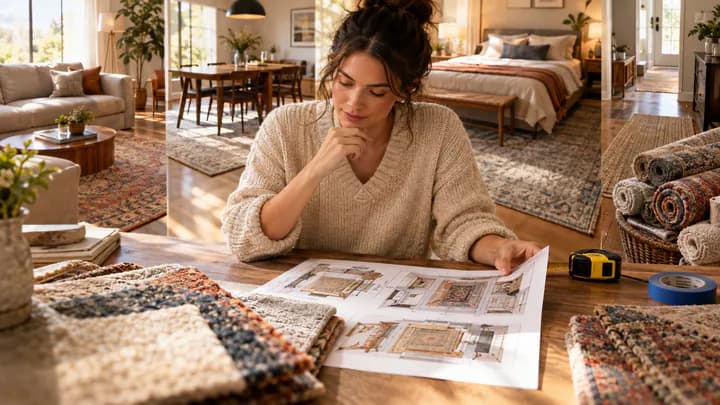
- Rug size. The front legs of every seating piece should sit on the rug. In most living rooms that means 8×10 feet, not the 5×8 that looks cheaper online. A too-small rug fragments the space and immediately reads as clutter.
- Coffee table height. Within an inch or two of the sofa seat height, and about two-thirds the sofa's length.
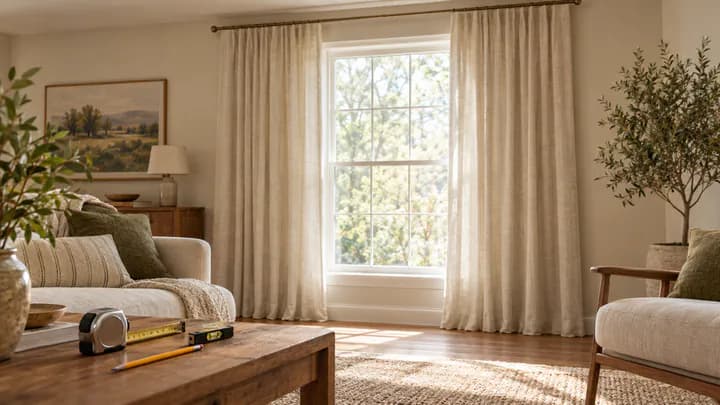
- Curtain hanging. Rod several inches above the window frame and wider than it on each side, with the fabric just kissing the floor. This one change makes a standard window look architectural.
Multi-purpose pieces earn their place here — storage ottomans, benches with a lift lid, a console that hides the router. Speaking of which, if your living room is dominated by a blinking stack of networking gear, it's worth deciding whether you actually need a router upgrade before you build a cabinet around it.
How do you keep a minimalist bedroom from feeling cold?
Layer materials, not objects. A bedroom with three textures — washed linen sheets, a wool throw, a wood or rattan surface — feels warm even in a completely neutral palette, because the eye reads variation in surface rather than variation in color.
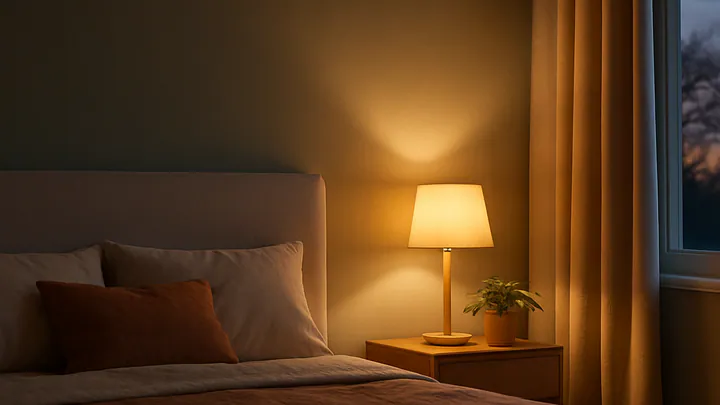
Practical specifics: keep the nightstand top within about two inches of the mattress height so it's actually usable at night; limit it to a lamp, a book, and a glass; and move charging cables into a drawer with a hole drilled through the back. Under-bed storage in flat, lidded containers absorbs the seasonal overflow that otherwise colonizes a chair.
Bedrooms are also where minimalism pays a functional dividend rather than just an aesthetic one — a dark, uncluttered, low-stimulus room supports the wind-down routine described in our guide to a calm, cozy bedroom refresh.
What lighting makes a neutral room feel warm instead of clinical?
Three light sources at different heights, all at 2700K, with a color rendering index (CRI) of 90 or above. One overhead fixture on its own is the single fastest way to make a minimalist room look like an office.
- Ambient: ceiling fixture or wall wash, ideally on a dimmer.
- Task: a floor lamp beside the reading chair, an under-cabinet strip in the kitchen.
- Accent: a small table lamp at about 24–30 inches, which is the height that creates the pooled, low glow rooms feel cozy in.
CRI matters more than people expect in a neutral scheme. Low-CRI bulbs flatten beige, oak, and cream into a muddy sameness — exactly the effect you were trying to avoid. And daylight is still the best light in the house: sheer panels instead of blackout in living areas, mirrors placed opposite windows rather than beside them.
What should you actually spend money on?
Spend in this order: lighting, rug, window treatments, then one anchor furniture piece. The first three transform a room's atmosphere for a fraction of what furniture costs, and they move with you if you rent.
Worked example — a 12×15 ft living room. Start by removing the second side table, the spare floor lamp, and roughly half the shelf objects. Paint stays. Add one 8×10 low-pile rug, two lamps at different heights with 2700K bulbs, and floor-length curtains hung high. Keep the existing sofa. The room now has fewer items, better proportion, and warmer light — and nothing structural was bought. If it still feels flat after two weeks, that's when you add the one anchor piece: a good chair, a real wood cabinet, or a single large piece of art.
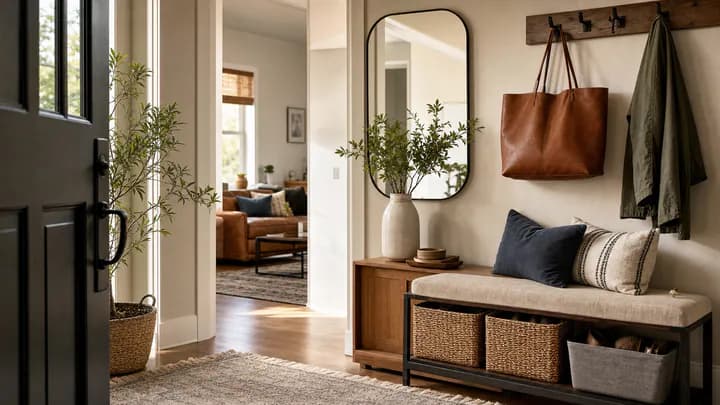
The same logic scales down. The first three feet of an entryway often deliver the biggest perceived change per dollar in the whole home, because it's the space you and every guest meet first.
What are the most common minimalist mistakes?
- Replacing everything at once. Buying a matching set to "become minimalist" produces a showroom, not a home, and it's the opposite of consuming less.
- Pushing all furniture to the walls. It reads as emptiness rather than calm. Floating seating a few inches off the wall creates depth.
- One material everywhere. All-white, all-matte, all-laminate flattens the room. Three materials is the minimum for visual warmth.
- Ignoring cables and appliances. In a sparse room, a charging cable is a focal point. Route, clip, or hide them — this is 20 minutes of work with outsized payoff.
- Confusing hidden with gone. A closet stuffed to the door isn't minimalism; it's clutter with a lid. The same editing habit works on clothes, as our capsule wardrobe guide shows.
When does minimalism not apply?
It doesn't apply cleanly if your home doubles as a workshop, a studio, or a hobby space where the materials are the point. Forcing bare surfaces on a working room just relocates the friction. In those rooms, aim for organized density with closed storage instead.
It also needs adapting for households with small children, shared multigenerational spaces, or anyone who relies on visible cues to remember tasks. For some people, out of sight genuinely is out of mind — in that case, use a single designated open tray or pegboard as the "visible zone" and keep everything else closed. Minimalism should reduce your daily friction; if it's adding rules you have to fight, the system is wrong, not you.
Finally, a note on renting: don't sink money into paint, built-ins, or fixed lighting you'll leave behind. Concentrate on portable wins — rugs, lamps, textiles, and a smart entry setup like the ones in our small entryway ideas.
Key takeaways
- Edit before you buy — storage purchased ahead of decluttering preserves the problem.
- Pick a minimalist variant that matches your daylight: warm minimalism or Japandi for low-light rooms, gallery minimalism only where architecture carries it.
- Texture and layered 2700K lighting create warmth; more objects do not.
- Proportion beats purchases — rug size, curtain height, and clear circulation fix most rooms for free or cheap.
- Spend in order: lighting, rug, window treatments, then one anchor piece.
- If minimalism is fighting how you actually live, adapt the rules rather than abandoning the room.
Frequently asked questions
What is minimalist home décor in simple terms?
Minimalist home décor is an interior design approach that keeps only furniture and objects that are useful or meaningful, then arranges them with deliberate empty space so each one reads clearly. It relies on a restrained color palette, clean silhouettes, and texture rather than quantity for visual interest.
Do I have to throw everything out to go minimalist?
No. The goal is editing, not erasing. A practical starting point is clearing horizontal surfaces and removing roughly a third of the visible objects in one room, then living with it for two weeks before deciding whether anything needs to come back.
Why does my all-white minimalist room feel cold?
Almost always because there's only one material and one light temperature in it. Add two or three tactile materials — wood, wool, linen, stoneware — and swap cool white bulbs for 2700K warm LEDs with a high color rendering index. Texture and light temperature do the warming, not more objects.
Can minimalism work with kids or in a rental?
Yes, but the emphasis shifts from bare surfaces to closed storage and a one-in-one-out habit. In rentals, focus on what you can take with you: rugs, lamps, textiles, and a few well-proportioned pieces, rather than paint and built-ins you'll leave behind.
How much does a minimalist room makeover cost?
It can cost nothing if you begin with decluttering and rearranging, which is where most of the visual gain comes from. If you're buying, the highest-return spending order is usually lighting, then a correctly sized rug, then window treatments, then one anchor furniture piece.
What's the most common minimalist decorating mistake?
Buying storage containers before decluttering. Bins make it possible to keep things you don't use, so the underlying volume never drops and the clutter reappears within months. Edit first, then buy storage sized to what's left.
How do I pick a white paint that doesn't look gray?
Check the light reflectance value (LRV) and test it on your actual wall. In a north-facing or shaded room, a white above roughly 80 LRV with a warm undertone holds up better, while cool-toned whites can read gray or blue in low, indirect daylight.