Bedroom Refresh in 2026: Calm, Restful Upgrades
A practical 2026 guide to refreshing your bedroom for better sleep and calm — layout, lighting, textiles, storage, and small upgrades that actually matter.

TL;DR: A great bedroom refresh in 2026 is not about buying new furniture — it is about reducing visual noise, softening the light, layering textiles you actually want to touch, and giving every object a home. Focus on five areas in order: layout, lighting, bedding, storage, and small sensory upgrades. Most of the transformation happens in a weekend and costs less than a single piece of furniture.
We hear the same thing from readers all year: the bedroom is the room they spend the most time in and the one they think about the least. It becomes a landing pad for laundry, phone chargers, half-read books, and unfinished decisions. This guide is our practical framework for turning that space back into somewhere restful — the kind of room you are relieved to walk into at the end of the day.
Start with how the room actually functions
Before you shop for anything, spend ten honest minutes noticing how you use the room. Where do clothes land when you take them off? Which side of the bed do you get out of first? What is the last thing you look at before turning off the light? A bedroom that fights your habits will always feel cluttered, no matter how nice the decor is.
Once you can name the friction points, most of them can be solved without spending money. A hook on the back of the door removes the "chair mountain" of worn-once clothes. Moving the nightstand two inches closer to the bed makes reading before sleep feel natural instead of awkward.
The five-minute layout audit
- Can you walk from the door to the bed without weaving around anything?
- Is there a clear surface within arm's reach of your pillow?
- Does the bed face away from the brightest window if you are a light sleeper?
- Do you have one soft light source you can turn on without leaving the bed?
- Is there a designated spot for tomorrow's clothes that is not the floor?
If you answered no to two or more of these, layout — not new stuff — is your first project.
Fix the lighting before anything else
Lighting is the highest-leverage upgrade in almost every bedroom we help readers rework. Most bedrooms have exactly one light source: a bright ceiling fixture with cool-white bulbs, controlled by a single switch by the door. That setup is efficient for cleaning and terrible for winding down.
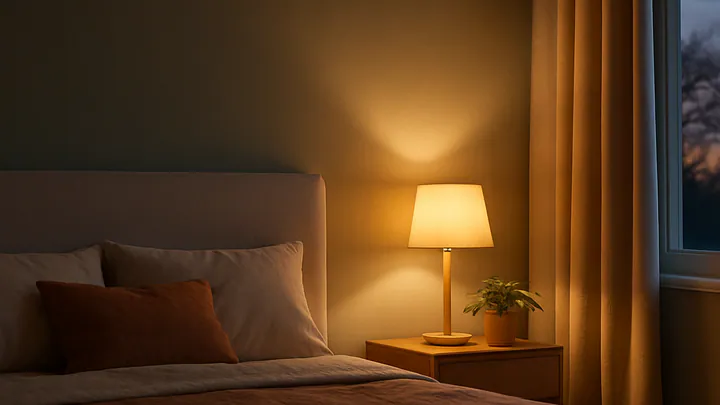
The fix is what designers call layered lighting. You want at least two, ideally three, sources of light at different heights, each with a warm color temperature (roughly 2200K–2700K). A ceiling light for tasks, table lamps for evening, and a small accent light — a plug-in wall sconce, a low-wattage floor lamp, or even a candle-style bulb — for the last hour before sleep.
Simple lighting upgrades under $100
- Swap every bedroom bulb to warm-white (2700K or lower).
- Add a dimmable smart bulb to the overhead fixture so you can lower it in the evening.
- Put nightstand lamps on both sides of the bed if you share it — separate control matters more than matching shades.
- Use a small motion-activated night light in the hallway or bathroom so you do not need overhead lights during the night.
Upgrade the bedding you actually feel
You spend roughly a third of your life in direct contact with your bedding, so this is one place where quality genuinely pays off. But quality does not mean expensive — it means choosing fibers, weights, and layers that suit your sleep style.
We suggest thinking of bedding as four layers: a supportive mattress protector, breathable sheets, a duvet or comforter appropriate to your climate, and a decorative layer on top for warmth and texture. Each layer can be replaced independently as it wears, which is more sustainable and easier on your budget.
What we generally recommend prioritizing
- Pillows first. The right pillow for your sleep position matters more than thread count. Side sleepers usually want firmer and thicker; stomach sleepers thinner and softer.
- Natural fibers where they touch your skin. Cotton percale sleeps cool and crisp; sateen feels smoother and warmer; linen is forgiving and gets better with washing.
- A washable duvet cover rather than a bulky comforter you can only dry-clean.
- One extra throw blanket for temperature adjustment without changing the whole setup.
Skip the decorative pillows you have to move onto the floor every night. They are the number one reason people stop making the bed.
Solve storage so surfaces stay clear
Clutter in a bedroom is almost always a storage design problem, not a discipline problem. If putting something away takes more than a few seconds, it will end up on the nearest flat surface. The goal is to make the right action the easy action.
Storage upgrades that pay off
- Under-bed bins on wheels for out-of-season clothes, spare bedding, or shoes.
- A small tray on each nightstand to corral the phone, glasses, lip balm, and one book — everything else has to leave.
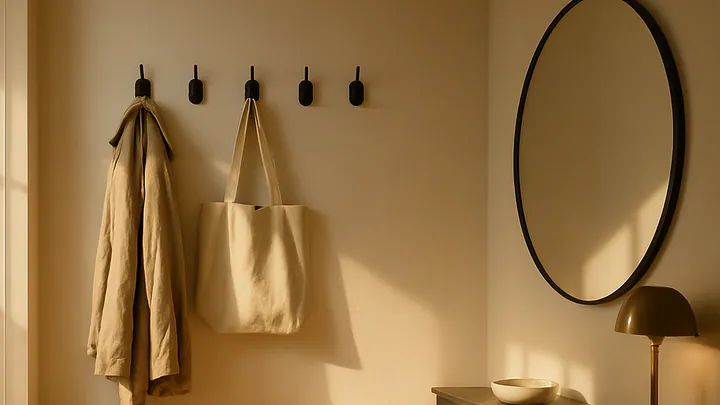
- Hooks on the back of the door or inside the closet for tomorrow's outfit and today's worn-once clothes.
- A slim laundry hamper with a lid so you do not have to look at it.
- A charging station outside the bedroom if possible, or in one designated drawer, so screens do not migrate to the bed.
Do a single honest sweep before you buy any new storage. Most bedrooms have a drawer or shelf full of items that belong somewhere else in the house. Relocate those first — you may find you already had enough storage all along.
Refresh the walls, floor, and windows
These are the biggest surfaces in the room, so small changes here shift the whole mood.
Walls. A single accent wall in a soft muted tone — warm clay, sage, dusty blue, mushroom — can transform a boxy room in an afternoon. If you rent, peel-and-stick wallpaper behind the bed gives a similar effect. Keep art low and calm; a few larger pieces read as more intentional than many small ones.
Floor. A rug that extends at least a foot or two beyond the sides of the bed makes the room feel grounded and warmer underfoot. If you already have carpet, layering a smaller textured rug on top still works.
Windows. Hang curtain rods close to the ceiling and let panels almost brush the floor. This one trick makes ceilings feel taller in nearly every room. If early light or streetlights wake you, add a blackout liner behind decorative curtains rather than replacing them.
Small sensory upgrades that make it feel finished
Once the bones are right, a few sensory details take the room from functional to genuinely restful.
- A small essential-oil diffuser or a single scented candle you actually enjoy.
- One or two low-maintenance plants like pothos, snake plant, or a small fiddle-leaf fig.
- A weighted throw folded at the foot of the bed for cool evenings.
- A physical alarm clock so you can charge your phone across the room.
- A small stack of books on the nightstand — a visible cue that this is a place for reading, not scrolling.
A weekend refresh plan
If you want a concrete schedule, here is the sequence we suggest to readers who want visible change in two days.
Saturday morning: reset
- Strip the bed and wash all bedding.
- Clear every flat surface completely.
- Remove anything that does not belong in a bedroom.
Saturday afternoon: layout and light
- Try one new furniture arrangement — even shifting the bed a few feet counts.
- Swap bulbs to warm-white and add a second lamp if you only have one.
Sunday: textiles and finishing
- Remake the bed with fresh layers.
- Add or rehang curtains higher and wider than the window frame.
- Style each nightstand with a tray, a lamp, and no more than two personal items.
- Bring in one plant, one candle, or one piece of art you actually love.
Key takeaways
- Fix layout and lighting before you buy anything new — they deliver the biggest change for the smallest spend.
- Warm, layered lighting matters more than the specific fixtures you choose.
- Invest in pillows, sheets, and a washable duvet cover; skip decorative pillows you will not use.
- Storage should make the right action the easy action; add trays, hooks, and under-bed bins.
- Hang curtains high and wide, keep the palette calm, and let clear surfaces do the styling work.
- Finish with small sensory touches — scent, greenery, a physical alarm clock — that signal "rest" to your brain.
Editorial note: This article reflects general home and lifestyle guidance from our editorial team and is not professional interior design, medical, or sleep advice. If you have persistent sleep difficulties, please consult a qualified healthcare professional.
Frequently asked questions
How much should I budget for a bedroom refresh?
A meaningful refresh is possible at any budget. Under $150 usually covers paint, a lamp swap, and new bedding layers. A $300–$800 range lets you add curtains, a rug, and small furniture. You do not need to redo everything at once — layered upgrades over a few months often look better than a rushed overhaul.
What is the single biggest upgrade for a calmer bedroom?
In our experience, lighting has the largest impact. Swapping a bright overhead bulb for two or three warm, low-level lamps changes how the room feels almost immediately, supports your body's wind-down cues, and costs far less than new furniture.
How do I refresh a small bedroom without making it feel cramped?
Keep the palette tight, choose furniture with visible legs so the floor reads as larger, and hang curtains close to the ceiling. Vertical storage — tall slim dressers, over-door hooks, under-bed bins — protects floor space while giving everything a home.
What bedding should I buy first?
Start with a good pillow suited to your sleep position, then a comfortable mattress protector and quality sheets in a fiber you like against your skin. A duvet with a washable cover is more flexible than a heavy comforter you cannot easily clean.
Do I really need blackout curtains?
If streetlights, early sun, or headlights reach your bed, blackout or room-darkening curtains are one of the highest-impact upgrades for sleep quality. If your room is already dim, lined curtains for warmth and sound absorption are usually enough.
How can I make my bedroom feel less cluttered without buying storage bins?
Remove anything that does not belong in a bedroom — work items, laundry piles, exercise gear — and give the remaining objects a defined home. Clear surfaces read as calm, so aim for nightstands with only two or three items on top.
What colors work best for a restful bedroom in 2026?
Warm neutrals, soft muted greens, dusty blues, and gentle earth tones tend to feel most restful. The specific hue matters less than keeping contrast low and choosing paints with a matte or eggshell finish that softens light rather than reflecting it.
Should I add plants to my bedroom?
A few low-maintenance plants like pothos, snake plant, or ZZ plant add life and texture without much upkeep. Keep them away from the bed if you are sensitive to dust or humidity, and skip strongly scented flowering plants that can disrupt sleep.